

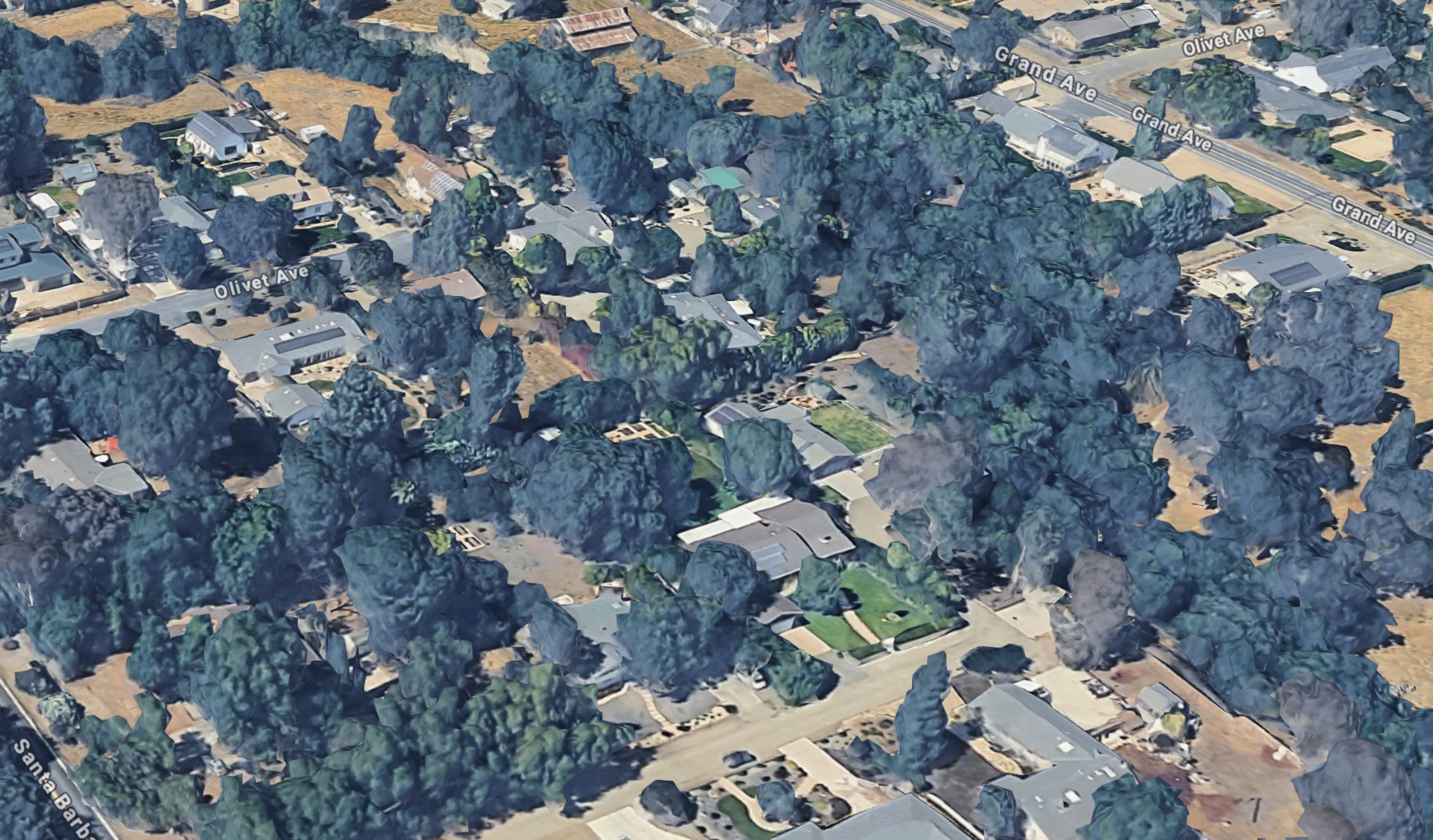
Fifty-four years ago Santa Barbara County designated Los Olivos as a “Special Problems Area” because of nitrate intrusion into our shallow ground water aquifer. The purpose of that designation was to control and limit both residential and commercial development. It did neither. The town and surrounding community has developed and expanded by over three times in both size and uses since 1972. A “Special Problems Area” designation did not control growth.
The county and the State Regional Water Quality Control Board have stated that they will impose a solution on the community to control nitrate intrusion via septic system sewage release into the ground. So, to control our own destiny we voted to form a Community Services District eight years ago and since then have elected board members to find a local solution that (1) maintains our small community’s rural character and (2) is a cost-effective solution that the governing county and state agencies will approve.
On July 8, the Board of Directors voted to move forward on a 60 percent engineered design for a sewer system with a pipeline to Solvang that would be owned by the Community Services District and engineered and sized for the capacity needs of Los Olivos. No other properties along that pipeline outside the district would be allowed access to it. At this time engineering and design is 30 percent completed so cost projections are guesstimates rather than the final engineer cost estimate. Current guesstimates show a sewer system will not be cheap, around $48 million. When engineering and environmental analysis are completed an engineer’s cost estimate will more accurately define costs. At that point there will be a state mandated Proposition 218 vote. Users will accept or reject a sewer system. That vote will be weighted according to use. By way of example, if the commercial core uses 80 percent of the sewer capacity it will pay 80 percent of the costs of construction and ongoing operations and maintenance. If that would be the case, residential properties would then pay 20 percent.
As with all projects, there is a group of people that don’t like or want a sewer system. They generally fall into two categories.
Some say that the county is not currently “red tagging” septic systems so there is no need to do anything. And that a sewer system is just an expensive government boon doggle.
Others say (1) there is a less expensive alternative and that (2) a pipeline to Solvang’s waste water treatment facility will induce growth along Alamo Pintado Road. Their alternative is, an as-a-yet-to-be-determined version of, what is called a STEP system. Small treatment plants (three or four?) would be located around the District to treat the fluid waste and pump it back into the ground. Solid waste would be held on each parcel, periodically pumped and transported to a disposal facility. The claim that this would be less expensive is speculative. No engineering has been done. Costs claimed by STEP proponents of land acquisitions, construction, maintenance, and District monitoring for (1) multiple treatment plants and (2) solid waste holding tanks on about 383 parcels are speculative. For the individual homeowner, it could well be that this type of system will be as costly, maybe more costly in the long run, than a sewer system. And it’s absolutely certain to be more complicated to operate, maintain, and monitor.
As for growth inducement, a pipe down Alamo Pintado Road is a concern. But of equal concern is approval, as the long term solution to sewage treatment by the county and the State, of small modular plants. That could open up the whole valley to “up zoning” for residential development. Developers under the state “Builder’s Remedy” law will use the precedent of county and state approval of smaller self-contained sewage treatment systems to convert agricultural land into housing.
So long as the county and the state control this issue and Los Olivos is designated as a “Special Problems Area,” the community faces tough decisions. Any solution will be expensive and disruptive. Any solution could well be growth inducing in Los Olivos and, as concerning, throughout the Santa Ynez Valley. And, as we’ve experienced, being designated as a “Special Problems Area” has not stopped growth.

