

In my formative days as a music consumer and addict, around age 8, my first real supplier was the Record Rack in the Magnolia Shopping Center. I would ride my bike there and acquire my first LPs there — the American classics Wichita Lineman, by Glen Campbell, and Johnny Cash’s At San Quentin. I was off and running and avidly listening, for a lifetime as yet incomplete. I remember in the back of the store, there was a service for dubbing albums onto reel-to-reel tapes or the then-new format of audio cassettes.
In honor of local music history, why not steal/borrow the term “record rack” for a new feature of this column? And why not kick things off with a heads-up about a fascinating outlier project of the locally grown kind?
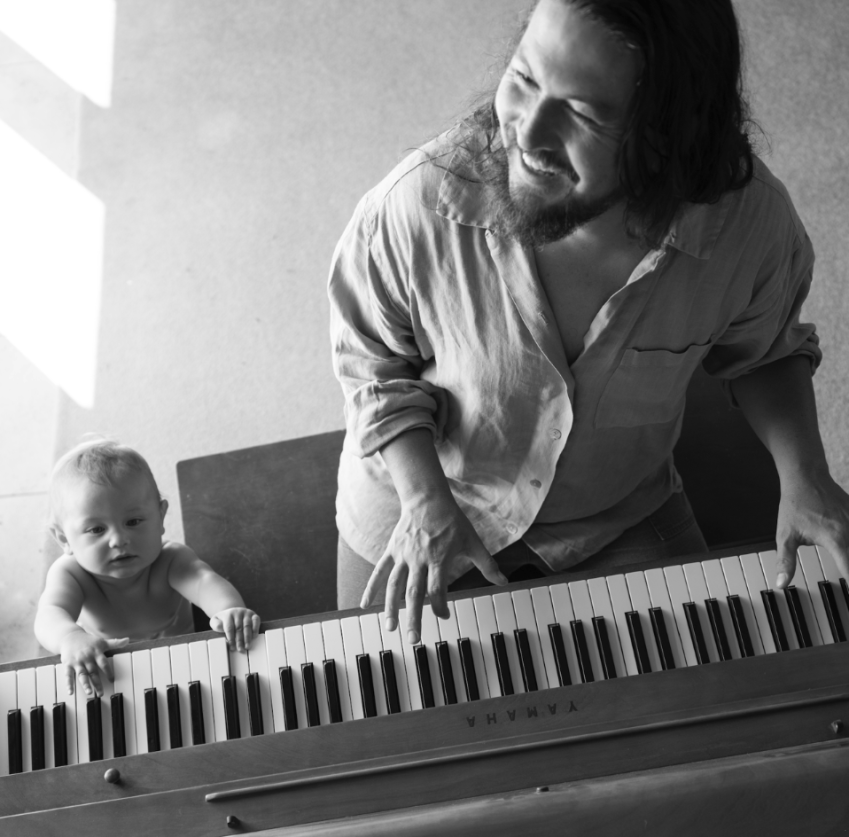
I direct your ears to Mitchell Yoshida’s evocative solo piano album Well-Tempered Spinet, volume one of a series of improvised pieces in non-standard tuning, in every key — a model loosely borrowed from Bach’s iconic Well-Tempered Clavier opus. Yoshida was born ‘n’ raised in Santa Barbara and makes his home here again with his family, and has a growing global presence and unorthodox résumé — including work with Edward Sharpe and the Magnetic Zeros, MIKA, Bastille, and soundtrack work in film, television, and the commercial world, but also feels compelled to take personal art-for-art’s-sake detours such as his spinet adventure.
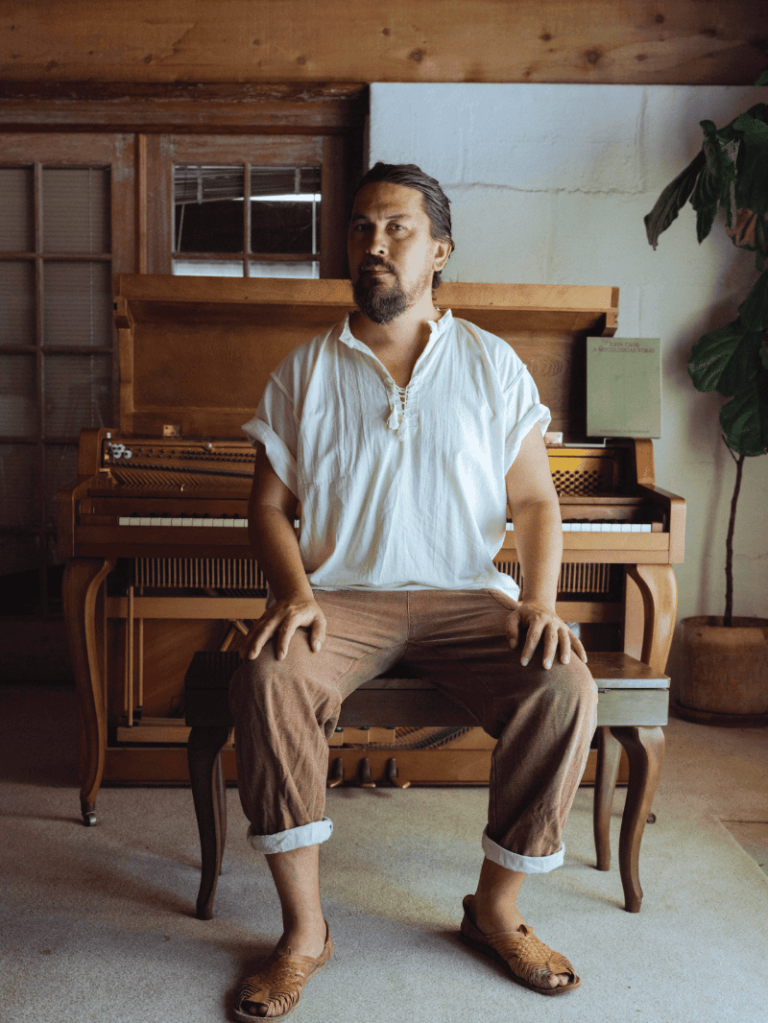
Conceptually and aurally, tuning is central to this music. By way of an introduction, he opens with “Prelude (C major),” a personalized and pop-ified variation on Bach’s famous Prelude in C from the Well-Tempered Clavier Book I. That brief, timeless, and powerful prelude is built on a set of arpeggios, with each chord triggering a particular emotional color. Yoshida’s version — which we’d like to think Bach would approve of — changes the palette but preserves the central concept.
As Yoshida has written about this special and personal creative effort, he is “drawn to subtle tensions — between tuning systems and expression, structure and freedom — treating sound not as something to be optimized, but as something to be inhabited.”
Much of the music on this eight-track, half-hour package has a strangely wistful, nostalgic beauty, as if conjuring memories of a past we relate to but aren’t directly part of. With the returned — and slightly detuned, to our standard listening error — scale, the humbler sorority of the spinet versus the richer texture of a grand piano, echoes of late-19th-century and early-20th-century saloons and salons can hover in the air, as on “For Tsegue-Maryam.” “Song for My Ancestors” suggests the post-impressionistic influence of Erik Satie or Federico Mompou, and the piece with the intervallic title, “Tenths Moments,” sounds like vintage Americana nostalgia reused and reformed, as if a companion piece/thought to the tender melody of “The Memory that Wasn’t There.” “Resolution Solution” finalizes volume one of Yoshida’s ongoing project, with an amiable resolving ramble which nuzzles up against a phrase from the folk tune “500 Miles” before heading off again.
As of early August, Yoshida dropped Vol. II of the trilogy of releases, subtitled Mind, with some more identifiably new age and old school minimalist notions (e.g., the Philip Glass nod “Glassy Conditions” and the rippling arpeggio fest of “Concentric Cycles.”) The self-described dark turn of “Dirge” opens out into the light of “Spring” and the engaging album-closing meditation that is “The Medlow, the Rain and You” vaguely sends a shout-out to Schubert in a moodier mood.
On a late and lazy August afternoon, you may want to let the music drift in and out of your consciousness and put it on repeat. (To check out the sounds, go to this Bandcamp page).
Ambient Side Tripping
For this listener, sinking into Yoshida’s well-tempered world made for an easy on-ramp into another side channel of the music world which has been pulling me into its esoteric world, a certain branch of ambient music, freely exploring unconventional tuning systems, early music references, and time-space characteristics which can make the music stretch your sense of time and harmonic bearings.
This music can be abstract while also elemental, something that filters in through the brain and ears, but seeps into your veins and perhaps soul — if you’re attuned to the ideal of “deep listening” and don’t have to be somewhere in 15 minutes.
The ancient and ever-relevant instrumental domain of the pipe organ is the tool of choice for two of this world’s presently prominent figures — Sarah Davachi and Kali Malone. (I also have a thing for the great British jazz-lined organist/pianist Kit Downes, but that’s another subcultural trip). Davachi and Malone also have a natural proclivity for finding ways to incorporate the organ-friendly alliances with brass, voices, and occasional strings or other sources into their parties — sometimes subtly dipping into digital sources, but generally keeping things “real,” in tune with the ancient verities and sonorities of the organ’s links to antiquity.
To start with a musician whose music can approximate the sound and sustaining qualities of the organ, from another instrumental place and attitude, guitarist Jon Catler — who worked for more than 30 years with minimalist patriarch LaMonte Young. In tribute to his mentor, Catler recently released the album The Young Mountain of the East (link), for multi-tracked electric guitar in Just Intonation tuning.

The album consists of a 12-part series of “Emanation” pieces, built from the texture of sustaining distorted guitar tones, gliding and swooping slowly in and out of stacked chords, as if generated with an e-bow and a slide. But the mechanics of how the sound is created are far less important than the mystery and allure of the sonic fruits. Only on the 11th, penultimate “Emanation” does a steady rhythmic ping-pong of guitar tones appear, layered contrapuntally and sounding vaguely like Frippertronics. In the 12th and final segment, the more familiar guitarisms yield back to the floating, edgeless atmosphere of the piece as a whole.
Malone, who gained a bump in public profile through a story in The New York Times in 2024, is only 32 years old, a Coloradan now living in Stockholm and Paris, and bringing new light to the organ-based minimal cause. Her best-known albums are The Sacrificial Code and All Life Long, but there is much to admire in the modestly scaled recent release, Intersecting Planes (Bandcamp link). An improvised duet with cellist Leila Bordreuil and Malone on organ, the project is, according to the inside track, “a work of austere, ritualistic presence, where the granularity of air, the vibration of strings, feedback, and subdued sine waves intersect in sculptural form.”
This is music with a general structural pattern like mystical breathing, in which slowly rolling waves of sound shift in pitch and texture ever so gradually. Mesmerism ensues.
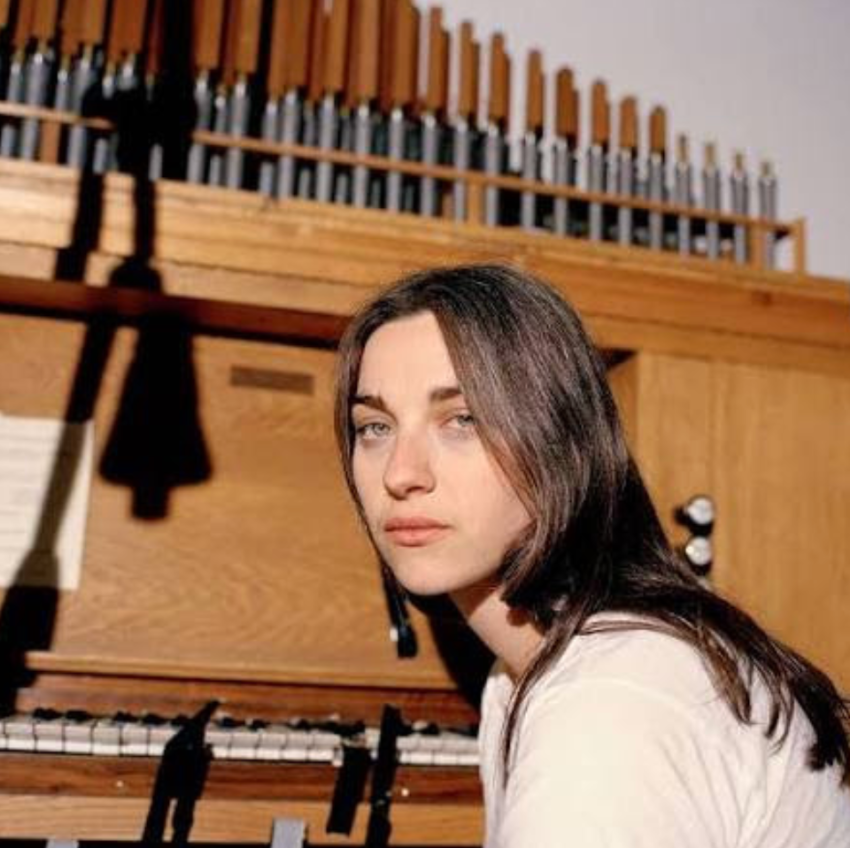
Contrasting the brevity and lightness of being of Malone’s latest, Davachi’s new release, The Will of Tongues (officially released tomorrow, August 28, link), is an ambitious concoction, 2.5 hours long, and a fine introduction to her world of interest and musical adventuring. Strings, voices, woodwinds, and brass tracks are incorporated into the mix, but the primary source and sonic force is the organ, on historical models recorded in the U.S.A., Canada, and the Netherlands. The instrument’s meditative potential is uniquely tapped, in all its artful droning glory and with its timbral chiaroscuro possibilities explored.
From Davachi central, the album is described as “a celebration of iterative listening and of extreme engagement, of intimate aural experience and its vast psychic horizons.” Which is true. But it is also a mind-lubbing place to hang out in, with intellect checked at the door.

Davachi is a Canadian-born artist presently based in Los Angeles, where she will give a concert on the legendary “great organs” of the First Congregational Church in L.A. on September 10 (link). Mark that date: with organ music, so rooted in the very architectural home where an instrument lives and resonates, the presence and “being there,” and especially with a deep listening agenda such as Davachi espouses, counts for much.
Once lured into the vortex of this branch of ambient/minimalist music, it can have an almost cultish attraction, like religious fervor, which can make conventional reality — or “normal” music — seem somehow conservative and confining. Beware. Be aware. And enjoy.
TO-DOINGS:
Jazz fans alert: This Saturday night, August 29, The Grand on State trains its spotlight on a significant “visiting artist,” the great veteran drummer Peter Erskine, bringing his trio with pianist Alan Pasqua and bassist Darek Oles to Santa Barbara for the first time. See how it’s done, in real time in a real and refined jazz club space, just down the block. (See story here). For those classical music-inclined and the classical curious, the Santa Barbara Chamber Players is presenting a program called Fly Me to the Moon at the First Presbyterian Church on Sunday at 3 p.m. The still-young new musical organization’s official season opens on October 10, but this summertime family-friendly program breaks up the typical August chill for “serious” music. On the menu are such general-purpose favorites as Tchaikovsky, Beethoven, Ravel, and Mr. movie music supplier, John Williams.
The Santa Barbara Bowl season eases into autumnal mode (according to the erroneous but accepted gospel of September as the falling of fall), with supreme pop-soulstress Diana Ross tonight, August 27, and Thee Sacred Souls on Sunday (see Richelle Boyd’s Independent story here).



You must be logged in to post a comment.