

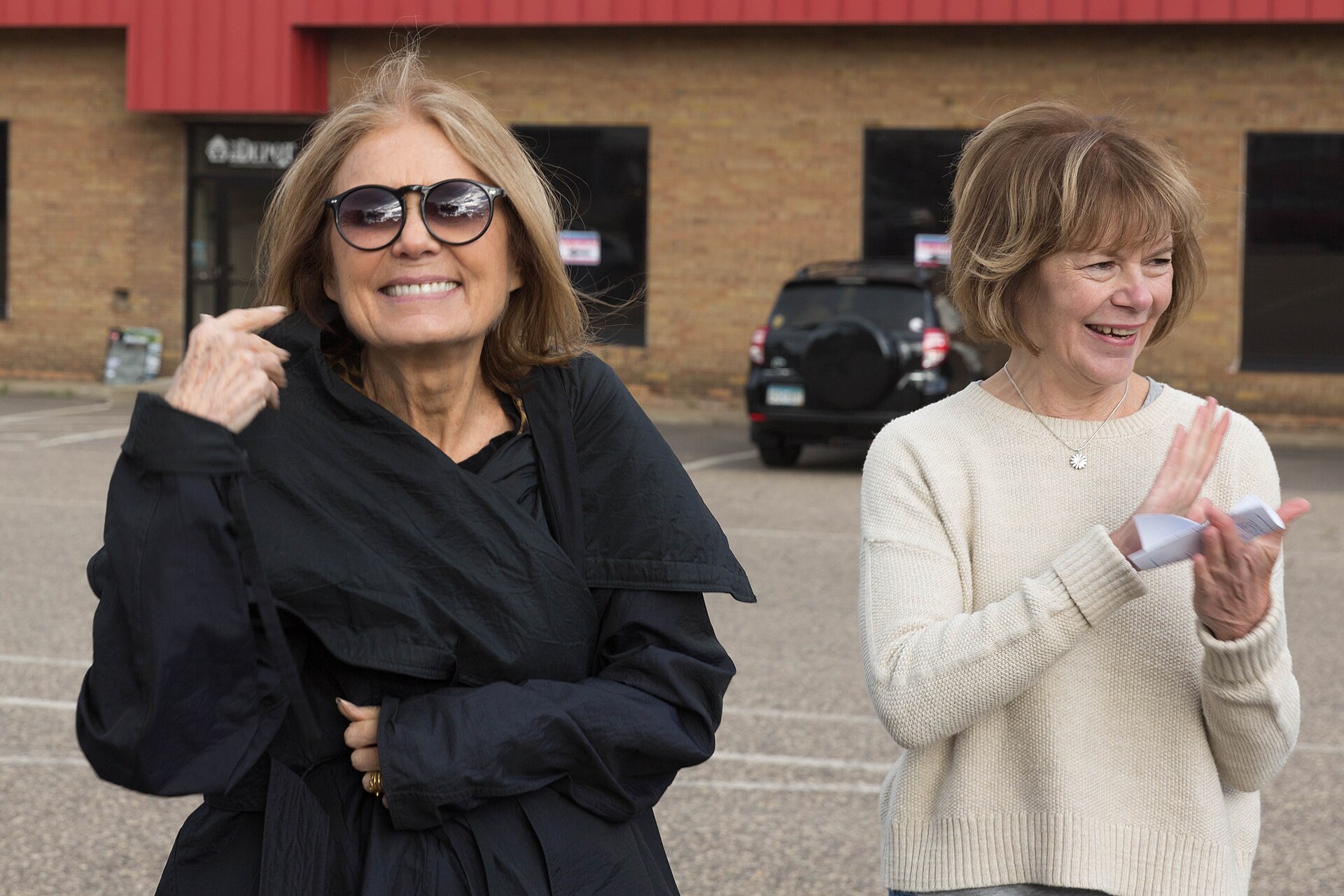
When I learned yesterday of the death of Gloria Steinem, I suddenly felt “alas, we are finally on our own now.” While the grassroots women’s movement that popped up across the country on campuses and living rooms in 1968 was taking root, it endeavored to be a “leaderless movement.” Indeed it was, emerging out of a tidal wave of consciousness-raising groups concerned with the various frustrations of living as second-class citizens and sex objects. As the media continued to demean the movement as bra burners and man-haters, Gloria Steinem arrived on the scene adding a fresh new voice to the already millions of women birthing a new form of human liberation.
In the midst of turbulent infighting within the movement about what it means to be a feminist, to be a woman, who to love, how to dress, and how to behave, Steinem “came out” as a normal women who would not give up her large sunglasses and long beautiful hair to seek the approval of ardent feminists. In the same way, she had not given up the struggle for equal treatment in the workplace in order to seek the approval of men. In either scenario, Steinem modeled a type of refreshing sincerity and humility about the possibility of being an activist without adhering to the purist image of the day. Steinem’s resolve to be who she was opened the door for other women, who were not politically involved, to feel welcome into the big tent that became modern-day feminism, surpassing the dreams of even the earliest feminists.
Steinem was criticized relentlessly over the decades both within the movement and in the mainstream — too pretty, too glamorous, too mainstream, not politically correct, and opportunistic. She was persistently attacked for embracing her own femininity, even as she worked tirelessly, often not eating or getting a good night sleep, to travel the country to push for equality for women in the work force, in the boardroom, in the bedroom, in the doctor’s office.
Indeed, in 1971 with the publication of Ms. Magazine, she created an oasis unknown previously in the male-dominated media landscape peppered with glamour and romance magazines for women. Her contributions as a speaker, writer, and publisher are well-known to the world. Less well-known, is how her unyielding humility in the face of sometimes fierce condemnation throughout her life (who she dated, what causes she supported, what letters she signed) allowed her to widen the women’s movement and push its cause to the forefront of society. Unlike many social movements that collapse from infighting, the tenuous early womens’ movement benefited from Steinem’s presence, as a warrior filled with complexities. In the end, she was embraced by women the world round for her steadfast dedication to the greatest cause of all time, equality for women in society.
The sadness I felt yesterday “on our own now” is not for the loss of a leader but rather the loss of a unique role model. Steinem did not pretend to have the perfect analysis or the right answers but was pulled forward year after year by the strength of a direction. Born in 1934, she knew firsthand what it was like to live as a women in an unfree world, one in which women were excluded; she felt the pain of that acutely. Perhaps in the midst of our own turbulent times, as we remember her many contributions, we can pause for a moment of humility to learn from the woman whose resolve to remain in the fight, even in the face of persistent attacks, garnered the most adherents to the cause, creating a much more equal world for all genders today.
Thank you Gloria, your work will continue, imperfect, but like you, moving in the right direction.

