

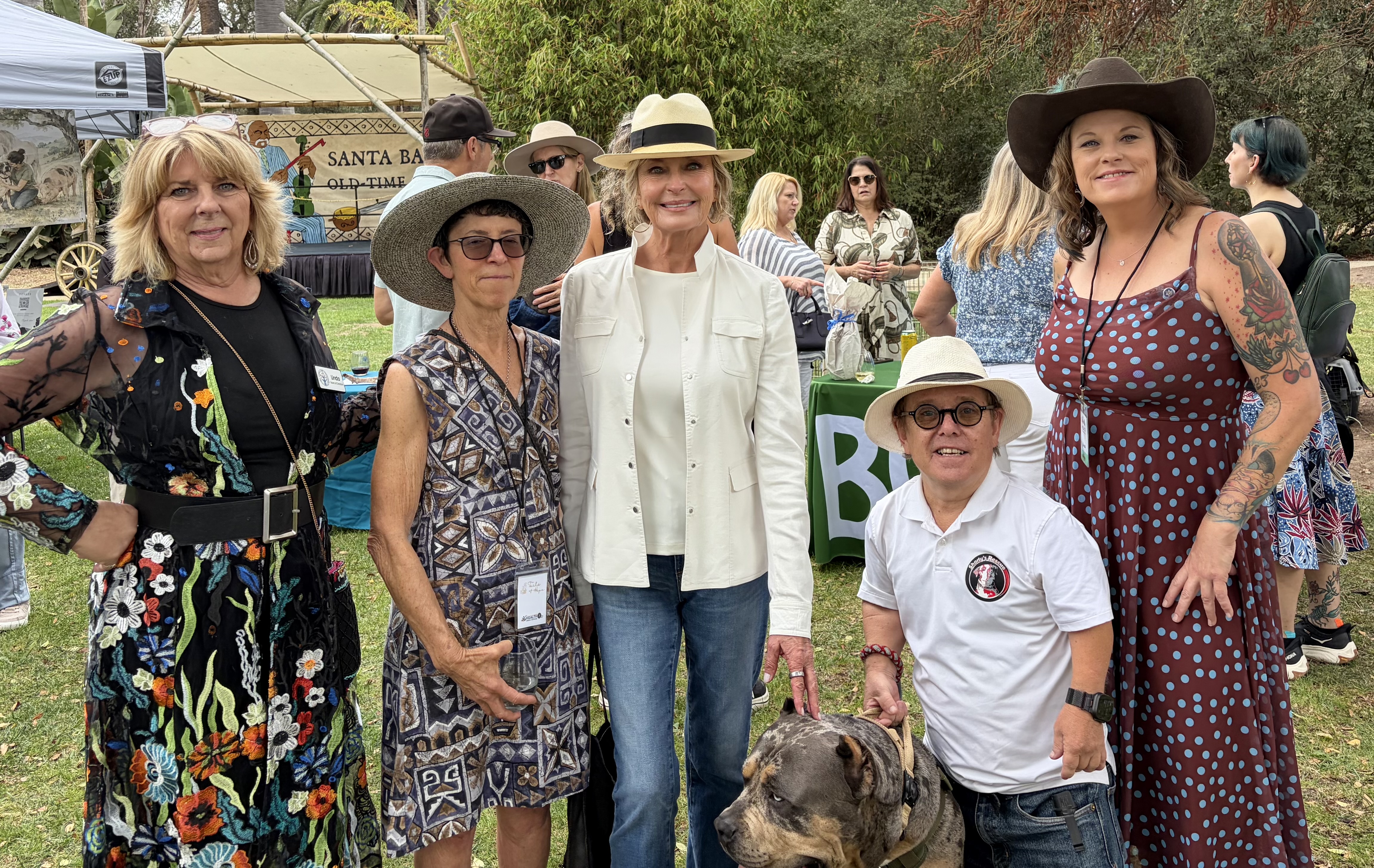
On September 20, the S.B. County Animal Care Foundation hosted its Tails of Hope event to raise much-needed funds for the shelter animals at S.B. County Animal Services, the county agency that it supports. Actor Bo Derek was again emceeing the program and was joined this year on stage by Shorty Rossi (Animal Planet’s Pit Boss and Shorty’s Rescue).
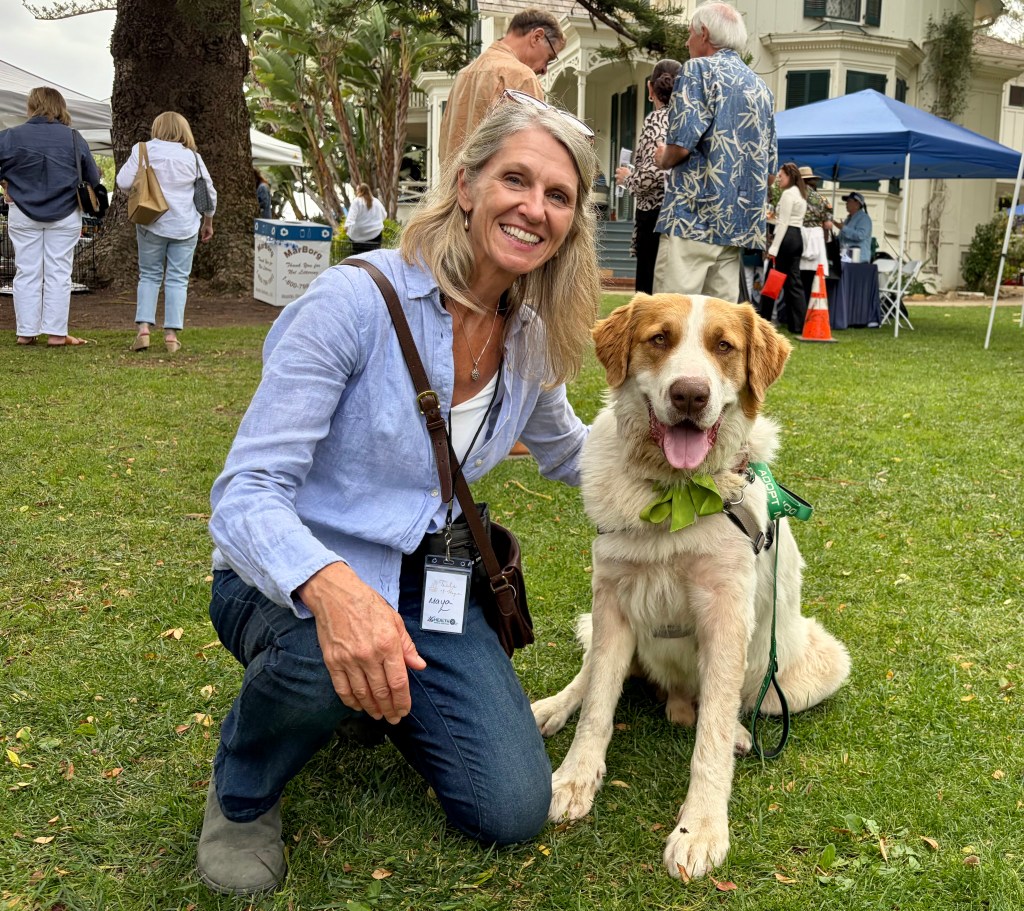
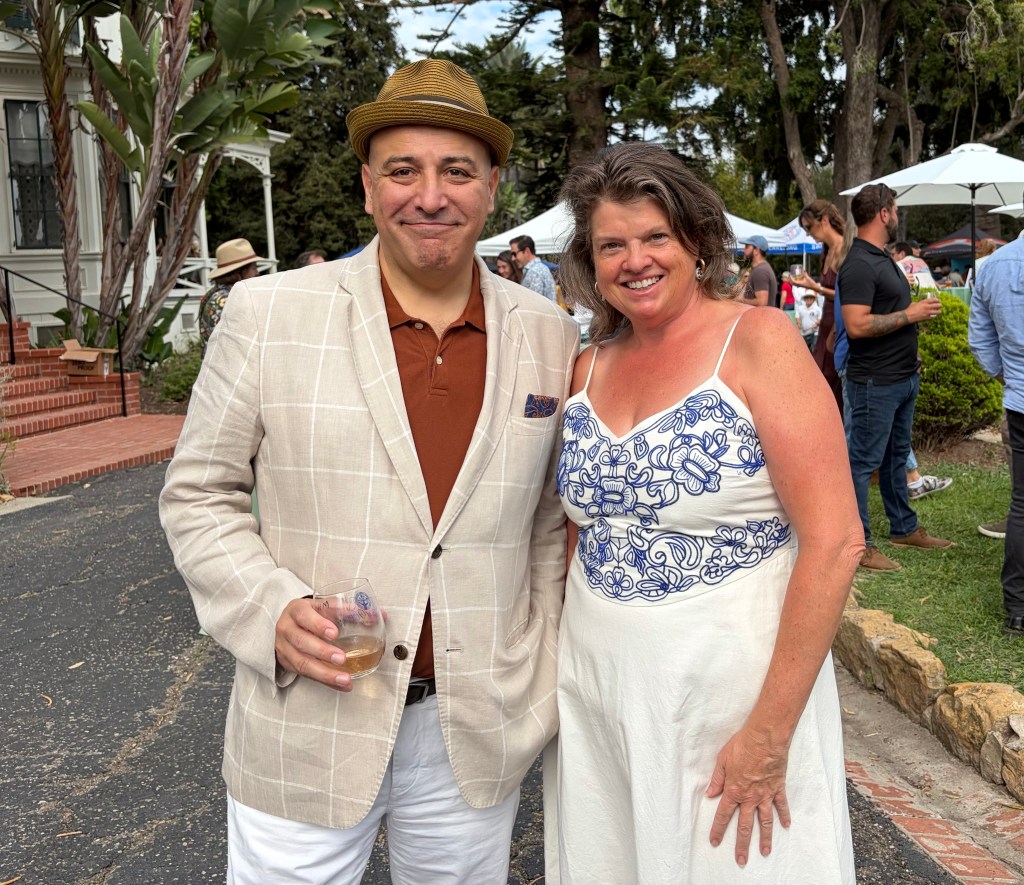
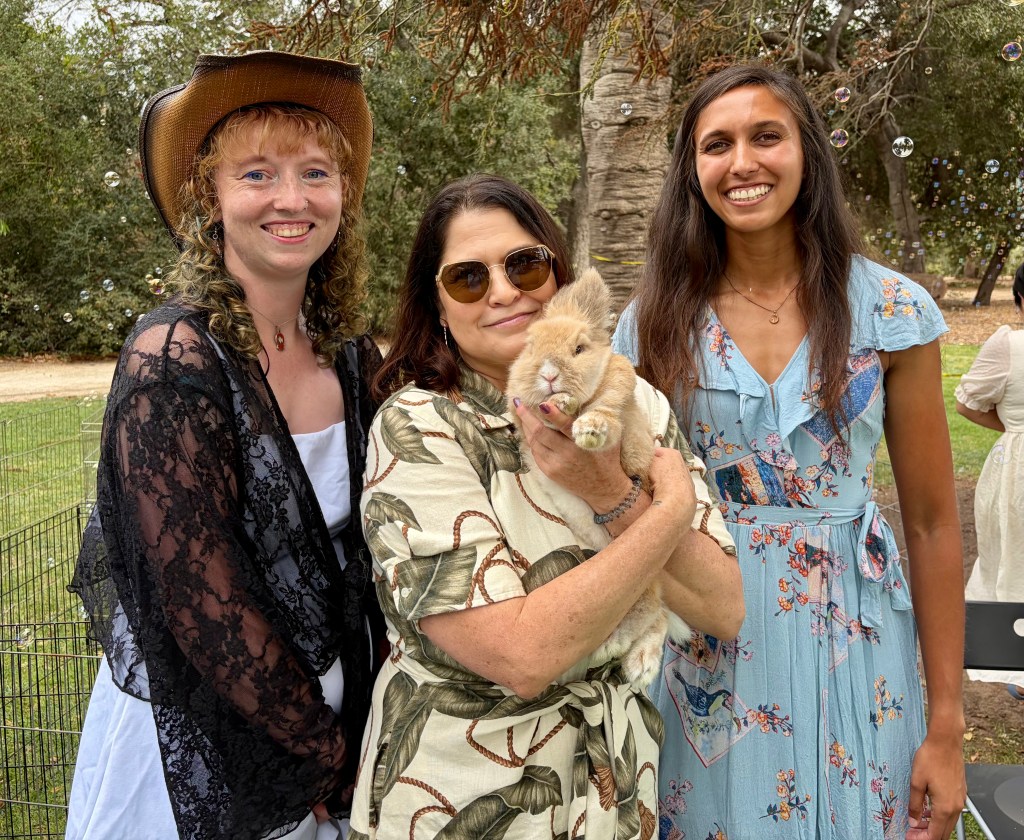
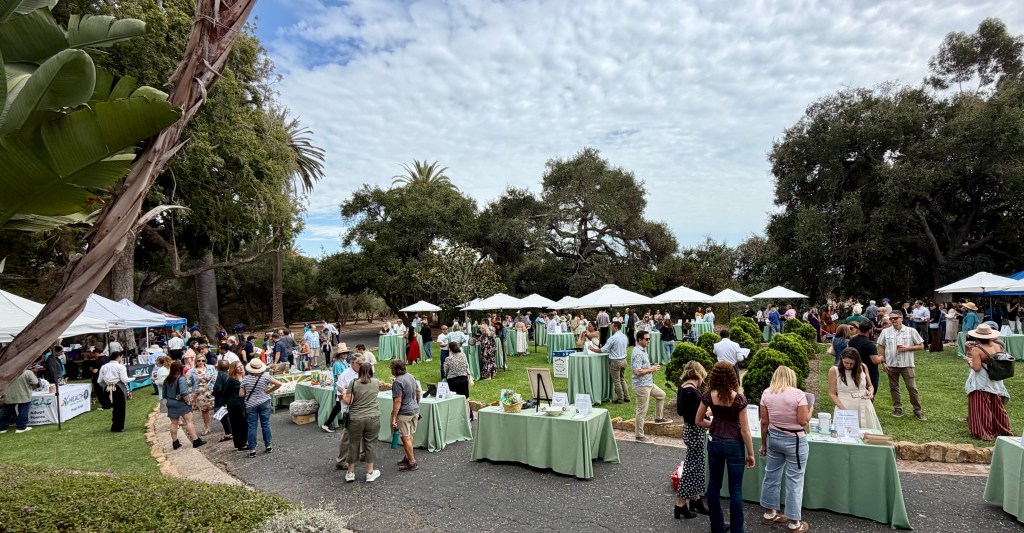
Held at Rancho La Patera and Stow House, the event began with a reception for the 300 guests on the spacious lawn, featuring booths of many animal-serving nonprofits, which showed the collaborative approach of those serving our four-legged friends. County Animal Services volunteers circulated through the venue with rescue dogs, which instigated some adoptions and added playfulness to the event.
As the county agency charged with picking up strays and abused and neglected dogs — in addition to its licensing and enforcement duties — Animal Services receives county funding for shelter animals, but some of the medical and other needs of the animals would go unmet if it weren’t for the S.B. County Animal Care Foundation. Funding from the Foundation goes largely to the diagnostics and medical treatment of the most serious cases, so that all shelter animals can get to a state where they are adoptable.
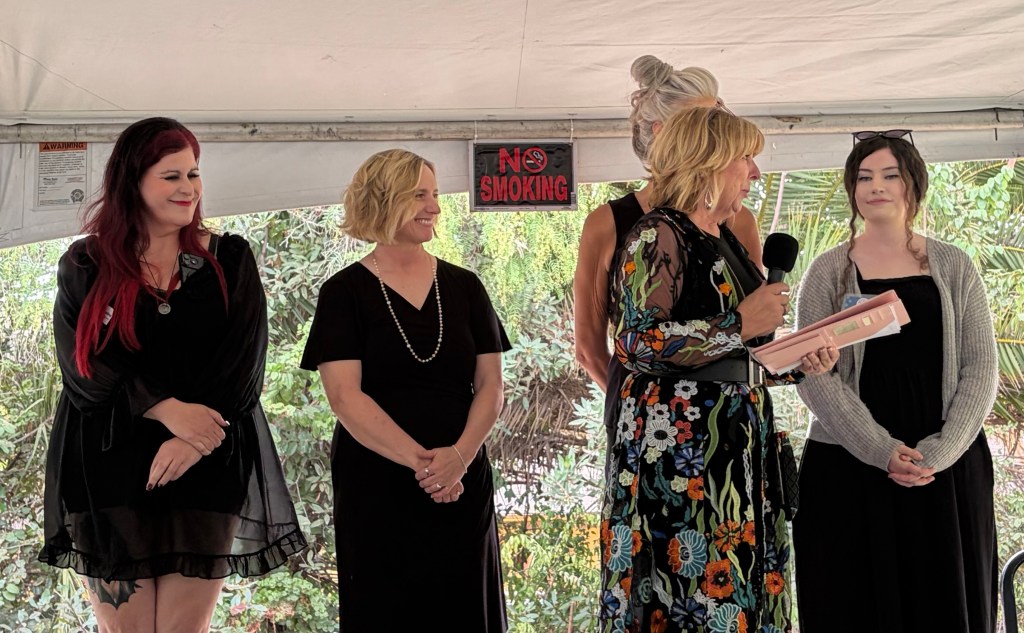
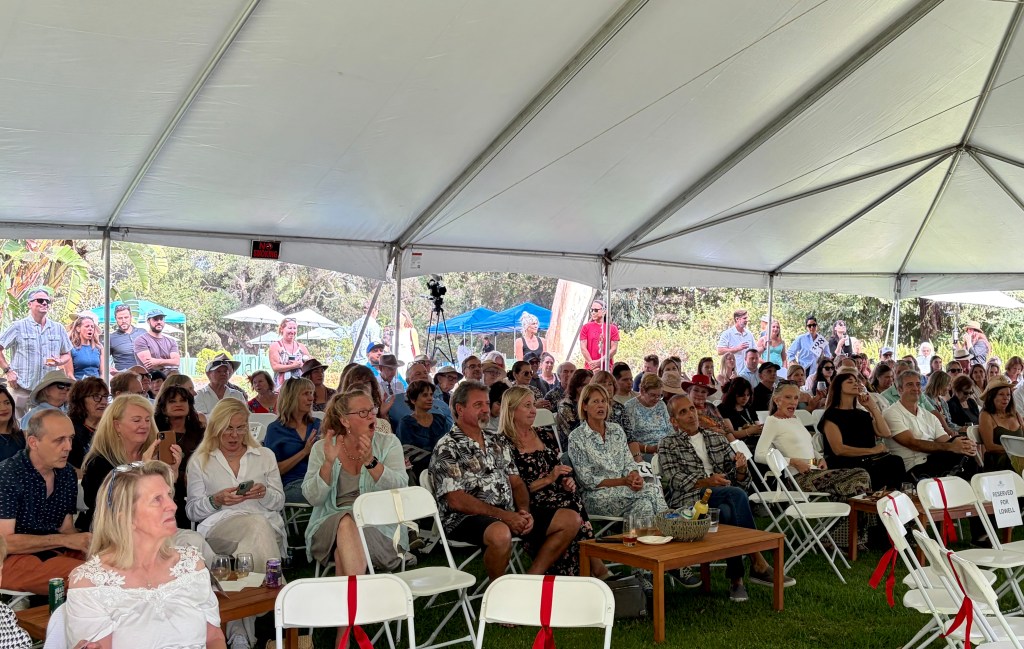
After the reception, guests were seated under a big tent and welcomed by Derek and Rossi, who both expressed deep gratitude to the Foundation and County Animal Services (CAS). Derek noted that “so far,” she and her husband, John Corbett, have adopted two dogs from CAS. She also conveyed Corbett’s regrets that a film engagement prevented him from co-emceeing the event.
CAS Director Sarah Aguilar shared her gratitude to the Foundation, as did Supervisor Joan Hartmann, who also acknowledged the nearly dozen politicians and their representatives in attendance. Foundation Cofounder and President Linda Greco poignantly conveyed the impact of donations: “When animals arrive at our county shelters injured, sick, abandoned, or simply out of options, your support provides the lifesaving resources that literally change an animal’s story from ‘What happens to me now?’ to ‘I’m going home.’”
In the past year, in addition to medical services, the Foundation has funded new play yards at the Santa Barbara shelter, DIY microchip scanning stations in various locations, and the restart of County Animal Service’s public wellness and spay/neuter clinics. It has also supported Animal Services’ foster program and an enrichment coordinator for shelter dogs. Thanks to the inaugural Tails of Hope event last year, it was able to increase its funding last year to nearly $250,000 and in this first half of this year has provided another $165,000. County Animal Services submits funding requests, with funds distributed pursuant to the board’s vote.
Funding priorities going forward, in addition to the core focus on medical services, include fostering and spay/neuter programs, the remodel of the Lompoc shelter, and the establishment of a vet clinic in South County. Greco and her board receive no compensation and work out of their homes; they have hired only a couple of part-time contractors, keeping expenses minimal.
In an interview, Greco explained that many of the animals that come to County Animal Services arrive stressed, frightened, and in need of immediate medical care. For the past 24 years, the Foundation’s partnership with the County has helped transform high euthanasia numbers into high live-release numbers “by providing resources that allow animals who might otherwise be considered unadaptable to receive treatment, heal, become adoptable, and find forever homes.”
In 2025, S.B. County Animal Services took in 4,264 stray animals, including 2,132 stray dogs and 1,799 stray cats. Its wildly successful adoption program resulted in 1,011 dogs and 1,586 cats being adopted. The vast majority of the remainder were transferred to partner entities.
The hiring of a staff veterinarian, Thomas Schaefer, DVM, in June 2025 has been transformative for County Animal Services, according to Aguilar. It has enabled them to expand services in house, thereby reducing its reliance on outside clinics and lowering per-animal medical costs. So far this year, it has provided approximately 4,000 exams, 1,400 surgeries, and 7,000 vaccines. Having Schaefer on staff “has strengthened our ability to treat animals sooner, make timely medical decisions, support foster placement, and create more pathways to positive outcomes,” Aguilar related. It’s live release rate stands at 92-94 percent.
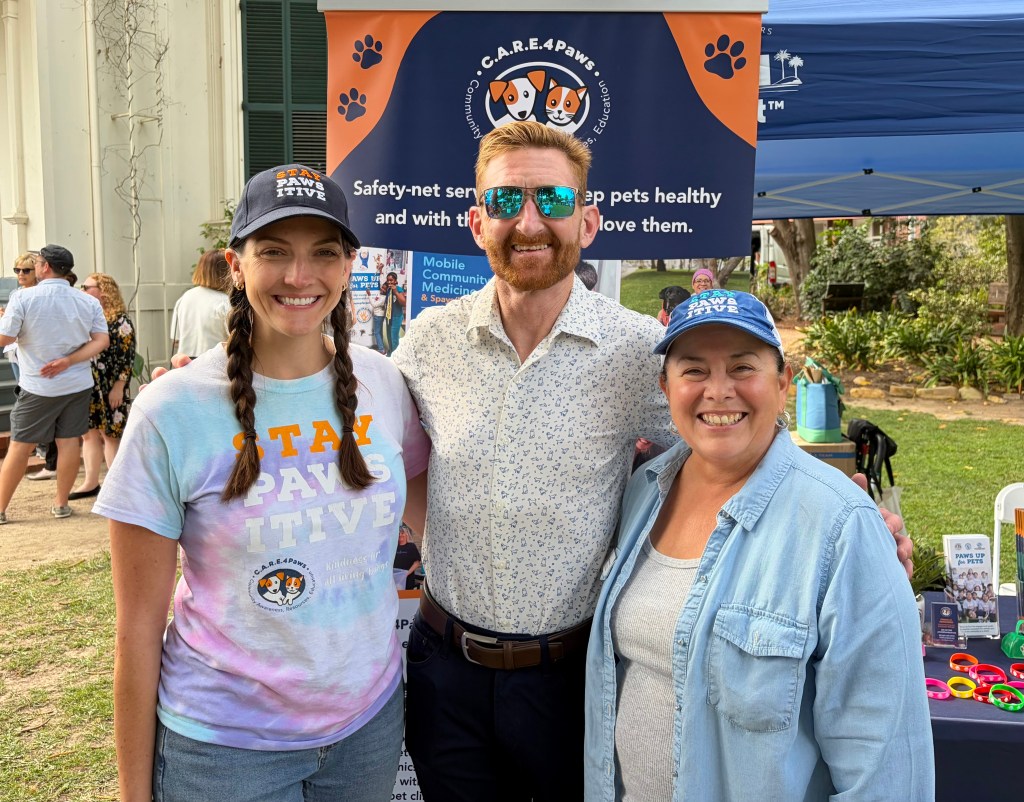
County Animal Services’ programs for alternative housing continue to expand. Last year, it had 6,200 foster placements and 3,450 doggy day trips. It works with partner organizations on various programs to assist pet owners keep their pets so they don’t end up in the shelter system. Last year, the Pet Pantry — a partnership with CARE4Paws, CAPA (Companion Animal Placement Assistance) and others — distributed more than 83,000 pounds of pet food.
With the simple message that the more donations the Foundation receives, the more abused, neglected, and stray animals that can be saved, guests bid up live and silent auction items, which together with sponsorships and ticket sales, raised about $250,000 net to help animals in need. To donate, go to https://www.sbcanimalcare.org.



You must be logged in to post a comment.