

Santa Barbara has spent years debating State Street. The Master Plan has passed, and the city is moving toward implementation. Yet the effort to reverse that decision brings us back to a familiar question: Should cars return?
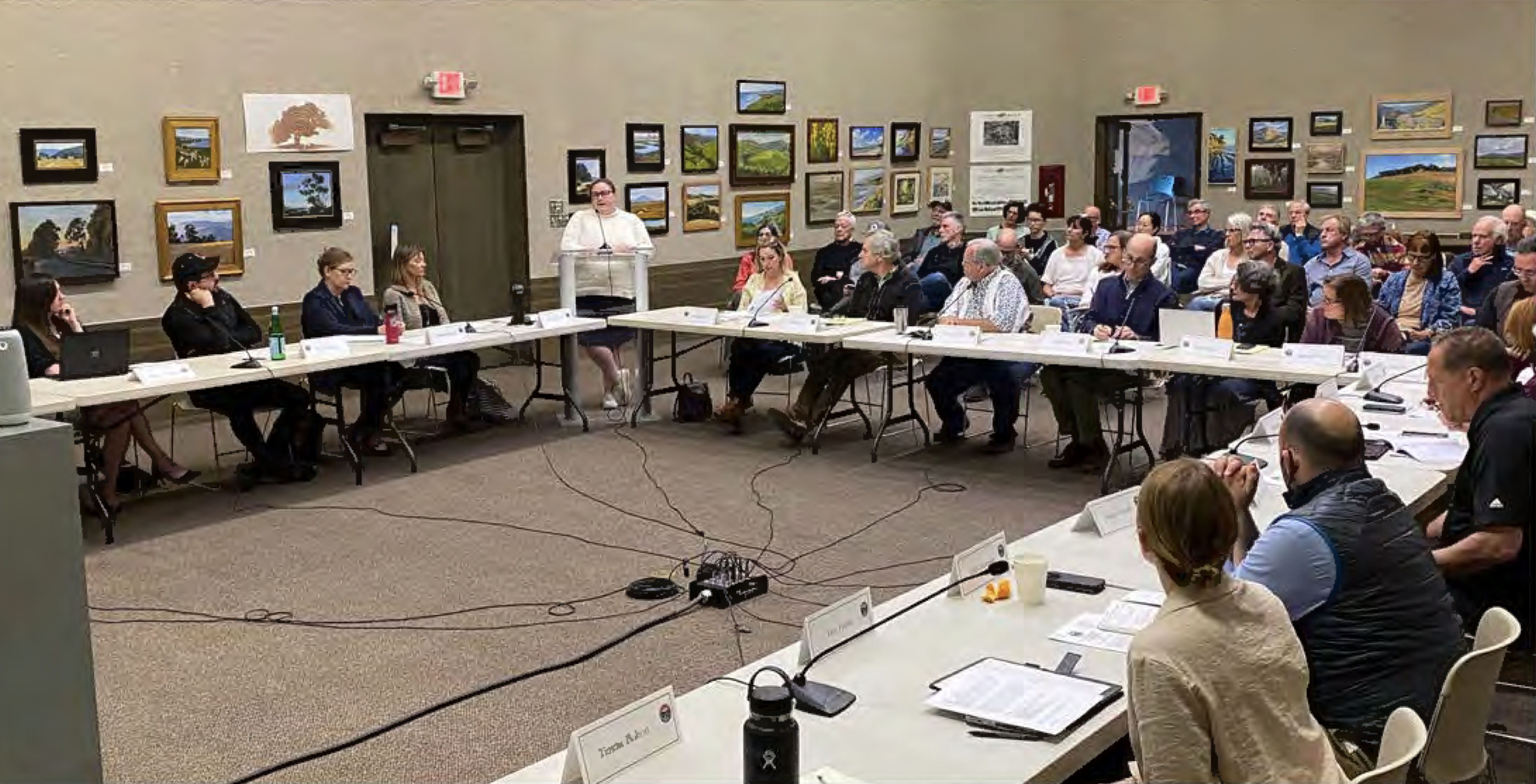
The discussion has become contentious, with competing claims about what residents, businesses, and visitors want. Fortunately, there is a public record focused directly on this question: the June 30 City Council meeting on extending Title 31, during which State Street’s car-free arrangement to was upheld. Residents had the opportunity to submit comments or speak, and the record offers a detailed account of the views people brought forward.
Across the entire public comment record analyzed for that meeting, 84 percent of comments supported keeping State Street car-free, compared to 11 percent who favored reopening it to cars. Support for the promenade outnumbered opposition by over seven to one.
The submissions on both sides offered a wide range of perspectives, from personal experiences to arguments grounded in research. Among those supporting the promenade, three themes emerged repeatedly: its value to local businesses, its distinctive appeal to visitors, and its role in strengthening community life in Santa Barbara.
Business Impact
The needs of downtown businesses have long been central to arguments for returning cars to State Street. Among the business owners who submitted public comments, however, 23 of 26 supported the pedestrian promenade.
An owner of a State Street retail store for 45 years described the difference directly: “Since we have been in business with and without cars, we can assure you that foot traffic has increased significantly since the street became a promenade.” [1]
A new business owner described the expectations behind their investment: “Our business was designed based on the expectations of foot traffic and peace and quiet when we signed our lease and is not sustainable with loud and polluting cars on State.” [2]
A customer’s comment offered the other side of that relationship: “If State Street is reopened to car traffic, I will definitely be much less inclined to visit the area unless I have to, and will no longer be walking around to check out local shops and small businesses.” [3]
These accounts connect business owners’ reliance on foot traffic with customers’ reasons for spending time downtown.
Tourism Appeal
The comments also describe how the promenade shapes visitors’ experience of Santa Barbara.
A local walking tour operator with 19 years of experience wrote: “Visitors frequently comment on how unique and special Santa Barbara feels because of the pedestrian promenade. They describe it as ‘European,’ welcoming, vibrant, and unlike many other destinations they have visited.” [4]
The same operator observed: “During the years since State Street was closed to vehicle traffic, I have not had a single guest tell me they wished it were reopened to cars.” [4]
A resident hosting visitors offered a similar account: “When I have visitors from out of town, they often mention how nice it is and enjoy this aspect of State Street, as well as shock to hear it may open to cars again.” [5]
In these accounts, the promenade is part of what makes a visit to Santa Barbara memorable.
Community Life
Beyond commerce and tourism, commenters described the promenade’s role as a shared community space.
One local business owner wrote: “Community is building here because we are walking and talking and sharing on the street and it is profound and unmistakeable.” [2]
Another commenter explained: “In an era where true community spaces are dwindling, having a car-free downtown is essential for our collective well-being.” [6]
A local urban researcher connected those experiences to broader benefits: “Walkable public space supports our physical and mental health, it’s better for the environment, and it strengthens the social ties that hold a neighborhood together. Santa Barbara has built something that many cities are still only planning for.” [7]
These comments describe a place whose value grows through everyday use, shared encounters, and the relationships that develop there.
Together, the numbers and testimony provide a consistent picture: strong support for a pedestrian State Street, grounded in its commercial, visitor, and community value. The adopted Master Plan provides a framework for investing in downtown’s public space, transportation, and economic vitality. Those priorities align with what these commenters want to preserve and improve.
As the same question returns, this record gives Santa Barbara a clear starting point. The public has already described what is working. The next step is to build on it.
Sources:
Analysis and public comment explorer:
https://sbcitycouncil.sturdystatistics.com/title-31/
[1] State Street retail business owner, public comment, page 133:
https://sbcitycouncil.sturdystatistics.com/title-31/#topic-14-state-st-01-8d137050-p133
[2] New business owner, public comment, page 68:
https://sbcitycouncil.sturdystatistics.com/title-31/#topic-7-state-st-04-a007787e-p68
[3] Customer describing downtown shopping, public comment, page 260:
https://sbcitycouncil.sturdystatistics.com/title-31/#topic-14-state-st-01-8d137050-p260
[4] Downtown walking tour operator, public comment, page 61:
https://sbcitycouncil.sturdystatistics.com/title-31/#topic-23-state-st-04-a007787e-p61
[5] Resident describing out-of-town visitors, public comment, page 86:
https://sbcitycouncil.sturdystatistics.com/title-31/#topic-23-state-st-01-8d137050-p86
[6] Shared community spaces, public comment, page 59:
https://sbcitycouncil.sturdystatistics.com/title-31/#topic-16-state-st-04-a007787e-p59
[7] Walkability and community benefits, public comment, page 158:
https://sbcitycouncil.sturdystatistics.com/title-31/#topic-16-state-st-01-8d137050-p158
Background on the council’s September vote:
https://www.independent.com/2026/09/02/state-street-master-plan-approved-by-santa-barbara-city-council/
City summary of implementation and investment priorities:
https://santabarbaraca.gov/news/council-meeting-key-item-recap-september-1-2026

