

Press releases are posted on Independent.com as a free community service.
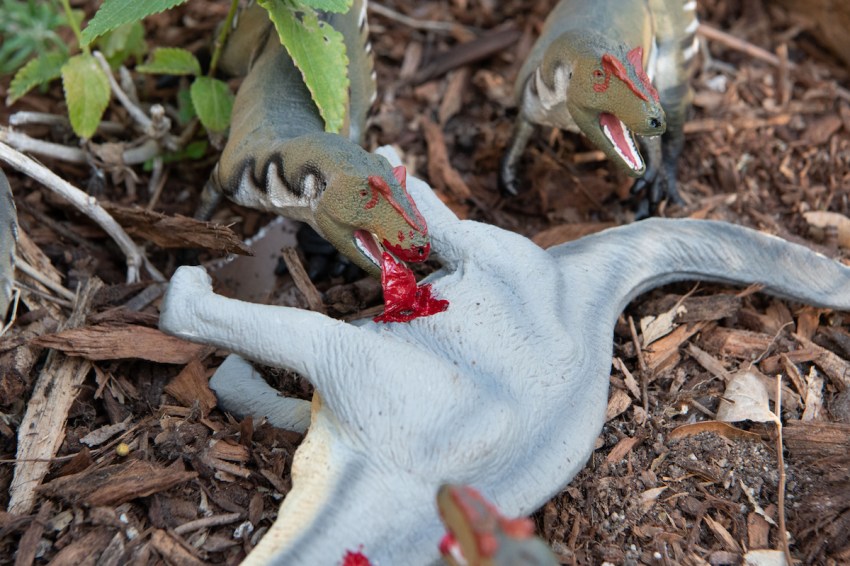
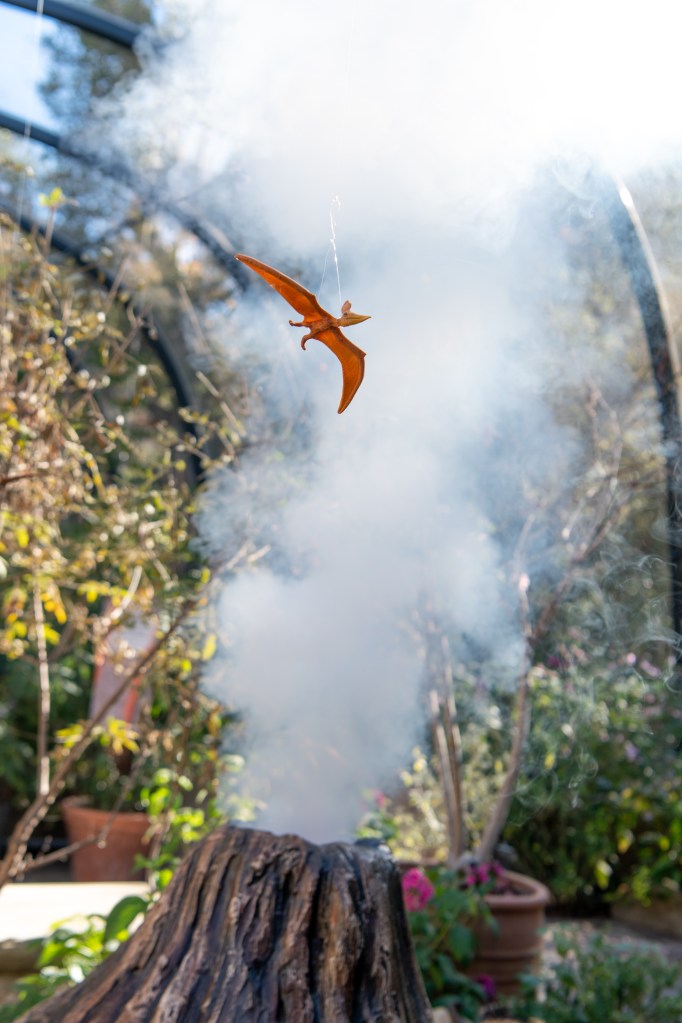
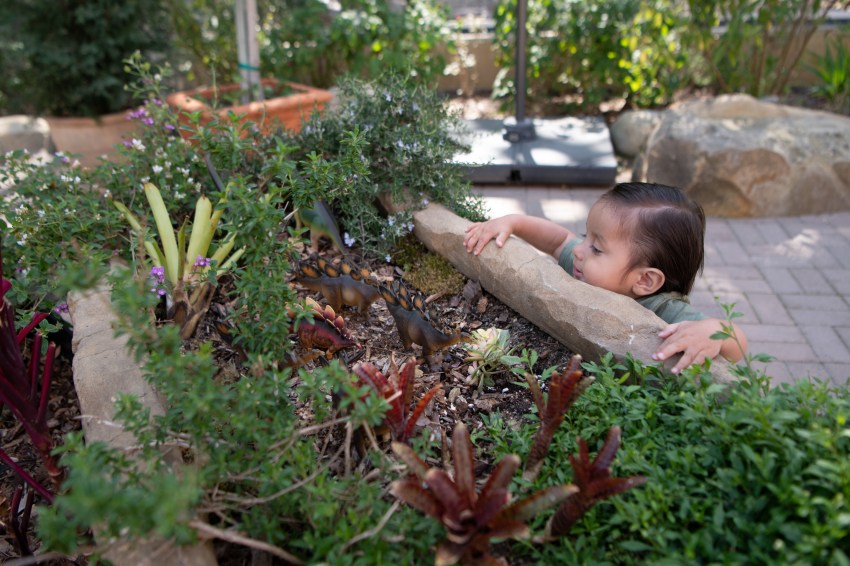
SANTA BARBARA, CA—Curators and exhibit staff at the Santa Barbara Museum of Natural History are busy bringing a fondly remembered dinosaur exhibit back to life. Dinorama: Miniatures Through the Mesozoic opens October 17 in the Sprague Pavilion, where guests can get a new perspective on deep time as they tower over a landscape of tiny dinosaurs—and cross millions of years in a single step!
When Dinorama: Miniatures Through the Mesozoic debuted in 2021, the Museum didn’t know what to expect. Would people respond to mini dioramas? Guests of all ages took to them like ichthyosaurs to water. Many visitors—especially the seven-year-olds—had long, deep, scientific conversations with the Museum’s interpreters. The little exhibit left a big impression.
This year, three paleontologists curated a fresh incarnation with more biodiversity and nuance. Dibblee Curator of Earth Science Jonathan Hoffman, Ph.D., and Fossil Preparator Ben Rotenberg, M.A., called in Justin Lemberg, Ph.D., to provide key expertise. Dr. Lemberg’s day job is being the John Johnson Chair of Anthropology, but his background in vertebrate paleontology drew him into helping with Dinorama. (His dissertation is about the famous transitional fish Tiktaalik.) The three experts hope that guests come for the dinosaurs and stay for the science. The combination of whimsical staging and hard science makes this exhibit compelling and fun for all ages.
“I hope people notice how interesting and strange the Triassic was,” says Lemberg. “It was a time period when the ecological role of ‘crocs’ was filled by giant amphibians and the role of ‘dinosaurs’ was filled by crocodile relatives and giant, egg-laying mammal relatives.” He encourages guests to slow down and look for the details and Easter eggs. “Don’t rush through it on your way to T. rex!”
“The biodiversity through the Mesozoic is amazing,” says Dr. Hoffman. “Each period has its own assemblage of vertebrates with different characteristics: giant size, formidable headgear, protective armor, winged flight, and streamlined swimming. And every year, paleontologists are discovering new species of dinosaurs and other Mesozoic vertebrates.”
Dinorama is included with Museum admission (Members are always free) and runs through March 14, 2027. The Sprague Pavilion is ADA accessible.
About the Santa Barbara Museum of Natural History
Powered by Science. Inspired by Nature. The Santa Barbara Museum of Natural History connects people to nature for the betterment of both, drawing on collections that preserve the natural and cultural heritage of the Central Coast and beyond. Founded in 1916, the Museum is a private nonprofit supported in part by philanthropy, membership, and visitors. Members visit free. For more information, visit sbnature.org.

