

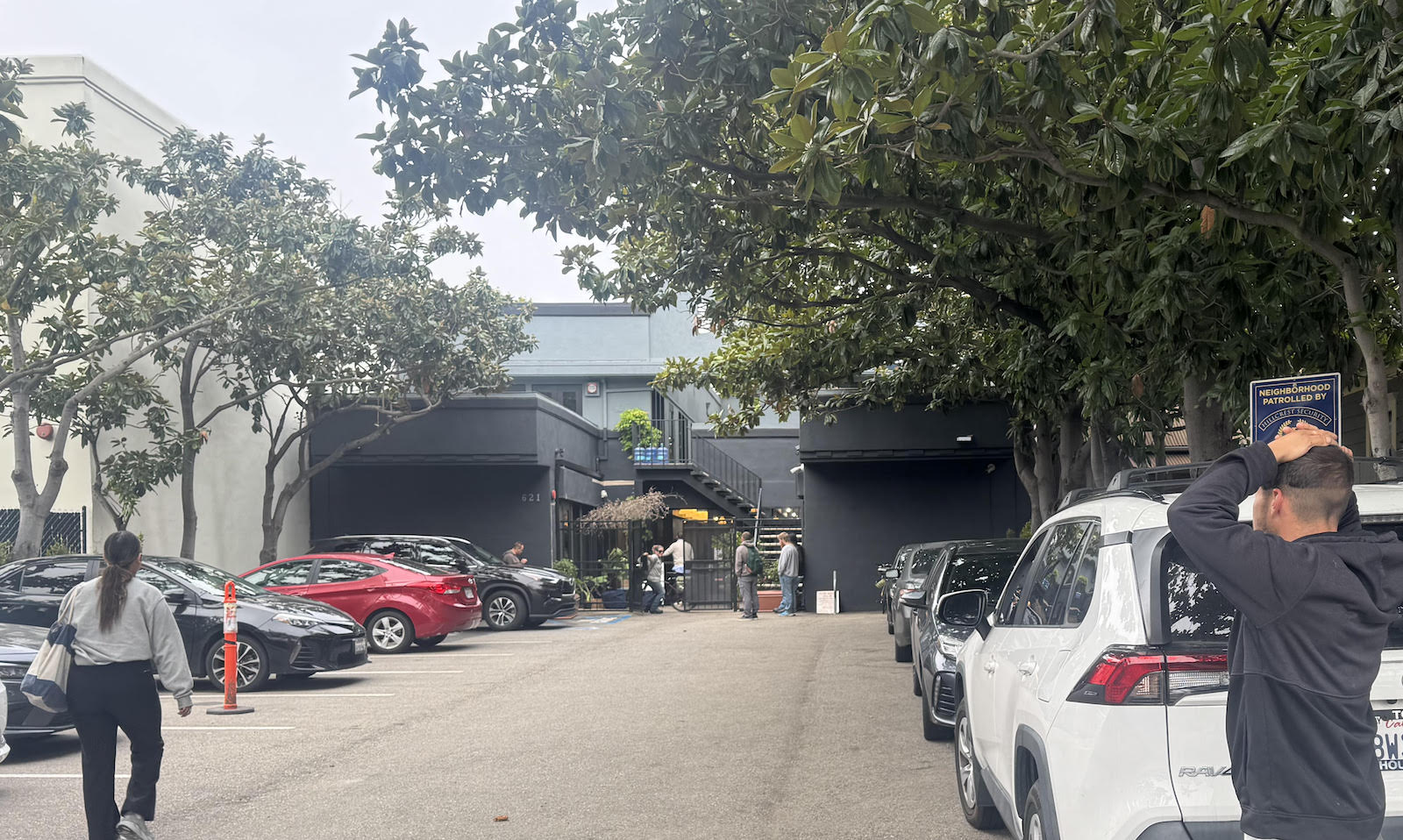
Much has been written in the past couple of months about disruptive and unlawful behavior at and around the FARO Center, Santa Barbara city’s “navigation center” on lower Chapala Street, opened last year to connect unhoused locals to services such as Medi-Cal, Social Security, veterans’ benefits, safe parking lots, and mental-health counseling. The center also serves lunch twice a week and hands out gently used clothing. And for a lucky few, about 10 percent of the clients actually find apartments in a housing market stacked against the poor.
Shortly after the center opened, neighboring businesses began complaining: Their front and back yards, and the street trees, were being used as bathrooms. Someone tried to break into Jodi House, a nonprofit just north of the center that serves brain-damaged adults. Another center patron spoiled her clothes and was kicked out; she then smeared excreta on the exterior walls of a clothing store two doors down. The Police Department was constantly being called over smoking, loud boombox sounds, yelling, fights, and loitering, not only in the unguarded parking lot when the center was closed, but up and down Chapala. In March, the building’s owner informed the city of a cease-and-desist letter from Jodi House, with a long litany of legal complaints against the city, with whom SBACT holds a contract to operate the FARO Center rent free. The landlord was threatening possible eviction.
As a newish trustee of SBACT, I experienced several troubling months of wrangling over who controls the FARO Center. Though the city foots the bill, SBACT folks operate with an unusual air of independence and an informal management style — factors that, ultimately, would compel me to resign from the board. Here’s my story:
With a possible lawsuit from Jodi House and additional complaints from neighboring paint, clothing, and antique store owners hanging over us, our board was invited to jointly search for solutions by City Administrator Kelly McAdoo. Our meetings included Senior Assistant for homeless services Barbara Andersen (herself a former SBACT employee), and City Attorney Sarah Knecht. I found the city officials to be cordial, professional, and not unreasonable. They were firm, however, about serious and potentially dangerous deficiencies in the FARO Center’s operation and gave us a spreadsheet describing 12 areas of deficiencies — areas in which we already knew our tiny (six-employee) nonprofit was lacking, including the need to hire a cadre of trained, experienced social workers such as one would normally find in a professional homeless-services agency, along with creating and implementing structure, employee education, controls, evaluation, financial discipline, and processes that would be needed to screen and guide the dozens of unhoused, vulnerable people pouring into the FARO Center per day.
The city also demanded an end to an unauthorized needle-exchange program that meant intravenous drug users were possibly mingling with vulnerable unhoused people. And they objected to loose controls such as the absence of strict screening procedures and formal recordkeeping/information sharing with city officials. In truth, such organizational lapses weren’t surprising, given SBACT’s size and inexperience.
Though the ordained minister-run organization began operating in 2013 and has a reputation for effective advocacy and community organizing — including a long and successful dinner-in-the-park program at Alameda Park — until recently it had just three to four employees. It was also financially fragile; in its fiscal 2023, SBACT reported a sizeable loss of $255,113 on revenue of $533,197. Stepping into the role of Advancement Chair, I drafted a seven-page development plan and recommended we begin assertively raising funds to hire at least three experienced social workers, train existing staff and volunteers, and overhaul operations to meet the city’s requirements.
In May, following four joint meetings with the city, we trustees were optimistic and hopeful, as it was obvious that 621 Chapala Street — a small building with only one bathroom — could not serve as a hang-out center for the up to 102 people whom SBACT was admitting per day. A “navigation center,” the city asserted, was supposed to be a service center where people could show up, make an appointment to see counselors, social workers, government agency reps, nurses, and so on, but not spend the entire day indoors until the center closed at 3 p.m., and then outdoors in the parking lot and its environs into the evening and on weekends.
Unfortunately, the trust that I thought we were building with the city in a joint effort to solve the FARO Center issues was upended when FARO management hired an attorney and organized a City Hall protest. Suddenly, unfounded rumors spread that the city intended to close the FARO Center permanently. (What city officials said repeatedly was that unless SBACT was willing and able to make the necessary improvements to its operations, the city would consider opening the FARO Center contract proposal process to other nonprofits — something the city, in hindsight, should have done previously.)
It seemed to me that SBACT management was distracted from from the obvious need to institute major new operations and management strategies — strategies that would allow SBACT to evolve into the homeless-services agency that it needed to be. Instead, management appeared to be more interested in public confrontation with the city. The final straw for me occurred when our board was presented with a bizarre new “operating plan,” and we were told the board would not be allowed to make changes nor edits. With more than 35 years experience serving on nonprofit boards, I was not about to surrender my fiduciary duty to SBACT’s mission to serve the neediest residents of our city in a safe, effective, and conscientious manner.
By May 26, I found it necessary to leave the board of SBACT. In my letter of resignation, I was blunt: “Because I continue to believe that SBACT lacks the institutional and managerial willingness, as well as the number of sufficiently degreed/trained personnel, and the financial resources, necessary to run a Navigation Center for the city of Santa Barbara, and because I believe [x] is not acting in the best interests of the SBACT Trustees to whom [x] should be reporting, I hereby tender my resignation, effective immediately.”
While I am sad to surrender this mission and leave the small staff and “ambassadors” (formerly homeless people) helping at the FARO Center, I’m still involved in serving lunch with my church there once a month. But I continue to despair over why a nonprofit would choose militancy over competency. Just this week, I received a notice that SBACT is organizing an “URGENT town hall” meeting where community members will be trained to “take action to help protect and preserve” the FARO Center.
Eileen White Read, a former Wall Street Journal reporter and nonprofit CEO, has served on the board of three nonprofit agencies serving the homeless, including, until late May, Santa Barbara ACT (SBACT.)

