

Understanding that the mid-career artist Vian Sora hails from Iraq and lived there until emigrating to the United States starting in 2008, might all-too reflexively trigger assumptions about art borne of wartime and social struggle. Assumptions, of course, can be dangerous. Yes, there are strong elements of her responses to the torments of Iraqi life in the works from her impressive Santa Barbara Museum of Art (SBMA) exhibition Outerworlds, her first U.S. museum show, but her energies are anything but singular in that direction.
In some ways, despite the sophisticated and sometimes horrific “secret life” of these colorful expressions — best understood through close attention to wall texts — the innate sensuality and charisma of Outerworlds might seem to qualify it as a “summer blockbuster.”
In terms of the history and cultural heritage of her birthright region, Sora’s exhibition includes a timeline running from the Babylon motherlode in 4500 BCE through Iraq circa 2025, a moment of relative calm and peace in the nation (key word: “relative”). With this vivid oil and mixed-media art, produced between 2016 and 2023, Sora channels her experience and tortured memories on largely abstract canvases of vibrancy and gnarled anguish, natural and mythological allusions and metaphors. Reality-referential aspects also slither into the seeming abstract nature of the work.
As Sora explained in an SBMA museum talk when the show opened, “As displaced people and immigrants constantly strive to make sense of our new orbits, these paintings depict a journey through distant time and space in order to reach safety. … I cherish the opportunity that these museums open their doors for our culture and stories to be shared.” (See Leslie Dinaberg’s report here).
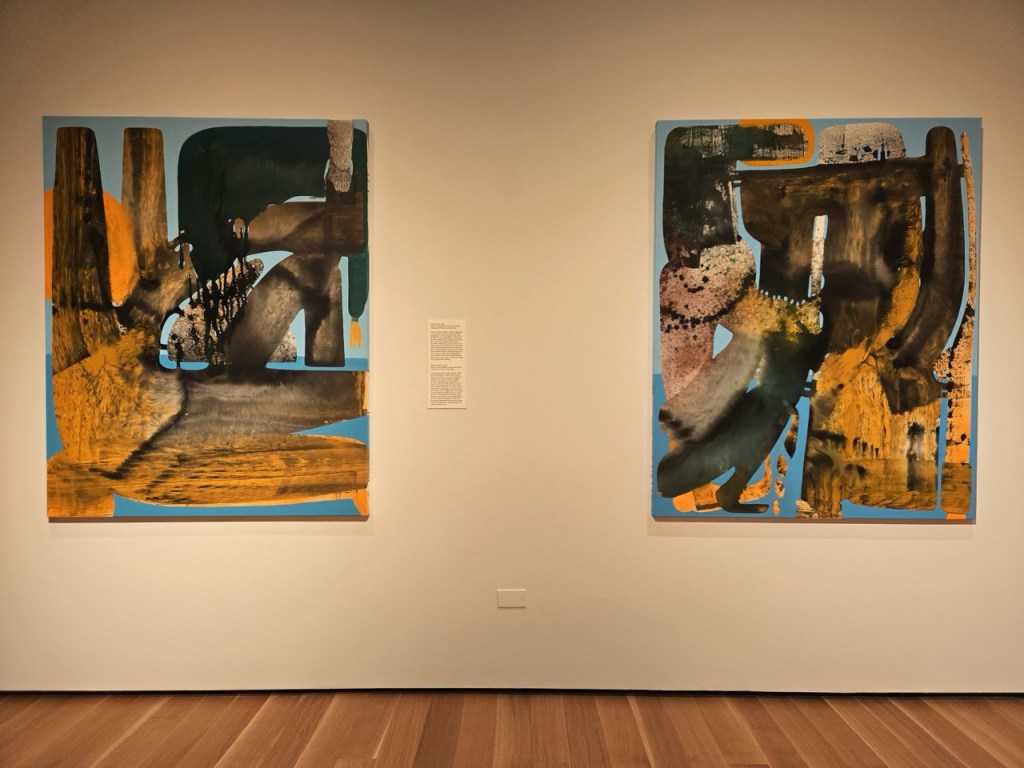
Generally, Sora deals with fragile forms and gestures which inform and inflame her art, with a bulbous and tubular visual vocabulary at times reminiscent of Philip Guston’s work, but with a distinctly personal and cultural “voice.” Ironically, some of the forms touch on the ravages of war, on society and literal bodies, as in the bloodied-and-torn anatomy in “Cherry Pickers” and the shapes of limbs, bones, and structures in flux in the two “Outerworld” pieces. Here, actual and such “outerworldly” elements as artistic and spiritual and even sci-fi reflections co-mingle.
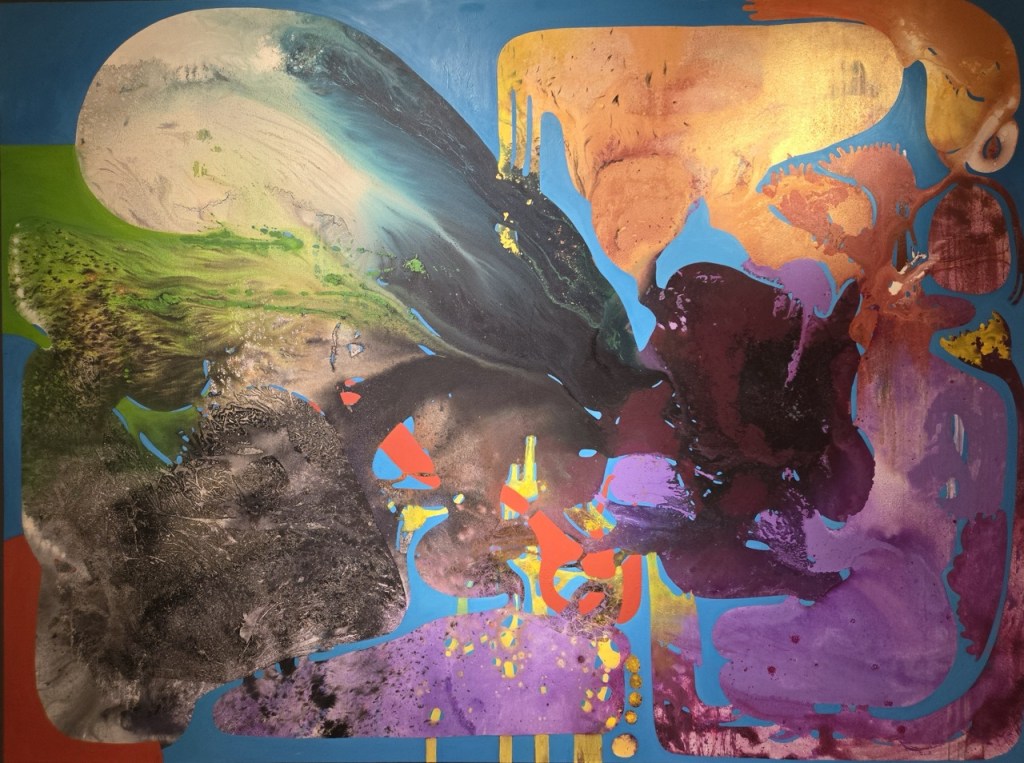
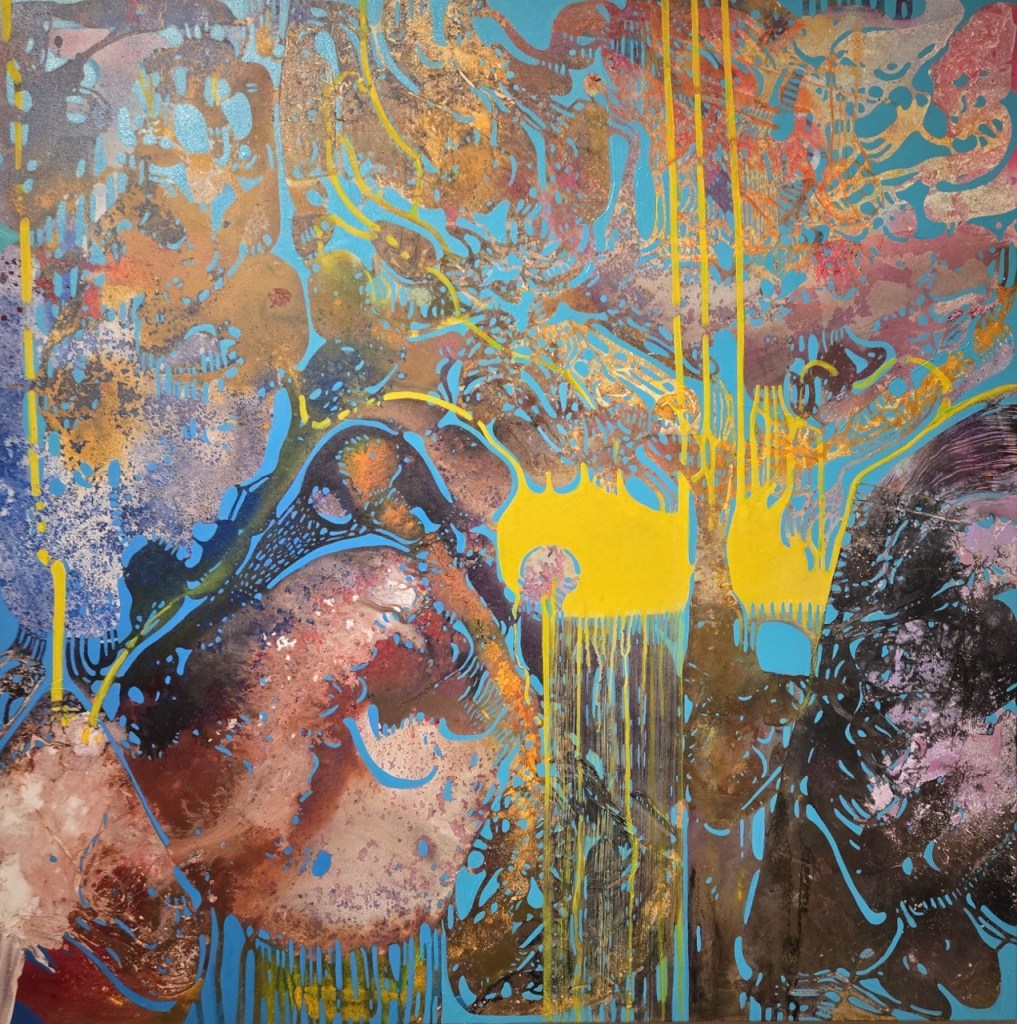
Nature figures into the overall range of underlying themes, as well, whether in the dangerous beauty of “Cobra Lily” or the large, water-based themes of the pieces “Floodgates” and “Morphing.” The densely thicketed “Woodlands” offers its dizzying visual buzz across the McCormick Gallery space from the larger and louder “Ecotones,” an implosive transitional nod to the ecological fragility of Iraq’s biospheric status, post-war and environmental recklessness.
Sora also naturally circles around regions of mythology, especially with the painting “Echo and Narcissus,” an abstract update on Caravaggio’s landmark 16th-century Narcissus portrait. But she also keeps it real and personal at times, with such works as “Citizen,” which she considers a “self-portrait,” organs, vessels, and all.
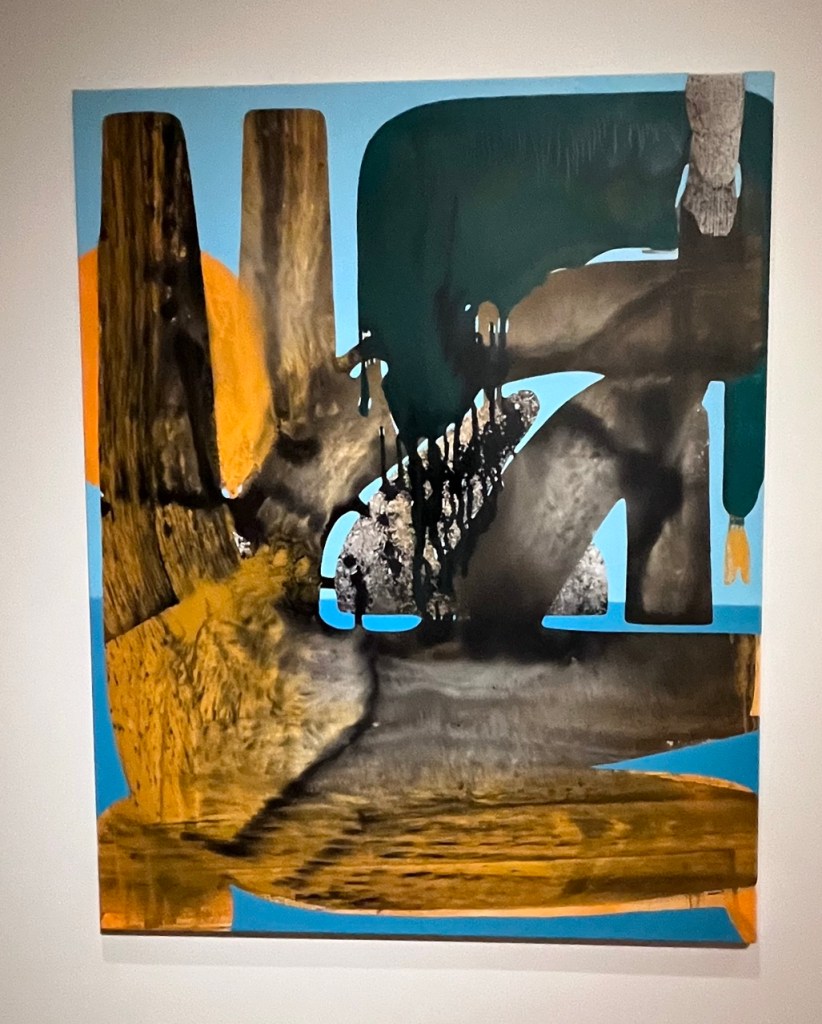
In a sense, the two central, anchoring artworks in the exhibition are “Dilman” and “Abzu,” demanding attention in two separate corners of the McCormick space. “Dilman” more directly interweaves essences of abstraction and recognizable sky/landscape imagery. The title refers to an island noted in Epic of Gilgamesh (2100-1200 BCE) (from Mesopotamia, site of the current Iraq), an ideal spot some have cited as a paradisiacal paradigm for the Biblical “Garden of Eden.” Implicitly, the painting manifests the doleful reality check of a species and a planet veering ever further from said metaphorical “garden,” a world going/gone wrong.
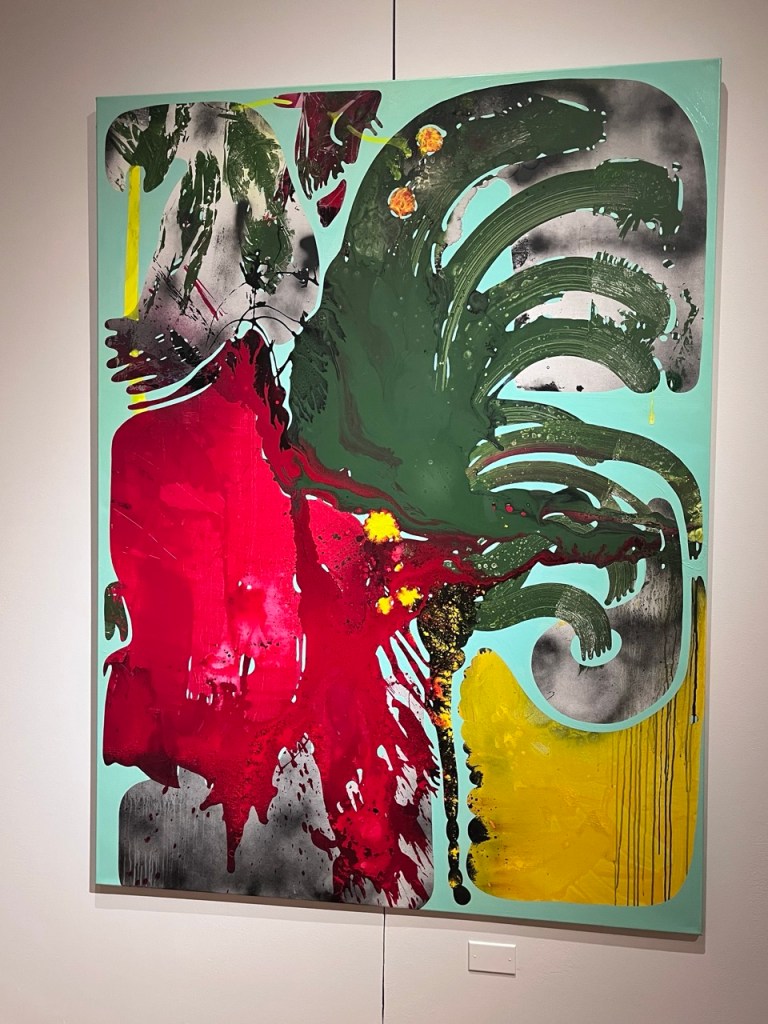
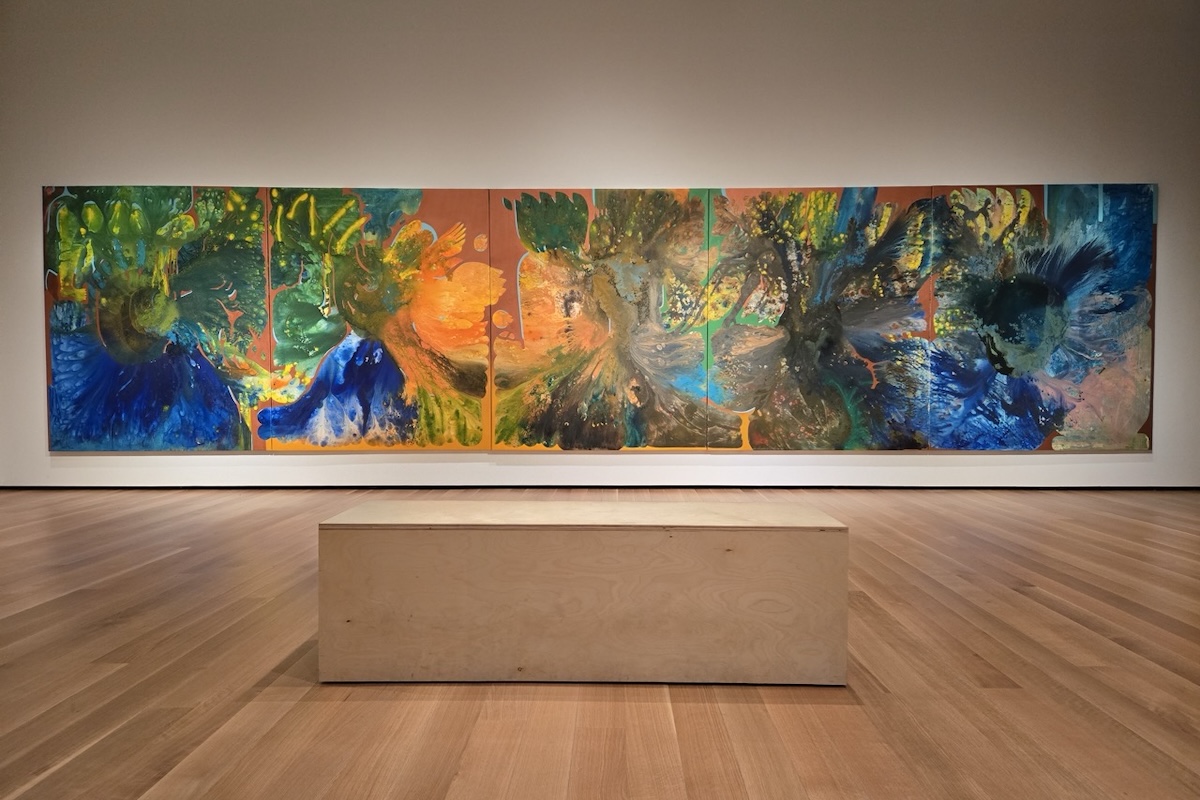
From another perspective of an origin story, “Abzu” is a wall-consuming multi-paneled epic that veritably bursts from the wall with optical and sensual extroversion. Here, Sora cross-references ancient Sumerian aquifers and the Babylonian creation myth from the 1,000 BCE–vintage Enūma Eliš, an alchemical creation saga involving the merging of fresh and salt water. Antiquity and myth aside, the epic work bedazzles the eye and sense with its profusion of color, rhythm, and life force.
Such is the layered power of Sora’s art, bristling and warming at face value, and imbued with deeper meaning for those who care to “go there.”
Vian Sora’s Outerworlds is on display at the Santa Barbara Museum of Art (1130 State St.) through September 7. See sbma.net.






You must be logged in to post a comment.