

The world would be so much easier if we could just have plain old villains and shiny heroes. A world of black and white instead of the shades of grey we weave in and out of.
That also applies to oil companies.
Many Santa Barbarans see Sable Offshore Corp. in a negative light. As a UCSB graduate who studied Environmental Science, much of my cohort views Sable as the ultimate evil. It’s the corporation that hopes to extract the oil from the oceans depths — and potentially pollute our blue waters, kill the birds and dolphins, and ruin the beautiful backyard of Santa Barbarans that is the grand Pacific Ocean.
If only it were so simple.
We don’t live in absolutes. The energy that lights our classrooms, heats our showers, and charges our devices doesn’t arrive unblemished. It’s routed through pipelines, extracted by corporations, and carried on the backs of communities and ecosystems that never signed up for the job. Corporations may extract — but we all consume.
On paper, Sable is a private energy company trying to restart oil production from its Santa Ynez Unit (SYU) in Gaviota — the very platforms and pipelines tied to the 2015 Refugio oil spill. For some, that’s all they need to know. Case closed. Burn the effigy, cue the protest signs.
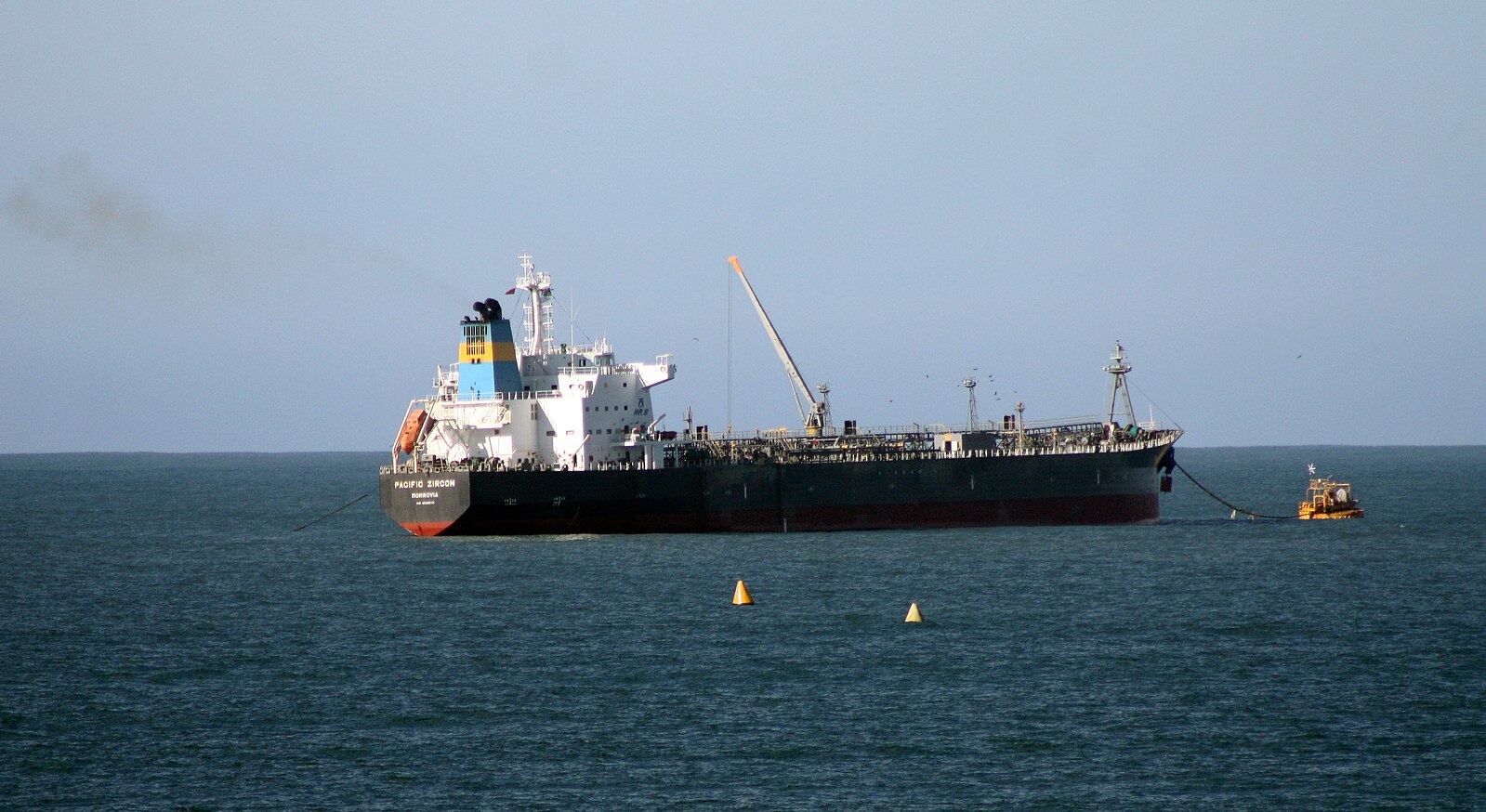
But Sable frames it differently. The company argues that without the Santa Ynez Unit, California must rely on more tanker imports — and tankers, they say, are worse for the climate. They cite “carbon index” figures to claim their crude is cleaner than oil from Iraq, Libya, or Brazil. Restarting SYU, they insist, would displace dirtier imports.
It’s a compelling line — until you check the math.
UCSB professor Paasha Mahdavi analyzed more than a decade of state and industry data to see what really happened after SYU shut down in 2015. Imports didn’t surge. They dipped slightly the next year, stayed stable for most of the decade, and fell again as California’s oil demand declined. SYU’s final year of production? Just 1.8 percent of the state’s supply. Hardly the lynchpin of tanker avoidance.
And about that “clean” crude: Mahdavi’s estimates put SYU oil at roughly 440 kilograms of CO₂ per barrel — nearly double the carbon intensity of Iraqi crude. The platforms pump mostly “heavy, sour” oil, high in sulfur and energy-intensive to refine. “There is no climate argument for restarting SYU,” he told me. “It is a predominantly economic argument.”
Sable, for its part, stands by its position. “One hundred percent of crude oil produced both onshore and in waters offshore of California is consumed by California refineries,” said Steve Rusch, the company’s vice president of environmental and governmental affairs. “Sable expects no different of SYU, which is pipeline-connected directly to the California refinery complex.”
Even if that proves true, global oil markets don’t work in neat state boundaries. Extra supply here can free up exports elsewhere, meaning net emissions don’t automatically drop — they just shift.
The economics are real: A recent UCSB Economic Forecast Project report estimated that oil and gas extraction in Santa Barbara County generates $766 million in total economic impact, $32 million in county tax revenue, and supports around 1,800 jobs, both directly and indirectly. A 10 percent production cut would cost the county roughly $77 million. Those are the stakes Sable emphasizes.
But economic stakes aren’t the same as climate benefits.
Which leaves us in the grey zone. Sable is correct that tankers emit. But the oil Sable would like to produce also emits — a lot. The company can’t guarantee it stays in California forever, and even if it does, it may not let us avoid dirtier barrels at all.


