
This article was underwritten in part by the Mickey Flacks Journalism Fund for Social Justice, a proud, innovative supporter of local news. To make a contribution go to sbcan.org/journalism_fund.
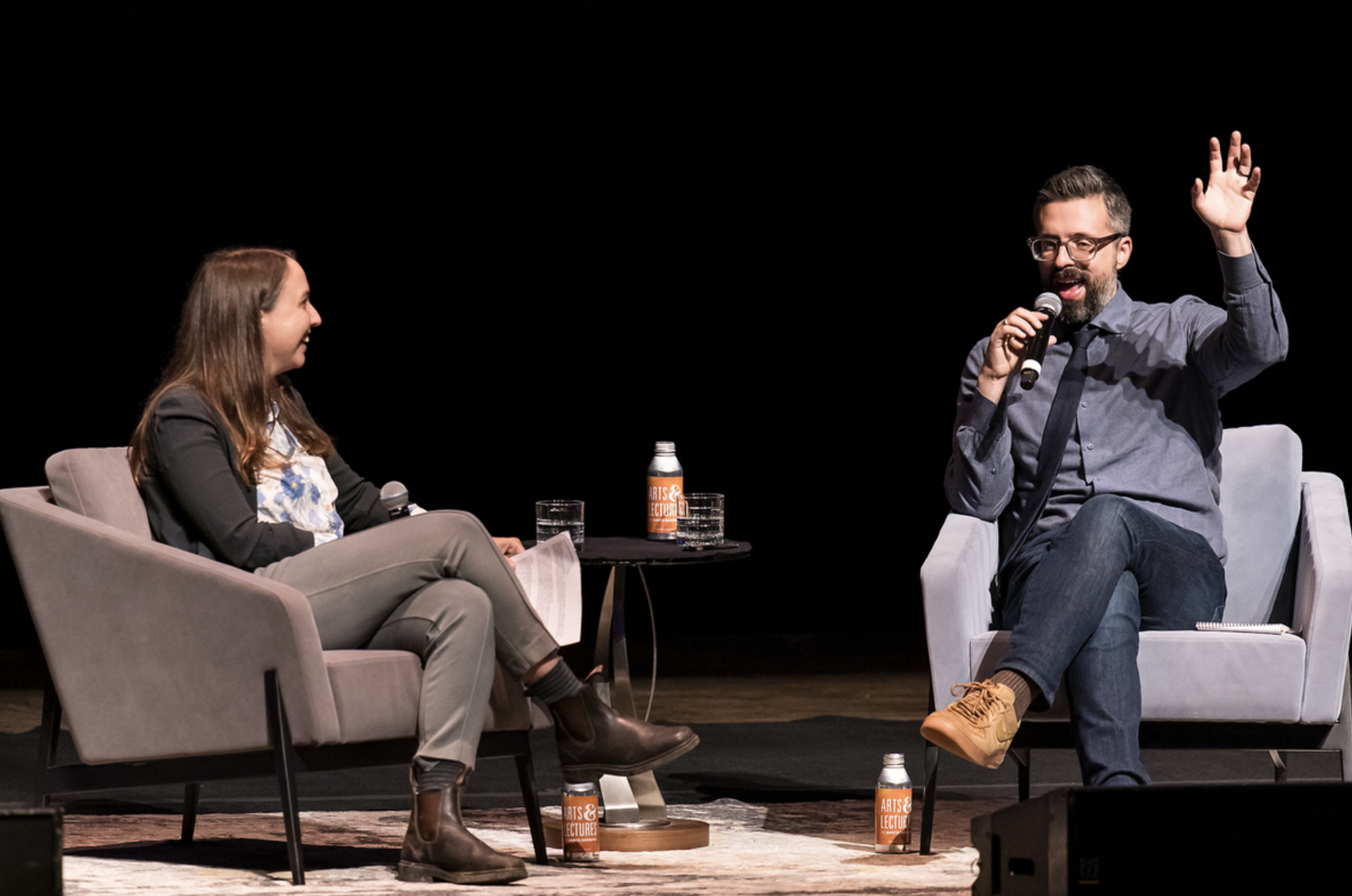
Lines flanked both sides of the Arlington Theatre on Tuesday night and the bright red letters on the marquee read “Ezra Klein.” Klein, a journalist and political commentator, came to Santa Barbara to talk politics, place, infrastructure, and environmental policy — all elements of his new book, Abundance — as part of UCSB’s Arts and Lectures series. The event filled the 2,000-seat theater.
Klein began with acknowledging the night’s election results: wins for Democrats in New York, New Jersey, and Pennsylvania. It befit the evening, as Klein’s lecture, and later his discussion with UCSB Professor Leah Stokes, focused acutely on politics — and their outputs.
Klein quickly identified himself as a liberal, and said that liberals needed to do two things: win elections and deliver results. When it came to elections, the problem, Klein said, was that liberalism didn’t compete with conservatism in enough places.
“Place determines power,” Klein said.
He gave his audience some history: Starting in the ’90s, a gap emerged in how the Democratic party performed in cities versus in rural areas. Cities went more blue, while rural areas grew redder. Due to the electoral college, Klein said, that puts Democrats at an inherent disadvantage.
Klein, whose 2020 work Why We’re Polarized focused on the growing divide between the U.S. political parties, said that throughout much of the 20th century, Democrat and Republican parties had several factions within them. But now, as politics have grown more nationalized, the parties’ “ability to be different things in different places has weakened.”
Klein points to the nationalization of media, and how powerful social media platforms reward conflict and controversy, as major factors of the loss of local character in politics.
To win voters, Klein said, Democratic candidates need to appeal to people who do not necessarily agree with them on every topic. There are limits, he said (no Nazis. please), but that ultimately casting a wider net grows the potential for success in a more diverse array of places.
Of course, he acknowledged, how you “radiate respect for people” is not an easy process. During his discussion with Stokes, Klein brought up Delaware Congressmember Sarah McBride, the first openly trans member of Congress, whose approach to disagreement, he said, is to build coalitions across groups. He said the popular Vermont senator Bernie Sanders’s willingness to talk to different people brings them into a sense of community.
Once liberals win power, Klein said, they should deliver on their promises. Here, Klein spoke about the need to build infrastructure, especially housing, and how in liberal areas (such as Santa Barbara) there’s a struggle to build “real things.” The need to build more — and the factors that have caused places that consistently vote for liberal politicians to fail to do so — is a key theme in Abundance.
Take affordable housing. Klein said when he reported on affordable housing, he learned that to build affordable units was two to four times more expensive per square foot, because of rules and regulations that grant money that funds it requires.
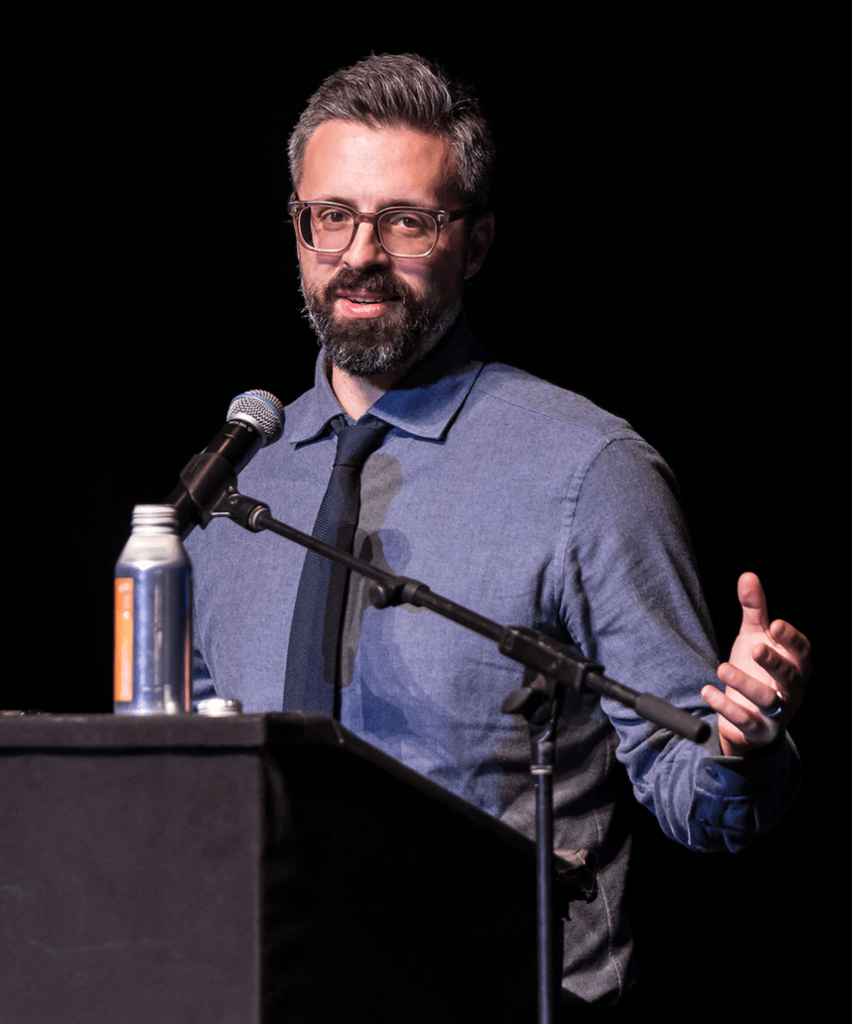
Housing, he said, should help with social mobility; affordable housing in places with economic opportunity helps people achieve economic stability. But these days, he said, people with less money have to move away from cities, to poorer areas. Ultimately, Klein said, the level of development in a place should match the amount of job opportunity. Take Silicon Valley, he said. With all its wealth, he said, it should look like Shenzhen.
Stokes and Klein also dove into the philosophy behind Klein’s Abundance, co-authored by journalist Derek Thompson. How, Stokes asked, does the pro-abundance movement square with environmentalist concerns? In other words, how do you build more and protect the environment?
Klein said that sometimes, environmental policies and the permitting process can actually stymie the development of things that could ultimately help protect the environment, such as renewable energy projects. It is here that some critics of Abundance have called the work myopic, saying that the work does not look at the wider system and its implications when considering when certain projects are held up, and more broadly, who should be the decision makers in community growth.
Regardless of whether you’re convinced of the book’s case, Klein’s argument that Democrats need to work harder to deliver on promises hit home for the audience that night. Democrats are the party that defends institutions, Klein said, and therefore, when the systems those institutions uphold fail people, the party loses those people.
“We should be the party that makes the government work for you,” he said.
Related Posts

Premier Events
Sat, Oct 10
9:00 AM
Santa Barbara
Treble Clef Chorus Fall Treasure Sale

Sun, Oct 11
5:00 PM
Santa Barbara
Trinity Choir: Choral Evensong
Wed, Oct 07
7:30 PM
Santa Barbara
Ensemble Theatre Company Presents: “Buyer & Cellar”

Wed, Oct 07
7:30 PM
Santa Barbara
The Theatre Group at SBCC Presents: “CLUE”
Thu, Oct 08
7:00 PM
Santa Barbara
“A Night of Blues” with Morganfield Burnett

Fri, Oct 09
7:00 PM
Santa Barbara
Paseo Nuevo Spooky Movie Nights
Sat, Oct 10
9:00 AM
Santa Barbara
SBNC 1st Annual Health & Wellness Fair

Sat, Oct 10
1:30 PM
Goleta
🌴 Another Day in Paradise at S.B’s Premier Ice Rink

Sun, Oct 11
7:00 AM
Ojai
Flamenco Guitarist Tony Ybarra

Sun, Oct 11
10:00 AM
Santa Barbara
18th Annual Domestic Violence Solutions Brunch
Sun, Oct 11
10:00 AM
Santa Barbara
Free Community Day at S.B. Botanic Garden
Sun, Oct 11
10:00 AM
Santa Barbara
Downtown Classic Car Show Santa Barbara
Sat, Oct 10 9:00 AM
Santa Barbara
Treble Clef Chorus Fall Treasure Sale
Sun, Oct 11 5:00 PM
Santa Barbara
Trinity Choir: Choral Evensong
Wed, Oct 07 7:30 PM
Santa Barbara
Ensemble Theatre Company Presents: “Buyer & Cellar”
Wed, Oct 07 7:30 PM
Santa Barbara
The Theatre Group at SBCC Presents: “CLUE”
Thu, Oct 08 7:00 PM
Santa Barbara
“A Night of Blues” with Morganfield Burnett
Fri, Oct 09 7:00 PM
Santa Barbara
Paseo Nuevo Spooky Movie Nights
Sat, Oct 10 9:00 AM
Santa Barbara
SBNC 1st Annual Health & Wellness Fair
Sat, Oct 10 1:30 PM
Goleta
🌴 Another Day in Paradise at S.B’s Premier Ice Rink
Sun, Oct 11 7:00 AM
Ojai
Flamenco Guitarist Tony Ybarra
Sun, Oct 11 10:00 AM
Santa Barbara
18th Annual Domestic Violence Solutions Brunch
Sun, Oct 11 10:00 AM
Santa Barbara
Free Community Day at S.B. Botanic Garden
Sun, Oct 11 10:00 AM
Santa Barbara


You must be logged in to post a comment.