


If it weren’t for a small garden outside of a one-bedroom apartment on Trigo Road in Isla Vista, Jack Johnson as we know him may never have taken root. During his senior year at UCSB, the Hawaiian-born film studies major moved in with his girlfriend Kim, whom he’d marry a couple years later. Their apartment overlooked an empty lot on the corner of Camino Pescadero, and that’s where they tended to zucchini and huge sunflowers next to a fountain that Jack built from an old bike tire and spray can caps.
“We planted a garden and saw things grow,” Jack told me over the phone during a tour stop near Houston last month. “We got that feeling together, that there’s something in this.”
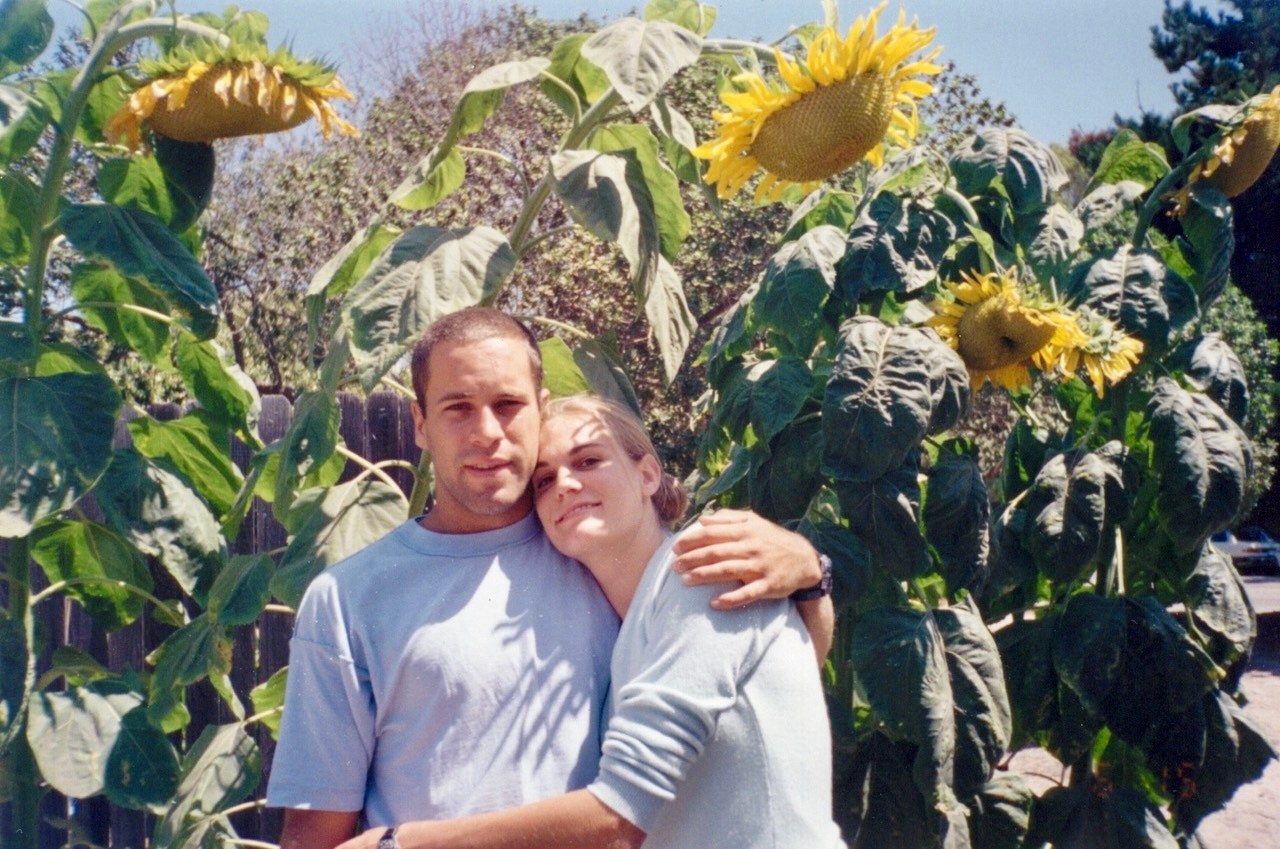
It wasn’t long after those early squash harvests that Jack’s rocket ship to global stardom as a big-wave surfing singer-songwriter took off, with Kim steadily in the cockpit, charting their career trajectory behind the scenes. Since 2000, he’s recorded nearly a dozen albums that sold more than 25 million copies, performed more than 250 songs that have streamed at least 10 billion times, played hundreds of concerts in every corner of the world, and become the soundtrack to trendy restaurants and big-box department stores alike.
But that spirit of putting seeds in the ground and watching them grow remains core to Jack and Kim’s missions beyond the music. In addition to building environmental education foundations for both Hawai‘i (Kōkua Hawai‘i, founded 2003) and everywhere else (Johnson Ohana, founded 2008) — which have contributed more than $40 million of album and tour proceeds to countless charities — the Johnsons took over eight acres of land on the North Shore of Oahu in 2019 to develop the Kōkua Learning Farm.
Now an extensive operation including row crops, a fruit orchard, beehives, a compost program, a canoe plant garden, and a wetland for Hawaiian natives, the farm and its three storefronts around Hale‘iwa host community work days, school field trips, and workshops all year long. It’s quite close to Jack and Kim’s heart, a place where they connect with their own family and the greater community while getting their hands dirty.
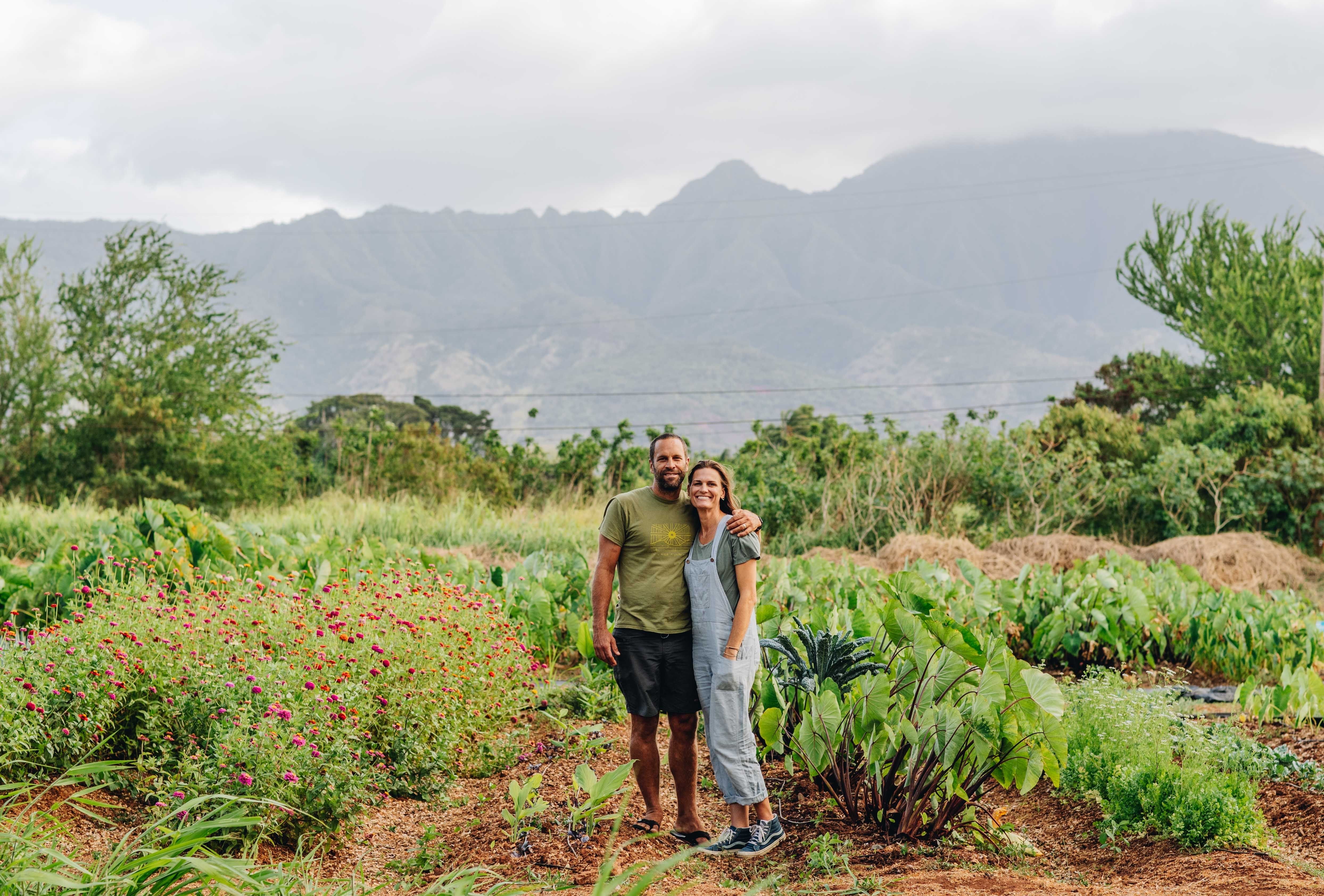
Kim spoke of both that original I.V. garden and the Oahu one during her commencement speech at UCSB this past June, when their oldest kid graduated as a Gaucho. After correcting the record about one of Jack’s most famous lyrics — they were actually eating lunch at the Ortega Dining Commons, not DLG, but the latter rhymed better with “sat next to me” — Kim explained, “We had no idea that little garden on Trigo would lead to planting several more in our life.” They’ve explored many across the planet since, along the way promoting places such as Fairview Gardens in Goleta, creating farm-to-school programs in Hawai‘i, and using them at home to teach their own children the value of hard work and real food.
“Is it the garden that grows the community, or the community that grows the garden?” asked Kim before a crowd of hundreds. “I think it is both.”
Their community is generational now. “It’s one of my favorite things to see the yellow school bus come up and drop off the kids,” said Jack, who may be most proud of clearing invasive species from one corner of the property and bringing back endemic plants. “We have a few native insects and a couple of native birds that have returned. It’s really important for kids to see positive change.”
Sowing Optimism

The same could be said for the rest of us adults right now. We’re enduring an era of global turmoil, with unnecessary wars, governments intent on breaking down rather than building up, and an earth so angry at our destructive ways that we’re burning and drowning every day.
Jack, meanwhile, remains this beacon of optimism, his beaming smile and cheery singalongs bringing warm sunshine to these cold, shady times. The New York Times proclaimed as much last month, suggesting (without too much snark) that people should ingest his “hopecore” to enjoy their own “Jack Johnson summer.”
“I can read articles and get angry or depressed — I feel all that stuff,” said Jack, who then, as an example, sang me a couple lines from “All at Once” over the phone: “All at once, the world can overwhelm me / There’s almost nothing that you could tell me / that could ease my mind.”
“That’s how I can feel at 2 in the morning when I am thinking about it all,” he explained.
Instead, he focuses on the good, like the farm and the nonprofit volunteers he meets on tour. “It definitely makes me feel at least some sense of optimism, meeting people every night doing important work in their communities,” said Jack. “That helps me draw a circle around it. Sometimes, you have to do that. You can’t expect everything to go toward positive change. So, we are psyched when we get to see it in my life and in this work.”
On the Road Again
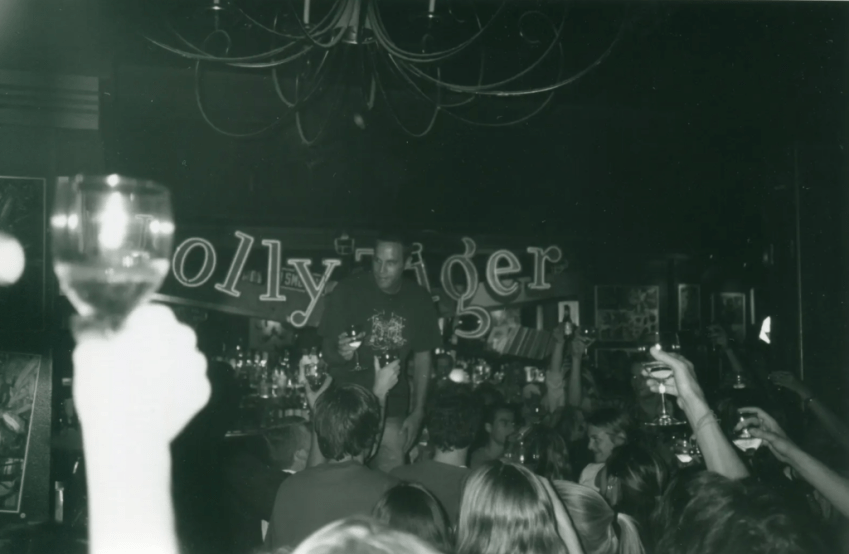
Jack Johnson is in the midst of his first major tour since 2022, which is a multi-pronged affair. There are about 60 concerts, two of which come to the Santa Barbara Bowl on October 3 and 4; there are screenings of the SURFILMUSIC documentary about his life, which plays in Santa Barbara at the Metro 4 on September 16; and there’s a new double-album of unreleased rarities and the film score by Hermanos Gutiérrez.
He’s faced similarly grueling schedules before, but it’s the first time he’s done so past the half-century mark. But this 51-year-old was sounding quite energized when we talked during his August swing through the South, that day preparing for his eighth sold-out amphitheater show in 10 days.
“Uncle is doing alright here on the road,” he laughed, explaining that the band does spend more time asking how each other slept these days. Surfing keeps him fit, but the late nights meeting up with old friends around the country, the sleeping in, and the breakfast buffets do tend to add some road pounds. The band tries to stay active most days, whether that’s pickleballing in the parking lot, kicking around a soccer ball, or playing a round of disc golf.
“You have to go for it, because it’s really easy to go from AC to AC, especially here in the South,” he said. “It’s no joke. The show is almost a workout. It’s like a sauna up there on stage every night.”
They eat healthy — their concert rider mandates that venues serve food sourced from nearby farms — and they’ve integrated such meals with fans and regional chefs into a “farm-to-stage” program. Instead of just giving away tickets to the ninth caller, they ask people to send in pics of themselves hanging out at farmers markets or otherwise supporting local food systems. The winners get to dine with Jack and the band as well as the chefs, farmers, and nonprofit workers the show is supporting that night.
“There are a lot of similarities between a restaurant and a live show,” said Jack, who appreciates how critical restaurants are to spreading this farmer-first gospel. “They are a gathering place, and chefs can have a big voice to call attention to what they want to show in their food.”
Collaboration’s the Key
Jack was in Nashville when word got out that Dolly Parton died, and he quickly worked “9 to 5” into his next shows. “She’s so badass. You think she’s just a musician, but she was also such a personality. She had so much swagger,” he said. “Then you find out about all the work she did to build community.” He sees her as a role model, just like Willie Nelson, who both taught him the value of collaboration.
“Our band plays together every night, and we always have fun,” said Jack, who’s been open to playing with anyone since his career began. “But when you invite a new feeling onstage, that’s when we get something new. That’s what music is all about: collaboration.” The year’s tours are strong evidence of that, as Jack’s been playing together with Hermanos Gutierrez, Lake Street Dive, and G. Love, but also a bunch of lucky and talented young performers at each stop.
That’s just one reason he’s having more fun at 51 than he did in his early twenties. “I don’t try to bring some false humility to it — I’ve been doing this a long time, and the whole thing has gotten more fun for us,” he said. “The crappy part about the nerves has gone away. You still get excited about going on stage, but I don’t feel like I’m gonna pass or wonder if I can do it. You can’t be that nervous every night. It’s not sustainable, but for a couple of years, I felt a bit like that. It was almost too exciting.”
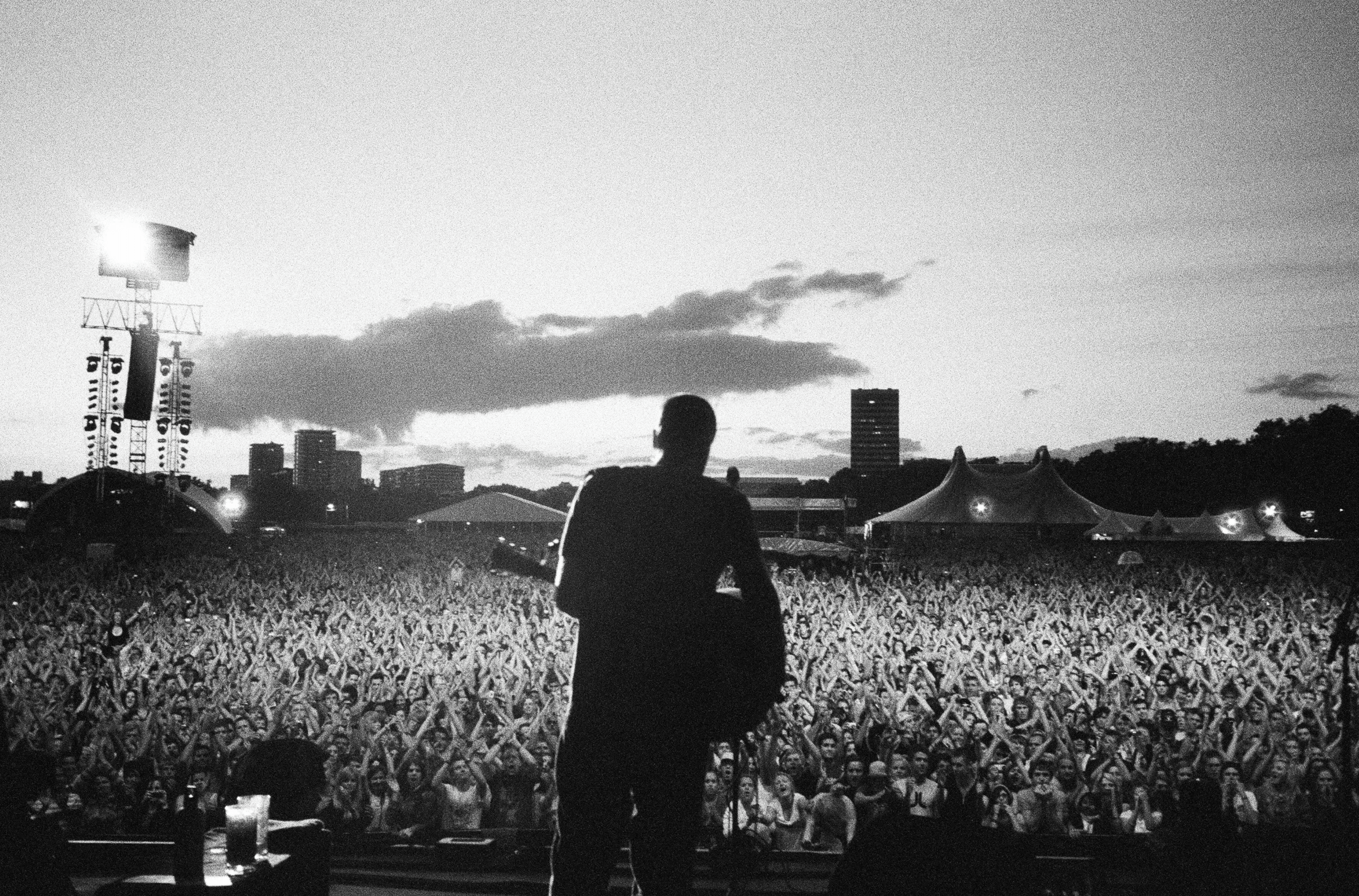
It remains surreal, though. “I still trip out when I look out and see an amphitheater filled all the way to the lawn,” he said. “I have the moment every night where I’m like, ‘This is weird. I can’t believe this is happening.’ We feel so lucky to keep doing it.”




You must be logged in to post a comment.