
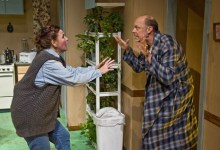
The God of Hell
Perhaps it takes a playwright who reached his creative peak in the Reagan era to understand the darker aspects of our current Republican nightmare, but fortunately for us, Sam Shepard is back on form and Genesis West has got him.

Perhaps it takes a playwright who reached his creative peak in the Reagan era to understand the darker aspects of our current Republican nightmare, but fortunately for us, Sam Shepard is back on form and Genesis West has got him.
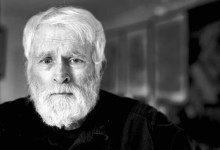
Ronald Brooks “R. B.” Kitaj died in Los Angeles on October 21. An American artist who spent most of his adult life in London, Kitaj was among the most ambitious figurative painters of the late 20th century. Associated for a short time with the emergence of pop art in Britain, Kitaj had the distinction of naming his own movement, the “School of London,” which included such illustrious neighbors as Francis Bacon, Frank Auerbach, Leon Kossoff, David Hockney, Michael Andrews, and Lucian Freud.
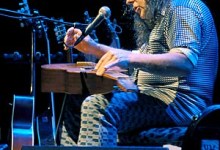
David Lindley is a great guitarist who deserves the kind of recognition that his good friend Ry Cooder has lately garnered, and if he keeps making the kind of music that he made at the Lobero on Saturday night, it won’t be long before he gets it.
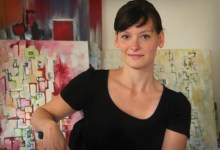
This story begins in so many places: Cape Cod and Santa Barbara, but also the imagination, and the art world, and wherever there are true gatherings of real friends. Heather Mattoon needs a benefit now because she is confined to a wheelchair, and is trying to put together a new life without any health insurance. She fell from a window at the end of the summer and severed her spine.
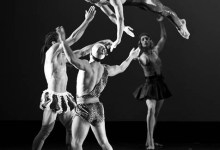
Named for a sun-loving variety of fungus and founded as a collective at Dartmouth College in 1971, Pilobolus Dance Theatre has developed a distinctively gymnastic style of movement involving complex, multi-Â-dancer lifts that are sometimes used to create the shadows of larger single forms.
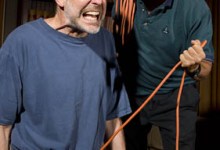
Genesis West opens Sam Shepard’s apocalyptic post-9/11 farce this weekend, and you can expect fireworks-or at the very least, long, arcing electric sparks emanating from Haynes, a representative of a secret U.S. agency who is on the lam after being exposed to radiation.
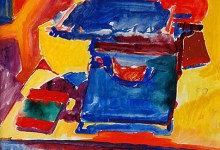
The point of departure for this varied and stimulating exhibition is the year 1957, a watershed in American history and culture. Gathering paintings and objects from far and wide, exhibition curator Jeremy Tessmer demonstrates a discerning eye; there is more than historical coincidence at work in his selection.
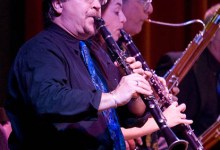
The woodwinds got their turn in the limelight at Friday night’s concert, which featured four pieces, including three works written for large ensembles that included multiple oboes, bassoons, and clarinets. The ebulliently sardonic John Steinmetz led both the reeds and the Adrian Spence jeering section with customary aplomb.
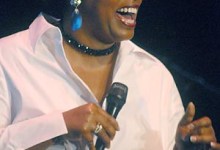
It was obvious from the outset that the Dianne Reeves edition of Lobero Live would be a special one. Reeves had not played the Lobero recently, and it is a perfect venue for jazz. In addition, the Santa Barbara stop on her current extended tour was the only chance to hear Reeves with both her marvelous pair of guitarists (Romero Lubambo and Russell Malone), and a full rhythm section (which included Reginald Veal on bass and Gregory Hutchinson on drums).
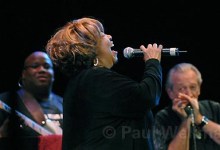
The inspired programming of this quadruple bill put the North Mississippi Allstars on stage for virtually the entire night, first on their own, and then backing Charlie Musselwhite and Mavis Staples. Add the funky N’awlins keyboardist Joe Krown, and you have a recipe for a gumbo that will have folks dancing in the aisles. Luther and Cody Dickinson have found a great collaborator in left-handed bassist Chris Chew.

