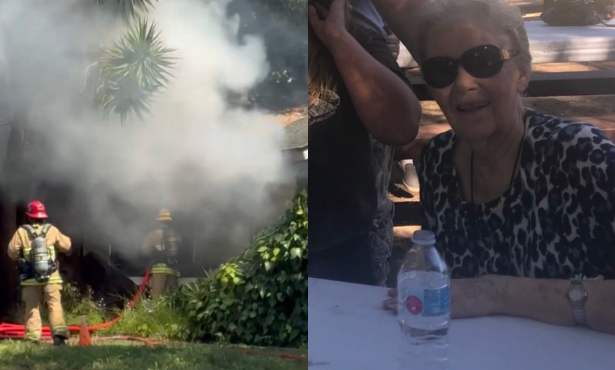
A group of community members gathered last week for a candlelight vigil to honor the 10-year anniversary of the lives lost in a tragedy now called “The Isla Vista Car Massacre.” The memorial service, led by Father Jon Hedges of Isla Vista’s St. Athanasius Orthodox Church, was held at Little Acorn Park, which borders the original scene of the crime: the 6500 block of Sabado Tarde Road.
The Isla Vista Car Massacre describes the incident on February 23, 2001 in which 20-year-old UCSB freshman David Attias, son of Hollywood director Daniel Attias, drove his Saab into a group of pedestrians, killing four on the spot and critically injuring one. The victims were Santa Barbara City College student Ruth Levy (20 years old), UCSB students Nick Bourdakis and Christopher Divis (both 20 years old), and Ellie Israel (27 years old), who was visiting town. The sole survivor was Albert Levy, Ruth’s older brother. The incident left Albert permanently disabled.
Upon striking the victims, Attias exited his car and began shouting deranged obscenities. According to eyewitness reports, Attias screamed “I am the angel of death!” and his behavior appeared erratic. Levels of marijuana and Lidocaine (a dental anesthetic) were found in Attias’s system and later ruled to have played no role in the incident. This outraged many individuals, who felt that the drugs did, in fact, play a critical role in the event.
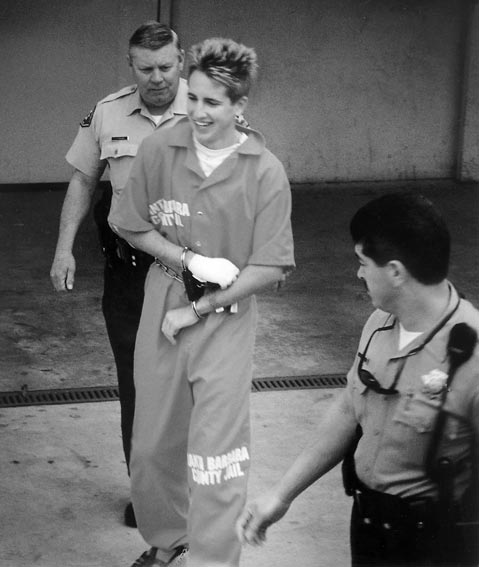
In the 2002 criminal trial, a jury convicted Attias of four counts of second-degree murder. Attias pleaded insanity, and roughly two weeks later the same jury found Attias not guilty by reason of insanity. He was then committed to Patton State Hospital, a psychiatric hospital in San Bernardino. According to Tricia Bourdakis, mother of victim Nick Bourdakis, it is a common misconception that Attias was sentenced to serve a full 60 years at Patton. In reality, the idea of Patton is to “cure” patients of their insanity.
Currently, Attias is evaluated twice a year, in January and June. Both Patton Hospital and CONREP, the Department of Mental Health’s statewide system that serves patients found to be not guilty by reason of insanity in the judicial system, conduct separate evaluations and give future recommendations regarding the patient. The patient could conceivably be released to a halfway house. The past evaluation in January suggested that Attias remain at Patton, yet, if the June evaluation states that Attias be released, the Santa Barbara Superior Court must comply.
According to Patrick McKinley, the former District Attorney who was the case prosecutor, the idea of 60 years most likely stems from the standard conviction for second-degree murder, which is 15 years to life in prison. The judge may have followed this reasoning, run the four counts of murder of which Attias was convicted, and decided on the verdict of 60 years. According to McKinley, even if there is no intent to kill, if an individual partakes in dangerous activity that he or she knows is dangerous and death results, it is classified as second-degree murder.
Yet, according to McKinley, the initial verdict of second-degree murder was crucial. “In general, you stay at Patton until you are no longer considered dangerous. By law, they can’t keep you longer than the maximum sentence, even if you are dangerous. In this case, the maximum sentence is life. That’s what made the murder part so important,” said McKinley. Although one could conceivably stay at Patton for a minimum of only six months, if it is determined that the event was simply one single manic episode. “They could say ‘You’re okay now, go home and take your meds,” said McKinley. McKinley continued by stating that if Attias had instead been charged with gross vehicle manslaughter, he most likely would have withdrawn his insanity plea. “[We were] disappointed by the reason of insanity but very happy with the murder conviction. If it weren’t for the murder conviction, he would be out by now,” explained McKinley.
However, according to Tricia Bourdakis, the ultimate decision baffled the legal community, leaving people unable to comprehend how an individual could first be convicted of second-degree-murder, which implies conscious awareness, and then be found insane. “A psychotic break does not last two minutes,” said Tricia, who feels that the ruling was unfair. “One thing that’s discouraging is that we were never able to talk about the children we lost. Most people in a criminal trial get to speak about [that], and we were never allowed to,” said Bourdakis, noting that the trial became focused on the issue of insanity.
According to California Appeal Court records, no appeal has been made by Attias, but this comes as no surprise to some. “Why would he want to appeal?” said Tony Bourdakis, father of Nick, “He was originally found guilty of four counts of second-degree murder, which is the best possible outcome [in our eyes].” According to the Bourdakis’, judge Adams stated that had Attias not been found insane, he would have sentenced him to 60 years to life in prison. Yet, in theory, Attias could have appealed the original murder conviction, which may have resulted in a shorter stay at Patton. “I don’t know why he didn’t, but I feel it is a near certainty that it would have been rejected,” said McKinley, concluding that the trail was virtually error free.
“I think the jury felt he’d be [at Patton] for 60 years, which he could be, but its not going to happen. I don’t think they jury realized the effect of their decision,” said Tricia Bourdakis. McKinley also feels that the jury did not expect the results of their decision, but no jury is ever made aware of the possible outcomes. “The jury, in any criminal case, are not told what the penalty is. They just decide innocent or guilty,” said McKinley. “And in the sanity case, not only are they told that but they are also told not to worry about it; that it’s none of their business.” Regardless, McKinley feels that the jury acted in an appropriate manner: “I don’t fault the jury for anything,” he concluded.
Yet, Tricia Bourdakis remains troubled by the insanity ruling. She is perplexed by the notion that Attias, if ever filling out a job application, could legally remark that he has never been convicted of a felony because he was legally found not guilty by reason of insanity. However, the term “insanity” is a tricky matter in the courtroom. “Just because you are severely mentally ill doesn’t mean your are legally insane,” said McKinley. According to McKinley, in legal terms, the test for insanity measures the ability to discern right from wrong. “The test is not a medical one; it’s a legal one… The test is not a symptom of any known medical disorder. If you don’t know right from wrong, it does not equal schizophrenia or bipolar disorder; it’s just a legal term. It’s quite possible to be very mentally sick and not meet the legal test,” explained McKinley.
According to McKinley, the insanity ruling came as no surprise. McKinley stated that Attias had different psychiatrists claiming that he was insane, including court psychiatrists, private psychiatrists, and psychiatrists that treated Attias before the killings. In addition, Attias had a longstanding history of prior mental health issues. According to McKinley, around age 13 Attias spent 30 days in treatment at UCLA after strangling his sister. “I wasn’t shocked by the verdict,” said McKinley, “We were left with little or no expert opinion saying he was legally sane. [The] overwhelming weight of professional testimony was that he met the test.”
In addition to psychiatric testimony, a video clip from Isla Vista TV exists from the night of the incident. It shows the victims in the initial aftermath before police and medical personnel arrived. According to McKinley, the footage shows Attias screaming and attempting to fight various individuals. “[The footage] hurt us. It showed him as crazy,” said McKinley.
What is interesting is that even after this public display of crazed behavior, Attias’s alleged first response in custody was to ask for a lawyer. “That’s a pretty good indication that he knew right from wrong,” said McKinley. Such an indication comes as a surprise considering the insanity ruling. “The big surprise was, if [the jury] thought that he — and they must have because they convicted him of second-degree murder — knew what he was doing, they wouldn’t think he didn’t know right from wrong,” said McKinley.
With regards to the ultimate decision, McKinley remains unsure of Attias’s mental state. “I think it was a very close question,” said stated. “Given the jury’s finding that he knew what he was doing was dangerous to human life, they should have found him sane, even though he is very mentally ill. But they did not, and that’s life,” he concluded.
Shocking or not, ten years later, community members continue to feel that the verdict was unjust. “Personally, I believe he is more responsible for it,” said Father Jon of St. Athanasius. “I thoroughly do believe that an appeal should be rejected and he should definitely be held accountable for what he did, and at least be kept away from doing it again.”
However, the purpose of the milestone memorial was not to remember Attias or to dwell over the trial. Instead, it was to honor the lives of the individuals lost in tragedy. “We’re not here to remember the ‘Attias incident.’ We are here to remember four wonderful lives and carry on the good stuff that they got started and didn’t have a chance to finish,” remarked Father Jon. In addition to the lives lost, the memorial meant to speak to all the lives that were impacted by the event, from the paramedics and officers who responded to the scene to the nurses and doctors in the hospital and all witnesses, friends, roommates, and attorneys. “It hit the community very hard, and I mean very hard. The people that were there that night were effected by it, even if they were total strangers,” said McKinley.
Many of the attendees present at the candlelight vigil were also present the night of the original incident. This includes Commander Darin Fotheringham, CHP Captain Jeff Sgobba, Sergeant Robertson, responding medics, and Chancellor Yang and his wife Dilling. Additional attendees were Isla Vista Foot Patrol Lt. Ray Vuillemainroy and former assistant district attorney Patrick McKinley, who was the prosecuting attorney in the case. Families of the victims were also present.
Chancellor Yang, who was present at the scene the night of the event, rose to the occasion, in attempt to make a more positive situation of the tragedy. One of the key contributions of Yang has been the acquisition and renovation of what is now the Santa Catalina Dormitory. Attias lived in the dorm, formerly known as Francisco Torres. “When Attias was there, it was like an institution — a warehouse for students. Now you go there, and there’s a sense of community, and that’s because of things that the university did. [It was] a good outcome [from a tragedy],” said Father Jon.
Father Jon says the improvements to dormitory life are vital to college students who frequently feel academic pressures or stress from being away from home, and often turn to drug experimentation as a means of coping. The hope is that with greater sense of community, the remodeled dormitory will increase the quality of student life. “When people are disconnected, they tend to do crazier things. [It’s important] to stay connected with family and friends,” explained Father Jon. “[Attias] was someone who had issues that hadn’t been dealt with, and it got worse. It got way worse, with tragic consequences.”
According to Chancellor Yang, additional action was taken to improve the quality of life both on campus and in Isla Vista. “As members of a university community, we constantly ask ourselves what more can be done to improve the quality of life for our students, and to ensure their health and safety. After the tragedy, our campus and community redoubled our efforts to work together to improve the living and learning environment in Isla Vista for our students and local residents,” stated Yang in an email. Among improvements were the expansion of academic and mental health counseling, the construction of the Isla Vista Foot Patrol station on university land in Isla Vista, and the building of Embarcadero Hall — the former Bank of America location — where many community resources are located, such as CLAS classrooms.
Along with Father Jon, McKinley reiterated the importance of being aware of fellow classmates. “A lot of people in the dorms could see that he wasn’t normal, but no one did anything. Its very similar to some of these other cases, like Virginia Tech, where a student is weird and instead of trying to deal with it and address the mental health issues, he was ignored,” said McKinley, who further praised University efforts to address and improve such issues on campus.
The families of the victims have also become supporters of the university in the aftermath of the tragedy. Tony and Tricia Bourdakis, who lost their son Nick in the incident, make visits to Santa Barbara several times a year. The family comes out to support university functions, specifically those connected to the Geography major, which Nick was perusing. “At the time of the tragedy, Nick had just recently declared Geography as his major and was excited about pursuing his studies in this area.
To honor his memory, the Bourdakis family established the Nicholas Bourdakis Memorial Fund, which supports student scholarships for undergraduates in Geography,” stated Yang. “They took an incredible tragedy and turned it into something really beautiful,” said Father Jon, regarding the Bourdakis’ connection with UCSB. “The family has really become supporters of the university and community.”
At the time of the tragedy, both Tony and Tricia Bourdakis wanted to crumble. But they realized that their daughter, Nancy, still had her entire life ahead of her. For her, they had to be strong. “We found strength in knowing we had to go on,” said Tricia. “The pain never goes away. The heartache never goes away. We just get better at disguising it.” She continued, “We learned to realize that we were lucky to have Nick for the 20 years that we did. [We have to] look on the positive side.”
The theme of negligent driving remains present in the minds of many community members. Lieutenant Fotheringham, who at the time of the incident was a sergeant assigned to the Isla Vista Foot Patrol, was on duty the night of the tragedy. He stated at last week’s memorial that one remark in particular troubled him: “A comment was made that Attias is still in a mental facility, and thank goodness for that, otherwise he would potentially be on the roads. And that really struck me. [Working in] law enforcement, I’m used to people getting [released], but the thought that some day he could be behind the wheel again is frightening,” said Fotheringham.
Victims of the family share similar fears. “My concern is that this kid could be, in theory, out this summer. And I’m concerned—and this is my personal opinion—that he could do this again,” said Tony Bourdakis.
Furthermore, Fotheringham stressed the importance of driving safety, stating that the tragedy should be used as a daily reminder of the dangers of driving under the influence of any sort of substance. “Driving a vehicle is a dangerous act that we take for granted. [We must] be diligent,” remarked Fotheringham.
Other officers echoed similar sentiments. “It’s just incredibly sad, to put it briefly and succinctly. [The memorial] symbolized, to me, anyways, how fragile life is. Emergency respondents deal with it everyday, but college students became acutely aware at one instance [of] how fragile life is, and the value of friendship, and driving safety,” said officer Sgobba.
A civil suit was brought against David Attias’s parents, Daniel and Diane Attias, who purchased the vehicle used in the incident. The two were accused of negligence for purchasing the car for their son, despite his history of drug use and erratic behavior. According to records, the separate lawsuits filed by the families of victims were consolidated into one lawsuit, which has now been settled. No additional comments concerning the lawsuit were made.
While not present at the memorial, survivor Albert Levy has surprised many in his recovery. Despite having both legs crushed, he is now walking. “We are really proud of him… He definitely has a strong, heroic spirit [and] he’s outdone what we thought he would do, in a really good way,” remarked Father Jon.
As time passes, those involved continue to be grateful to the Santa Barbara community for the support shown throughout the horrific misfortune. “As far as we’re concerned, [Attias] should be in prison, and that’s the bottom line. But we appreciate all of the people in Santa Barbara. It is one of the most fabulous communities, and has been supportive to all of us,” said Tony. Tricia continued, stating, “[people have shown] their feelings of sympathy and regret. The Santa Barbara community is really wonderful and we’ve made some really good friends out of the tragedy.”