
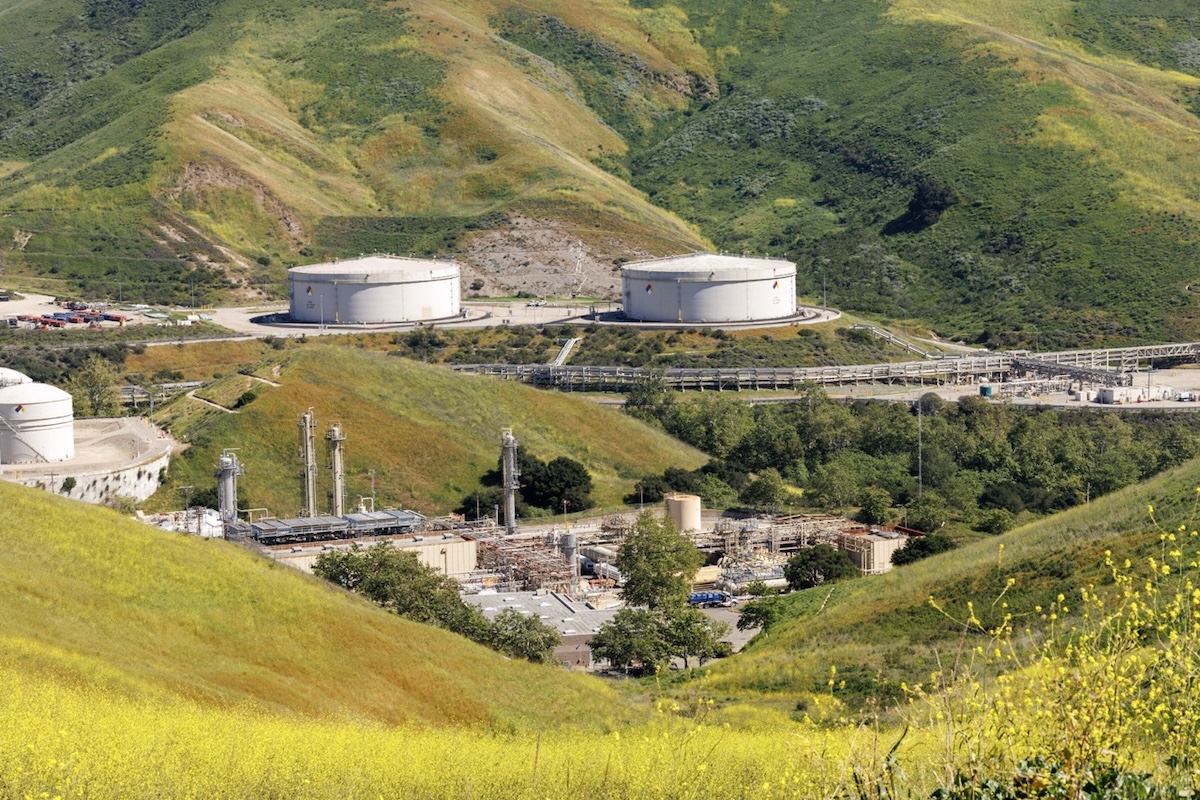
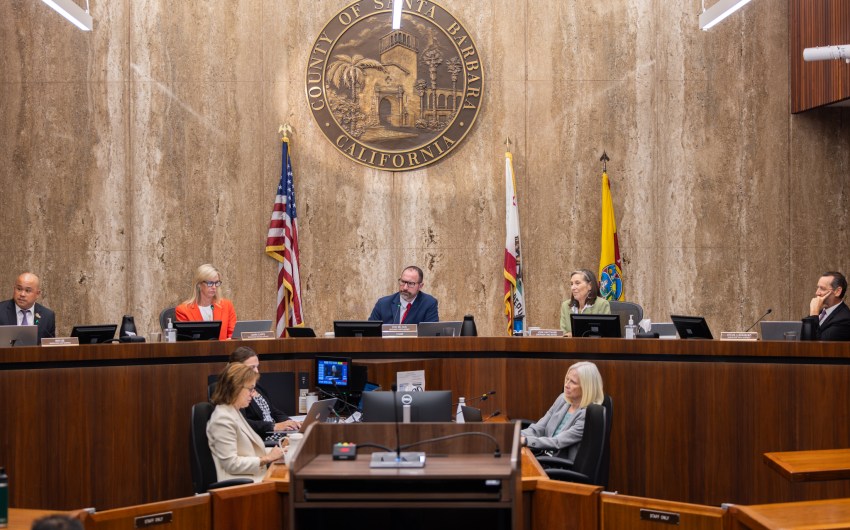
Oil development off Santa Barbara County’s Gaviota Coast has long turned on fine legal margins — interstate versus intrastate, State Fire Marshal versus the U.S. Pipeline and Hazardous Materials Safety Administration, court orders versus claims of immunity. On Friday morning, in the Santa Barbara courtroom of Judge Donna Geck, one of those margins snapped into focus.
Geck refused to lift the injunction blocking Sable Offshore Corp. from restarting its pipeline system — even as oil continues to flow.
That alone might sound like just procedural sparring, but this time, the ruling did something new: It rejected, for the first time, Sable’s argument that a federal order issued under the Defense Production Act allows it to sidestep state law and the court’s prior orders.
“This is the first time a court has recognized that the Defense Production Act order does not relieve Sable of its requirements under state law,” said Talia Nimmer, staff attorney at the Center for Biological Diversity (CBD).
The Environmental Defense Center (EDC) and a coalition of environmental groups, including the CBD, filed lawsuits in April 2025 against state fire regulators, alleging Sable was illegally issued waivers to operate its pipelines without corrosion protection. Sable, which purchased the Santa Ynez Unit in 2024 and was named as a real part of interest in the suits, had been trying to resume operations after the system shut down because of the 2015 Refugio Oil Spill, which was caused by a badly corroded pipeline. A preliminary injunction issued last July required the company to secure all necessary state approvals — and give the court 10 days’ notice — before restarting.
Instead, Sable began moving oil again in March, pointing to a federal directive ordering it to “prioritize and allocate pipeline transportation services” under the Defense Production Act. In court, Sable argued that the federal order effectively overrides those state requirements — that it cannot comply with both.
Geck disagreed.
“The most important thing is the judge denied Sable’s request … the injunction is still in place,” said Linda Krop, chief counsel from the EDC. “She flat out said ‘You still have to comply’.”
The distinction is a technical one, but with broad consequences. Federal law can preempt state law — but only when the two are in direct conflict. Here, the court found no such conflict. Sable can comply with the federal directive while still obtaining state permits and following the court’s order.
“Sable could have been getting these state approvals,” Krop said. “They could have been done by now.”
Instead, the company has continued operating without them.
“Every day that oil’s flowing through these pipelines means that Sable is in violation of the court’s preliminary injunction order,” CBD attorney Nimmer said.
That violation now moves to the foreground. Judge Geck set a May 22 hearing to consider whether Sable should be held in contempt of court — a step that could carry financial penalties or additional enforcement orders.
Underlying Friday’s ruling was another legal thread that has shaped the case from the beginning: the federal consent decree put in place after the 2015 spill. That agreement requires Sable to obtain approval from the State Fire Marshal before restarting the pipelines — a requirement the court again treated as binding.
Geck also pointed to federal case law, including the so-called Hercules decision, to address Sable’s claim that the Defense Production Act shields it from liability. That protection, the court noted, applies to contract disputes — not to violations of laws or court orders. For example, should the pipeline leak and cause damage, harmed parties could still sue. But, if Sable had to break a private contract — for instance, diverting oil from a buyer like Chevron to fulfill a federal defense order — that buyer could not sue for breach of contract.
“The immunity only applies to damages from a contracting party, not from a state law, or a federal court order,” Krop said.
Sable Offshore Corp. did not respond to a request for comment by press time.
As of April 17, the contradiction remains: an active pipeline and an active injunction against it. But on May 22, if found in contempt, “you’re going to have to pay,” Krop said.
Related Posts





Premier Events

Wed, Oct 28
5:00 PM
Santa Barbara
Fundraiser for Domestic Violence Solutions

Wed, Oct 28
5:30 PM
Santa Barbara
Coastal Well Woman SB: “Own Your Menopause Journey”

Wed, Oct 28
6:30 PM
Carpinteria
Carpinteria Community Spotlight – El Niño Disaster

Wed, Oct 28
7:00 PM
Santa Barbara
Reel Rock 20 Climbing Film Tour

Wed, Oct 28
7:00 PM
Goleta
IVRPD Presents : Halloween Pumpkin Patch

Thu, Oct 29
12:00 PM
Santa Barbara
Spook Fest at Loubud Wines Halloween Experience

Thu, Oct 29
5:30 PM
Santa Barbara
Silent Movies + Live Organ, Trunk or Treat & More

Thu, Oct 29
6:00 PM
Santa Barbara
Halloween Paint & Sip at Goodland Wine Shop

Fri, Oct 30
12:00 AM
Montecito
Día de los Muertos at The Speakeasy

Fri, Oct 30
11:30 AM
Santa Barbara
🌼💀 Join us for Día de los Muertos! 💀🌼
Wed, Oct 28 5:00 PM
Santa Barbara
Fundraiser for Domestic Violence Solutions
Wed, Oct 28 5:30 PM
Santa Barbara
Coastal Well Woman SB: “Own Your Menopause Journey”
Wed, Oct 28 6:30 PM
Carpinteria
Carpinteria Community Spotlight – El Niño Disaster
Wed, Oct 28 7:00 PM
Santa Barbara
Reel Rock 20 Climbing Film Tour
Wed, Oct 28 7:00 PM
Goleta
IVRPD Presents : Halloween Pumpkin Patch
Thu, Oct 29 12:00 PM
Santa Barbara
Spook Fest at Loubud Wines Halloween Experience
Thu, Oct 29 5:30 PM
Santa Barbara
Silent Movies + Live Organ, Trunk or Treat & More
Thu, Oct 29 6:00 PM
Santa Barbara
Halloween Paint & Sip at Goodland Wine Shop
Fri, Oct 30 12:00 AM
Montecito
Día de los Muertos at The Speakeasy
Fri, Oct 30 11:30 AM
Santa Barbara

