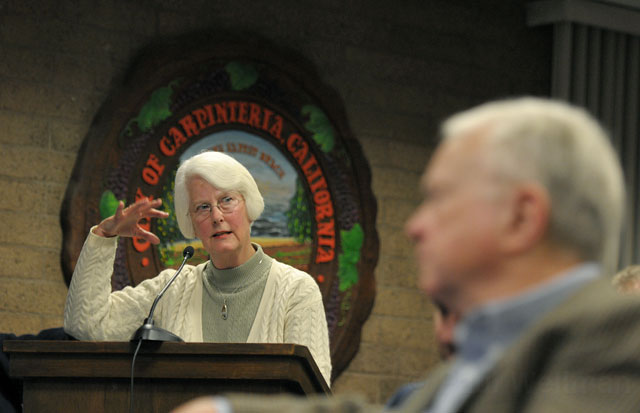
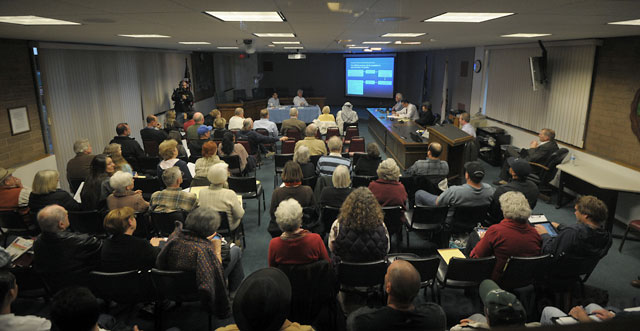
It was standing room only at two separate hearings in Carpinteria Thursday as residents and watchdogs came out to sound off on the latest oil drilling project proposed for the waters just west of the small seaside hamlet. The hearings, one in the afternoon and one in the early evening, and both held in Carpinteria’s City Council chambers, marked the first opportunity for the public to weigh in with their questions and concerns about the possible environmental impacts associated with Carone Petroleum Corporation’s unorthodox plan to expand its existing drilling efforts from Platform Hogan, located in federal waters, in such a way that the energy company would access oil located within state water boundaries. In short, at least for proponents of the plan, the meetings did not go well.
It was less than two years ago that residents of Carpinteria resoundingly rejected, via a landslide vote, Measure J, an initiative that would have paved the way for Veneco Inc. to use extended-reach, slant drilling methods to access some of the crude lurking beneath state waters just offshore. This anti-oil-harvesting sentiment was repeatedly referenced on Thursday as public speaker after public speaker expressed their worries about Carone’s plan and what it could mean for both the onshore and underwater environmental health of the Carpinteria area.
From broad-brush issues like the increased potential for an oil spill or the possible negative effect the proposed slant drilling might have on fault lines, to more project-specific concerns like ramping up the usage of infrastructure that is already almost half a century old (i.e., Platform Hogan, the La Conchita processing plant, and the underwater pipeline between the two) and what the increased drilling would mean for the seal rookery a short distance away, there was no shortage of concerned and skeptical testimony. As Carpinteria resident Vera Benson put it, “We have experienced spills here before, and we never want to experience them again.”
Other areas of worry brought up during Thursday’s scoping hearings included what the slant drilling might mean for the extensive underground aquifer that provides Carpinteria with its drinking water and is the lifeblood for the community’s agricultural industry, what would happen with the mud generated from the increased drilling, would fracking be involved, how would oversight work due to the bifurcated nature of the proposal (drilling from federal waters into state waters), and what, if any, precedents would the unusual project be setting if it gained approval.
The plan, which was officially applied for back in December (previous incarnations of it, however, have been floated as far back 1997) has Carone, a subsidiary of Signal Hill, looking to drill from Platform Hogan 3.7 miles offshore of Carpinteria back toward land and the crude under state jurisdiction. Using slant drilling methods — a technique in which the operators essentially drill straight down from the platform before curving laterally towards the oil reservoir — Carone, with the company Pacific Offshore Operators doing the day-to-day work on the rig, expect to get some 8.9 million barrels of oil during the 40-year period of the project. To do so, they estimate they will need to drill no more than 25 wells, a mixture of actual production wells and injection wells. When operations peak approximately six years after they start, they hope to be bringing in 3,500 barrels a day. (Currently, Platform Hogan averages around 219 barrels per day.)

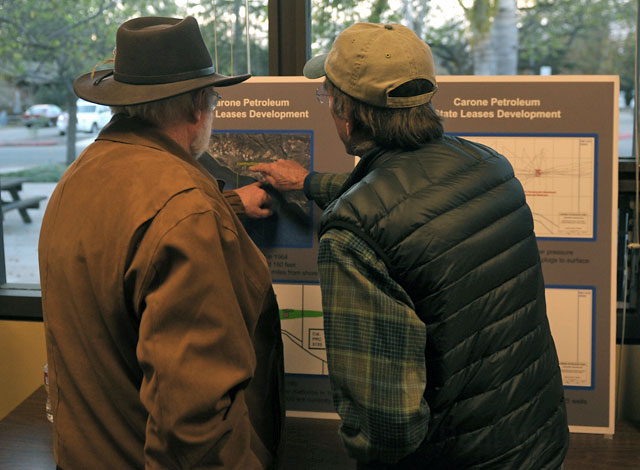
According to folks from Carone, who were on hand Thursday with a table of information about their plans, the risks associated with their proposal are not nearly as dangerous as many of the public commenters fear them to be. Explaining that the oil levels in the reservoir they hope to tap are so low that the harvested crude, when piped from Hogan to the existing facilities at La Conchita, would be at such low pressure levels that a well blowout would be, in the words of one of the diagrams on display, “impossible.” Further, besides potential downsides highlighted by the majority of public speakers, the project also has potential upsides such as job creation and millions of dollars in potential tax revenues for the state.
Technically speaking, Thursday was the public scoping hearing for the project’s Environmental Impact Report (EIR) process. Based on this week’s testimony and written comments submitted to the California State Lands Commission up until February 21 (the federal Bureau of Ocean Energy Management is also helping preside over the EIR process), the extent and scope of the EIR will be developed. A draft EIR, which is being prepared by Ventura’s Marine Resources Specialists, is expected to be completed by the end of the year.