
A wide-scale disaster is unfolding in Nepal. Flash flooding last week inundated entire villages, killing more than 900 people and counting. More than 4,000 people remain missing, including Americans.
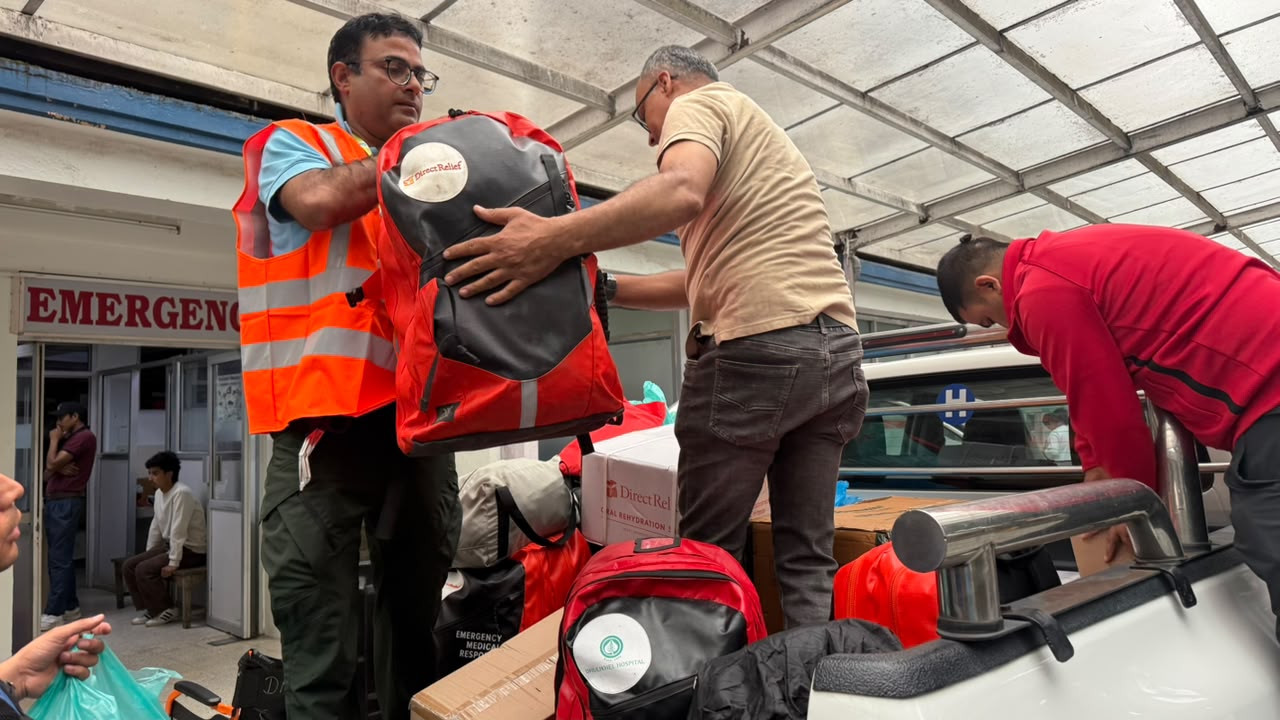
Santa Barbara–based charities Direct Relief and ShelterBox are drawing on experience in the region to guide their response to the recent floods.
Nepal is prone to disasters, especially along its border with China, where the recent flooding occurred. While it was originally thought to be the result of an earthquake — which has rocked the region before — scientists now attribute the flood to a massive glacial collapse. They say it triggered an avalanche and high-speed debris flow that tore through waterways.
Data shows that since the 1900s, these kinds of “glacial failures” have happened dozens of times.
Photos of the recent disaster show the extent of the devastation: entire villages are coated in mud, as if made of clay. Residents walk through towns where detritus hangs over crumbling balconies and spills from broken windows, their colorful clothing standing out against the gray scenes.
Delivering aid has been difficult.
“With all of the infrastructure damage, access to people and to care has been truly washed away,” said Alexandra Kelleher, an emergency response senior program manager at Direct Relief.
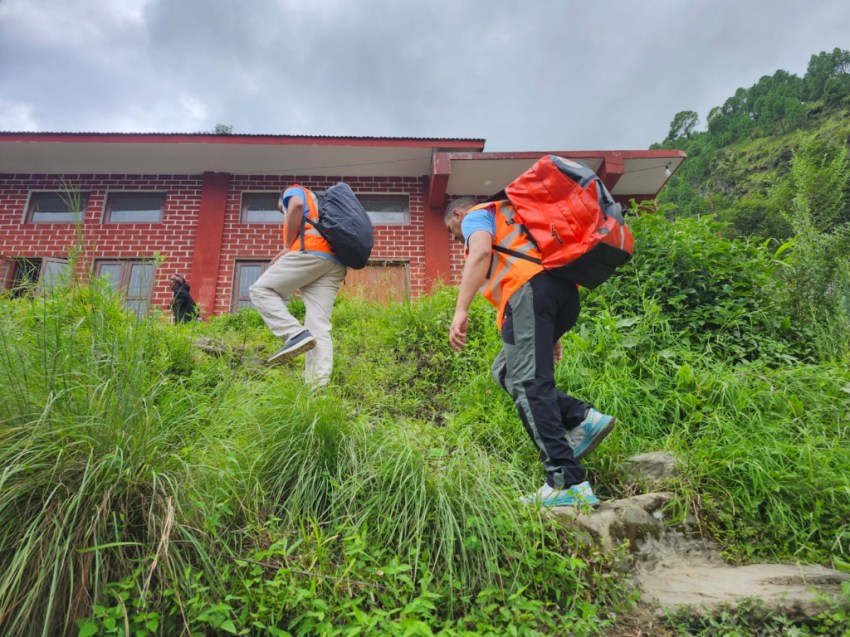
The areas devastated by the floods are rural. It’s a complicated process to deliver medical supplies “even on the best of days,” due to the terrain’s steep valleys and rivers fed by glaciers, Kelleher said. “The effects of the flood have only compounded the difficulty,” she added. At least 19 bridges have been destroyed, the power is out, and many areas are only accessible by helicopter. Secondary flooding risks loom.
But Direct Relief was prepared, drawing on its previous response to a 7.8-magnitude earthquake in Nepal that triggered a large avalanche and killed more than 9,000 people in 2015.
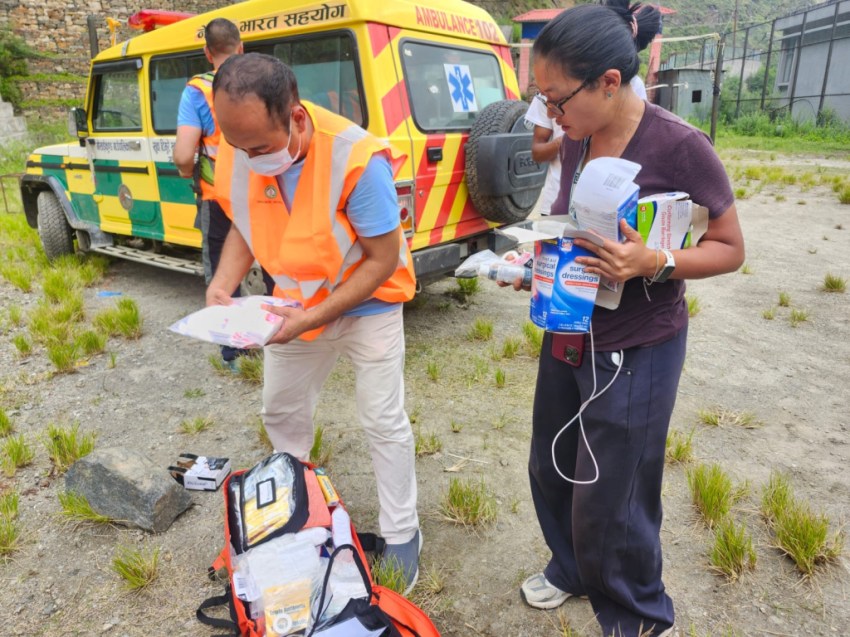
The organization had prepositioned emergency medical supplies at partner sites in the area to aid in search and rescue efforts, Kelleher said. Its relationships with local nonprofits and hospitals, and having supplies already on the ground, were critical in the first 72 hours, she noted.
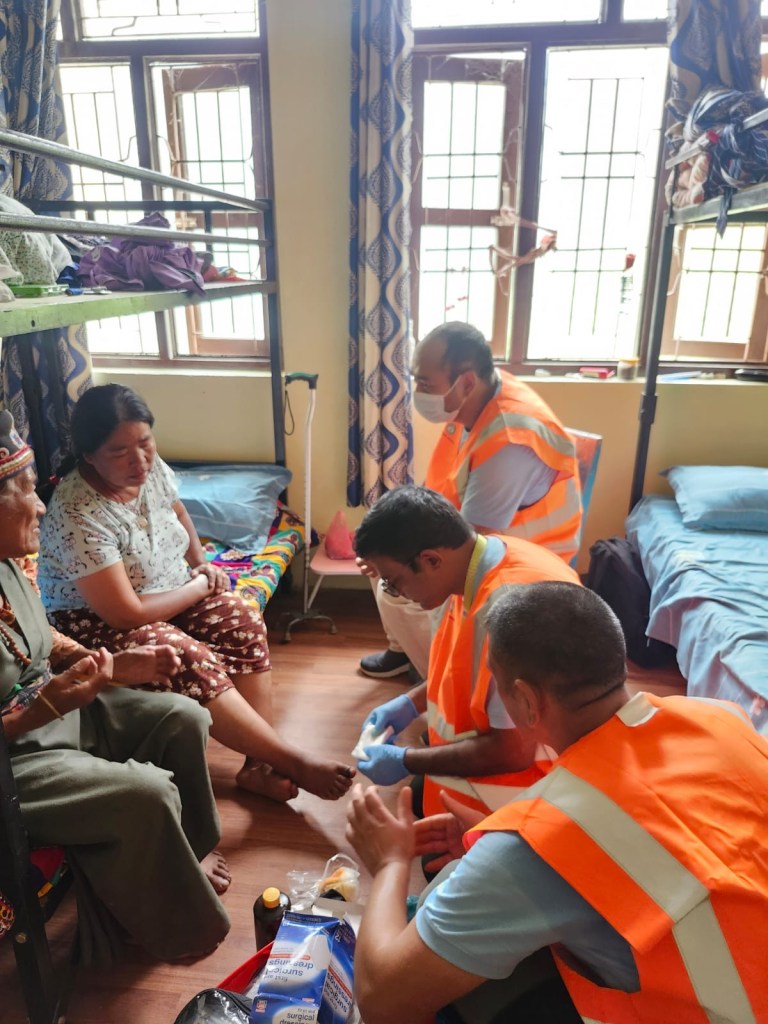
Those emergency supplies — and a $25,000 grant to volunteer medical group Mountain Heart Nepal — addressed survivors’ immediate health needs, from treating acute wounds and trauma patients to providing essential medications to those with chronic conditions. The organization had also already sent a $287,000 shipment of diabetes and cancer medications in early August.
“People that have cancer, or people with diabetes or hypertension, those illnesses and treatments — they can’t just be put on pause,” said Brea Burkholz, Direct Relief’s communications director.
A lack of clean water, power, hygiene, and sanitation will only exacerbate medical needs. Direct Relief is now preparing two additional shipments of medicines, first aid packs, hygiene kits, and equipment from its Santa Barbara County warehouse. Together, they weigh nine tons and are valued at $4 million. It will also deliver solar lights from Santa Barbara–based nonprofit Unite to Light. Direct Relief expects the shipments to go out this week.
“We are also focused on ensuring the evacuees’ health is not forgotten,” Kelleher said. “It’s just the start of a long road to recovery.”
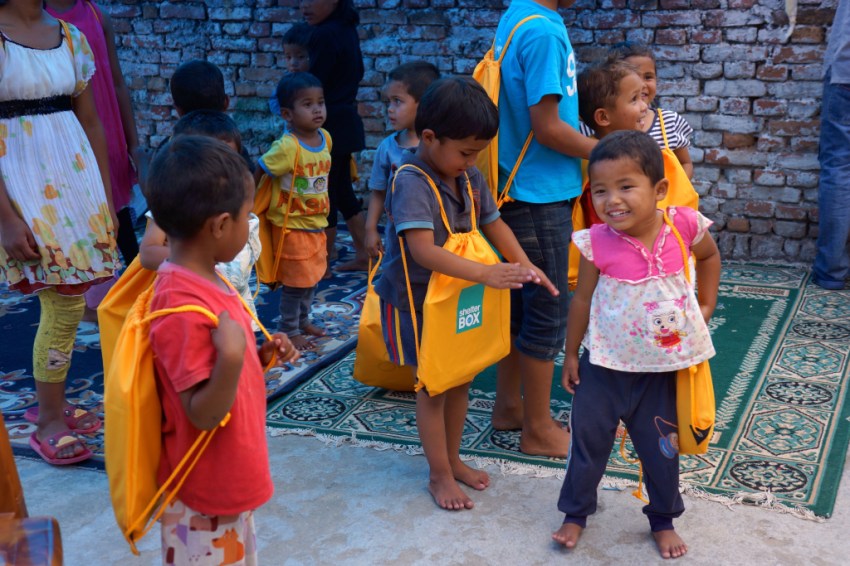
While Direct Relief provides medicine, ShelterBox provides cover. ShelterBox also responded after the 2015 earthquake, and the need now is similar: Thousands of people have lost their homes and critical infrastructure is damaged.
“Homes and buildings were swept away,” said ShelterBox U.S.A. president Kerri Murray. “It’s incredibly challenging when you look at this area because you’ve got these villages scattered across these very remote mountainous areas, and the critical roads and bridges to reach them are destroyed.”
The team at ShelterBox is currently working to understand the scale of the disaster and determine what it can physically manage to deliver or procure locally to bring to the communities that have essentially been cut off, Murray said. It will not be easy.
“But this is what we do,” Murray said. She recounted the organization’s “very large response” back in 2015, when teams delivered blankets, pots and pans, water filters, tools, and emergency shelters, bringing refuge to 68,000 people.
They have a response team en route to Nepal, which they will later supplement with additional staff and volunteers, Murray said.
“But we’ll begin working on the ground with our local partners, determining who’s been affected, and how many people,” she said. “Then we look at the logistical challenges of how we are going to coordinate and stage the supplies, and then reach the people in those villages that have been most affected by this.”
Having experience working in Nepal “helps a lot,” she said. Still, it takes time — likely days to weeks, she estimated.
Seeing that a melting glacier played a role in the deadly floods, scientists are pointing to climate change as a possible culprit.
Thawing permafrost is making the Himalayas more dangerous, and is likely linked to last week’s glacial collapse, experts note. Studies show that glacier melt has rapidly increased, with high mountain glaciers losing mass and retreating, contributing to erosion and unstable mountain slopes. As a result, the risk of landslides and glacial collapse has increased.
“It is too early to say definitively that climate change directly triggered this collapse, but warming temperatures are certainly transforming the Himalayan landscape,” said Brett Anderson, a meteorologist with AccuWeather, in a statement.
No matter what caused the collapse, climate- and weather-based disasters have increased substantially, and the humanitarian consequences are getting harder to manage, according to Murray.
“I think what we’re seeing is a growing humanitarian challenge from increasingly severe and overlapping disasters,” she said.
ShelterBox is increasingly responding to multiple crises at a time, she said. “Families are being displaced at an enormous scale,” she explained. “There are more people displaced today than almost any time in recorded history.”
But their job at ShelterBox isn’t to debate the science behind disasters, she noted.
“It’s to deal with the human consequences,” she said.
Related Posts


Premier Events

Sat, Oct 17
9:00 AM
Santa Barbara
Mesa Harmony Garden Fall Plant Sale Continues…

Sat, Oct 17
2:00 PM
Santa Barbara
A New America: Phoenix Rising- Conversation with Dr. James Tepfer
Fri, Oct 23
2:00 PM
Santa Barbara
Music & Meditation: Clarinetist Nancy Mathison & Pianist Antonio Artese
Sat, Oct 24
9:00 AM
Santa Barbara
Mesa Harmony Garden Fall Plant Sale Continues…

Sat, Oct 17
8:00 AM
Goleta
Isla Vista Elementary Rummage Sale Fundraiser
Sat, Oct 17
9:00 AM
Santa Barbara
No Kings: Vote Early Carpinteria
Sat, Oct 17
10:00 AM
Santa Barbara
No Kings: Vote Early Lompoc
Sat, Oct 17
12:00 PM
Santa Barbara
No Kings: Vote Early Rally S.B
Sat, Oct 17
1:30 PM
Santa Barbara
Screening of “Unseen” A Documentary and Q&A with Director Set Hernandez and Subject Pedro

Sat, Oct 17
2:00 PM
Santa Barbara
Halloween Costumes, Decorations Workshop & Games

Sat, Oct 17
3:00 PM
Montecito
Author Talk & Signing Lorenzo DeStefano ”The Magic Hour” Photography

Sat, Oct 17
5:00 PM
Santa Barbara
“Lucy Darling – All That and More”
Sun, Oct 18
9:00 AM
Santa Barbara
“Move with MADD” Santa Barbara 3K Community Walk & Fundraiser to Prevents Impaired Driving

Sun, Oct 18
11:00 AM
Santa Barbara
17th Annual Asian American Neighborhood Festival
Sat, Oct 17 9:00 AM
Santa Barbara
Mesa Harmony Garden Fall Plant Sale Continues…
Sat, Oct 17 2:00 PM
Santa Barbara
A New America: Phoenix Rising- Conversation with Dr. James Tepfer
Fri, Oct 23 2:00 PM
Santa Barbara
Music & Meditation: Clarinetist Nancy Mathison & Pianist Antonio Artese
Sat, Oct 24 9:00 AM
Santa Barbara
Mesa Harmony Garden Fall Plant Sale Continues…
Sat, Oct 17 8:00 AM
Goleta
Isla Vista Elementary Rummage Sale Fundraiser
Sat, Oct 17 9:00 AM
Santa Barbara
No Kings: Vote Early Carpinteria
Sat, Oct 17 10:00 AM
Santa Barbara
No Kings: Vote Early Lompoc
Sat, Oct 17 12:00 PM
Santa Barbara
No Kings: Vote Early Rally S.B
Sat, Oct 17 1:30 PM
Santa Barbara
Screening of “Unseen” A Documentary and Q&A with Director Set Hernandez and Subject Pedro
Sat, Oct 17 2:00 PM
Santa Barbara
Halloween Costumes, Decorations Workshop & Games
Sat, Oct 17 3:00 PM
Montecito
Author Talk & Signing Lorenzo DeStefano ”The Magic Hour” Photography
Sat, Oct 17 5:00 PM
Santa Barbara
“Lucy Darling – All That and More”
Sun, Oct 18 9:00 AM
Santa Barbara
“Move with MADD” Santa Barbara 3K Community Walk & Fundraiser to Prevents Impaired Driving
Sun, Oct 18 11:00 AM
Santa Barbara


You must be logged in to post a comment.