

Wisely, SBIFF opted to keep the final programming day slots open for TBAs — a chance to re-screen films which were so popular they sold-out houses earlier in the festival, along with a few artistic highlights. The list included the film which turned out to be the Audience Choice winner, a long-standing program sponsored by the Independent and a chance for viewers to weight in with voices and votes. Never mind the career critics among us or official jurors. The people have spoken: Out of Plain Sight wins the 2025 prize. (Read Callie Fausey’s story here.)
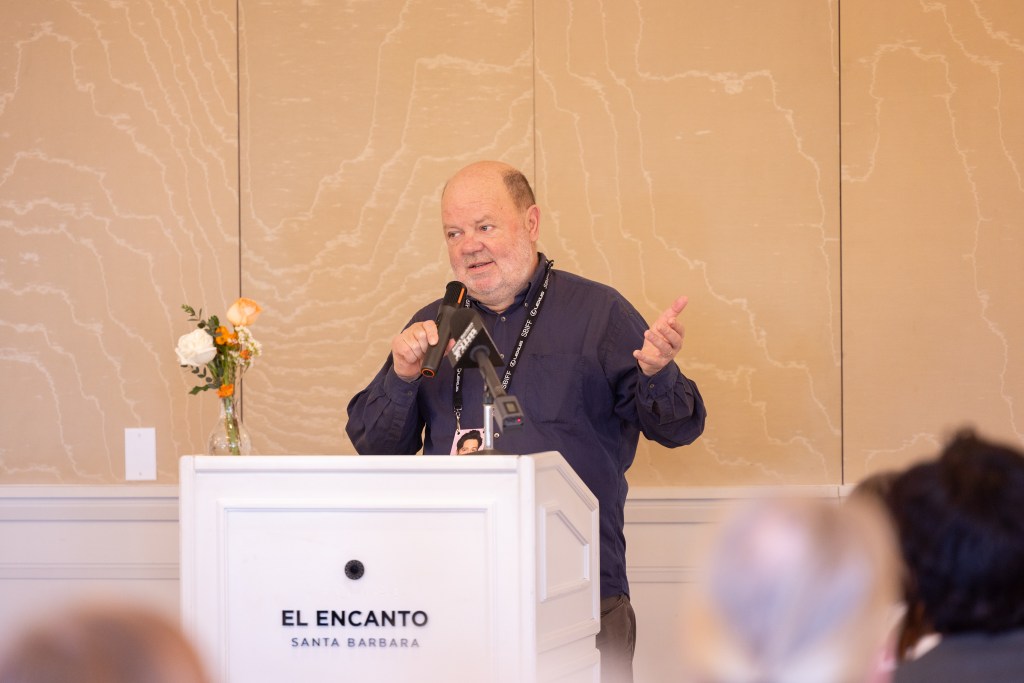
When I announced the Audience Choice award at Saturday morning’s SBIFF awards breakfast at the El Encanto, I sheepishly admitted to Rosanna Xia, the film’s onscreen anchor and co-director, that I had yet seen the film but would.
And I did, in the third sold-out screening of the festival, yesterday afternoon. And I was mightily impressed. More specifically, I shared in a common response to this much buzzed-about documentary by being at once maddened and saddened by its account of the lingering effects of DDT in our lives and the food chain.

Xia, an environmental reporter for the Los Angeles Times, has spent the last few years uncovering the shocking phenomenon of the demon insecticide and “forever chemical” DDT disposed of in dumping sites just off the coast of Palos Verdes. The direct damaging effects include an extreme health hazard to sea lions, moving through other sea life and even up the food chain to condors. Human risks are hard to assess, but cancer and other maladies have been traced to the chemical.
A series of Times articles lured the attention of director Daniel Straub and his cinematographer brother Austin. In their fascinating and frightening documentary, Xia herself serves as principal investigator and on-screen source, including extensive consultation with UCSB Earth Science professor David Valentine (read Callie’s 2023 cover story about his work here) and other experts, telling a powerful and thoroughly-researched story about the legacy and untold damage done by dichloro-diphenyl-trichloroethane. Archival footage and army training films dating back to the ‘40s suggest kitsch culture, but with “horror film” resonances.
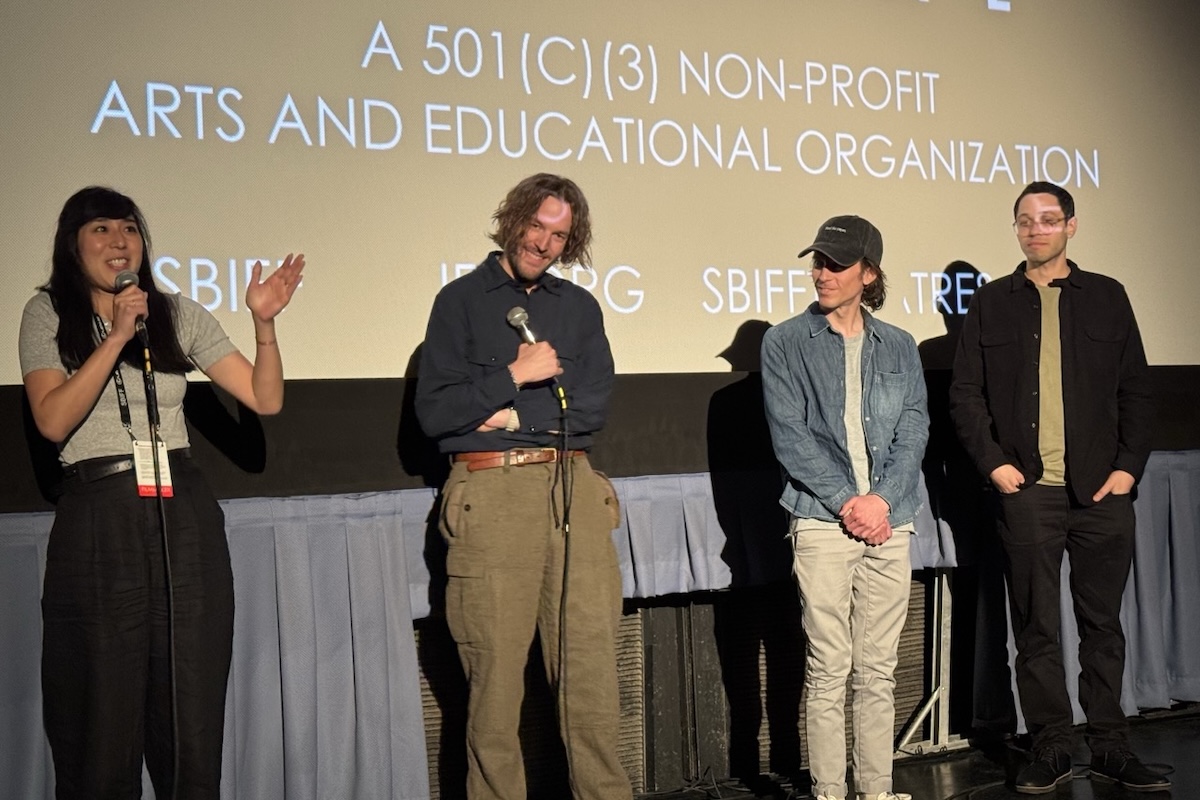
The Straub brothers recounted their process of “ambushing” Xia at a book talk and eventually talked her into their plan to follow her on her research, as “an axis point in the field,” versus the standard practice of talking heads testimonials. She commented that, “I was resistant to visualize or sensationalize a story that didn’t need sensationalizing.” Ultimately, she realized, “I needed to serve as a proxy for the story.”
As Xia said “an environmental doc is not the easiest sell. This is not the easiest film to watch, but it’s important.”
Another award winner, taking the Jeffrey C. Barbarkow International Cinema prize, was the stylistically intriguing and emotionally complex Taiwanese film Yen and Ai-Lee. From literally the first shot of this elegantly visual black and white film, we are drawn into and mystified by various family backstories. Writer-director Tom Shu-yu Lin inventively interweaves threads of the fuller story, using subtle inverted chronology and transforming identity to tell the tale — but in slow reveal format.
It’s a story with familiar points of family-based pain, centered around are tight-lipped and obviously emotionally scarred protagonist Yen (brilliantly played by Kimi Hsia) enmeshed in a circle of abuse, unfairly neglected children and desire for revenge. And yet the film proceeds with artful cinematic touches, often with atmospheric long takes and a sense of place and pacing reminiscent of Ozu’s work. The all-important cathartic release arrives only when our heroine is undercover in a veiled costume, as part of an acting class. It’s a powerful scene/shot worthy of an award in and of itself.
Another festival favorite, garnering sold out houses, TBA status and seemingly a ripe contender for the Audience Choice award itself, was the Peruvian film Mistura, from writer-director Ricardo de Montreuil. This gorgeously staged and shot depiction of mid ’60s Lima leans into the winds of melodrama too many times for comfort. But it’s a beautiful thing to behold, especially the magnetic actress Bárbara Mori — as the society woman Norma, suddenly separated from her husband and launching into the restaurant business. The premise also showcases ample portions of food porn imagery.
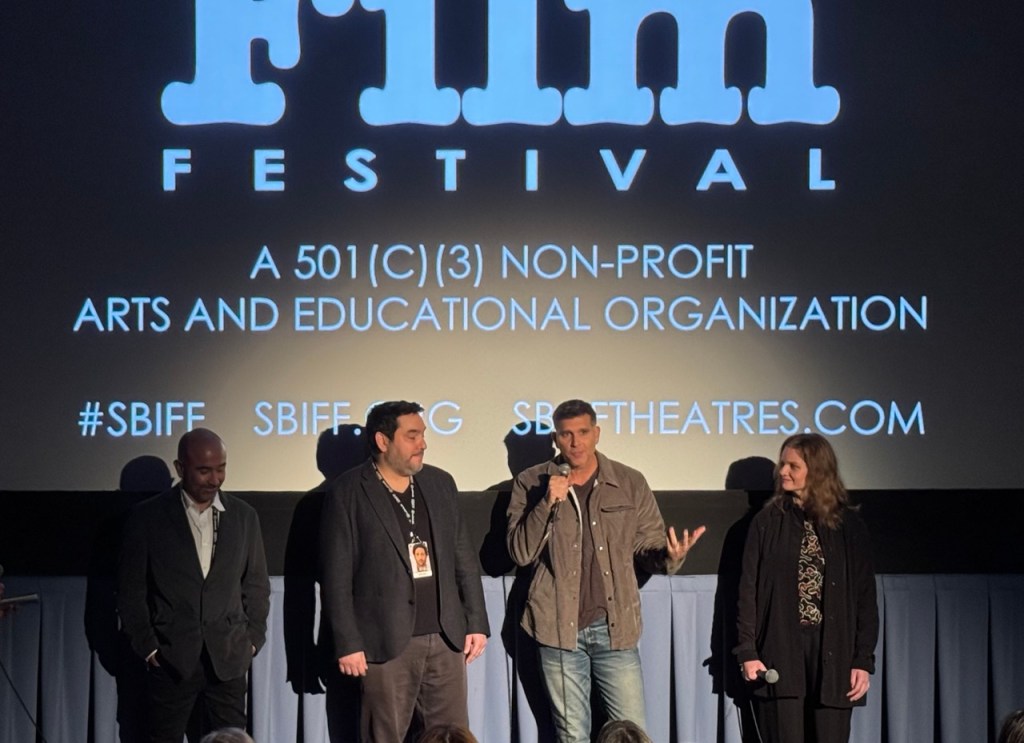
Montreuil was at the Riviera Theater for a Q&A on Sunday, and he explained that, through the film’s angle of mixing cultures and cuisines, he portrayed “a mix of different cultures and tribes. It’s an essay on how diversity can make us stronger.” He later added that, “I wanted to promote unity, which is important now, with politics trying to divide us — not only here but around the world.”
One interesting side note in the film is its musical aspect. The central character Oscar, driver and eventual love interest who also plays cajon in clubs, was actually played by the professional percussionist Cesar Ballumbrosio, impressive in his first acting role. The score also includes legendary Peruvian percussionist Alex Acuna who played with the eminent jazz group Weather Report in addition to rent-paying pop session work before his recent retirement.
Final Reel
Now that SBIFF @ 40 is all said and done and screened, we can safely say that this was a year when both opening and closing films were worthy of our love and attention. Jane Austen Wrecked My Life kicked the program off on a good note, while the closing film, A Missing Part, kept us engaged with its unusual but ultimately moving story of a French father trying to gain access to his daughter, sequestered through a custody clause in Japan.
In the on stage preamble to the finale, board President Ernesto Paredes commented that, “there are so many moving parts to making this festival happen.” He also spoke about the upcoming major renovation of the festival’s new Film Center, asserting “we will become an anchor for the renewed lower State Street area.”
Managing director Sean Pratt, who, like executive director Roger Durling, has been a vital part of the festival for 23 years, ushered out a large ensemble of staff and volunteers for their close-up. “The stage is not big enough,” Pratt said. For sheer number of bodies involved, it was an “it takes a village” moment.
At 40, the child has been raised into adulthood, and is doing very well, thank you.










You must be logged in to post a comment.