
Fiesta Dance — Step by Step
The Legends Behind
Santa Barbara’s
Iconic Stage Tradition
By Camilla Barnwell | July 31, 2025

Read more about Fiesta 2025:
Fiesta Listings 2025
Four Luminaries of Fiesta 2025
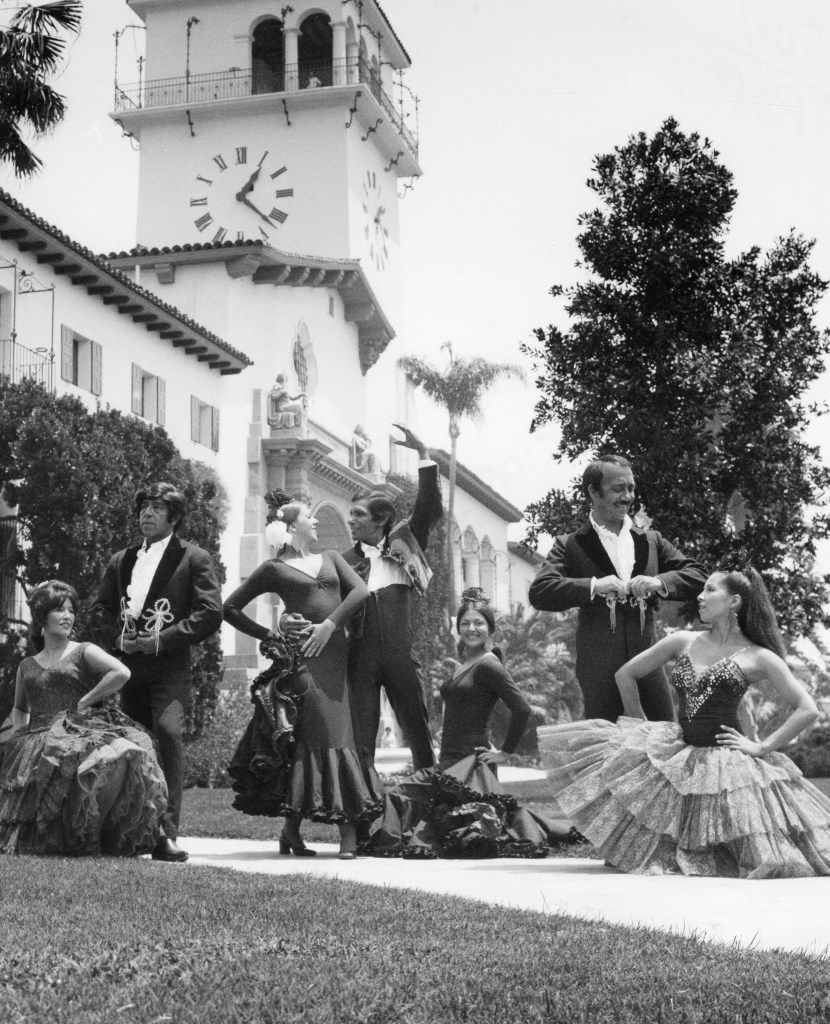
If the Old Mission steps could speak, they’d tell a thousand stories of Fiesta: slamming heels, swirling skirts, breath held before dancers cross the stage into the light.
But just beyond the glow — past the applause, the perfect turns — stand the maestros, the studio directors who brought it all to life.
ONCE UPON A FIESTA
Fiesta began in 1924 as a civic pageant celebrating the region’s Spanish, Mexican, and Indigenous roots — a romanticized nod to Santa Barbara’s rancho period, when families and neighbors gathered in the patios and plazas of this small pueblo, playing music and dancing. They were having a fiesta.
Fiddles and guitars accompanied graceful, slow-paced dances, many brought from Spain and Mexico, but some songs and dances were also created here, part of the Californio culture developed by a people mostly isolated from the rest of the world.
Dance was always at the heart of those early Santa Barbara celebrations. That heart still drives Fiesta, but today it powers an entire industry and, for many, a way of life.
And yet, the full story of how these dances came to define Fiesta — who brought them, taught them, and kept them alive — has never been gathered in one place.
For this article, I drew from 101 years of Fiesta programs, press clippings, publications, and first-person accounts to map the lineages and the artists behind Santa Barbara’s most iconic stage tradition.
The throughline isn’t hard to trace. Nearly every major figure in today’s Fiesta dance scene is tied to a thread that leads back to the originators: the visionaries who lit the torch.
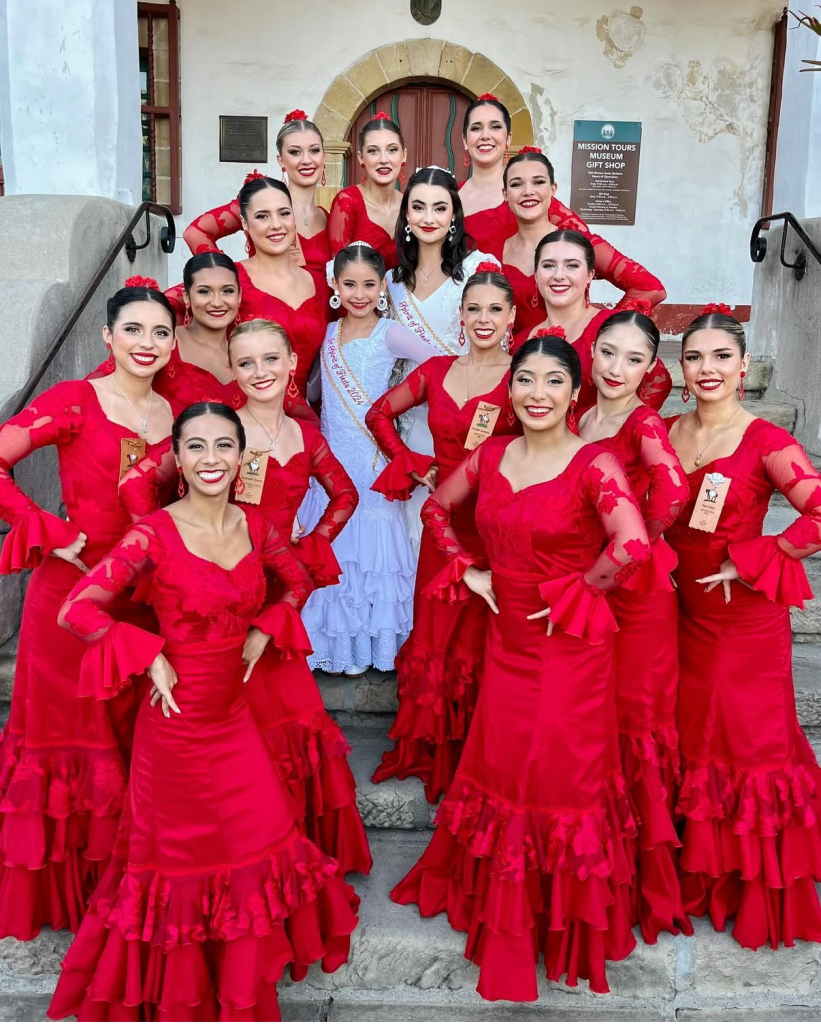
And it was not an easy torch to carry. Throughout Fiesta’s history, the leaders behind Santa Barbara’s dance studios have always done more than teach steps. They’ve built a professional dance culture from the ground up — producing shows, fundraising, managing egos and complaints, nurturing generations of students, and often depleting themselves (and sometimes their wallets) just to keep studio doors open.
The result today: a thriving and diverse dance community.
For studio directors — the veritable rockstars of Fiesta — it’s both a calling and a crucible.
In a recent interview I had with Daniela Zermeño, director of one of Santa Barbara’s most influential studios, she reflected on what it takes to have a successful Fiesta season: “Grit. Heart. Passion.” By the time her dancers step onto the mission steps and continue performing on stages across town, she’s poured a year into their preparation — as choreographer, costume designer, soundtrack editor, and, at times, counselor, chauffeur, and lifeline.
For many young Santa Barbara dancers, being named Spirit of Fiesta is the culmination of a lifelong dream. But for others — like Zermeño, the 2009 Spirit — it marks the start of a career shaped by four intense days in August.
“It’s hard to believe how much this little festival in this little town runs my life,” Zermeño said. “I’m living in this small world created by big, great people who paved a really hard path to keep these traditions alive.”
Like so many directors now working in Santa Barbara, Zermeño is aware that the Fiesta of today is a world built on the talent, sacrifice, and sheer will of those who danced the path before her.
THE PAST
TO THE FUTURE
For the record, flamenco didn’t arrive with the Franciscan padres or the Presidio soldiers. No one in early California was stomping across dusty Santa Barbara County ranchos in polka-dot ruffles.
But long before flamenco arrived, dance was already woven into the fabric of Californio life. When Major-General John Frémont arrived and California became part of the United States, many Spanish-speaking residents feared those traditions would vanish.
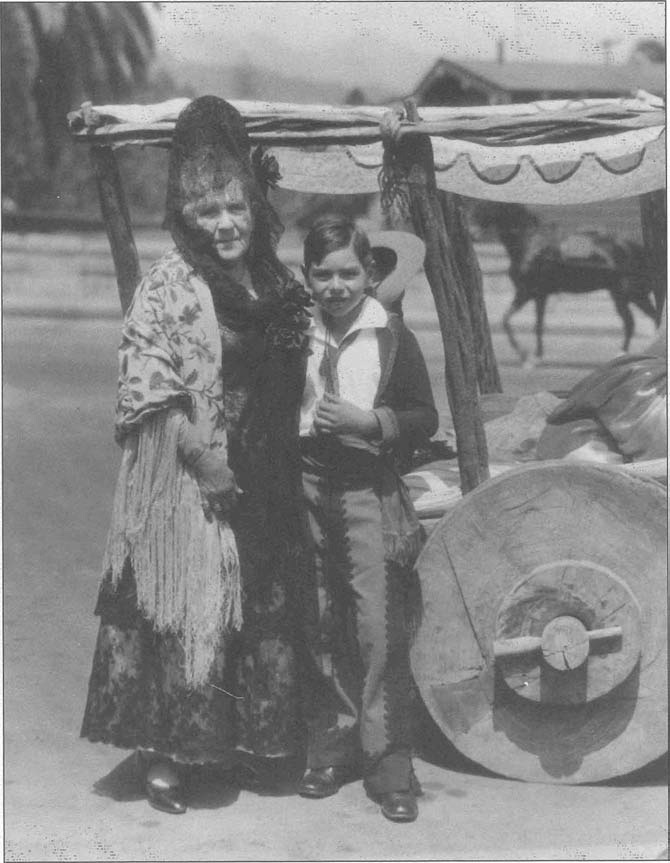
To the rescue came María de los Ángeles Ruiz, described in a daily paper of the time as “a direct descendant of one of the choir boys who came when the old Mission was founded.” By keeping the Californio dances alive through her classes and performances, she came to be regarded as one of the last living links to its origins.
By the time the first official Fiesta was celebrated in 1924, Ruiz was already advanced in years, but her influence was everywhere. Newspaper accounts and early programs list her dancers performing across town — at parties and civic events. Among them was one of her stars: a young Juan Cota, who would later be known as “Mr. Fiesta.”
Juan Cota took the stage at the first Fiesta and never really left, participating for more than five decades as a dancer, teacher, and choreographer.
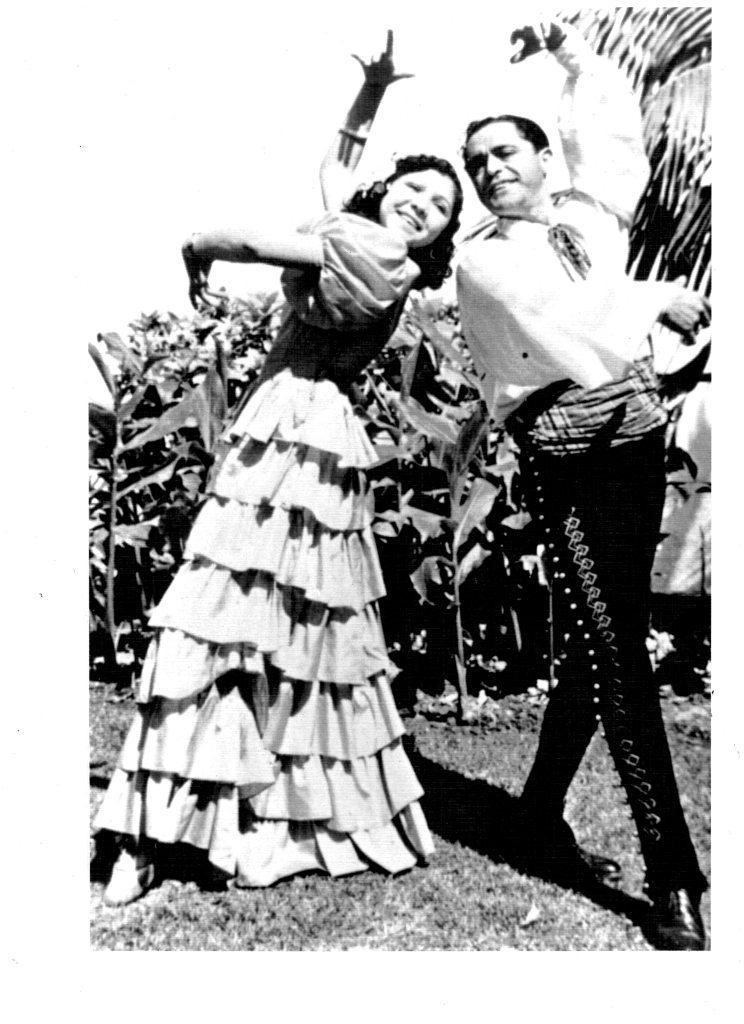
Cota taught and performed the dance steps from Santa Barbara’s early days: fandangos, boleros, classical Spanish danzas with castanets, seguidillas, quadrilles, and jotas. He was also known for his masterful performances of Jarabe Tapatío (Mexican Hat Dance) and El Sombrero Blanco.
Cota learned the Californio dances locally, but his family, who were descendants of a Santa Barbara Royal Presidio soldier, sent him to Mexico to learn the Mexican and classical Spanish dance forms. He and his wife, Elfina — herself a descendant of José Francisco Ortega, the first comandante of the Santa Barbara Presidio — had 13 children, many of whom joined with the generation of early Fiesta performers that Cota trained.
His granddaughter, Rosal Ortega, a renowned dancer who recently returned to Santa Barbara, remembers her mother, Irene Rosita Cota Tuttle, telling how she was just 6 years old when she danced the Mexican Hat Dance with her father, Juan Cota, on stage during Fiesta. “Dance is in my DNA,” Ortega said. “If I don’t dance, I don’t feel alive.” Two years ago, Ortega opened a flamenco dance studio for adults in Santa Barbara.
IGNITING THE LIGHT
It was a warm July night in 1940 when José Manero erupted onto the El Paseo Restaurant stage. According to news accounts of the time, the audience gasped, then began fanning themselves, as he snapped his red cape through the air and his seductive bull in heels, Paquita del Rey, circled and charged with a dancer’s snarl.
It wasn’t flamenco. The duo performed a paso doble — a theatrical Spanish dance modeled after a bullfight, with march-like footwork and dramatic flair.
Word of the performance quickly reached the organizers of Old Spanish Days, who invited Manero and his partner to reprise the number at the Fiesta event that August at the County Bowl.
Trained in Madrid and Mexico City, Manero had Hollywood ties and performed on world stages. But he decided to stay in Santa Barbara and opened a studio in De la Guerra Plaza. It became both a sanctuary and a proving ground, with the sound of castanets and guitar riffs drifting year-round over his balcony onto the streets below.
“My gosh, the memories I have of following the sounds of music up those stairs,” recalled Rose Marie Cruz, one of Manero’s star performers. “You were just drawn to it. His studio was our safe haven, a place of freedom, love, security.”
But that haven came with rules. Respect and punctuality were non-negotiable. He stitched costumes by hand and punctuated tempo and posture with a sharp rap on the floor with his wooden stick. Students arrived cool and left wringing wet.
Cruz incorporated many of these values in the studio she founded nearly 40 years ago where a portrait of Manero still hangs on the wall.
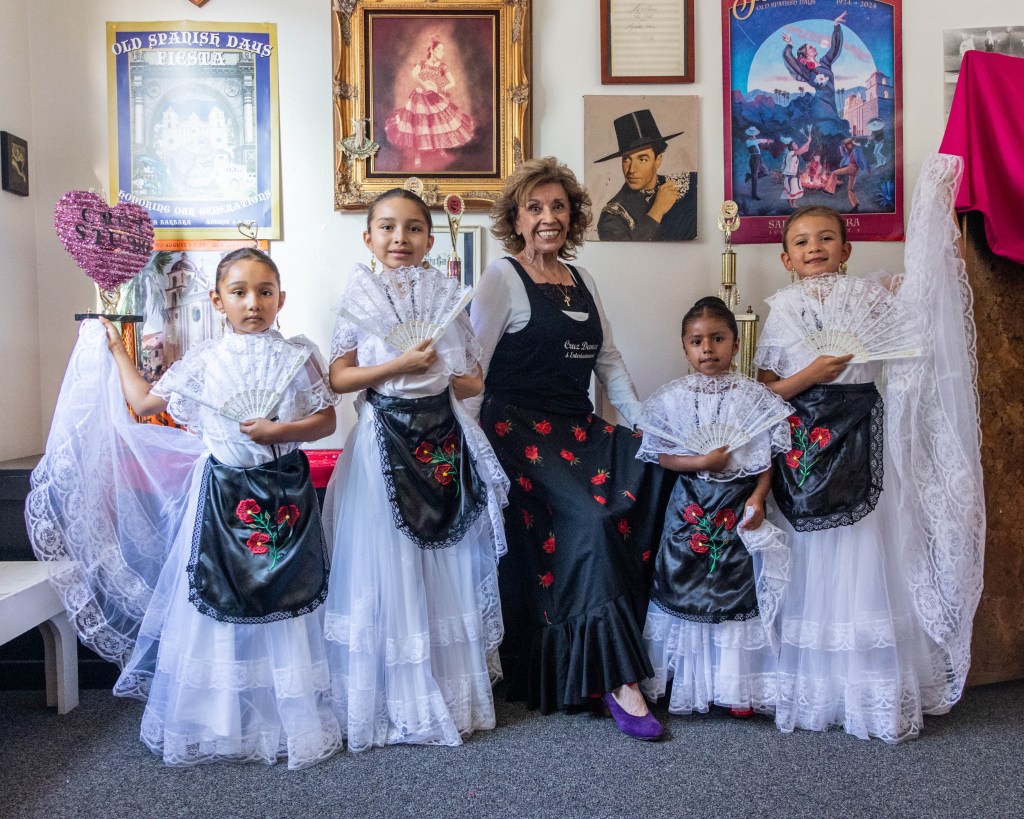
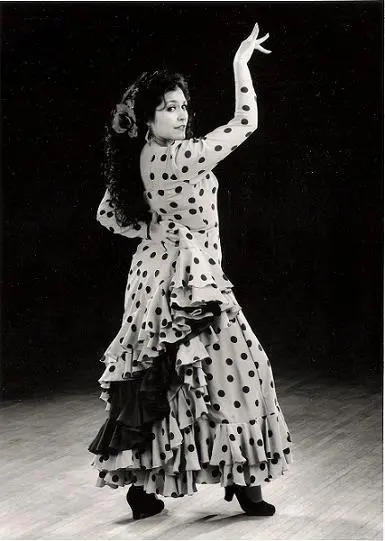
Studio director Kathy Cota, the youngest daughter of Juan Cota, studied and performed with Manero on Santa Barbara stages. In an interview some time before her death in 2024, she told me that Manero upped the standard for Fiesta dance across the region: “José opened us up to a whole new world.”
Another Manero-trained dancer, Antoinette Lopez, who became the Spirit of Fiesta in 1975, agreed. Lopez began training with him when she was only 4 years old and operated a studio in Santa Barbara for several decades. “I looked up to him so much,” she said, “I remember thinking, ‘Someday I’m going to have my own studio.’ Art forms die out if not for the teachers who keep them alive.”
AN EVOLVING GENERATION
In the footsteps of Juan Cota and José Manero followed a cascade of Santa Barbara artists — studio heads, artistic directors, maestros and maestras — Rose Marie Cruz, Linda Vega, Ana Galindo, Antoinette Lopez, Kathy Cota, Laura Garcia, the Cabrera family, Daniela Zermeño, and Maria Bermudez.
More recently, dancers who have been performing during Fiestas for years have leaped into leading and directing studios, among them: Alda Escárcega, Ashley Almada, Jesalyn Contreras, Marisol Cabrera, Erika Martin del Campo, and Timo Nuñez.
“After traveling the world and studying with masters in Spain, I still find that the greatest influences I turn to are my very first teachers; Linda Vega, Roberto Amaral, Juan Talavera, and Maria Bermudez,” said Nuñez, who first dazzled Fiesta crowds as a boy, then performed internationally before returning home in 2024 to open his own flamenco studio “I carry a deep sense of honor and responsibility as I continue this beautiful legacy.”
Fiesta’s dance story continues to honor a range of traditions — from early California to Mexican folklórico and Indigenous forms — brought to life by family ensembles and longtime performers. Those keeping these dance forms alive include: the Cabrera family, Diana Replogle-Purinton of Baile de California, Georgina Rodriguez of Alma de Mexico, Francisco Espinosa of Grupo de Danza Folklórica Quetzalcóatl, and John and Lisa Estrada of Grupo Folklórico de West L.A.
Still, most of the dance studios that fuel the Fiesta machine today focus mainly on flamenco, which is why we see so much of it in August.
FLAMENCO FLAMES
Once flamenco took root in Santa Barbara, it didn’t just enter quietly — it upended the scene. The ripple effects fueled studio growth, energized Fiesta dance, and, inevitably, stoked the fires of competition. The big names most associated with bringing serious, international-level flamenco dance to Fiesta are: Juan Talavera, Luisa Triana, Linda Vega, Roberto Amaral, Maria Bermudez, and Manuel Gutierrez, as well as a long list of visiting world-class flamenco dancers brought to town by Vibiana Pizano’s Flamenco Arts Festival.

José Manero is credited with inviting L.A. flamenco star Juan Talavera to guest-teach in Santa Barbara in the ’60s, giving local students their first serious introduction to flamenco’s fierce footwork, sharp rhythms, and centuries-old raw emotion.
Studio sensation Linda Vega told me that she was 21, living in Santa Barbara, when she happened upon a class taught by Talavera. So taken by the art form, she moved to Spain, working in the competitive world of tablaos: intimate flamenco performance spaces, typical of southern Spain.
But after a decade, Santa Barbara and its Fiesta drew her back, first as a choreographer, then to open her studio in 1987. Vega’s style, warmth, and unmistakable spark did more than just draw in students. Neither Vega nor flamenco were Santa Barbara natives, but through her, the art form became the hottest ticket in town, inspiring rival studios to adapt and a new generation to follow her lead.
When Vega retired in 2020, she passed her studio to Maria Bermudez, who in 2024 passed it to Timo Nuñez. Both of them are Vega’s former students.
A celebrated international flamenco performer, Bermudez today serves as artistic director of the Flamenco Santa Barbara company, which provides dance scholarships and support to artists and musicians who perform during Fiesta and throughout the year.
“Santa Barbara has fascinated and inspired me as an artist,” Bermudez said. “It’s like a Spanish fan — every fold has a space. You live in this tiny town, but the level and standard of dance keeps evolving, higher and higher.”
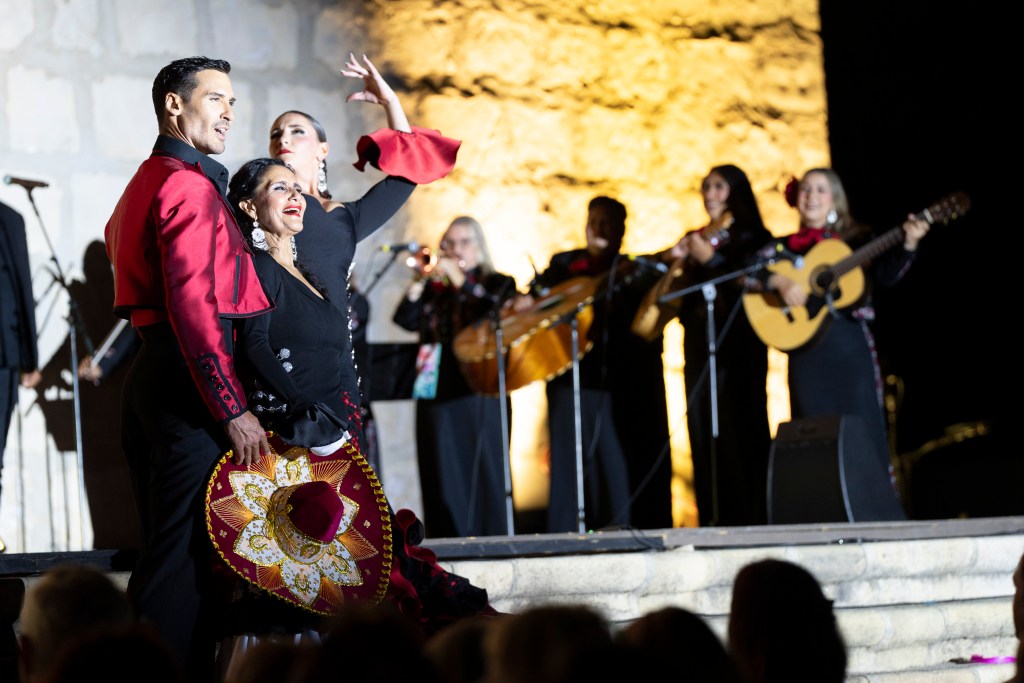
Ana Galindo, who shared that she trained as a child with flamenco legend Carmen Amaya, has been a colorful force in the Santa Barbara flamenco scene for decades. She definitely understands the realities of studio life and feels strongly that the studios are underappreciated.
“Number one: You’ve got to pay the rent. Number two: If the neighbors don’t like the sound, they’re gonna help you right out the door and you’ll be looking for another studio,” she said.
“You’ve got a city made with Spanish tile, and these fiesteros and socialites celebrating a Spanish Fiesta, but when it comes time to putting it back in, it ain’t done,” she said with her signature candor. “Dancers walk the parade, instead of on a float, and sometimes have to dance on cement floors. It’s hard to find gigs or get stage time.”
But Galindo knows that none of that can hold a true maestro back, or an artist with a passion that doesn’t let go.
TRADITIONS REMAIN
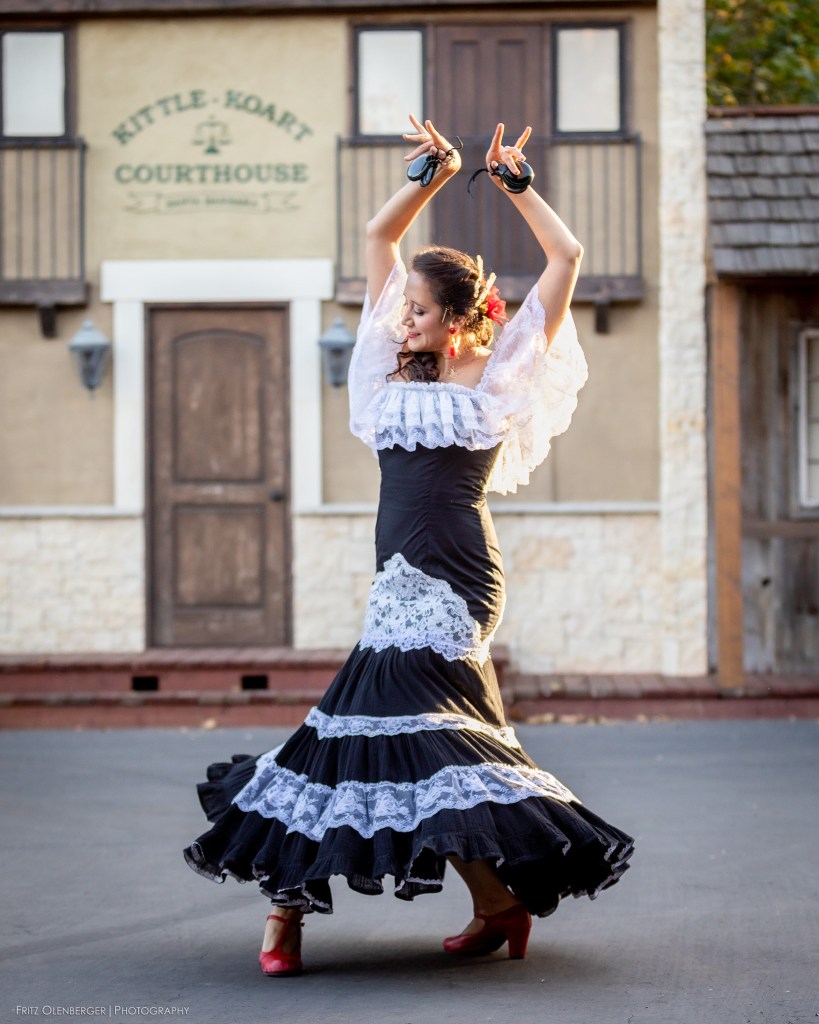
Marisol Cabrera represents the rare triple threat. Her training spans flamenco, folklórico, and classical Spanish dance, shaped by many mentioned in this story — Cruz, Vega, Galindo, and Amaral — as well as Nino Carrillo of Alma de Mexico, Alex Marshall, and former members of the Native Daughters Dance group, Las Fiesteras: Dolores Hartnett, Mary Louise Days, and Susan Parent.
“If you go back in time, the legends like José Manero, Kathy Cota, and Rose Marie Cruz upheld the classical Spanish forms. But what happens if their students aren’t teaching anymore? What happens to those traditions?” said Cabrera, Spirit of Fiesta 2001, who is often seen performing with her mother, father, and brother. “As a dance educator with deep knowledge in these genres, my goal is to keep passing it on as best I possibly can. That’s the only way it will survive.”
Rhonda Ledson Henderson, a past La Presidente of Old Spanish Days who is running this year’s Fiesta Pequeña, agrees: “Fiesta is not guaranteed,” she said. “Studio directors are the fire that ignites new artists for the next generation.”
PASSING THE TORCH
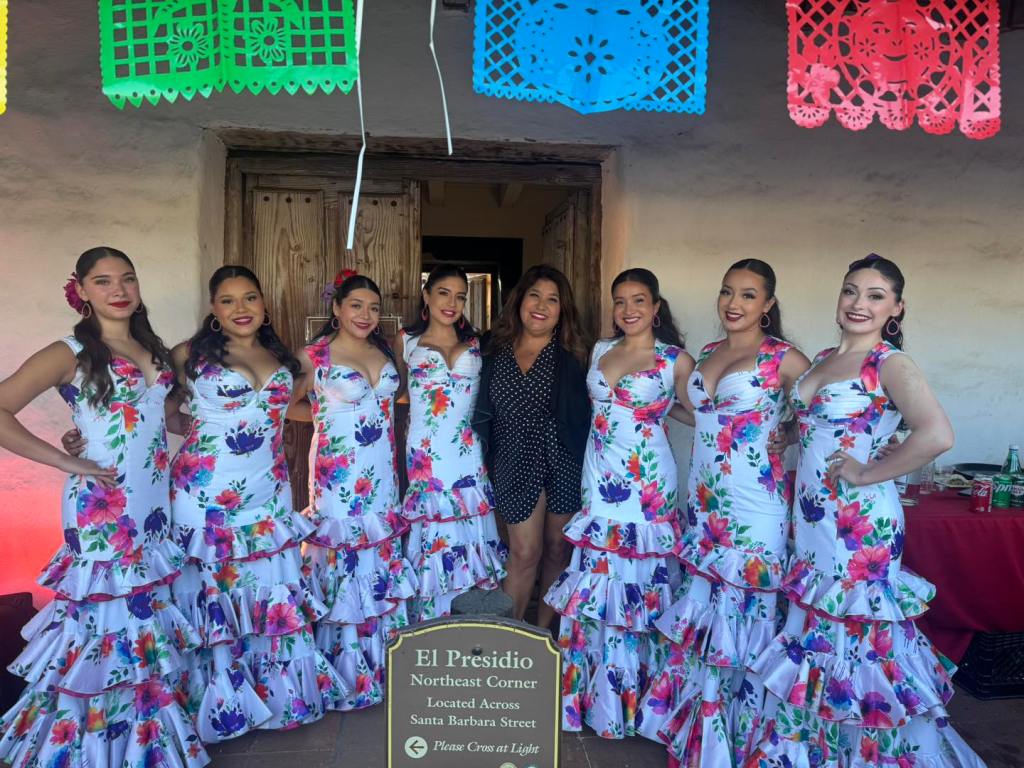
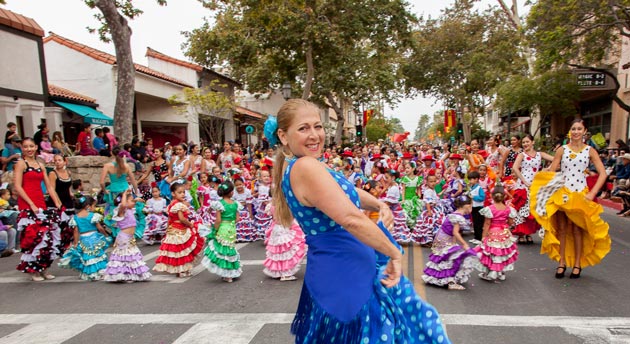
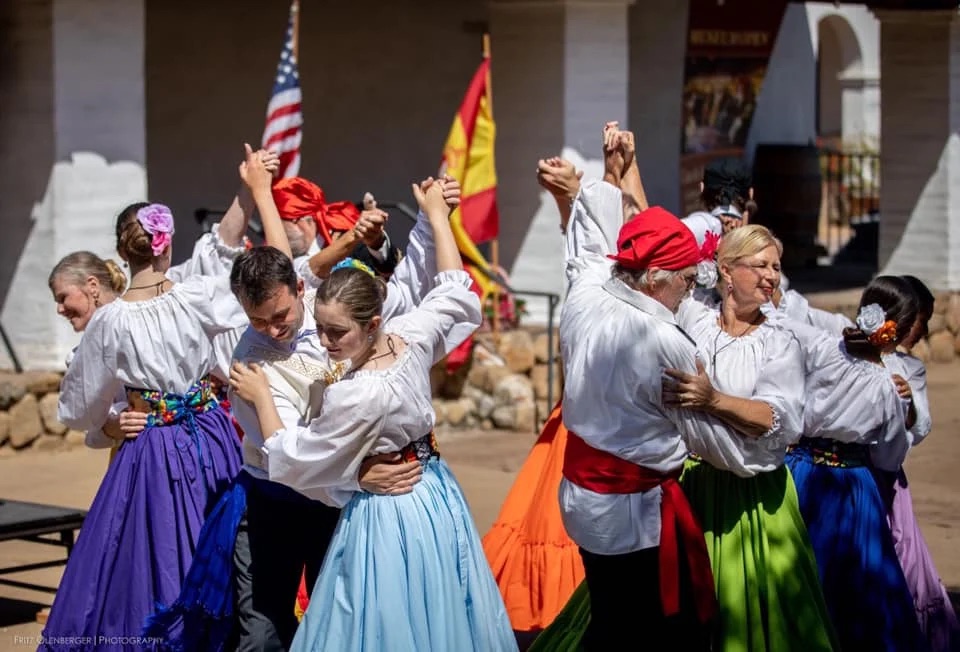
Some of today’s directors once sat as children cross-legged on the Old Mission lawn, watching a Spirit of Fiesta twirl. Some even earned the coveted title. And now some are coaching dancers toward that same spotlight.
In a town dense with talent, tensions flare and rivalries simmer. Students switch studios. Parents become managers. Friendships strain under the heat of competition. But pressure, like rhythm, can refine.
Each August, a loop of lineage tightens — layering choreography over choreography, memory over memory — until the mission steps hold more stories than any archive, or any writer, ever could.
Read more about Fiesta 2025:



You must be logged in to post a comment.