
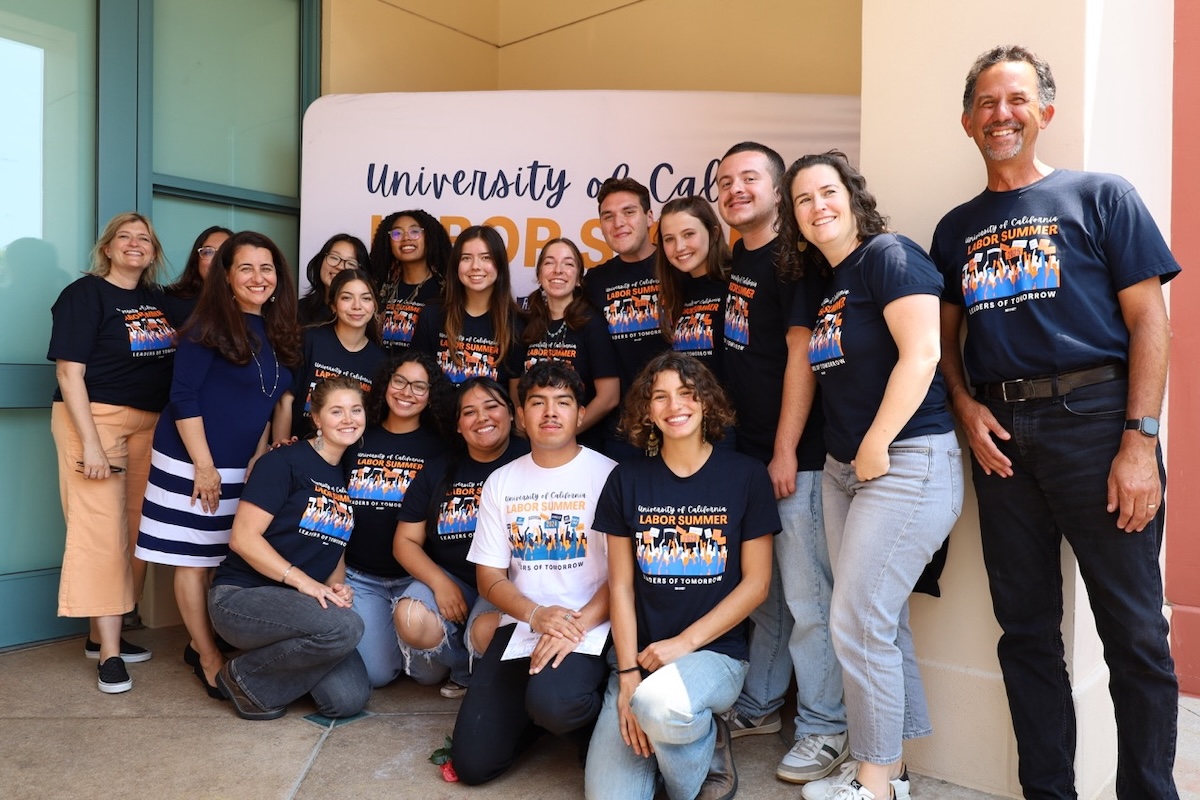
For the third year in a row, UC Santa Barbara students participated in “Labor Summer,” a program that gives a group of students on-the-ground experience in labor organizing, planning rallies, and advocating for workers in a wide range of industries on the Central Coast.
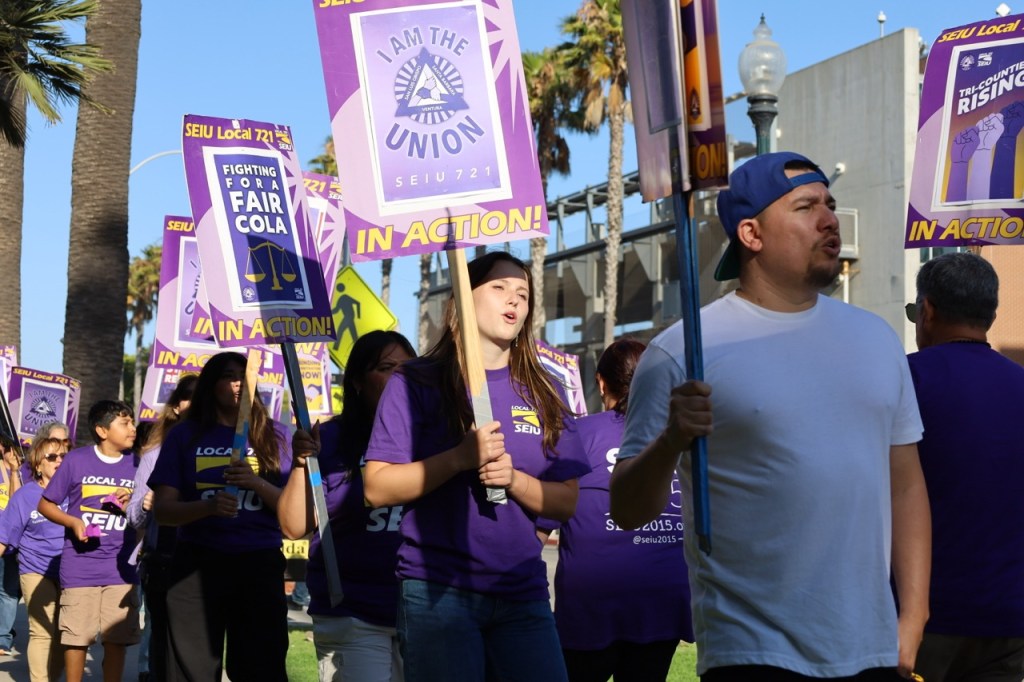
UCSB’s Community Labor Center started the Labor Summer program in 2023, placing 11 students with labor unions such as United Farm Workers (UFW), United Domestic Workers of America (UDW), and local chapters representing public sector employers. This year, 14 students participated in the program, interning at a diverse range of groups, including United Auto Workers, Greenpeace, Central Coast Labor Council, community organizations such as CAUSE and MICOP, and unions representing nurses, public employees, and food workers.
Run by Labor Center Executive Director Carmen Rhodes, Academic Coordinator Fabienne Doiron, and Faculty Director Ralph Armbruster-Sandoval, the program aims to create a pipeline for students interested in labor organizing, and to “cultivate the next generation of labor leaders,” Armbruster-Sandoval said.
Over the past three years, eight Labor Center students have interned with the UFW, a farmworker union that has become especially important in the current political climate, with targeted immigration operations occurring more frequently on agricultural sites across the state.
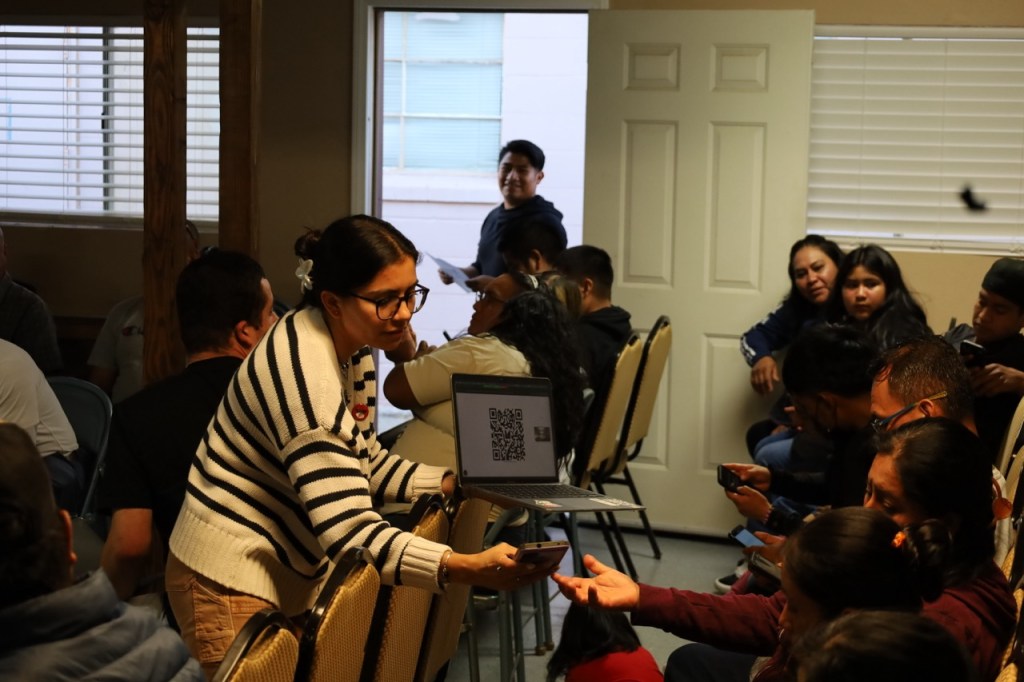
Jenny Alvarez completed the Labor Summer program as an undergraduate in last year’s cohort. After interning with UFW last summer, she was hired as an organizer this year. Though she had spent most of her Oxnard childhood driving past the fields going to and from school, but it was as an organizer that her eyes opened to the reality of the workers.
“Hearing testimonies from farmworkers who, for decades, have worked twice as hard as the average American,” Alvarez said, “and can still barely scrap by Labor Summer really … changed my heart. Now I don’t see things in the grocery store the same way.”
In 2024, she helped farmworkers enroll in the Deferred Action for Labor Enforcement (DALE) program, which grants temporary protective status for undocumented workers who experience labor violations. At the time, two workers had died on the job, including one where workers were forced to continue working around the body of a coworker who was killed by a farm truck.
The UFW helped more than 50 workers enroll for the protective status, something Alvarez said is important given the indiscriminate immigration enforcement, workplace raids, and ICE detainments at court hearings that have made it more difficult to organize workers.
It’s also led to some scary situations. One occurred when Alvarez was escorting a farmworker to a court hearing and was pulled over by three unmarked vehicles. Although she did everything “by the book,” she says the encounter ended with an ICE officer sticking his hand inside the window to get in and take the person out.
She says she’s been inspired by the workers’ resilience in the face of the fear: “To them, it’s normal,” Alvarez said. “It’s the sacrifice they make for their kids.”
“They are so extremely humble, so loving, and they have such faith that things will work out,” she continued. “And they only want the bare minimum; they want what they deserve.”
Though concerned about the upcoming harvesting seasons, Alvarez is hopeful that the farmworkers can continue organizing and that the public will change its views about the agricultural industry.
“People should give themselves the opportunity to understand what the average farmworker goes through,” she said. “Be conscious about the choices you make in the store. It’s not just fruit. It’s dairy, meat, it’s everything that we eat, and a lot of people don’t realize.”
Axel Valencia-Alvarez, a fourth-year Chicano Studies major who is part of this year’s Labor Summer cohort — and one of two UCSB students working with the UFW over the summer — said it was a life-changing experience to work closely with farmworkers.
UFW has adapted to the current climate, he said, holding meetings in workers’ houses and helping families prepare for potential immigration issues by creating a “family plan” to cover legal questions of child custody and power of attorney should a parent be deported. “It’s not easy having those conversations,” he said.
“We live in a really divisive, polarized society right now, and they’ve seen their rights taken away,” he said. “So, for us as organizers, we’ve just been encouraging the workers to mobilize, and creating some hope and resilience in the world.”
Senator Monique Limón was in attendance for Labor Summer’s closing ceremony at UCSB on August 7. She said students participating in the program are “gaining an excellent perspective on the role that organized labor plays in securing better wages, benefits, and stronger workplace protections.”
Senator Limón noted that a third of the country’s farmworkers reside in California, and the state has worked to approve legislation to ensure farmworkers have access to housing, childcare, and supportive services. She pointed to Senate Bill 778, which she recently authored to guarantee farmworker families access to childcare from birth through at least the age of 12. “This bill was brought together in support of the agricultural industry and labor organizations,” Limón said.





You must be logged in to post a comment.