
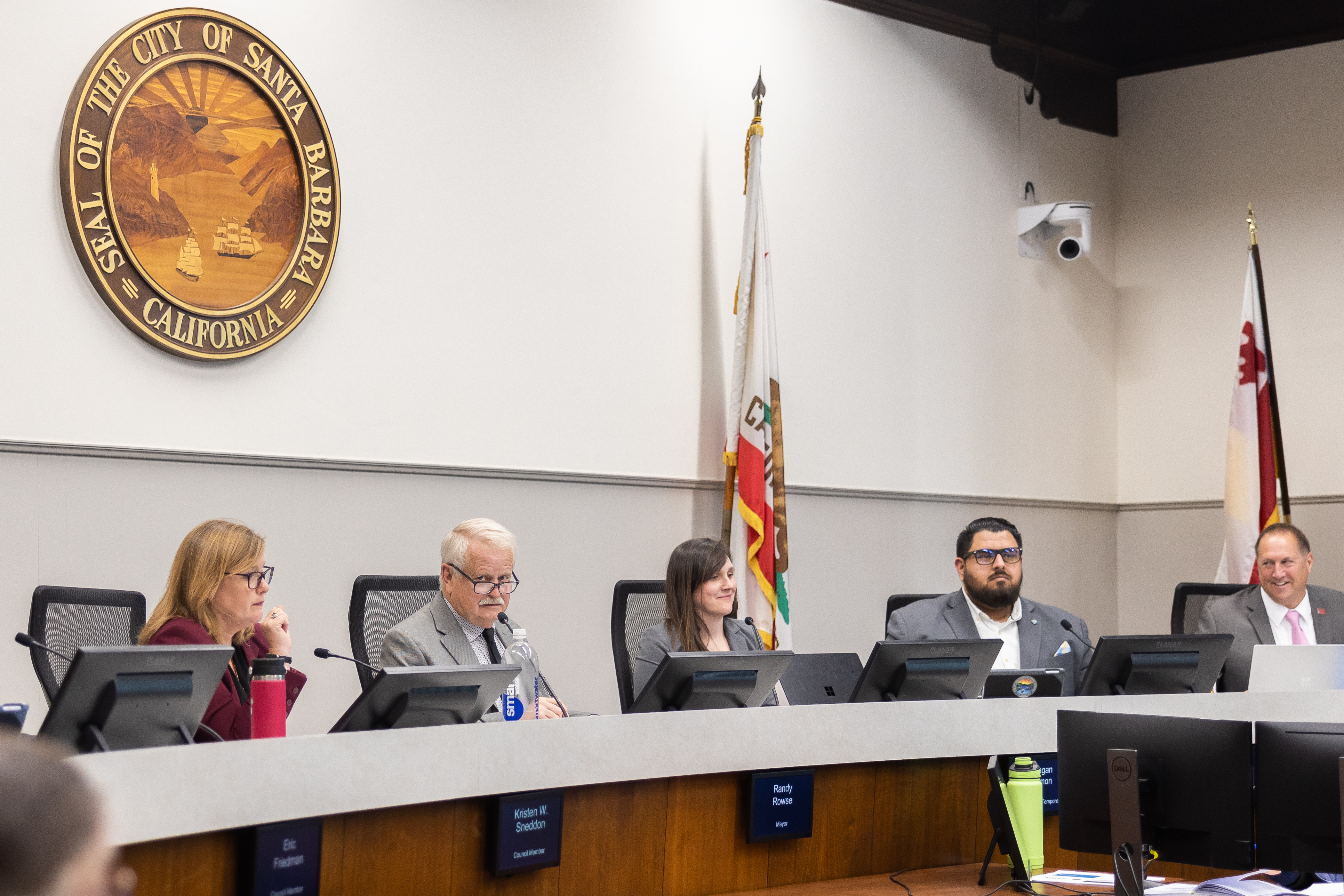
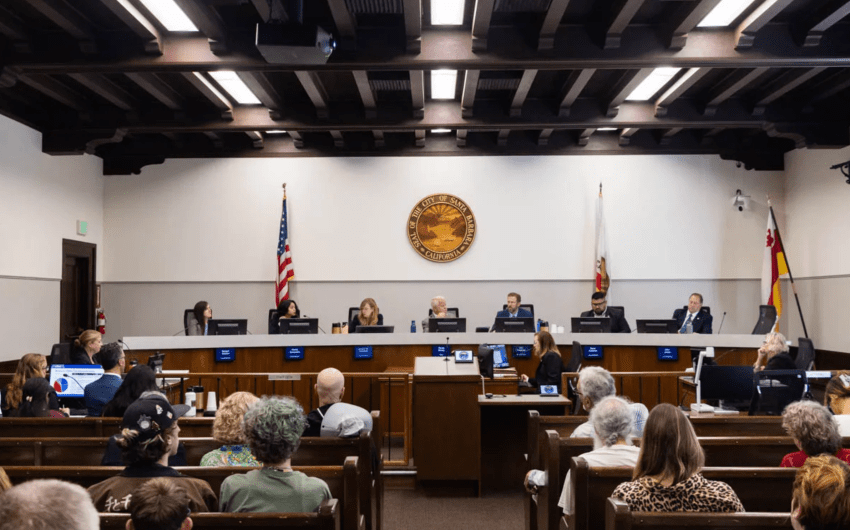
Santa Barbara City Council directed staff to make a few changes to the proposed Adaptive Reuse Ordinance, with the majority of councilmembers supporting the plan to lighten up restrictions for developers looking to convert underused commercial, office, or retail spaces in the downtown area. During Tuesday’s meeting, the council made a last-minute change to also direct staff to remove the inclusionary requirement in the Central Business District, which would allow developers to move forward with projects without the usual requirement of at least 10 percent of units set aside for affordable housing.
There is no specific pathway for developers to easily convert old buildings to residential units, and more than a year ago, the city began drafting a new “Adaptive Reuse Ordinance” to encourage developers to pursue reuse projects.
The new ordinance promises a streamlined path to receiving permits, offering no limits on density (units must meet the city’s minimum size requirements), fewer fees, and breaks on parking requirements. As long as residential units fit within the existing building and no exterior modifications are needed, the project can get a fast-pass through the planning process.
“We’re really trying to maximize and facilitate that creation of housing,” said City Project Planner Dana Falk.
City staff originally recommended the ordinance mirror the inclusionary requirements for most other housing projects, with Falk explaining that a citywide evaluation of its inclusionary housing policy was underway. It would be simpler, City Administrator Kelly McAdoo explained, to leave the ordinance as drafted and remove the requirement for affordable housing at a later date when the data was available.
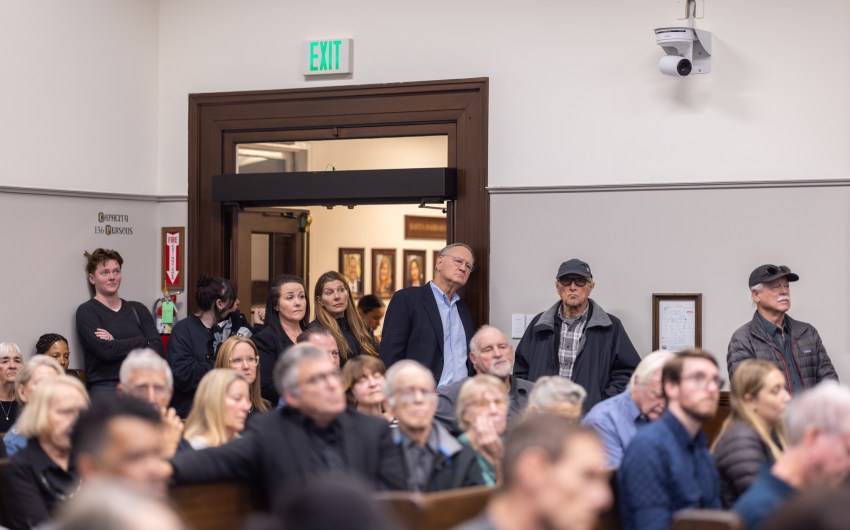
The City Council heard from several property owners, developers, and real estate consultants, however, who worried that forcing the inclusion of affordable housing — at least in the Central Business District — would kill many projects before they even got off the ground.
Housing advocates also spoke during public comment, arguing that the inclusionary requirement is one of the few remaining that the city can guarantee new affordable units, and the adaptive reuse ordinance was already too generous with its incentives for developers.
Councilmember Eric Friedman worried that making adaptive reuse too bureaucratic would defeat the purpose of creating an ordinance, and might backfire by “inadvertently driving property owners to build more hotels.”
“I think this is a very real possibility unless we get this right,” Friedman said. “The last thing we want to do is reduce the ability to get more housing built and instead get more hotels.”
Councilmember Friedman suggested removing the inclusionary requirement in the Central Business District, and instead putting a cap that would trigger mandatory affordable units for larger projects of 25 units or more.
Councilmember Meagan Harmon said she wanted to be clear that the council would not be removing requirements for inclusionary housing for any other projects except those that fell under these “hyper-specific” circumstances: only for adaptive reuse projects proposed within the Central Business District.
She said she was “deeply committed to inclusionary housing” citywide, but that the adaptive reuse program should be more fundamentally about “paving the way for the reuse in downtown in spite of the complexity that exists there.”
After deliberation, the council decided in a 5-2 vote to direct staff to return with an amended ordinance, with no inclusionary housing requirement for projects under a staff-recommended minimum number of units. Councilmember Kristen Sneddon and Wendy Santamaria voted in opposition, with Santamaria saying that she was worried about the Central Business District becoming a “high-income only” area.
“That’s not what our city is,” Councilmember Santamaria said. “Whether we like it or not, we have people who are lower-income who keep the city running and who also deserve to live in that central core.”
Related Posts




Premier Events
Thu, Apr 09
7:00 PM
Santa Barbara
POSTPONED – Journey Within: Wisdom & Meditation with Gurudev – POSTPONED
Fri, Apr 10
2:00 PM
Santa Barbara
Music & Meditation SB – Concert April 10, 2026

Sat, Apr 11
7:00 PM
Santa Barbara
Dinner & Standup Comedy @ Wine Cask Gold Room
Sun, Apr 12
11:00 AM
Solvang
Santa Ynez Valley Home + Build Showcase
Mon, Apr 13
7:00 PM
Santa Barbara
New Horizons – Antonio Artese West Coast Trio

Tue, Apr 14
7:00 PM
Goleta
Wild and Free Film Festival Spring Movie Night
Thu, Apr 09
6:00 PM
Santa Barbara
Chaucer’s Books – Poetry Night

Thu, Apr 09
7:00 PM
Santa Barbara
CWC Docs: The Other Roe

Thu, Apr 09
7:30 PM
Santa Barbara
Doublewide Kings Benefit Concert

Fri, Apr 10
7:00 PM
Ventura
Rubicon Theatre Presents “Somebody to Love”
Fri, Apr 10
7:00 PM
Santa Barbara
Unity Singers’ Spring Concert

Sat, Apr 11
10:00 AM
Los Olivos
Tomatomania! Santa Ynez Valley

Sat, Apr 11
12:00 PM
Isla Vista
Music in the Park: Spring Concert Series – Anisq’Oyo Park
Sat, Apr 11
3:00 PM
Santa Barbara
SB Music Club Free Concert Saturday 🎶

Sun, Apr 12
2:00 PM
Santa Barbara
Ensemble Theatre Company Presents “A Night with Janis Joplin”

Sun, Apr 12
7:30 PM
Santa Barbara
SBAcoustic Presents Poi Rogers & The Elderberries
Thu, Apr 09 7:00 PM
Santa Barbara
POSTPONED – Journey Within: Wisdom & Meditation with Gurudev – POSTPONED
Fri, Apr 10 2:00 PM
Santa Barbara
Music & Meditation SB – Concert April 10, 2026
Sat, Apr 11 7:00 PM
Santa Barbara
Dinner & Standup Comedy @ Wine Cask Gold Room
Sun, Apr 12 11:00 AM
Solvang
Santa Ynez Valley Home + Build Showcase
Mon, Apr 13 7:00 PM
Santa Barbara
New Horizons – Antonio Artese West Coast Trio
Tue, Apr 14 7:00 PM
Goleta
Wild and Free Film Festival Spring Movie Night
Thu, Apr 09 6:00 PM
Santa Barbara
Chaucer’s Books – Poetry Night
Thu, Apr 09 7:00 PM
Santa Barbara
CWC Docs: The Other Roe
Thu, Apr 09 7:30 PM
Santa Barbara
Doublewide Kings Benefit Concert
Fri, Apr 10 7:00 PM
Ventura
Rubicon Theatre Presents “Somebody to Love”
Fri, Apr 10 7:00 PM
Santa Barbara
Unity Singers’ Spring Concert
Sat, Apr 11 10:00 AM
Los Olivos
Tomatomania! Santa Ynez Valley
Sat, Apr 11 12:00 PM
Isla Vista
Music in the Park: Spring Concert Series – Anisq’Oyo Park
Sat, Apr 11 3:00 PM
Santa Barbara
SB Music Club Free Concert Saturday 🎶
Sun, Apr 12 2:00 PM
Santa Barbara
Ensemble Theatre Company Presents “A Night with Janis Joplin”
Sun, Apr 12 7:30 PM
Santa Barbara

