
The Power of Autonomy
Anacapa School Shows That When Teens
Lead in the Classroom, More Engagement Follows
By Tiana Moloney | November 20, 2025

Read more from Schools of Thought 2025 here.
Think back to your school days — there was probably one class you genuinely looked forward to, not just one you had to survive. Maybe it was the subject, or maybe it was the teacher who gave you some control over how you learned. That sense of autonomy isn’t just a perk; it can make a real, measurable difference.
One study of high school students (Grades 9-12) found that those who perceived their classes as allowing autonomy, with their teachers supporting their decision-making, showed increased engagement over the course of the class rather than the typical decline.
“It allows for kids’ own interests and passions to be highlighted,” reflects Anacapa School’s Middle School Director, Edie Lanphar. The school, which began in 1981 and includes middle and high school (soon to incorporate 6th grade), operates on a hands-on, project-based learning model.
While they offer traditional classes that maintain conventional academic rigor and meet accreditation and college-preparatory standards, they still include elements of student choice, projects, and creative ways to show learning. One way they do this is by giving their students experiences outside of the classroom.
Because of Anacapa’s unique location in downtown Santa Barbara, students have the opportunity to participate in field trips that connect classroom learning with real-world experiences. “We’re really able to engage with the community around us,” shares Anacapa’s Head of School Mari Talkin, who sees these out-of-classroom excursions as opportunities for the kids to gain independence. “[The kids] love the independence that we trust them with.”
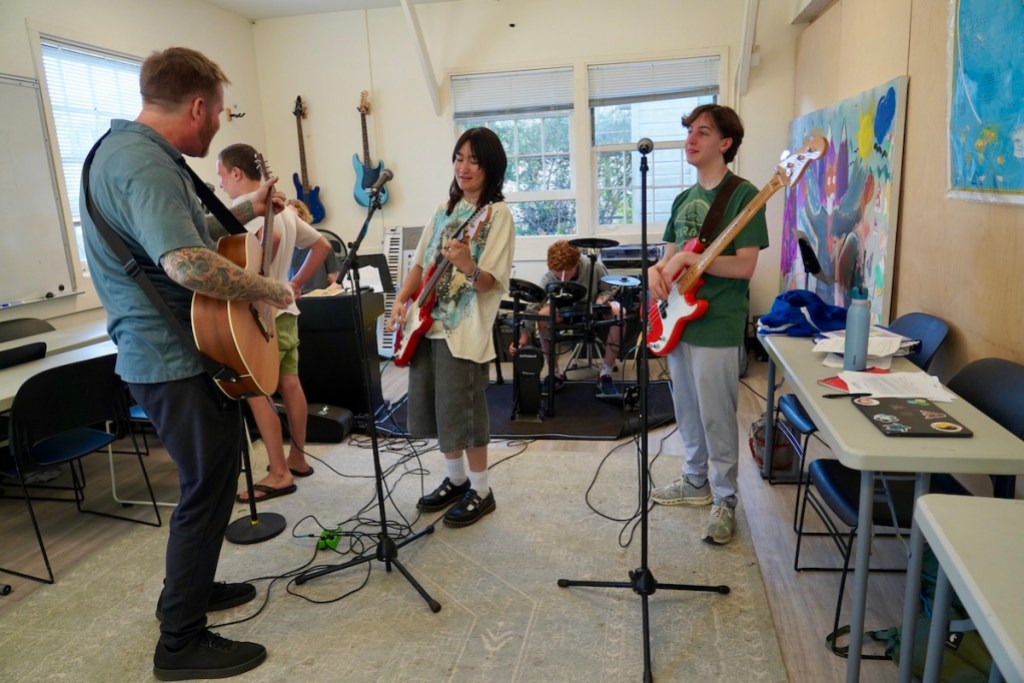
A safe learning environment and letting students lead go hand in hand. “We want to create the safest space possible so that they are well taken care of,” she says. Lanphar emphasizes that when students are free from stress, anxiety, or relationship issues, their brains are better able to absorb information, participate fully, and engage with their education.
A primary example of their student-led approach is the “mystery unit,” which is an integrated, cross-curricular theme at Anacapa School that brings together subjects such as science, language arts, and social studies around the central idea of mystery, both in ancient and modern contexts. For this course, Lanphar notes, “It’s really about also creating critical thinkers who really want to know all there is to know about something.”
Students explore topics such as forensics and DNA extraction (with hands-on presentations from experts, including the Santa Barbara Sheriff’s Office), investigate mysteries through literature (reading works by Sir Arthur Conan Doyle and Agatha Christie), and write their own mystery stories.
“We do a lot to enrich the students’ experience and give them a lot of opportunities,” says Talkin. “And our hope is always that something is going to catch their imagination, and something’s going to catch their interest, and then they’re going to do a deep dive into it.”
See anacapaschool.org.




You must be logged in to post a comment.