

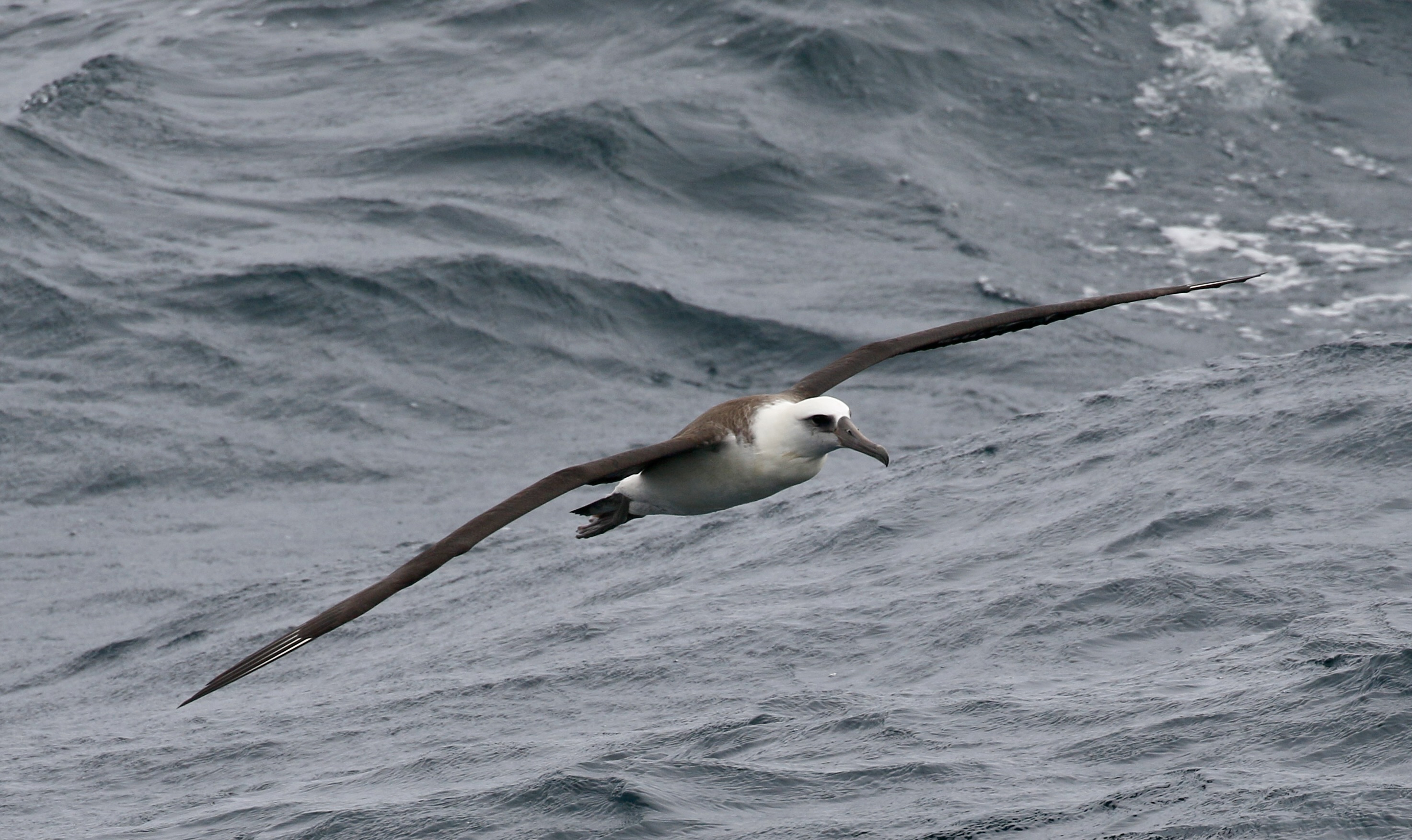
The oldest-known wild bird in the world has returned for another breeding season to the Hawaiian island of Kuaihelani, also known as Midway Atoll. She’s a Laysan albatross and is at least 75 years old. You might wonder how biologists can know her age with such certainty. She was banded in December 1956 at her nest, already a breeding adult. Laysan albatrosses do not reach sexual maturity until at least six years of age. Each year since, she has returned to the exact nesting spot after spending the winter far at sea. Amazingly, Wisdom, as she is known, is still successfully raising young at her ripe old age.
Banding is one of the surest ways to ascertain a bird’s age, but a fraction of wild birds are banded, and only a tiny percentage of those are recaptured. There’s a lot we don’t know about birds’ longevity, but we do know that larger birds tend to live longer than smaller ones. Geese, ducks, and gulls, for example, have the potential to be long-lived. But what of the song birds, especially the migrants that make twice yearly journeys of thousands of miles? Some of these birds can be surprisingly resilient.
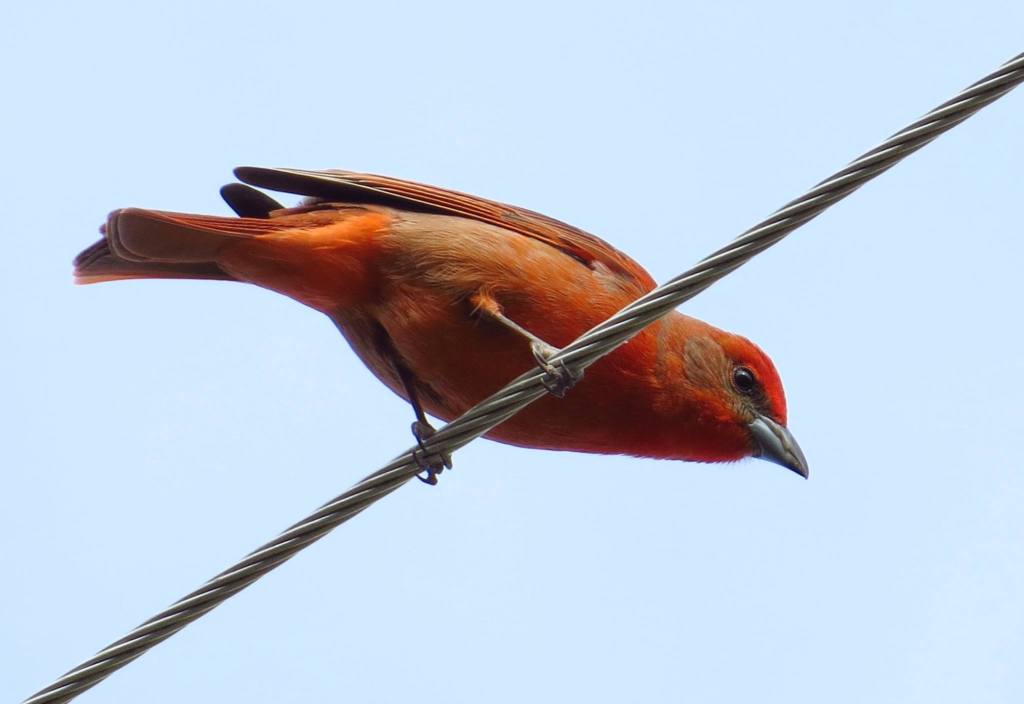
Santa Barbara has a good track record of attracting rarities that come here to winter, not unlike the rich and famous humans. Our coastal climate and abundance of winter food make survival relatively easy. In the 1980s, a Grace’s warbler, a species that normally winters in Mexico, returned to a row of pine trees in Montecito for nine consecutive winters. Another famous winterer was a male hepatic tanager; beginning in 1982, he returned to Rocky Nook Park for at least twelve winters. Another male hepatic tanager has just returned to Evergreen Park in Goleta for his third winter. It will be interesting to see whether he rivals the Rocky Nook bird for longevity.
Once a bird successfully winters in a given spot, the chances are that, if it survives, it will return to the same area the following winter. The white-crowned sparrow in your yard might have been loyal to its patch of grass for many a year. Another rare, famous winterer has stayed loyal to Bohnett Park, a tiny park on Santa Barbara’s Westside. The bird is a western warbling vireo and has recently returned for its 13th winter. It’s a very rare bird anywhere in the U.S.A. in winter; most winter far south in Mexico.
I live quite close to Bohnett Park and so keep track of the bird. I first saw it on the day of the Christmas Bird Count in January, 2014. Since then, I’ve spent countless hours watching it, and considerably more hours searching for it unsuccessfully. Warbling vireos are small and subtly marked (some might say drab, but not I), and during the winter, they are largely silent. They move quite sluggishly when they move at all, and this makes the bird often difficult to find. I believe this has also helped with our bird’s survival. Its behavior is quite unlike many other small birds such as kinglets, warblers, and finches, which are constantly on the move and calling to one another, a boon for hawks and other predators. The vireo can sit still for five minutes at a time. It spends the great bulk of its time in dense willows, where it gleans its arthropod prey.
In all the hours I’ve watched the bird, I’ve never seen it come down to the creek to drink or bathe. I’m sure it does (it must!), but it speaks to its great stealth that I haven’t observed these behaviors. The creek in Bohnett, interestingly, is the site of the original Mission Creek before it was channelized.

You can be sure that at first light on January 3, this year’s date for the Santa Barbara Christmas Bird Count, I’ll be at Bohnett Park looking for my old friend, before I head off to search for a variety of other birds. Our bird count was first held in 1902, which makes it the second oldest count in the state. Last year, we recorded 214 species within the count circle, the fourth highest tally in the nation. Whilst the competition to see the most species is fun, the more important goal is to take the pulse of overall bird numbers, which for many species is sadly showing a steep decline.
If you’d like to learn more about the count, and perhaps sign up to participate, you can find more information at santabarbaraaudubon.org.







You must be logged in to post a comment.