


For most of the early decades of U.S. history, the styles of homes built in this country were inspired by European architecture such as Greek Revival, Italianate, French Second Empire, Tudor Revival, and Queen Anne. That changed in 1876 — the year we turned 100 years old.
To celebrate the country’s 100th birthday, we the people held our first world’s fair — the Centennial International Exhibition (officially called the International Exhibition of Arts, Manufactures, and Products of the Soil and Mines). The event opened in Philadelphia on May 10, 1876. As we celebrated our history, American architects began to look back at our own past for inspiration, and thus began the style now called American Colonial Revival. Another reason for the popularity of this style was the restoration work occurring in the historic city of Williamsburg, Virginia, in the 1920s.
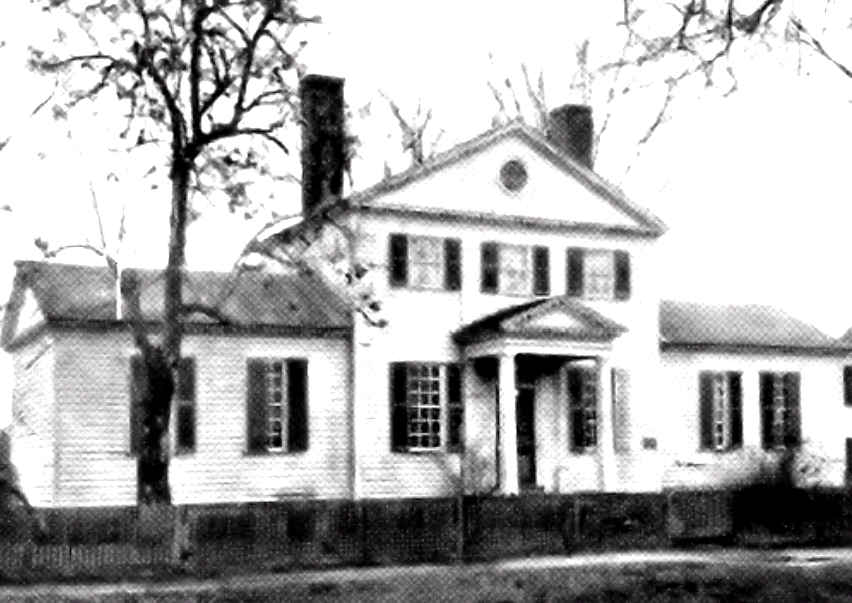
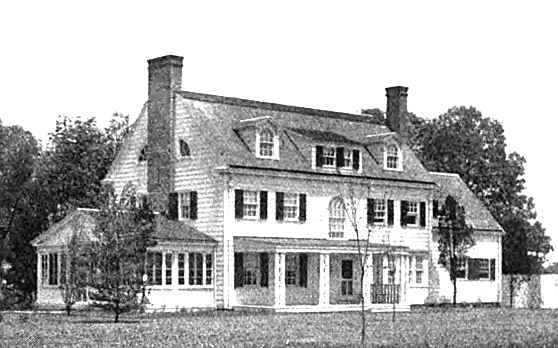
Popular Nationwide
According to the City of Santa Barbara’s Design Guidelines, “Across the nation, American Colonial Revival became the strongest house style of the first half of the 20th century, dominating the vernacular architecture of America. Having left a lasting impression on house design, its effect on the city of Santa Barbara continues to this day.”
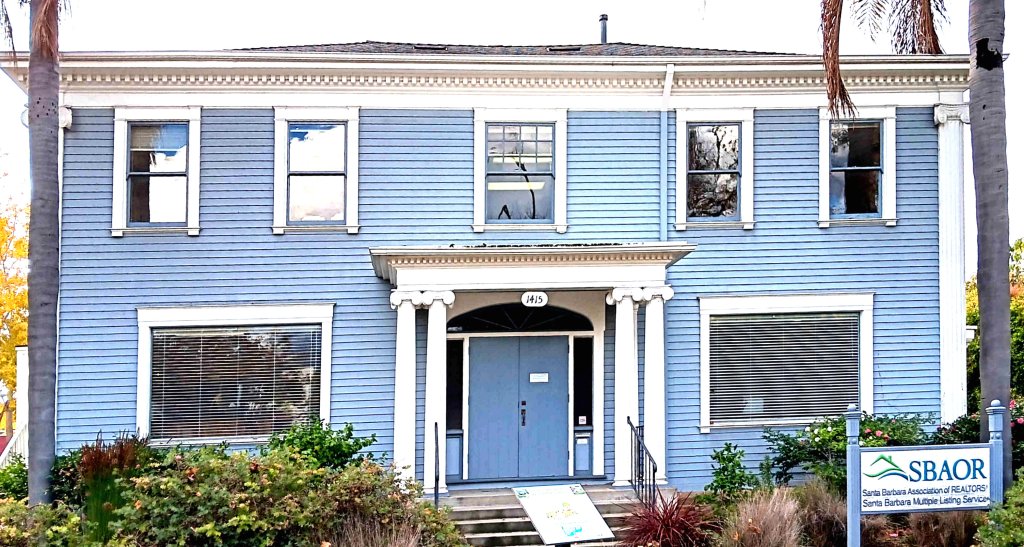
Many of the families who built American Colonial Revival–style homes here were Easterners who brought their idea of architecture with them. In many parts of the country, a center-entrance Colonial Revival is the most popular style. So, it’s no surprise that the headquarters of the Santa Barbara Association of Realtors at 1415 Chapala Street is in a Colonial Revival house.
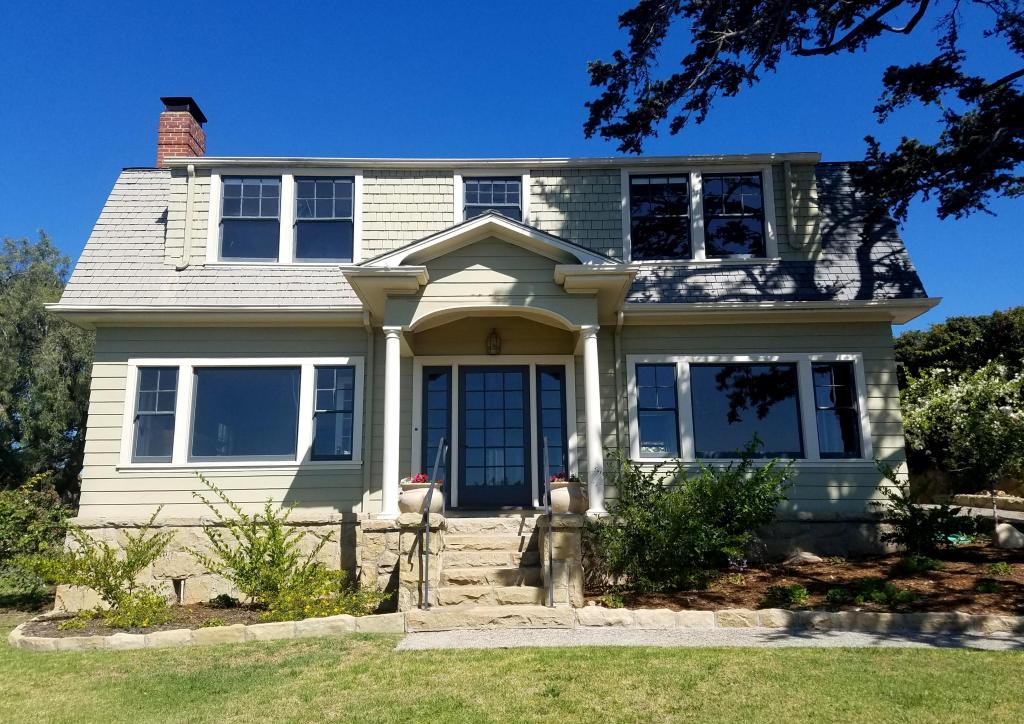
A couple of the homes that I’ve written about in this column are Colonial Revival style, such as the one at 2405 Santa Barbara Street and 941 Garcia Road. The one on Santa Barbara Street could easily be a model for a classic Colonial Revival. There’s a center entrance in a small gabled portico with simple Doric columns, and a curved underside with a fan light. The home is topped with a side-gable roof, and the windows are flanked by shutters.
The home at 941 Garcia Road has a side gambrel roof, dormers, and a central portico with columns similar to those at the Santa Barbara Street home. (Dormer windows get their name because they are generally found in bedrooms where people sleep; think of the French and Spanish verbs for “to sleep”: dormer and dormir.) These homes are covered with wood siding, another common feature of Colonial Revival homes. Chimneys are generally placed at the side of the house.
A Very Early Example
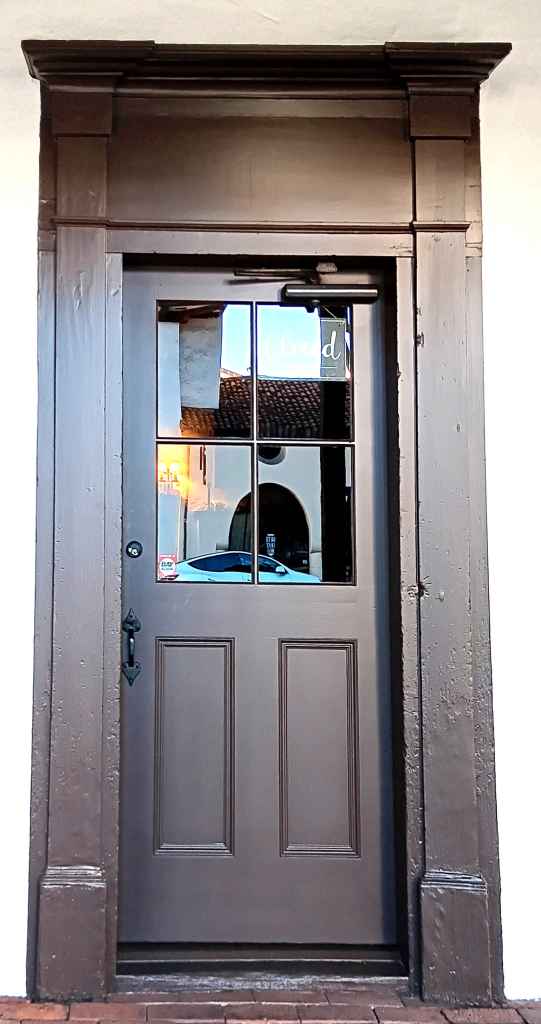
One of the oldest examples of a Colonial style doorway in Santa Barbara is on the Hill–Carrillo Adobe at 11 East Carrillo Street. This home was built about 1825 by Daniel Hill from Massachusetts. Although the home itself is not Colonial Revival, the trim around the door is pure Colonial style, and quite different from the doorway surrounds on other adobes here in Santa Barbara. No doubt, Hill wanted a doorway to his home that resembled the ones he was used to on the East Coast.
Food for thought: Next year, 2026, will mark the 250th anniversary of the founding of the United States. Will we see a rebirth of American Colonial Revival architecture in the new year? (To be determined.)
Please do not disturb the residents of these homes.
Betsy J. Green is a Santa Barbara historian, and author of Discovering the History of Your House and Your Neighborhood, Santa Monica Press, 2002. Her website is betsyjgreen.com.







You must be logged in to post a comment.