
Saying Goodbye to
San Marcos Growers
What Does Santa Barbara Lose When
Nursery Run by Legendary Plantsman Randy Baldwin
Gives Way for Housing?
By Matt Kettmann | Photos by Ingrid Bostrom
January 22, 2026
Picture the iconic Santa Barbara garden, the kinds that occupy our public spaces and private places alike, whether working-class yards on the Westside or magnificent spreads in Montecito.
There are palm fronds, aloe spines, and agave spears, flashes of color — often orange, plenty of purple — and sage-like scents, reminiscent of a romp through the surrounding chaparral. The selected species are drought-tolerant, hardy, and often native, at least to our climate, yet sometimes Seussian and hard to find anywhere else — a mashup of Botanic Garden and Lotusland, with a sprinkling of Alice Keck Park Memorial Garden for good measure.
This distinctive plant palate dates back to the early days of Santa Barbara as an American city, when horticultural heroes such as Francesco Franceschi and Joseph Sexton introduced Mediterranean trees and shrubs from around the world in the 19th century. Their choices were embraced by the well-traveled wealthy who settled into sprawling sea-view estates and championed by civic-minded folks such as Ralph Stevens, Lockwood de Forest, and Edward Orpet, who spread them around parks and promenades.
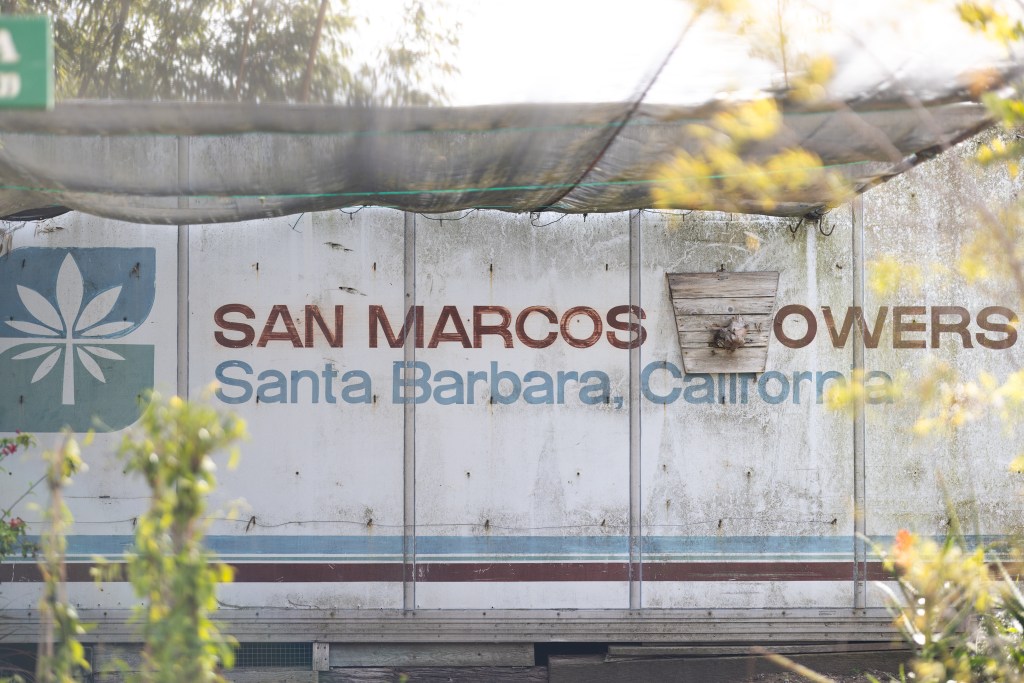
Santa Barbara’s ensuing affinity for these plants only proliferated to the point of ubiquity over the recent decades, with examples now in every neighborhood, lining most of our streets and parking lots, composing the visual backdrop for many of our lives. And that modern prevalence, it turns out, is largely due to one reason: a wholesale nursery called San Marcos Growers, operating under the radar to most of us in the heart of Goleta Valley’s sprawling suburbia for nearly 50 years.
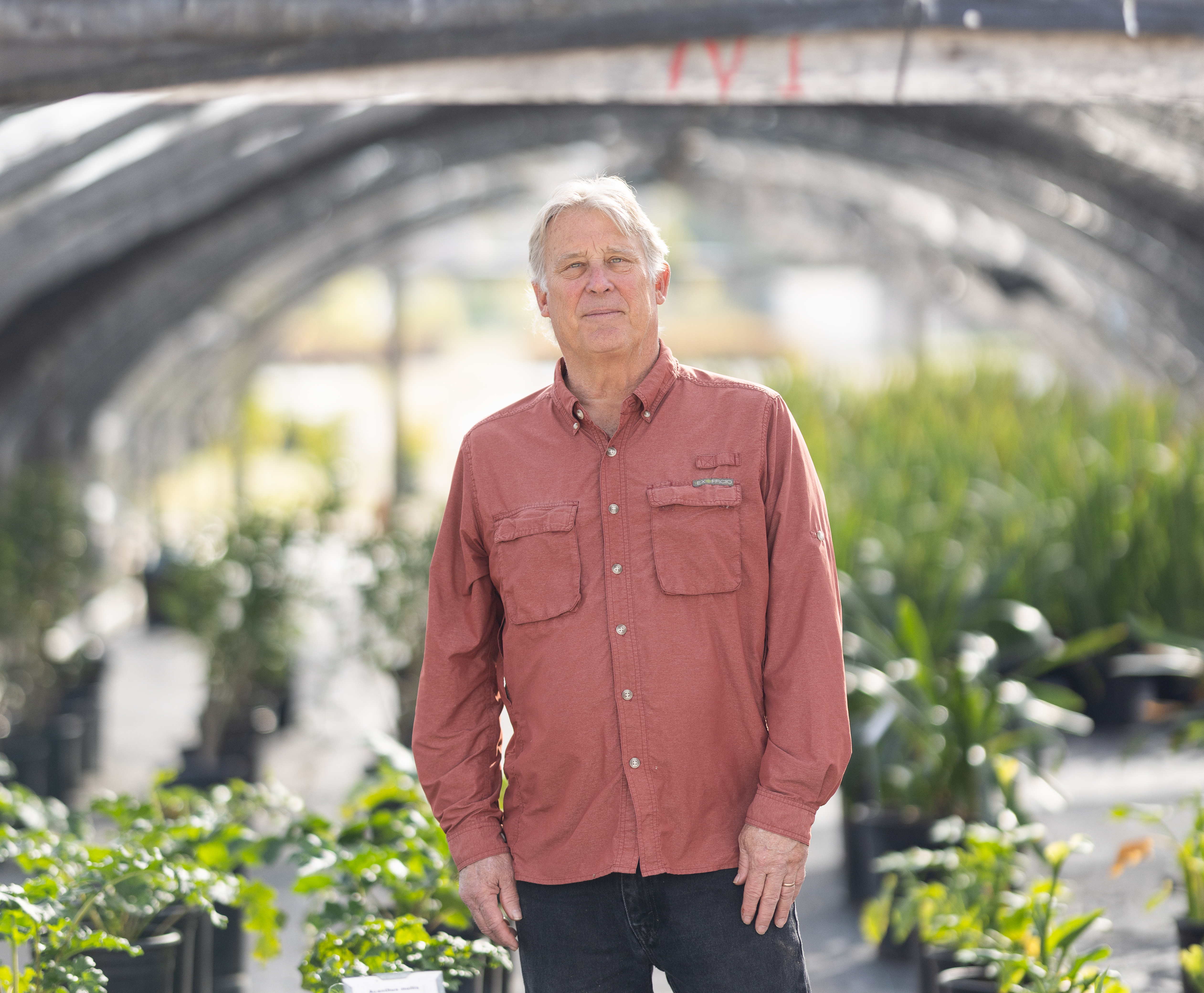
Under the direction of Randy Baldwin since 1981, San Marcos Growers became the preferred place to find all sorts of plants, whether you ran a landscape design firm that worked for institutions or a retail nursery that sold to everyone else. The plants Baldwin helped select, propagate, and promote — from those that grew naturally in our mountains to cacti from Mexico and euphorbia from Madagascar — filtered down to our playgrounds and homes, so much even tiny apartments sport such succulents on the windowsill.
This Is the End
But that’s coming to end as San Marcos Growers sells off the rest of its bounty this month. The nursery business is never easy, and increasing regulations paired with higher costs of everything are only making it harder. That’s not what killed San Marcos, though. Business remains brisk to this dwindling day, with calls coming in and orders going out to customers as far away as the Bay Area and San Diego.
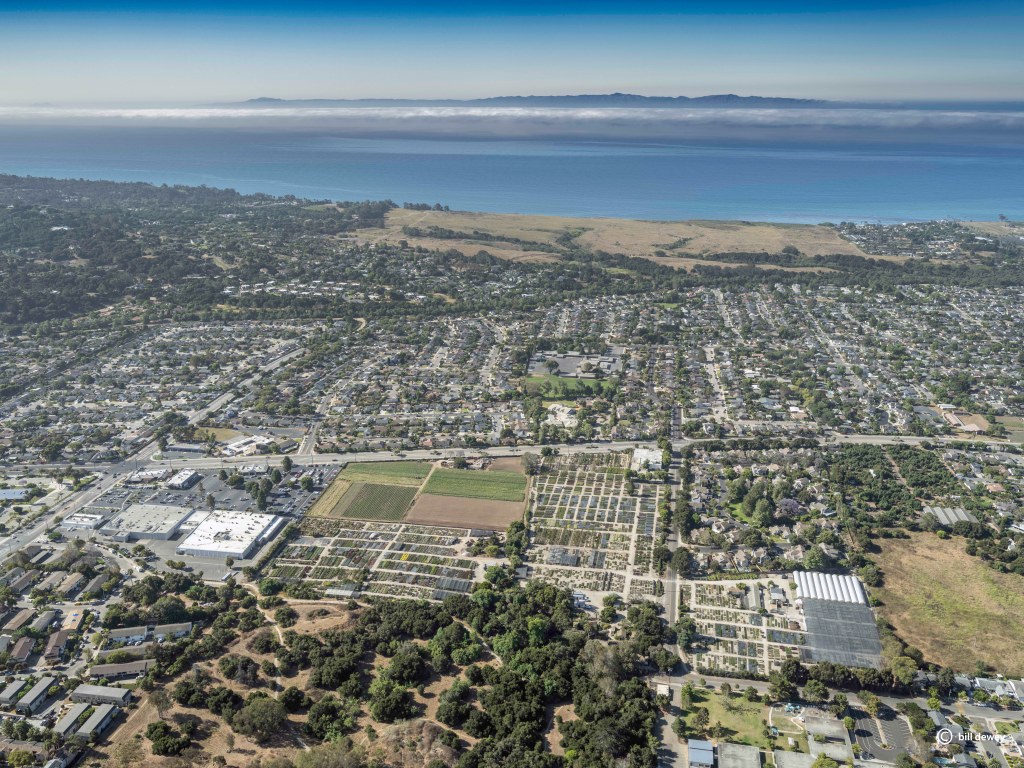
The death blow in this case was development, mandated by Sacramento to battle the state’s housing crisis, leaving local governments little leeway to say no. Soon, the rare trees of San Marcos will be replaced by hundreds of homes — in fact, combined with the adjacent property, there will be nearly 1,500 new units built on less than 40 acres in the next couple of years.
No one can debate the need for more places for more people to live, especially here in southern Santa Barbara County. Indeed, many of the employees of San Marcos epitomized the problem, traveling from places such as Lompoc every day to work. And it’s hard to deny that this part of town is not an ideal place for such dense development — squeezed between the major thoroughfares of Hollister Avenue and 101, next to existing shopping centers, schools, and bus stops.
But this story is not about quibbling what we gain. It’s about what we lose when San Marcos and Randy Baldwin are gone.
There’s the allegorical loss, of course, in the never-ending global battle that pits open space, farmland, and nature against the rising tide of humanity that consumes every square inch we can. Whether the change of San Marcos — which sat on the impending development frontlines for nearly two decades — feels like a win for economic fairness or a loss for our agricultural history is up to each individual to decide.
The irrefutable loss, however, is not up for debate. The end of San Marcos means the very real disappearance of actual plants, a diminishing of horticultural information, and a fading network of international connections that turned this humble patch of flat ground into one of the most important botanical centers on our planet.
Whether the everyday citizen ever experiences what that means remains to be seen, but it’s happening across California, as other important nurseries close, bigger ones consolidate, and the menu of available plants shrinks. For those who work in the landscaping industry — that is to say, professionals who design, restore, and maintain the planted part of our world — the end of San Marcos is being felt as a generational cataclysm.
“People are wondering where they’re going to get these things going forward,” Baldwin told me last month as trucks crammed into his small parking lot to clamor for the remaining plants. “There’s a bit of fretting in the landscape industry.”
That humility is in part what makes Baldwin the beloved figure he is among peers. Of the dozen professionals I spoke to for this article — most of whom have been coming to San Marcos since the earliest days — words such as “devastating” and “huge hole” were frequently employed. They fear that the progress made by San Marcos on mastering sustainable, native, and downright stunning species from around the Mediterranean corners of the world will peter out, making Santa Barbara and many parts of California look more similar to everything else.
The end of San Marcos is by no means the end of Baldwin, who’s only 69 years old and plans to maintain his critically valuable website, which, incidentally, was probably the first nursery website ever when it launched in 1996. But he’s being mourned alongside the property nonetheless.
His good friend John Greenlee, the man who made ornamental grasses a keystone to sustainable gardening, believes that San Marcos Growers thrived due to a number of factors, including perfect timing, as it opened right when much of California was being built out.
“But the heart and soul of the reason is because of Randy Baldwin, a most brilliant plantsman,” said Greenlee, who was based in Los Angeles for decades and now works out of the Bay Area. “It’s more than just a nursery. It’s the entire essence of it all. It can’t be duplicated. There will never be another San Marcos Growers. Randy Baldwin is a national treasure. It’s truly, truly, truly the end of an era.”
Now for the Beginning
That era began in 1979, when Jim and Marcia Hodges purchased the land and hired the City of Santa Barbara’s arborist Dave Gress to build a nursery. Jim and Gress volunteered for Santa Barbara Beautiful together, and realized that, in order to carry on the region’s tradition of unique trees, they needed a place to grow them.
Jim died suddenly before they really ever broke ground, but Marcia and Gress preserved. In 1980, they hired a S.B. City College horticulture grad named Lynn Kravitz to head up propagation — a job she held until retiring in 2015 — and the next year Gress dialed up Baldwin, who’d been working at La Sumida’s upper State Street nursery after graduating from UCSB. He was hired on that phone call.

“I broadened the palate,” said Baldwin of his impact. “I was really interested in California natives at the time, and I grew to love plants from other places, Australia and South Africa primarily. Then we got into succulents heavily.” He collaborated with the S.B. Botanic Garden on natives, with UC Santa Cruz on Australian plants, with the Huntington Garden on cacti and succulents, among other breeding programs.
“People just started coming to me,” said Baldwin. “Everyone thought I was pulling from the wild. I did some of that, but the majority was someone saying, ‘You should be growing this.’ Gradually, we just got a name for growing unusual plants.”
Many of those were “loss leaders” — attractive to small, influential sets of landscape artists, though not particularly lucrative. “It helped to grow some common stuff alongside of them,” explained Baldwin, who built a fleet of five trucks — including two semis — that delivered to many thousands of accounts across California.
“He nurtured a lot of plants we may have never seen in the landscape around here,” said Billy Goodnick, who started visiting San Marcos as a “dirtbag” gardener before serving as the City of Santa Barbara’s landscape architect for 22 years. “He was the beta tester.”
Hired by the Botanic Garden herself in 1981, Carol Bornstein recognized Baldwin was “a remarkable plantsman” from day one, and she worked with him extensively on expanding the commercial availability of native California plants. “He was always interested in trying something new,” she said, even though a lot of them didn’t work out. “A lot of nurseries are focused on the tried and true, and just crank them out because they know they’re gonna sell. San Marcos Growers has a reputation of being on the cutting edge, no pun intended.”
They made plenty of progress together in peppering gardens with plants that would have once grown there naturally, but both lament that natives still have yet to take off as much as they should. “All you have to do is drive around Santa Barbara and see how many gardens have zero percent native plants,” she said. “It’s pretty disappointing to people like me and Randy. We still have a long way to go.”
At least people are increasingly aware that species popularized by San Marcos are good for wildlife too. “People want plants that support butterflies, bumblebees, birds…,” said Bornstein. “That has made a tremendous impact on the mixture of plants now being grown in more definitive numbers.”
All About the Plant
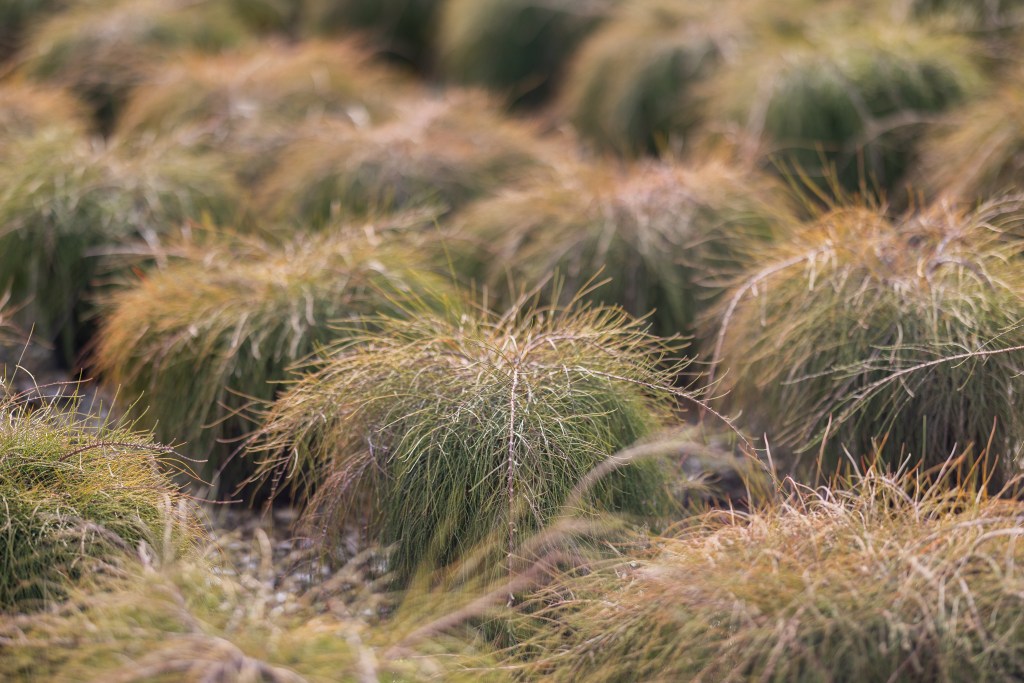
Aside from untouched nature and farms, most every plant you see in the developed world made its way through a wholesale nursery at some point. That goes for park bushes, school lawns, street trees, freeway dividers, parking lots, the awesome yard on your block, and even the rundown yard on your block.
For an industry that’s basically invisible to most of us, it’s incredibly pervasive and powerful. In 2024, the overall nursery business was the second-largest agricultural producer in Santa Barbara County, amounting to more than $124 million — bested only by strawberries. Wine grapes, by comparison, barely eclipsed $70 million.
If you’re a landscape designer, you get inspiration and plan projects around what a place like San Marcos offers. If you’re a landscape contractor, you buy those plans from San Marcos. If you’re a gardener whose client wants a new tree, you go to San Marcos. If you own a retail nursery, like Terra Sol or La Sumida, you buy your plants from places like San Marcos to sell to the rest of us.

The everyday Santa Barbaran’s primary interface is through retail nurseries. They’re visited weekly by roving wholesalers who bring samples in the back of pickup trucks, from which a manager can select plants to be delivered later. That usually works fine, but sometimes the delivered plants aren’t quite as pretty as the samples.
For Santa Barbara’s public-facing plant dealers, San Marcos could save your weekend sale. “I could go over to San Marcos any day of the week, hop on a cart, basically drive through a giant candy store, and cherry-pick what I wanted,” said Mike Tully, the co-owner of Terra Sol. “Instead of a tiny pickup truck, I have a giant nursery.”
Sometimes, landscape pros need something in a pinch. “I can check with San Marcos and have that for them in two hours,” said Tully. “To be able to fulfill orders on that type of turnaround has led to dynamic customer service.”
What will retailers like him do going forward? “Now, I am pretty much looking to San Diego County to get a lot of the material that I used to get in the blink of an eye from San Marcos,” he said. “We’ll still be able to fill our shelves, but there is quite a bit of unique plant material that may not be findable from other growers in the future.”
San Marcos is not the only significant wholesale nursery closing in California right now. Tree of Life in San Juan Capistrano, founded in 1980, closed last month, and Griggs Nursery in Watsonville — which had taken over the historic Suncrest Nursery that shuttered in 2023 — announced last week that it will close this year. Meanwhile, smaller wholesalers are being consumed and consolidated by larger companies at the same time. There are still plenty of respected nurseries from Goleta to Carpinteria — pros are especially hopeful that West Covina on More Mesa might fill some of the coming void — but none currently offer the breadth of San Marcos.
A veteran of landscape architecture in Santa Barbara since 1969, Bob Cunningham cofounded Arcadia Studio in 2000, and it quickly became the largest firm in town. The firm employs a full-time staffer to track down plants for their projects, and that job just got much harder.
“Randy has probably hundreds of varieties that other growers don’t want to touch because there isn’t enough market for them,” said Cunningham. “Their closure is certainly having a big impact on us and other designers who don’t simply rely on what’s easily available but try to include a lot of creativity in our designs. There are just so many plants that are simply not grown because they’re not commercially viable.”
Then, the Internet
Amid building a repository of physical specimens and running a near-statewide shipping network, Randy Baldwin somehow found time to build what’s believed to be the first nursery website in the country, if not world. That was in 1996, after he and Brian Hodges — the son of the farm’s founders — had created a digital database of inventory, which is now appreciated as one of the most significant reference guides to Mediterranean plants anywhere.
To his surprise, smgrowers.com rose to the top of horticulture inquiries on the internet. “All of the sudden, people were reading our stuff — of course, they’re plagiarizing our stuff, too,” laughed Baldwin, who was quickly asked to give talks on how other nurseries could do the same. “It became one of our main sales people essentially.”
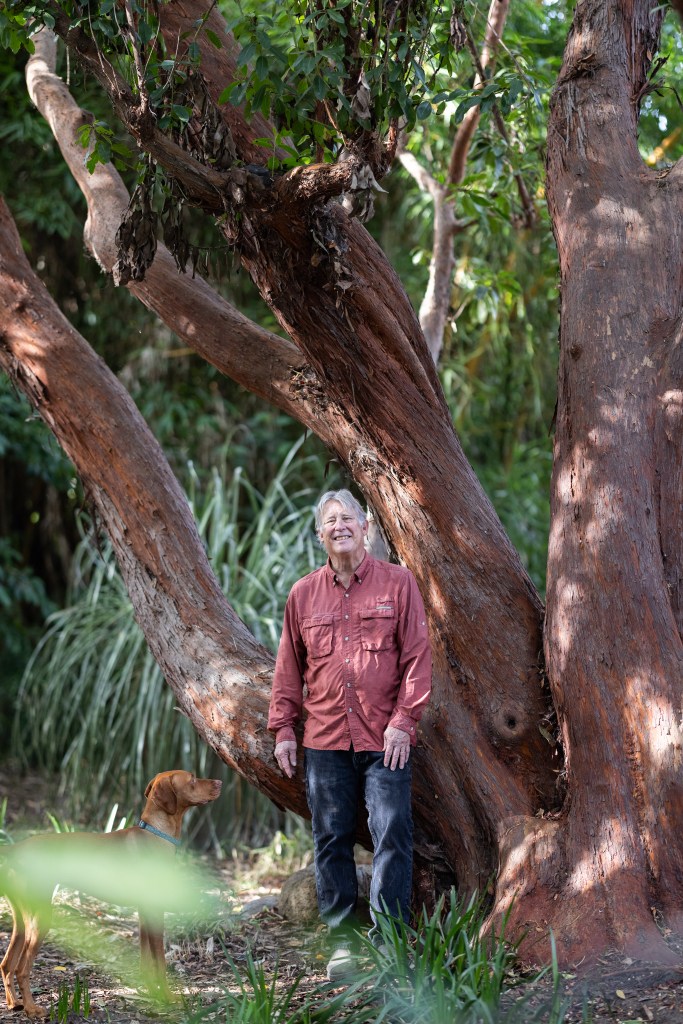
Its impact was felt far beyond Santa Barbara. When Eric Arneson and Nahal Sohbati — who moved to Santa Barbara to found Topophyla Landscape Design in 2018 — were in college in San Francisco, the website was a constant presence. “San Marcos was a huge resource on what plants grow where,” said Arneson. “Even before we knew it was in Santa Barbara, we referred a lot to its catalogue of information.”
That continued when they worked for firms big and small, and it was only when they lived a couple of miles away in Goleta that they discovered San Marcos was in their backyard. As they designed properties from Hollywood to Healdsburg, the nursery became a source for about 90 percent of their plants, and the website remains a critical tool.
“That’s invaluable for our industry,” said Sohbati, whose day trips to the nursery — where pros could grab a cart and rove the grounds independently — sparked their most innovative concepts. “It became part of our design process.”
“It really got us spoiled. It’s hard to go to other nurseries now,” said Arneson, who’s dismayed that he will now have to rely more on larger, out-of-town nurseries. “When you shop at San Marcos, you’re spending that money locally. It’s directly benefiting the economy around you.”
Baldwin is pledging to keep the website alive, and he’s continuing to update it as you read this. Numerous institutions, from Berkeley to Pasadena, are offering to host the site, which he wants to ensure is free to use and free from advertising, though he knows referral income could keep it viable.
Encyclopedia, Too
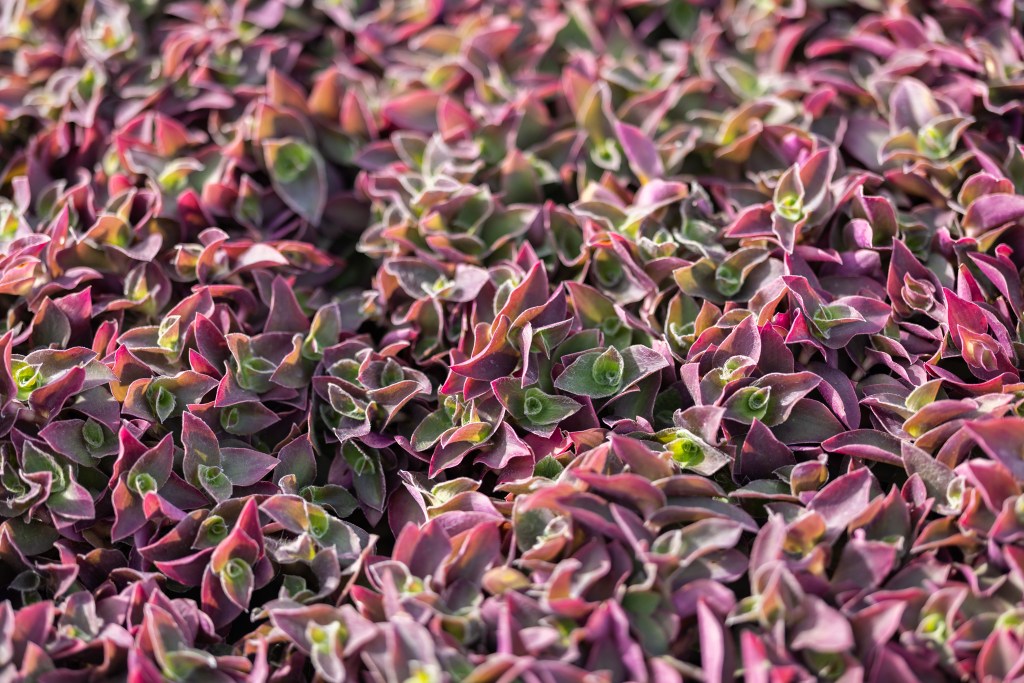
The website’s generous, highly insightful spirit is essentially the online avatar of Baldwin the human. He served (and still serves) on countless boards, both local and national; steadily donated coveted cultivars to institutions and fundraising causes; and regularly hosted “Field Days,” where plantspeople from all across the state would converge to listen to guest speakers, tour the grounds, and discover new species for their projects. Whenever he received a question about this or that plant in this or that setting, his responses were revelatory, and he readily provided contacts for specialists if needed.
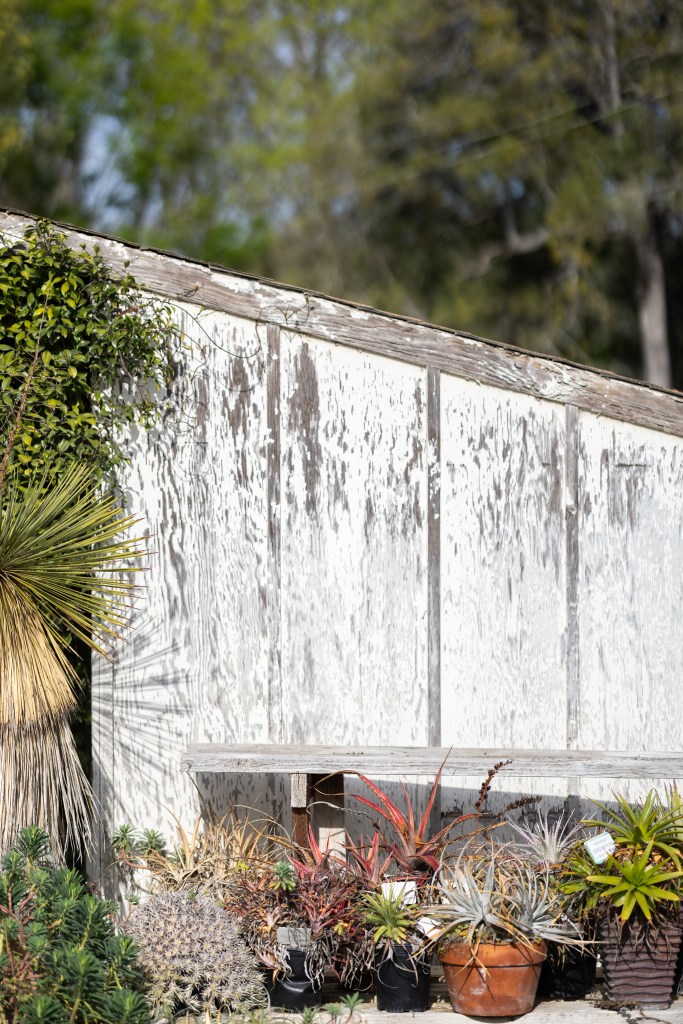
“As anyone knows who has ever asked him a plant question, even a seemingly simple little plant query, the answer you get back is often worthy of a master’s thesis,” said Jeff Chemnick, who’s worked at Lotusland since the 1990s and owns Aloes in Wonderland on the backside of the Riviera. He gave that comment during a speech at the last-ever field day in October 2024, which was called the Last Dance Party. “I don’t know where he gets the time to run this empire, maintain the website, schmooze everyone silly, and still have the time to so thoroughly research and reply in detail, and I mean great detail.”
While the experimental nursery era may be fading these days across California, Baldwin’s information is keeping the fire alive for those who light more torches.
“It’s really as much of a horticultural and botanical institution as it is a nursery,” said Paul Mills, who looked forward to meeting Baldwin when he was young and then worked with him constantly since he started at Lotusland in 1995. “The amount of knowledge and information they have amassed and openly shared has fed generations of young people.”
He sees Baldwin’s fingerprints everywhere. “I can spot a San Marcos Growers landscape anywhere in town,” said Mills. “The influence is huge.”
The End, Again

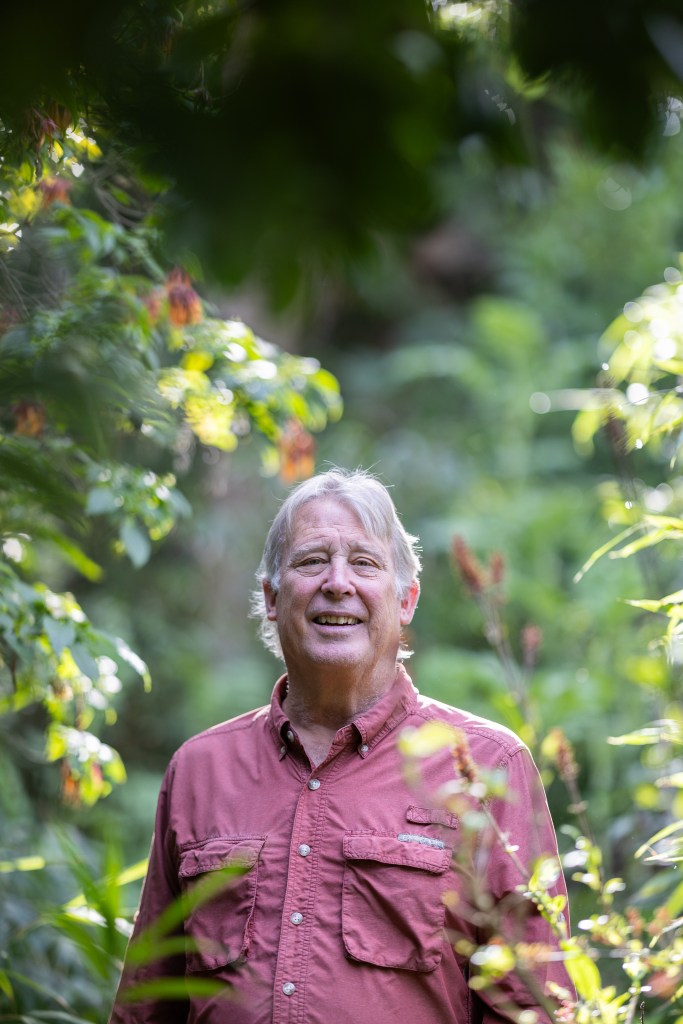
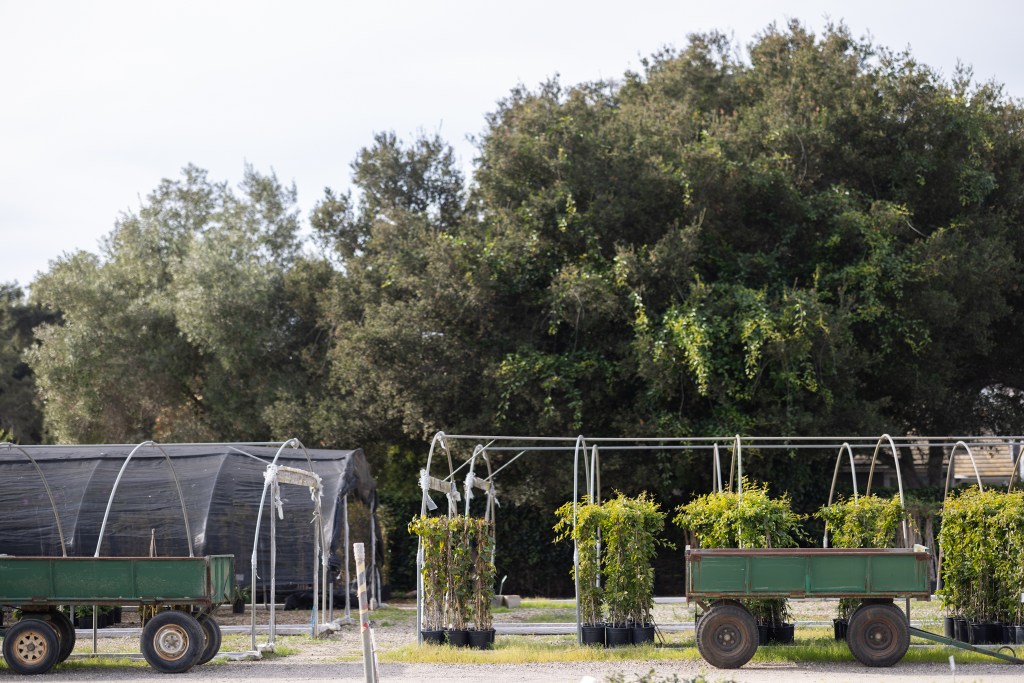
In mid-December, one week before San Marcos Growers held its final normal day of operations, Baldwin walked me around the property, home to the most magnificent and curious plants in Santa Barbara and far beyond.
There’s our region’s largest magnolia, flood of succulents, towering canary palm and Queensland kauri trees, specimens such as the strawberry tree and Brazilian cedar that now line our roadways, and, well, far too many species to scribble in a notebook, especially as he rattles off names in Latin. Most of what remains will be destroyed by the development.
Baldwin, who became a partner in the business in 1990, lives in a small, old home on the back of the property with his landscape contractor wife, Heide, whom he met through the industry. They raised their son and daughter there — graduates of the adjacent El Camino School — and were in the process of picking which of their thousands of personal plants to move to the home they own but have never lived in a couple miles away.
He was nostalgic, of course, but I also sensed relief. “Personally, I’m ready,” Baldwin told me as we wandered past silvery pineapple relatives and gargantuan agaves. “The Hodges gave us the opportunity to make a really good run at this. I’m not bitter at all.”
The hardest part is letting go of more than 50 employees, some of whom have worked there as long as he has. “I have been doing this planting work all my life,” said production and propagation manager Delfina Martinez, who started in 1982. She lined up a new job at Windmill Nursery in Buellton, which is only 15 minutes from her home in Lompoc compared to the 45- or so minutes she’d drive both ways to San Marcos for the past 44 years. She was still charging away that day, not quite prepared to say bye.
“It’s been great working here,” she said. “I will miss everything. I know we’re not going to find another one like San Marcos.”




You must be logged in to post a comment.