

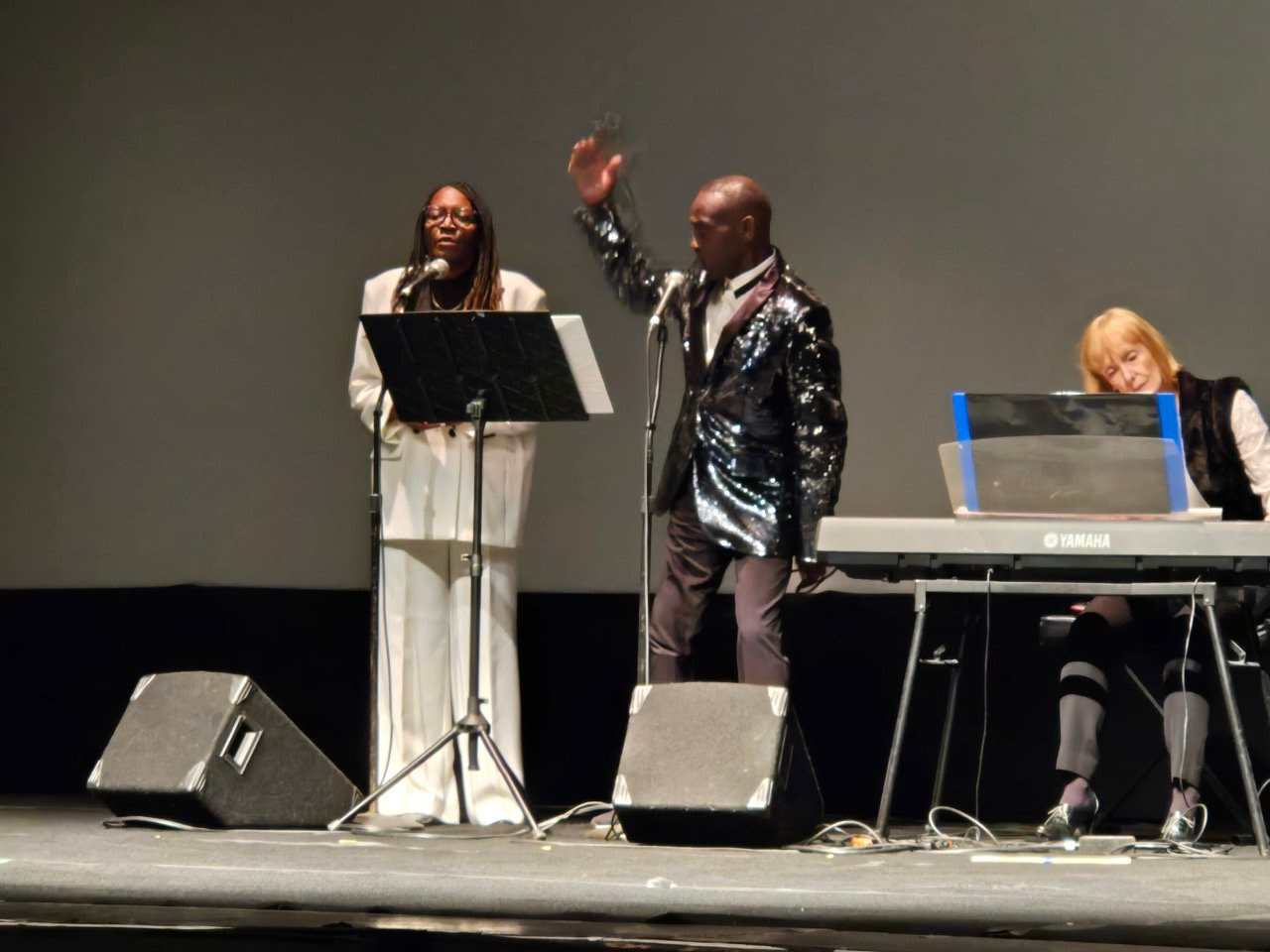
(Soundtrack to this column: “Lift Every Voice and Sing,” performed by Harlem Boys Choir).
Lift every voice and sing,
Till earth and heaven ring,
Ring with the harmonies of Liberty;
Let our rejoicing rise
High as the list’ning skies,
Let it resound loud as the rolling sea.
“Lift Every Voice and Sing,” by James Weldon Johnson and John Rosamond Johnson, 1900
Hearing “Lift Every Voice and Sing” rise up into public ear space and singalong space last week — as the natural anthemic song for the MLK celebration at the Arlington and in a churchly forum at the First United Methodist Church — I suddenly had a realization: This may be the greatest hymn of the 20th century.
Originally a poem written by NAACP President James Weldon Johnson and given musical form by his brother John in 1900, the hymn is often and rightly considered the “Black National Anthem,” but is at once infectious and intriguing as a piece of music, with an unusual structure by 19th century hymn standards. Thematically, the hymn/anthem appeals to higher voices and the prospect of higher ideals. But it also functions as a benevolent fight song for the importance of lifting voices against outrageous injustice everywhere, sacred and profane, as acknowledged at Monday’s vigil at Stearns Wharf for the brutally slain American-citizen-turned-martyr Alex Pretti.
The Arlington MLK program was an inspirational culling of community and spirits, as usual, and part of a list of events surrounding MLK Day, including the audience-participatory clapping, singing, and vibing at the “Ring Shout,” at Trinity Episcopal Church on Saturday. On Monday, charismatic emcee JoAnne Meade Young quoted the event’s tribute, Coretta Scott King, who asserted that the holiday “is not a day off, but a day on.”
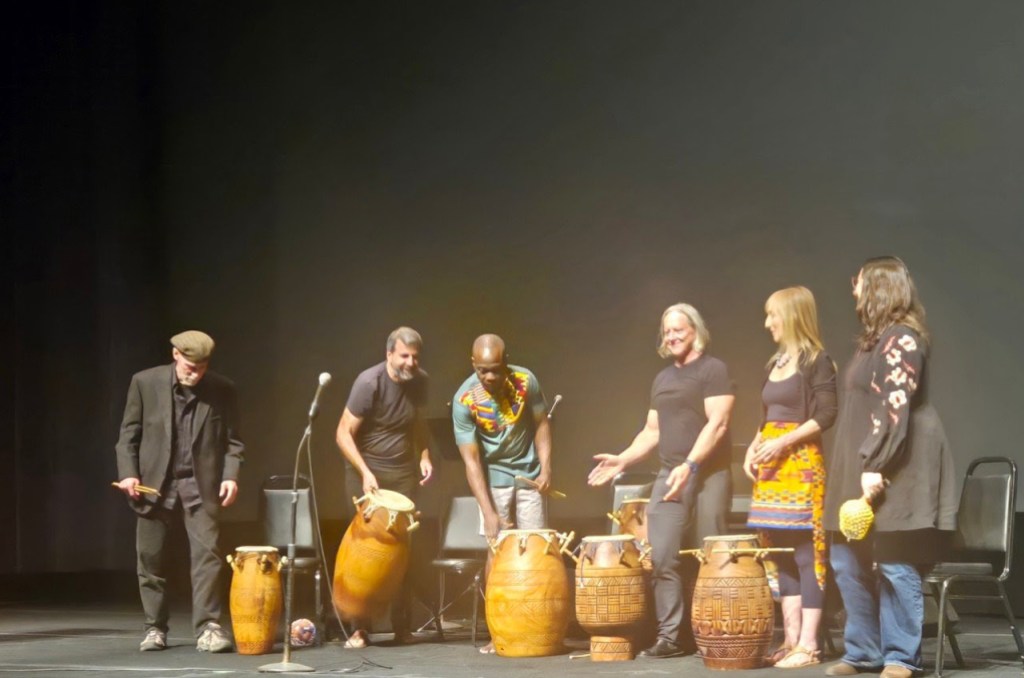
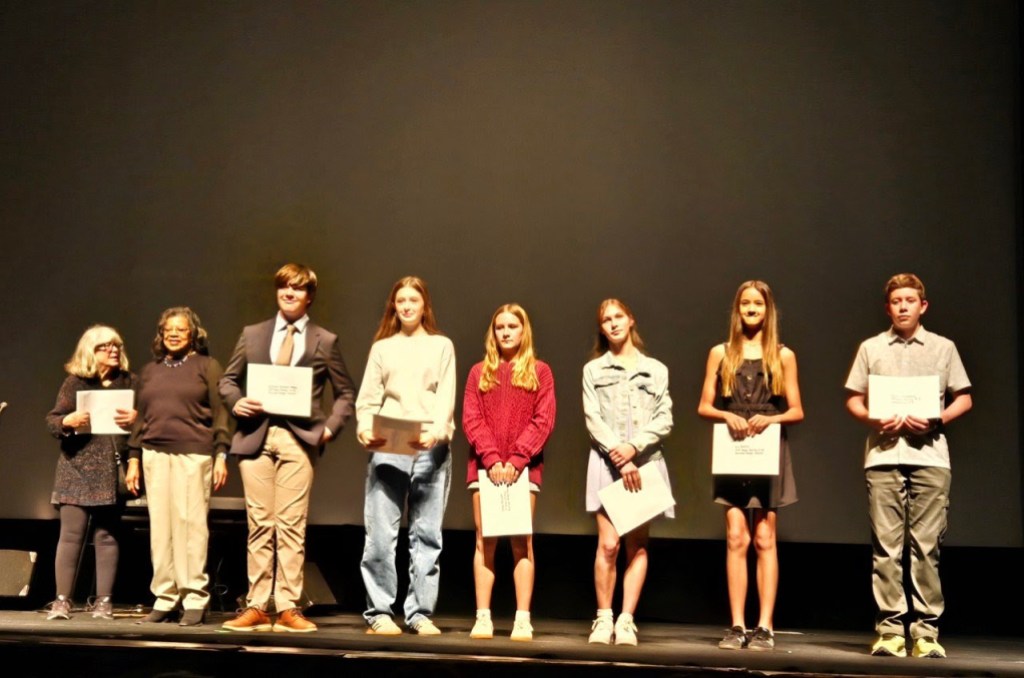
Beyond the all-important invocation of “Live Your Voice,” music lined the path of the program, from the West African pulsations of Sese Ntem’s Ewe drumming troupe and the group Shelter’s timely singing of “Everything Must Change” and Stevie Wonder’s “Love’s in Need of Love Today” — an anthem on its own terms. On other art and expressive turf, young voices and minds came forth through the Essay and Poetry Program winners.
Keynote speaker Leah Weber King, MLK’s daughter-in-law, reminded us that MLK’s “legacy is not a relic,” and accentuated the power of his “soul force.” She addressed the Trump-linked atrocities of just a week ago — this before further horror in Minneapolis — and “painful reality” of what is transpiring in America and the world. However, she said, “you can take away rights and roll back laws,” but ultimate victory will be claimed “though radical soul force love.”
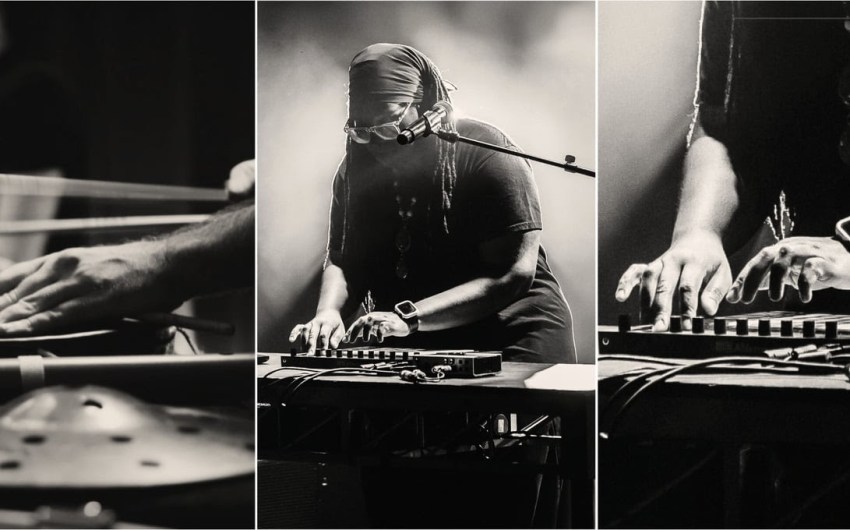
Speaking of related musical news … When I interviewed Mark Turner, my favorite tenor saxist, for a 2022 DownBeat story, the subject was mostly his then-new and impressive ECM album Return from the Stars. But he also spoke passionately about a project in progress, paying musical tribute to an underrated and fascinating book Reflections On: The Autobiography of An Ex-Colored Man, written by James Weldon Johnson in 1912 and republished in 1927.
Last year, Turner’s tribute album was finished and released, mixing his musical tapestry with Johnson, in a firm but soft-spoken voce, narrating snippets of the book’s text, which traces a “colored man’s” explorations of Black experience and exploitation in the South and North. The album flew too far under the radar, but deserves more love and attention paid. Turner uses his musical gifts, as a unique saxophonic voice and composer, to reconsider a book which considers Black life from its own multiple angles. (Hear it here).
Adventures in NAMMing
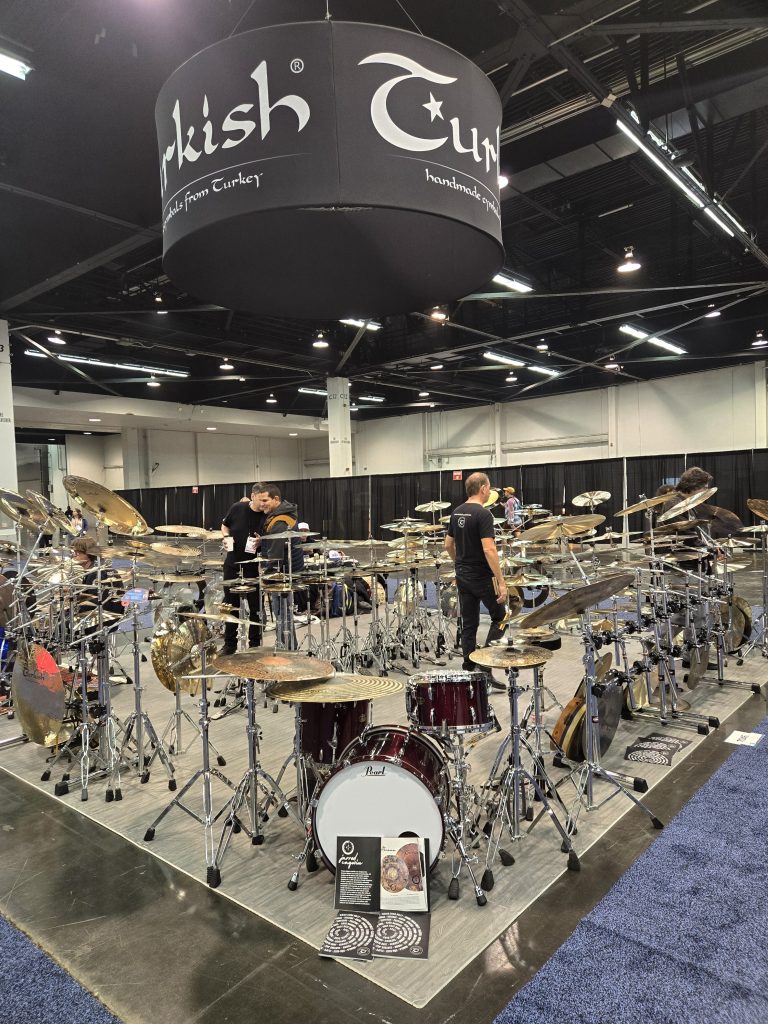
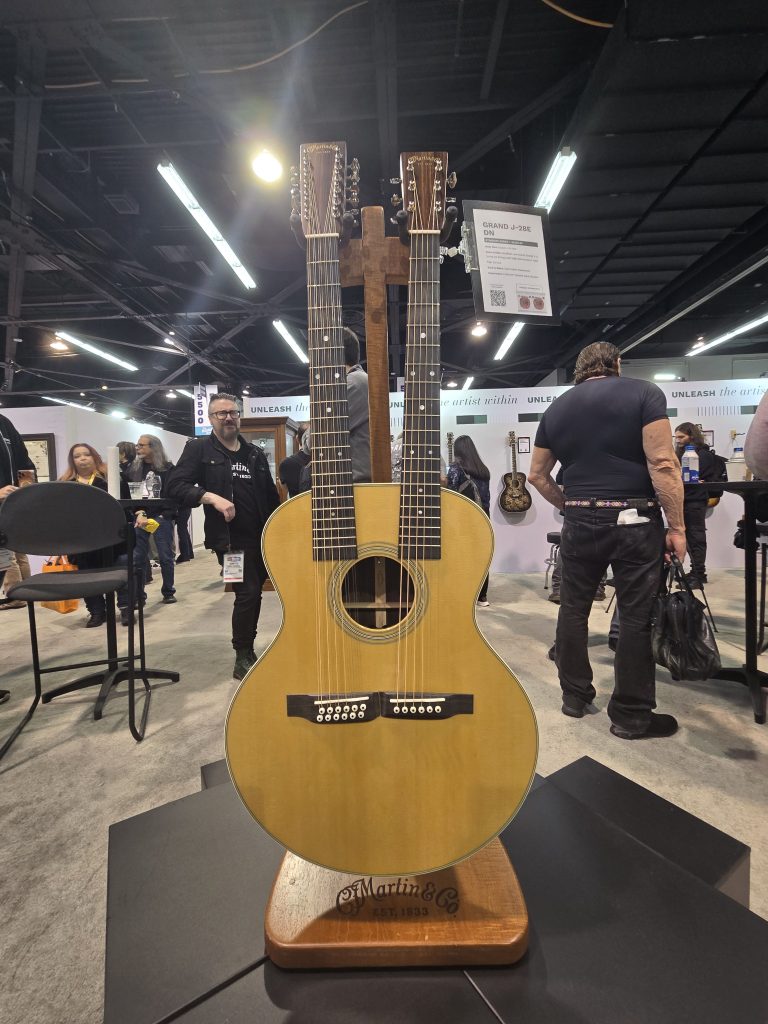
Entering certain halls of the Anaheim Convention Center for the annual NAMM (National Association of Musical Merchants) expo — the massive international gathering of all things instrumental and music-connected — a wall of dull, undulating noise greets you. The unsuspecting visitor could wonder if there is some emergency situation underway. While wandering the aisles, you detect the tiny tumults of guitar, bass, and drum wailers who comprise the parts of the thundering whole. Welcome to NAMM.
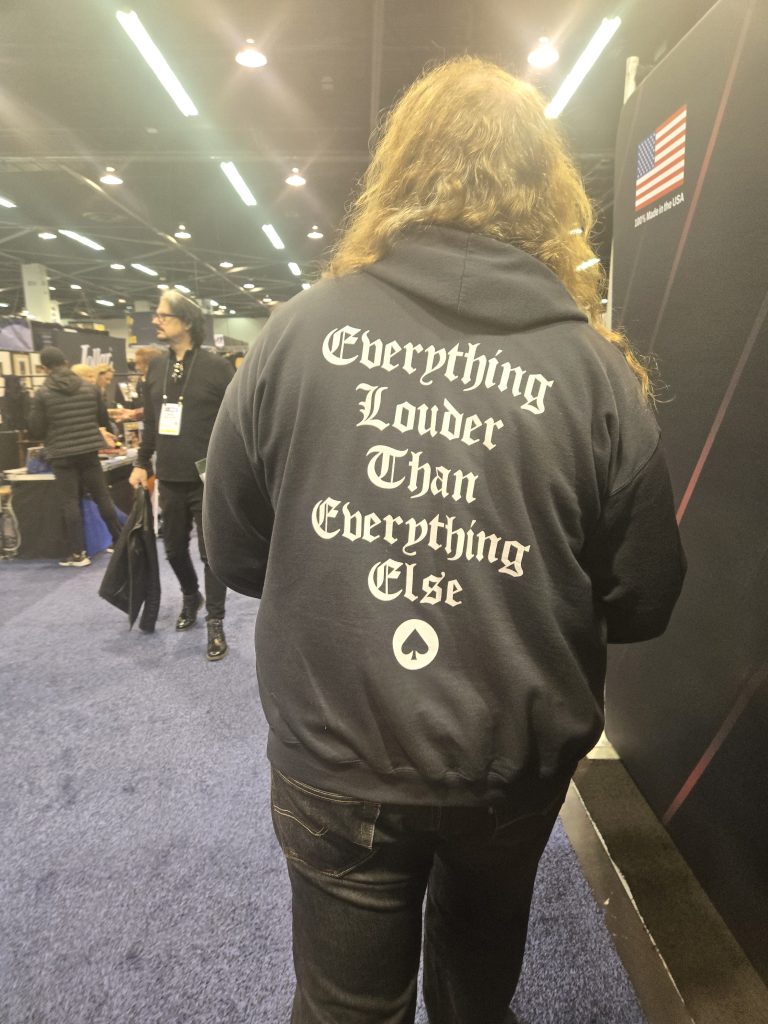
Looking past the core marketing mission driving NAMM, it is a funhouse of organized, commerce-driven chaos. Beneath the general ruckus, however, hums a strong undercurrent of Music Love as defined by many subcultures. Black leather meets tie-dye meets business suits meets cheesecake garb and more, and all swim in a pool of tolerance. Or at least they don’t let their antipathies be known here, in contrast to other corners of America’s public square at the moment.
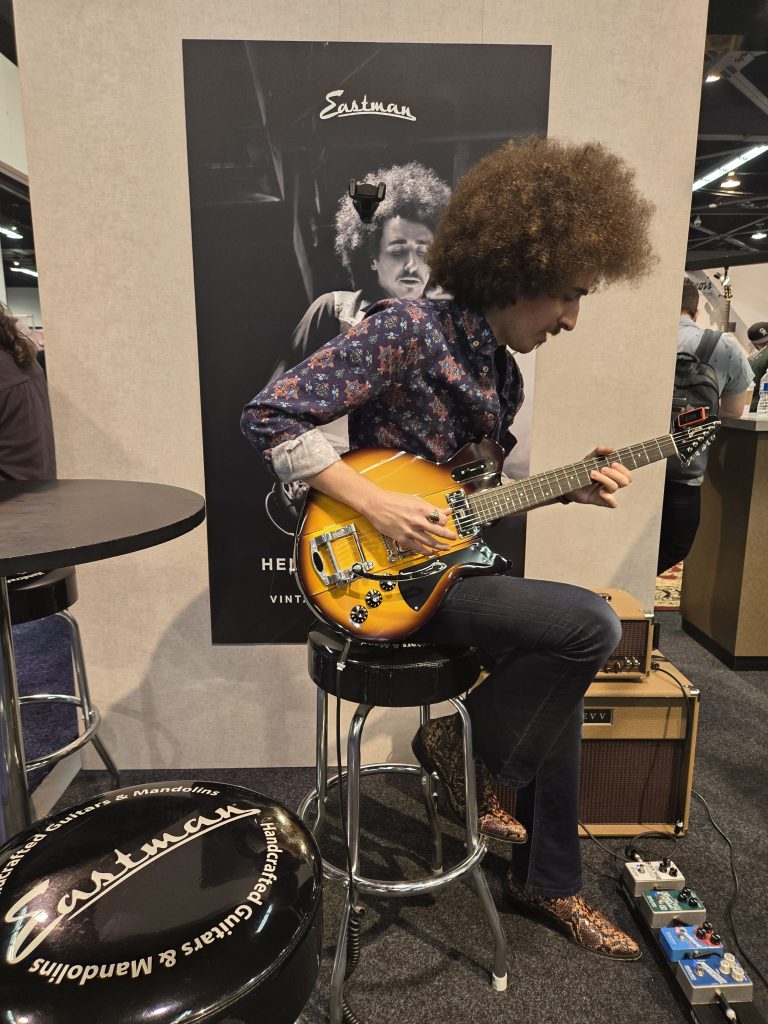
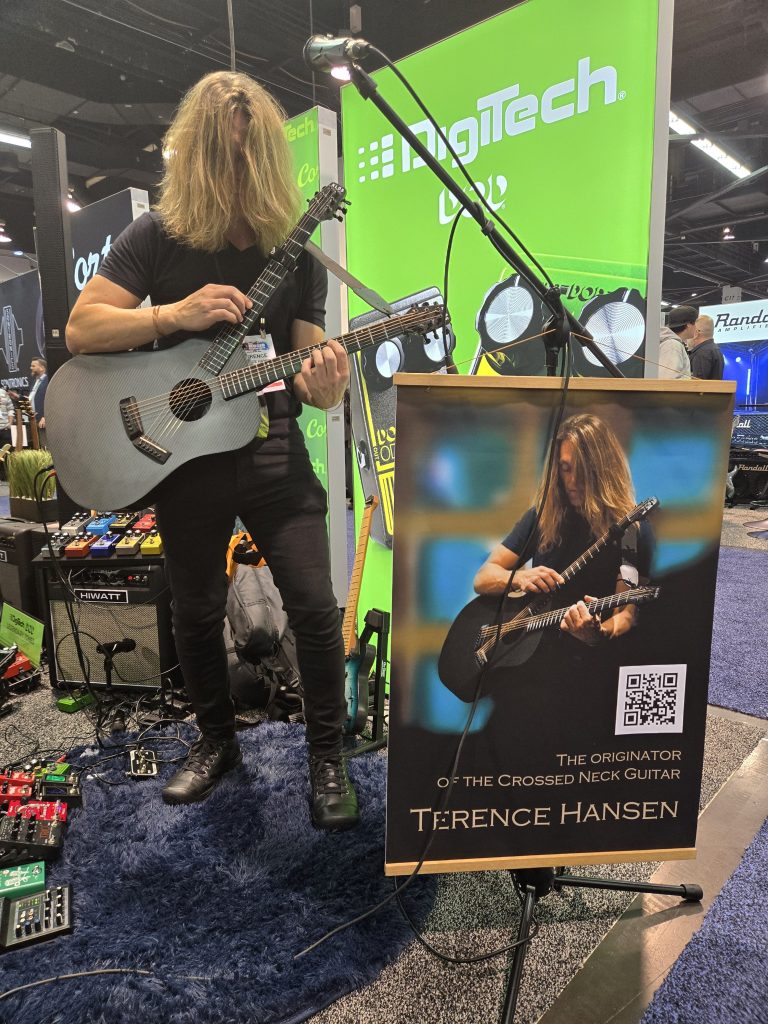
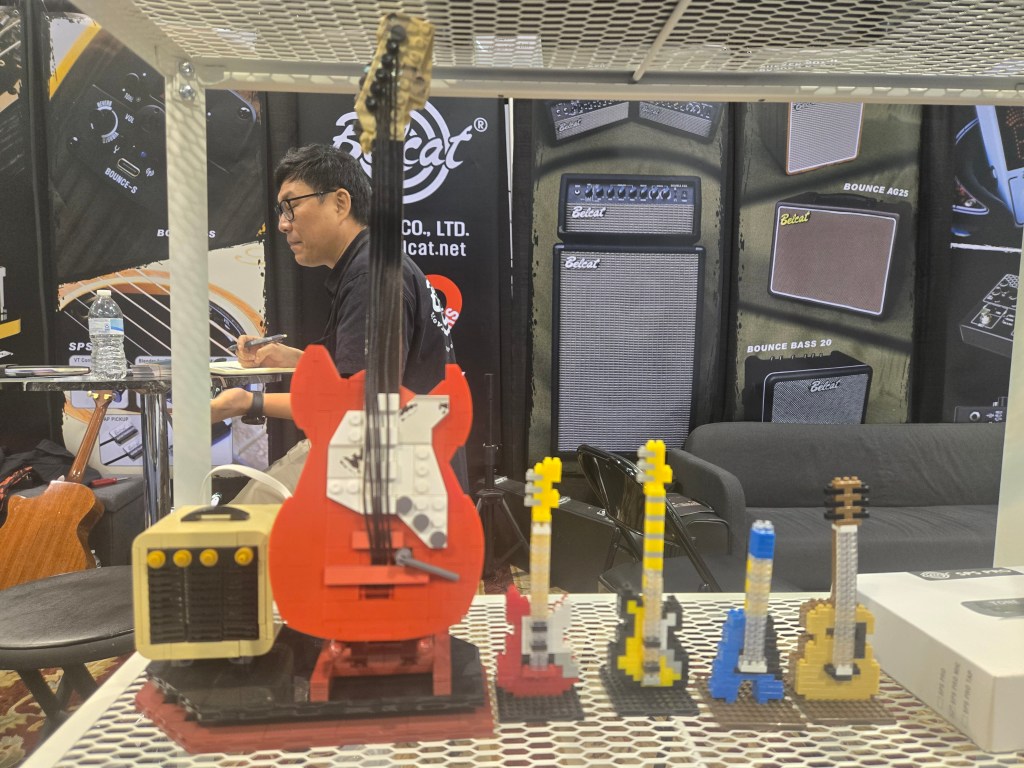
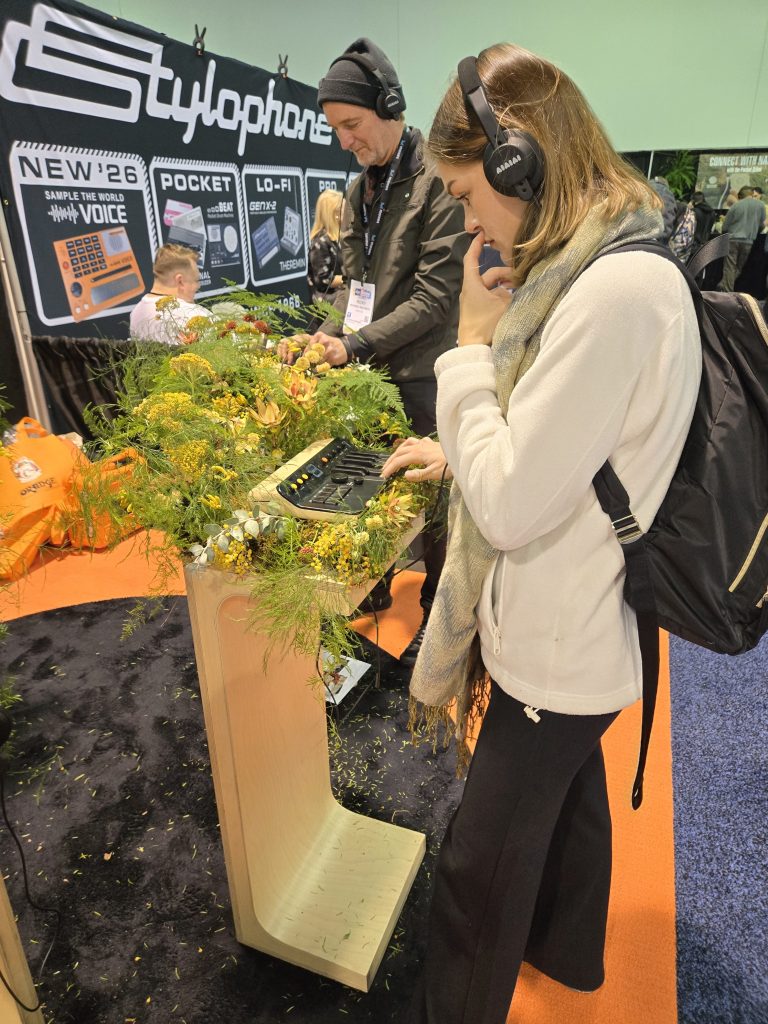
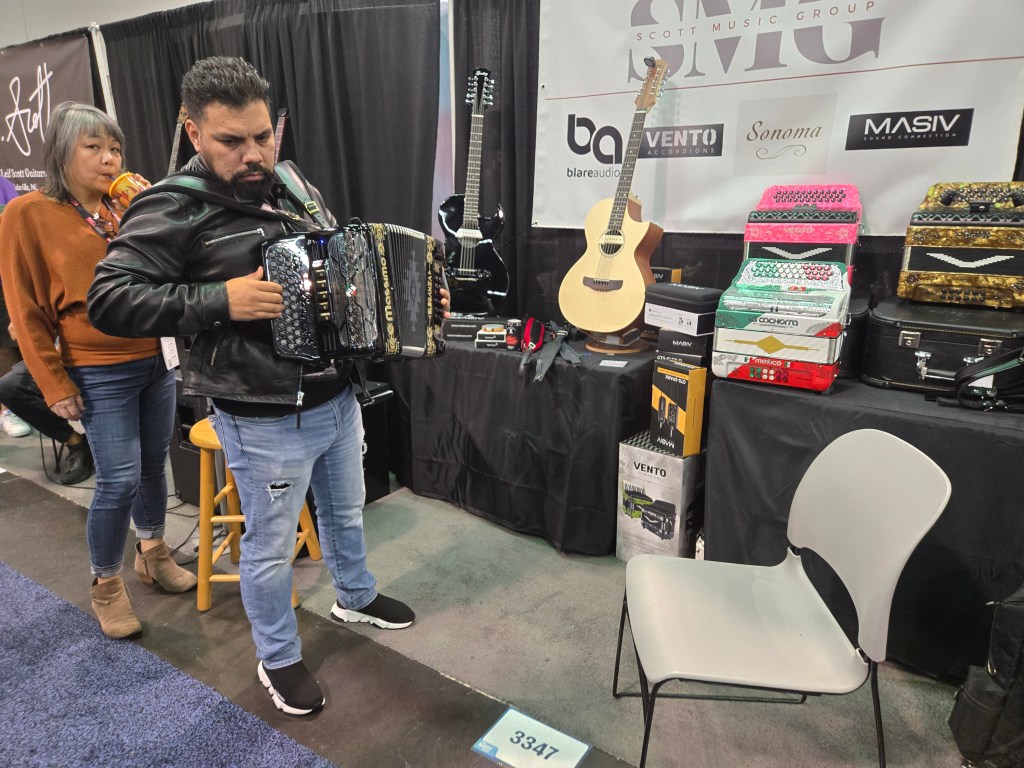
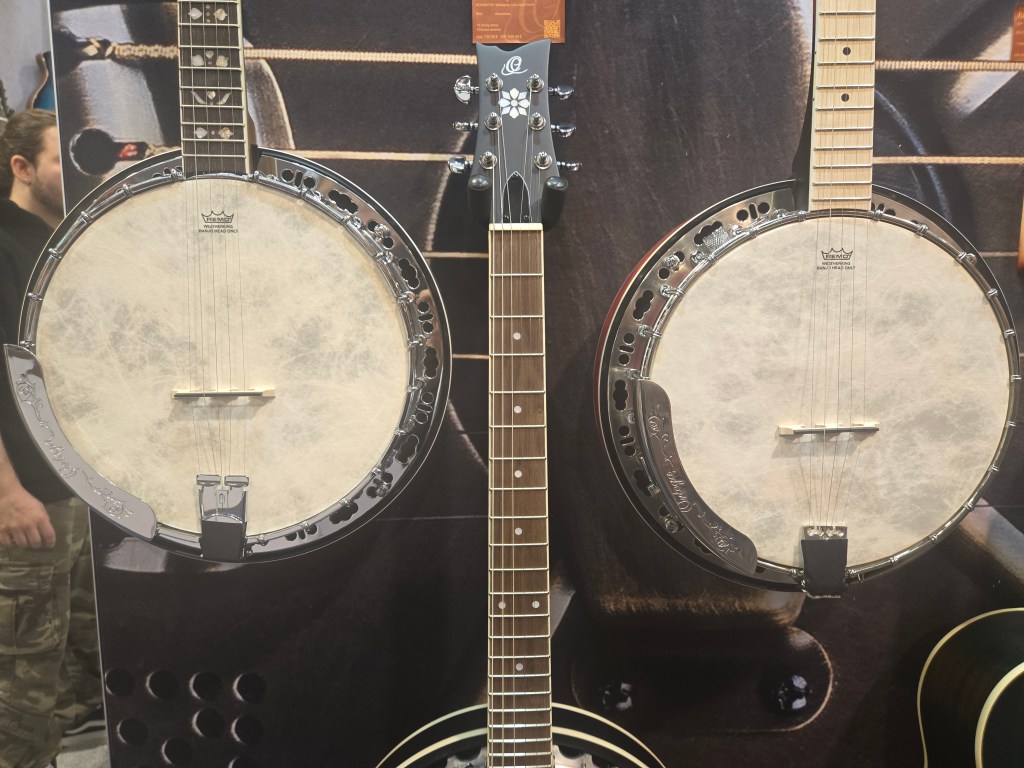
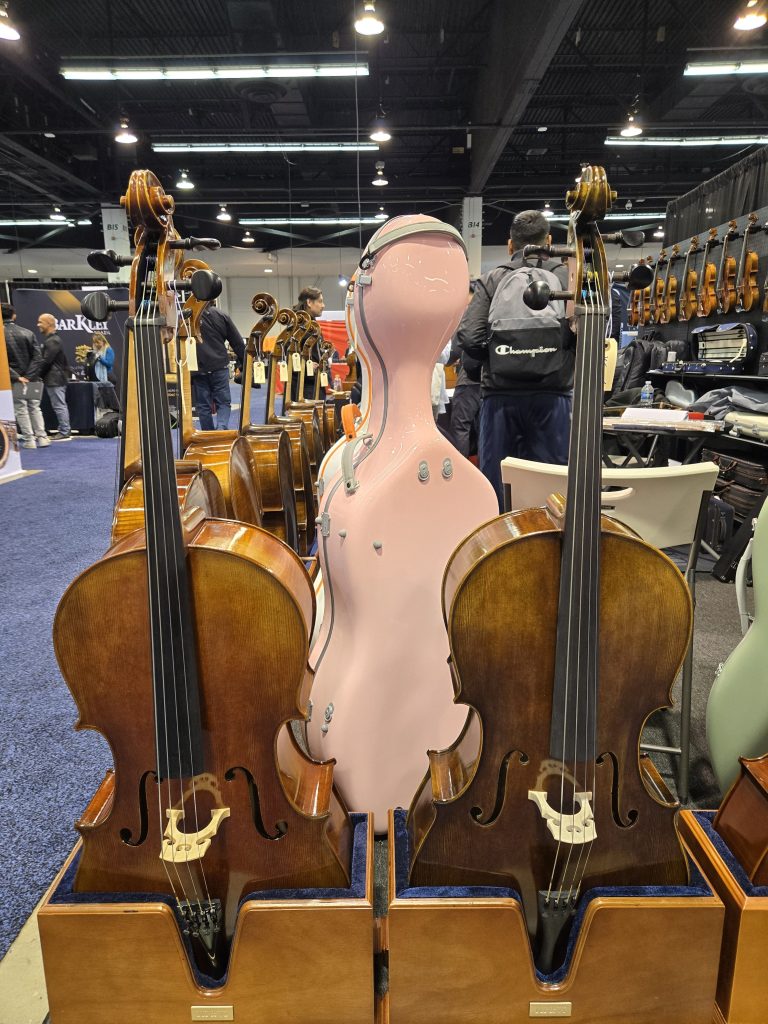
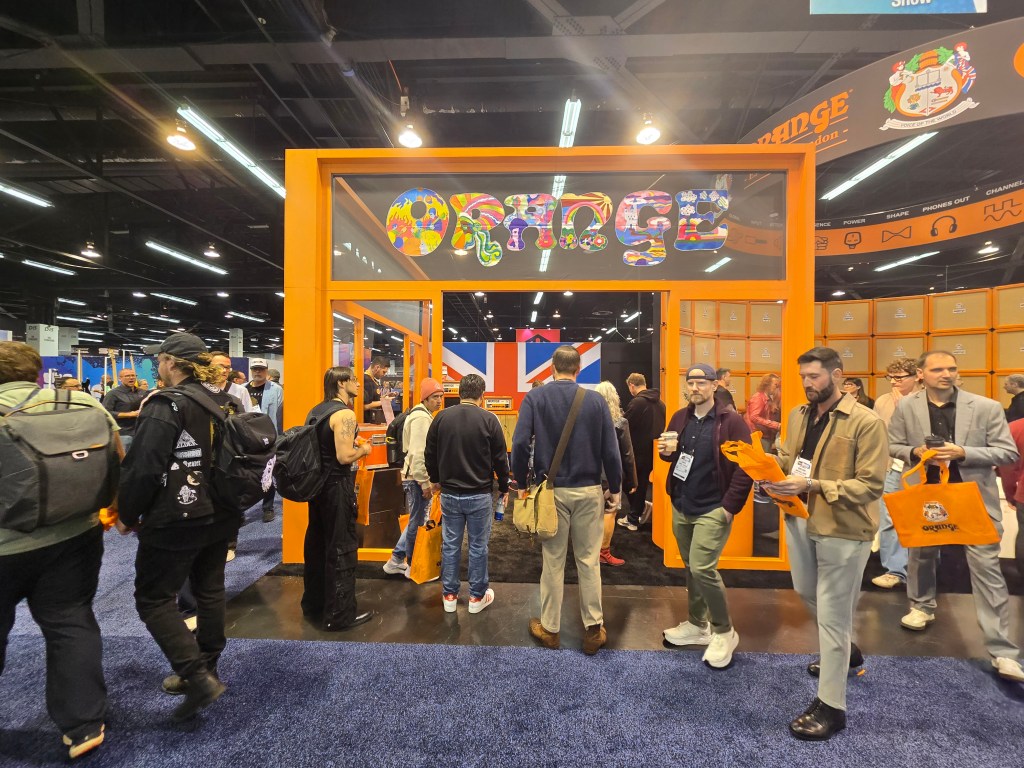
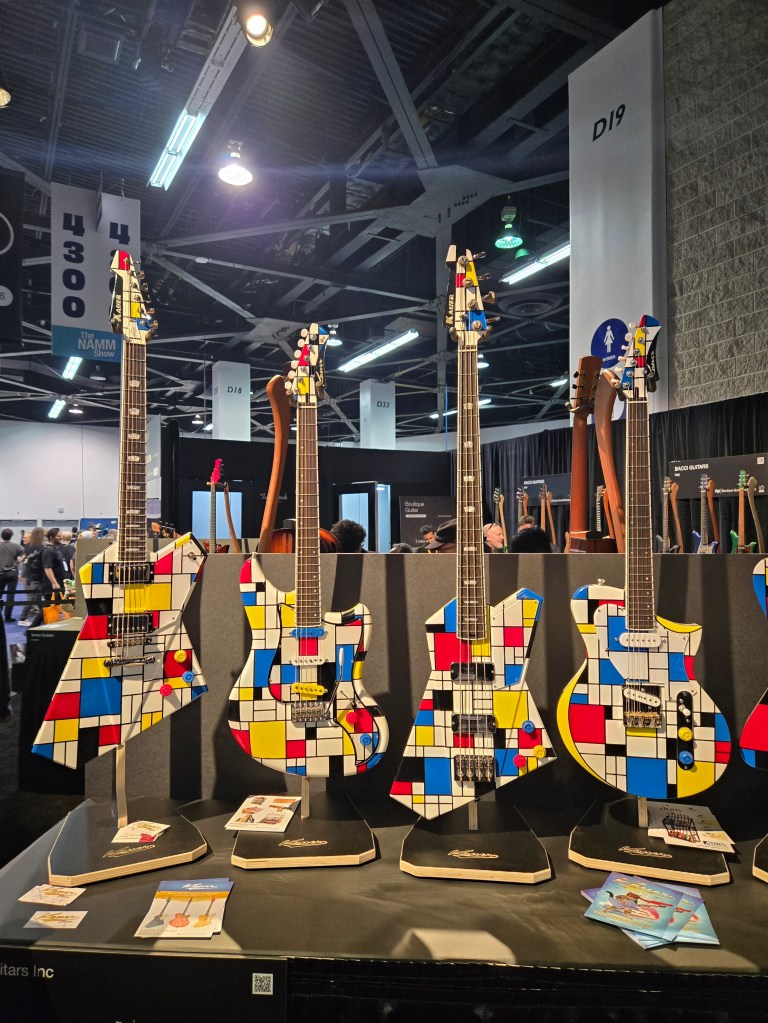
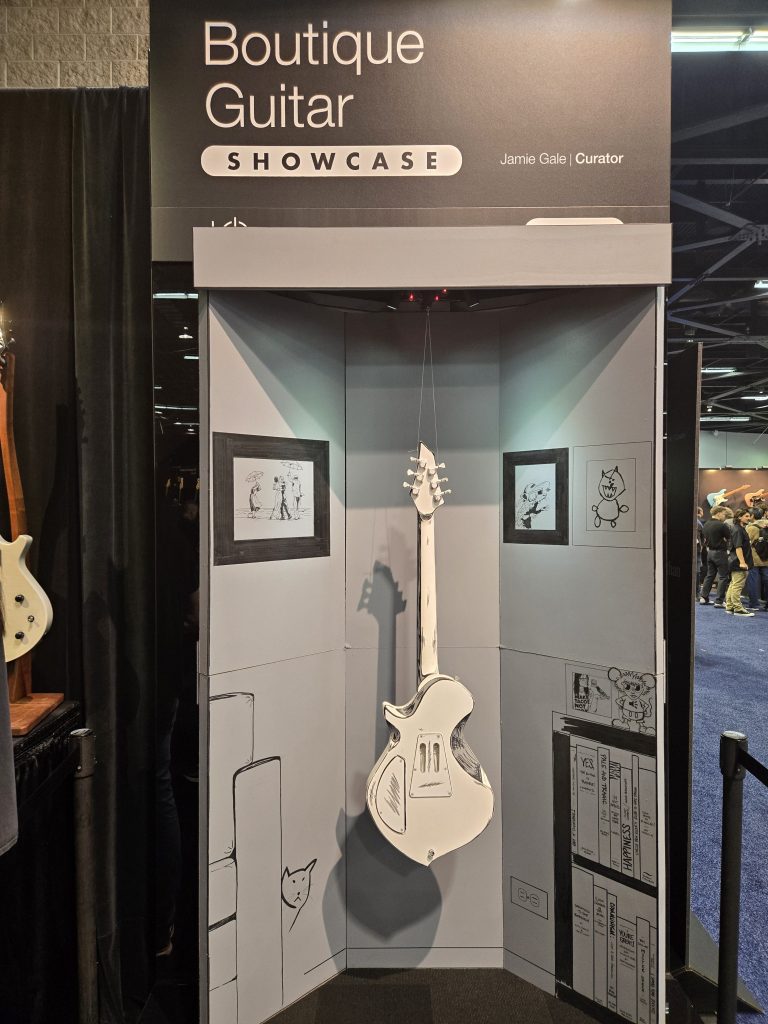
Mass produced gear commands the largest real estate in the Convention Center and the splashier displays, but there is action in humbler DIY margins of the musical instrument/accessory/software world, as well. Custom guitar design, of a sometimes exotic kind, can be found in the Boutique Guitar Showcase zone. This year, art notions snuck into the narrative with the Sully Guitars–designed “This is (NOT) a Guitar” — tapping Magritte’s classic adage “this is not a pipe” in his painting The Treachery of Images — and the Mondrian-esque designs from Kala Guitar. Piet would approve, we assume.
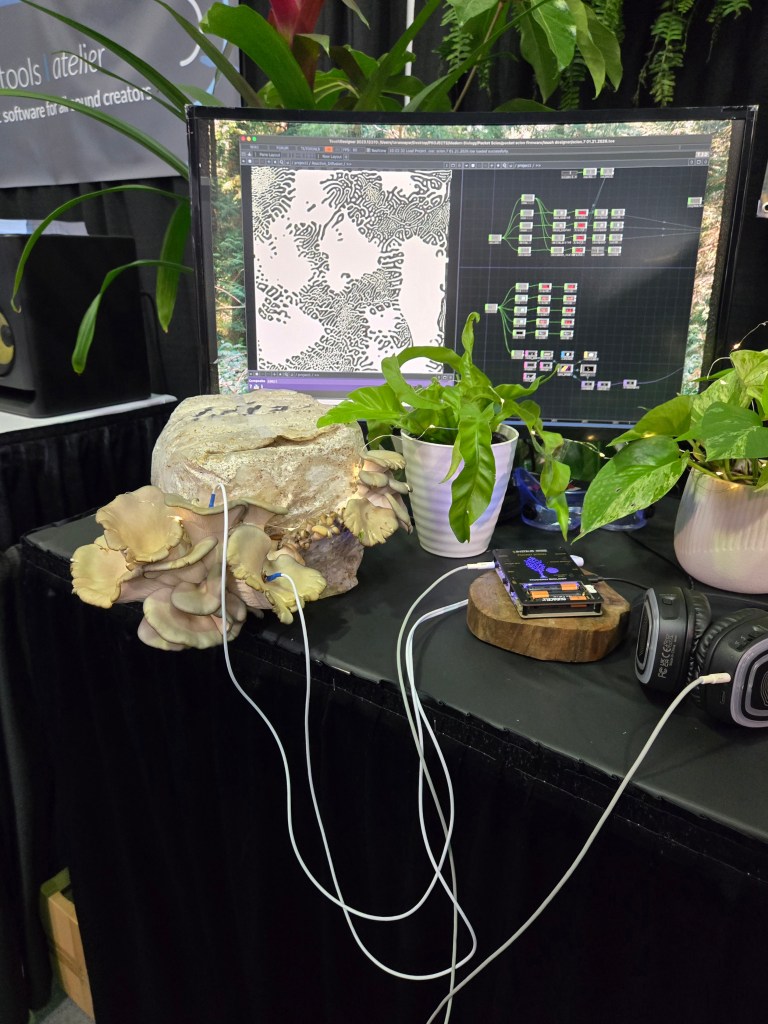
In the charming grassroots-y zone of the electronic/keyboard hall, one could drift from a short blast of enticing organ playing by Matthew Whitaker at the Viscount booth to a nook booth along the wall where a cell-phone size device called the Pocket Scion taps plant vibrations and translates them, via “biosonification,” into electronic musical stimuli. I had a nice time listening to what some eloquent mushrooms had to say and sing.
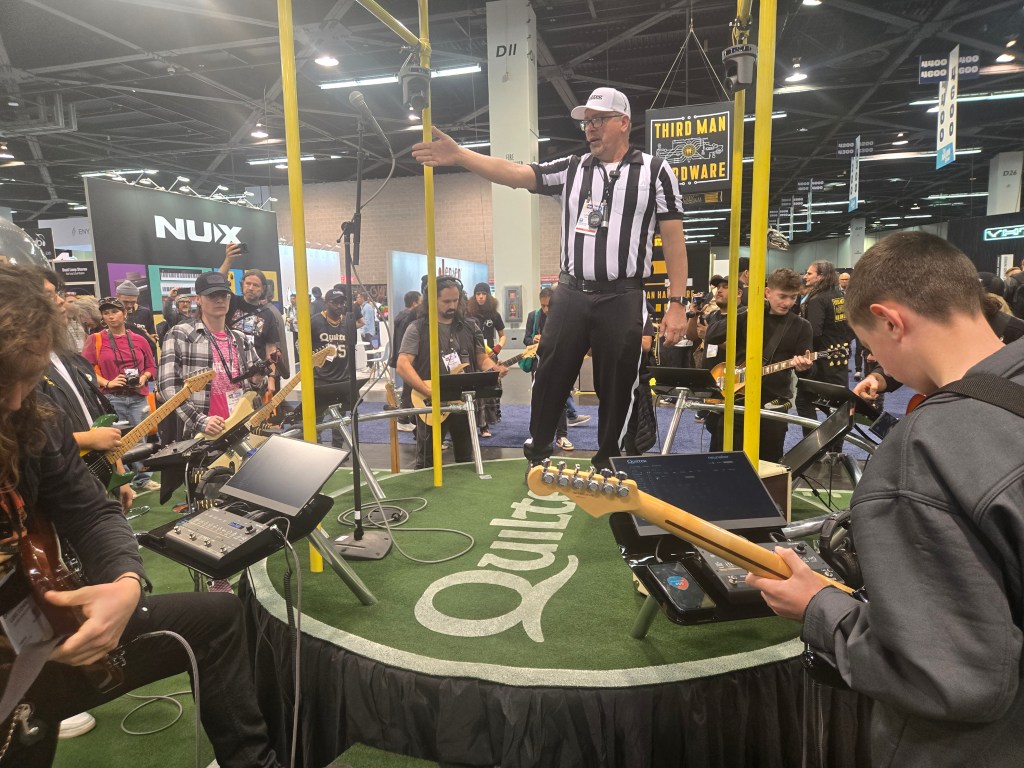
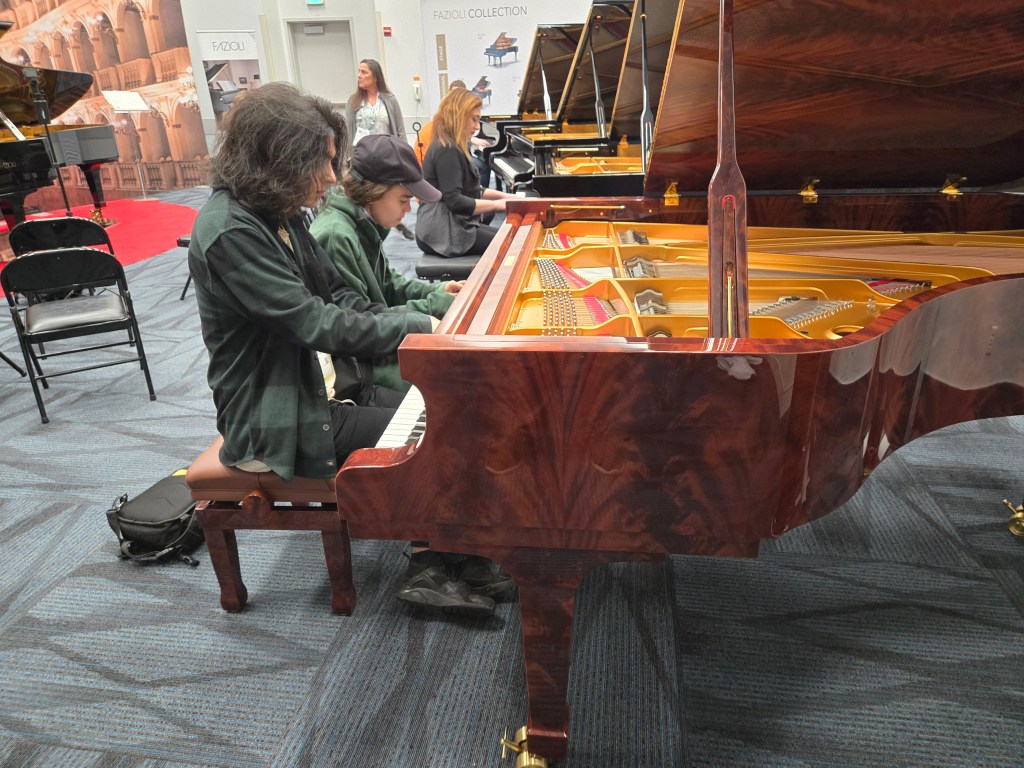
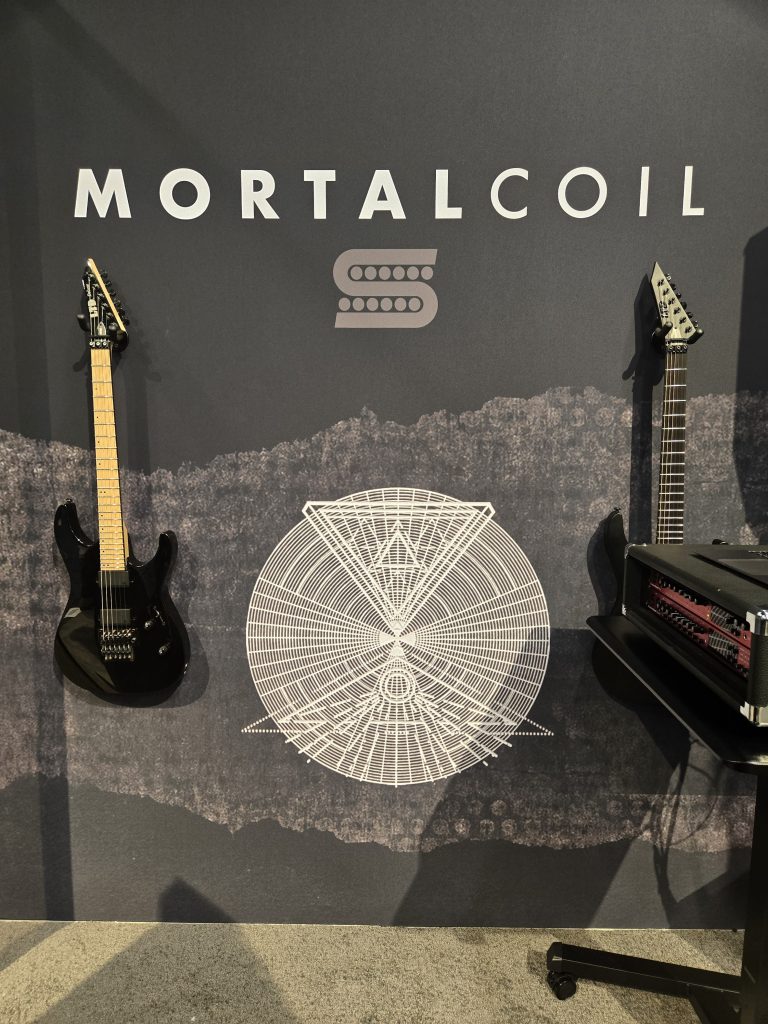
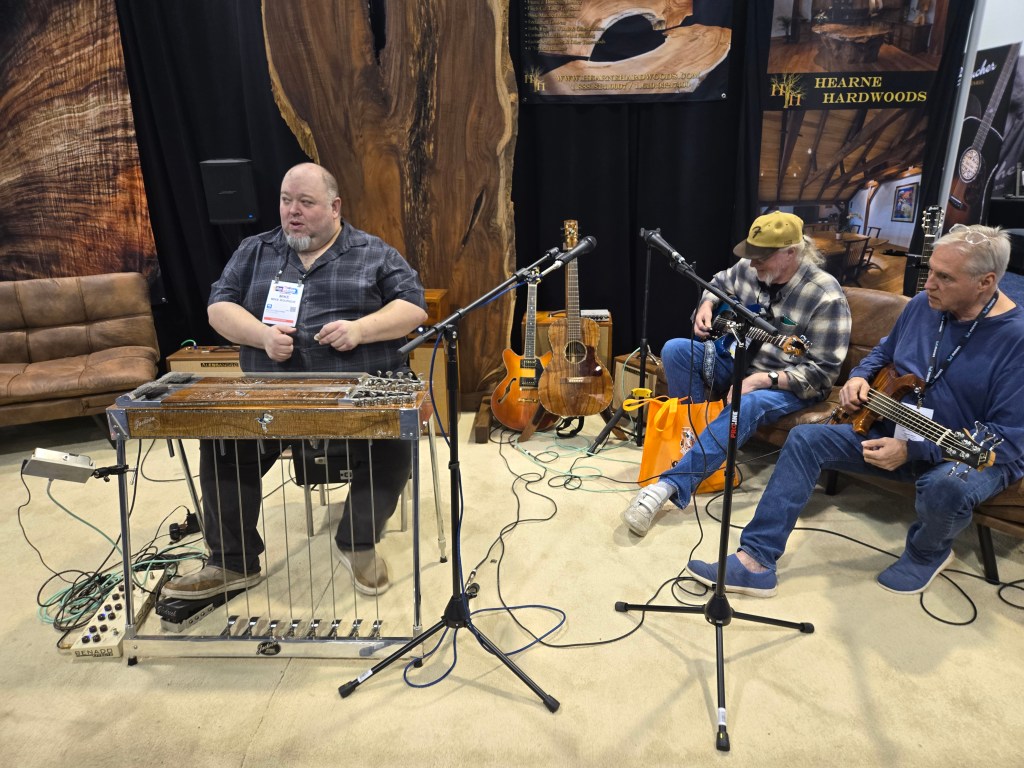
For twang content, pedal steel guitar master Mike Bourque could be heard holding forth, tastily, in the Hearne Heartwoods booth — all about the precious wood aimed at the luthier market. A more unplugged but nonetheless clangorous, Charles Ives–ian mash-up of separate pianistic parts could be enjoyed upstairs in the room occupied by famed piano maker Fazioli.
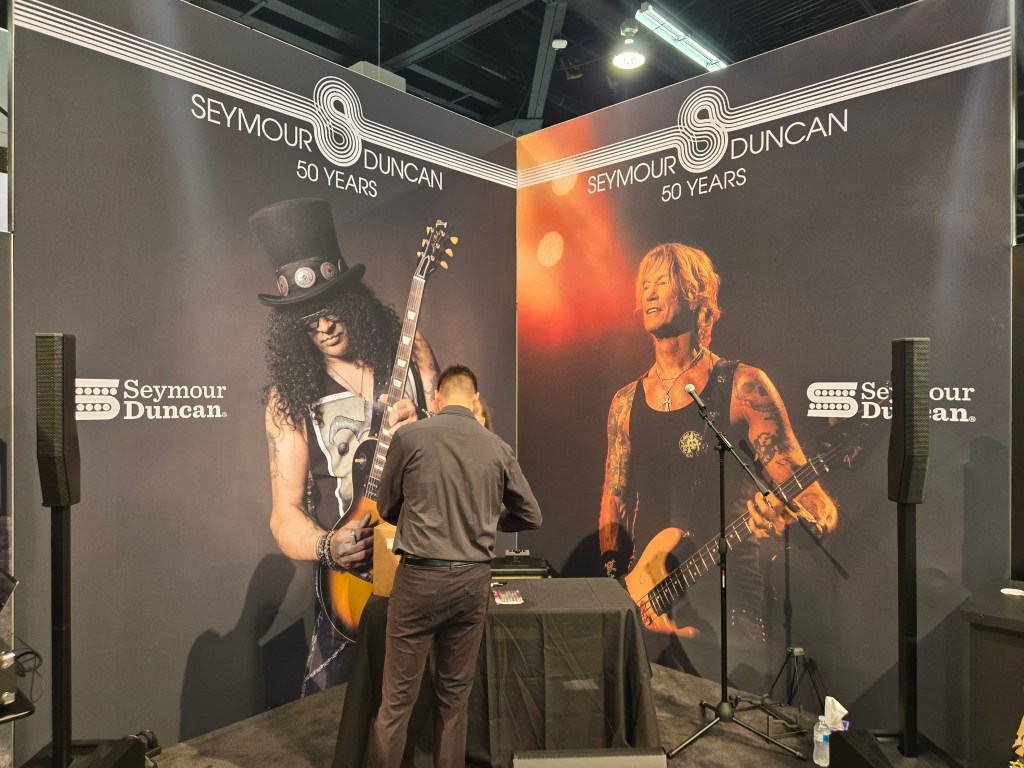
In terms of Santa Barbaran focus, all roads lead to the booth occupied by guitar pickup czar/guru Seymour Duncan, pride of Santa Barbara, whose company is celebrating its milestone 50th anniversary. On a Thursday early afternoon which suddenly felt like Saturday night for 10 minutes, fiercely nimble rock guitarist Philip Sayce was burning it up on the Duncan performance platform for a densely packed crowd of NAMM goers.
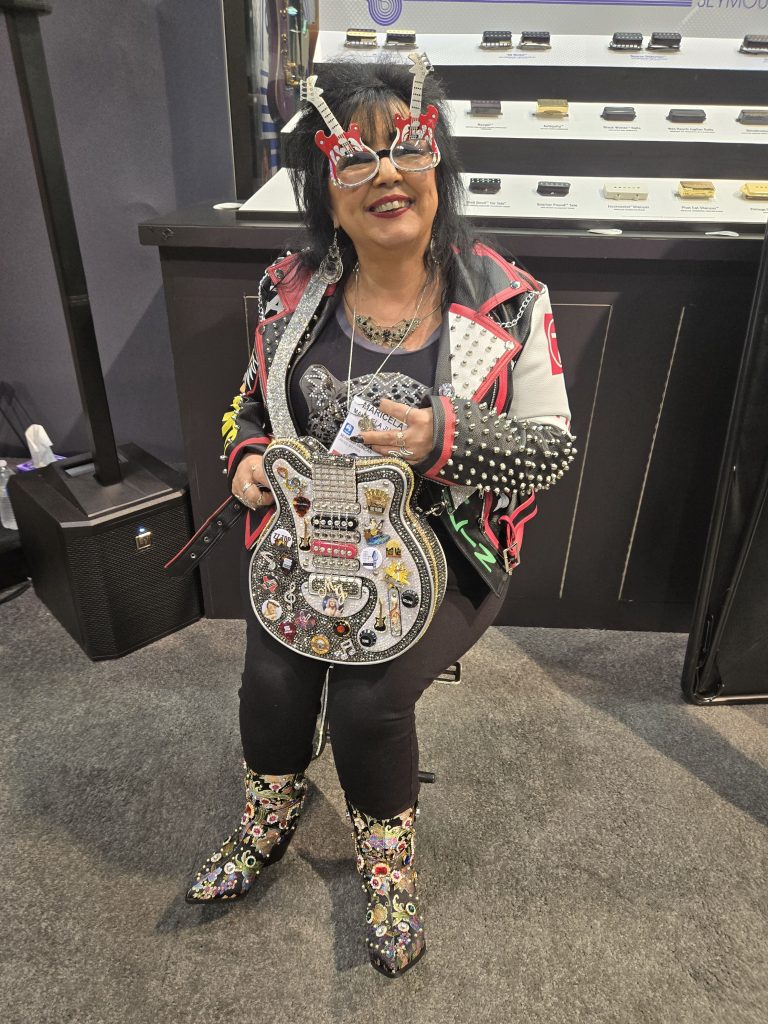
From a different sphere of celebrity-hood, nearby there sat legend “MJ” — a k a Maricela “MJ” Juarez, a k a “La Maestra” — sporting stylish guitar-shaped glasses. She’s been with the company for 43 years and counting, and has worked with a list of such known names as Eddie Van Halen, Billy Gibbons, Steve Miller, David Gilmour, Peter Frampton, Los Lobos, Slash, Angus Young, and more. On the company website, she also adds, “at the same time, I work with young Johnny from just down the street. God says to treat everyone with respect because we are all humans.”
Lift every voice.
TO-DOINGS:
One of the living greats of classical pianists, Emanuel Ax, has cut a regular pathway through Santa Barbara for many years, and he returns to give a recital at the Lobero Theatre on Wednesday, February 4, as part of CAMA’s “Masterseries” chamber music–geared component. He will bring a program of those 19th century Germanic pillars Beethoven and Schumann, with living American composer John Corigliano in the wings.
It’s always smart to mark the calendar the few weekends each season when the enterprising and always-enjoyable Folk Orchestra of Santa Barbara (FOSB) passes through the town/county. Mastermind and multi-instrumentalist Adam Phillips boldly leads the charge, writing the arrangements and some of the music for a 25-plus ensemble of fine local musicians, revolving around specific programs of period and/or genre. This time out, FOSB goes Medieval, channeling music and instruments of 16th century antiquity, and more.
The orchestra plays in welcoming alternative spaces, usually of the church sort: at El Presidio Chapel on Friday, January 30, Trinity Episcopal Church on Saturday, and at St. Marks in the Valley in Los Olivos on Sunday afternoon. Get down, get folky orchestral, get Medieval.
In other orchestral news, the still-young and bravely striving newcomer to the local classical music scene, Santa Barbara Chamber Players, continues its forward motion with a concert at Hahn Hall on Saturday, January 31. Program highlights include music of Mendelssohn, Schumann, and featuring pianist Pascal Salomon and led by conductor Zig Reichwald.
Related Posts


Premier Events
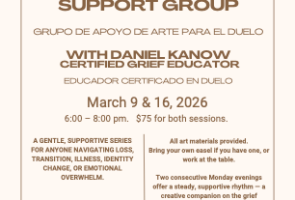
Mon, Mar 09
6:00 PM
Santa Barbara
ART 4 GRIEF Support Group

Sat, Mar 14
7:00 PM
Santa Barbara
Red, White, & Blues II: The American Songbook
Sun, Mar 15
3:00 PM
Santa Barbara
Red, White, & Blues II: The American Songbook
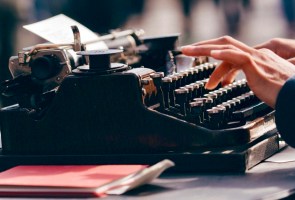
Thu, Mar 12
6:00 PM
Santa Barbara
Poetry, Typewriters, and Collage Workshop
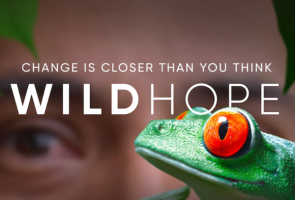
Thu, Mar 12
6:30 PM
Santa Barbara
An Evening of Wild Hope: PBS Film Screenings
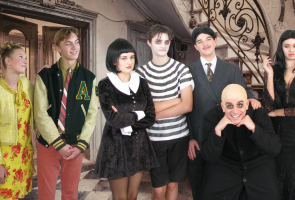
Thu, Mar 12
7:00 PM
Santa Barbara
Lights Up! Presents: “The Addams Family”

Thu, Mar 12
7:30 PM
Santa Barbara
UCSB Music of India Winter Concert
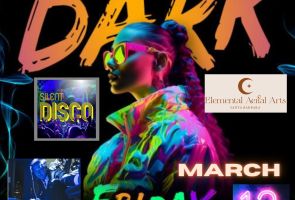
Fri, Mar 13
6:00 PM
Santa Barbara
GLOW X: A High-Definition Neon Experience

Fri, Mar 13
7:00 PM
Goleta
Folk Orchestra of Santa Barbara Celtic Concert
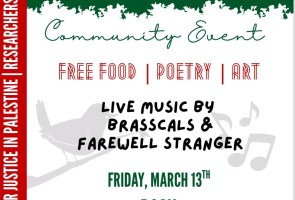
Fri, Mar 13
7:00 PM
Goleta
Peace Event

Sat, Mar 14
1:00 PM
Santa Barbara
St. Patrick’s Day Irish Firedance

Sat, Mar 14
1:00 PM
SANTA BARBARA
SBCC’s Science Discovery Day

Sat, Mar 14
3:00 PM
435 State St, Santa Barbara, CA 93101
☘️ Santa Barbara St Patrick’s Day Bar Crawl & Block Party
Mon, Mar 09 6:00 PM
Santa Barbara
ART 4 GRIEF Support Group
Sat, Mar 14 7:00 PM
Santa Barbara
Red, White, & Blues II: The American Songbook
Sun, Mar 15 3:00 PM
Santa Barbara
Red, White, & Blues II: The American Songbook
Thu, Mar 12 6:00 PM
Santa Barbara
Poetry, Typewriters, and Collage Workshop
Thu, Mar 12 6:30 PM
Santa Barbara
An Evening of Wild Hope: PBS Film Screenings
Thu, Mar 12 7:00 PM
Santa Barbara
Lights Up! Presents: “The Addams Family”
Thu, Mar 12 7:30 PM
Santa Barbara
UCSB Music of India Winter Concert
Fri, Mar 13 6:00 PM
Santa Barbara
GLOW X: A High-Definition Neon Experience
Fri, Mar 13 7:00 PM
Goleta
Folk Orchestra of Santa Barbara Celtic Concert
Fri, Mar 13 7:00 PM
Goleta
Peace Event
Sat, Mar 14 1:00 PM
Santa Barbara
St. Patrick’s Day Irish Firedance
Sat, Mar 14 1:00 PM
SANTA BARBARA
SBCC’s Science Discovery Day
Sat, Mar 14 3:00 PM
435 State St, Santa Barbara, CA 93101


You must be logged in to post a comment.