

Stay up-to-date with all things film fest by subscribing to our Dispatches from SBIFF newsletter featuring
daily reports of what happened last night, and previews of what’s next at the
Santa Barbara International Film Festival. Subscribe here.
Santa Barbara Independent is a proud sponsor of SBIFF’s Audience Choice Award.
Don’t forget to vote for your favorite films.
Musical Sagas, Holy and Profane
Two music-related films screened at the McHurley Film Center back-to-back on Saturday afternoon, from radically different worlds. Some filmgoers and music lovers with a wide taste palate could happily hop from The Yellow Tie, a fictionalized biopic about a Romanian classical music titan, to If These Walls Could Rock, a documentary about a famed piece of rock ‘n’ roll real estate/history.
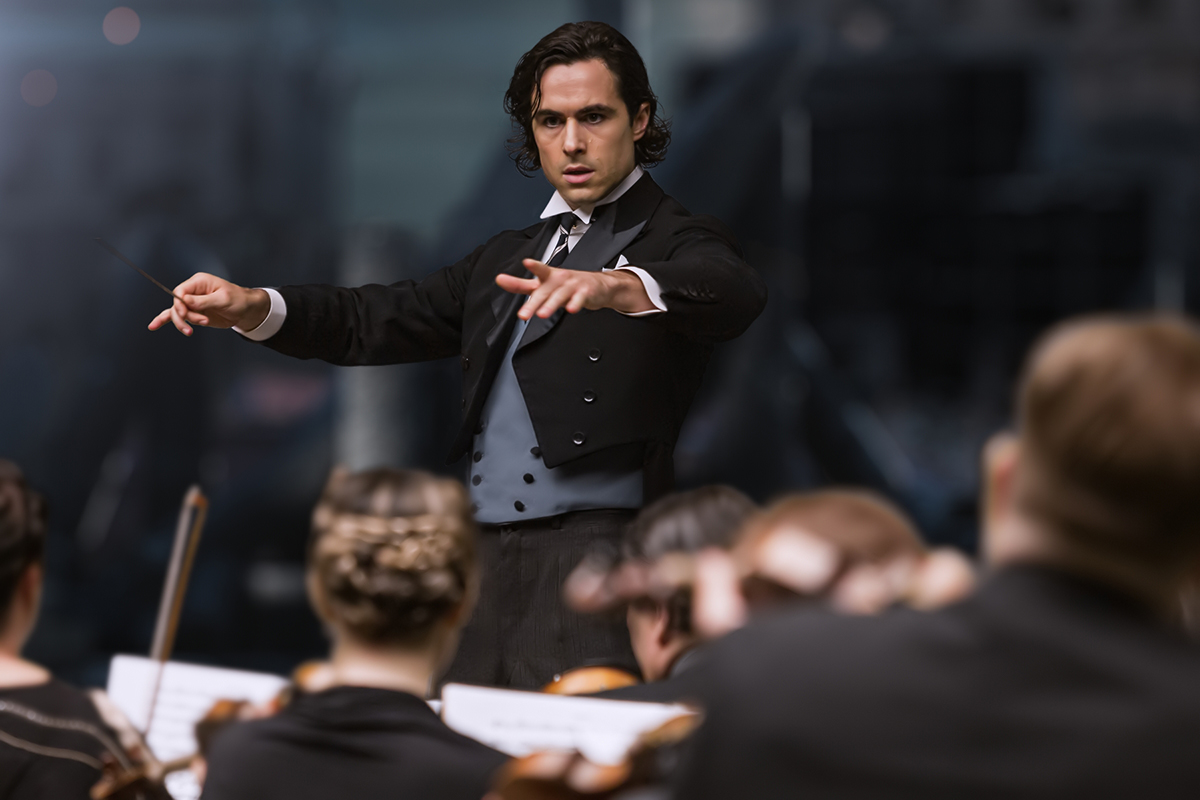
Besides being a fairly engaging film — given the sometimes questionable values of the epic biopic genre — The Yellow Tie serves at least a few novel causes. Firstly, it casts a generous spotlight on the little-known life and legacy of the great Romanian conductor/composer Sergiu Celibidache, whose half-century career was diminished in terms of public awareness by his fierce ideological opposition to recording his music: The live concert experience was the only true musical form, in his mind.
The film, lovingly and ambitiously made by his son Serge Ioan Celibidache, spans much of the 20th century, from his youth in Romania to his Glory Days leading the Berlin Philharmonic and his veritable exile to Latin America, international teaching and conducting, and a final return to the homeland he had avoided during the Eastern bloc era. To tell the story, the director has created a tapestry of time-and-place cross-cutting, similar to Bradley Cooper’s approach in the Leonard Bernstein biopic Maestro. We meet the cantankerous conductor late in life, in the form of John Malkovich, who nails the prickly and principled maestro with the aplomb we expect. The gifted actor Ben Schnetzer does an impressive job as the adult Celibidache, although setting the film mostly in English is distracting and veracity-robbing.
Another virtue of this film is its valued addition to a slowly expanding group of recent films that put classical music in focus in a respectful way. The film also pays respect to Romanian culture and an underrated Romanian national hero. Not surprisingly, its SBIFF screenings drew out a healthy Romanian contingency in the house. (Hm, TBA candidate?)
If maestro Celibidache maintained an uncompromising belief in the importance of the content of music, If These Walls Could Rock aims its lower sights at the hedonistic party timing periphery of the music itself. The documentary is a fawning portrait of the now 60-plus-year-old Sunset Marquis hotel, which basks in pop-cultural mythology as a hangout and party central for legendary and wannabe-legendary rock stars, as a sort of less literate West Coast answer to N.Y.C.’s Chelsea Hotel.
Directors Craig A. Williams and Tyler Measum started the project three years ago, spinning off Williams’s book on the subject, and proceeded to compile interviews — steeped in the hotel’s special ambience — and historical background materials. Because of the hotel’s anti-paparazzi and tight-lipped policies, sticking to a “what happens at the Marquis stays at the Marquee” attitude, celebrities have deemed it a safe haven, which means that we don’t get as many salacious sex, drugs, and rock ‘n’ roll anecdotes as might be expected. Some of the poolside and room-trashing tales are re-created with animation.
But by weaving in the business saga of father-son owners/keepers George and “Marky” Rosenthal, the film also tells the back, side, and front story of the hotel as a surviving landmark in the ever-shifting landscape of L.A. architecture and scene-making. While it can be entertaining, for a spell, to hear of the hotel’s exploits and emotional resonance from the starry likes of the places self-appointed mayor Billy Bob Thornton, Billy Gibbons, Bruce Springsteen, Slash, Morrissey, Sheryl Crow and others, there comes a point where some of us feel a bit creepy focusing on the extracurricular excesses of the rich and famous, and raucous and role playing. Shouldn’t we, as Celibidache might say, focus on the art rather than the artist?
Sorry for that pompous diversion. I know that, as Jagger and Richards — Marquis regulars at one point — opined, it’s only rock ‘n’ roll, but I like it.
Putting the “Art” in Artisan, Oscar Timed
Movie stars always have their field day at SBIFF, with hotly attended tribute nights at the Arlington, but some of the more interesting and well-timed activities remind us of the larger canvas of film art. We’re talking, of course, about the annual Variety Artisans Awards night, paying respects to behind the scenes aspects which, well, make cinema cinema.
Saturday night at the Arlington belong to a group of these artisans, the variety of which demonstrated the many dimensions of filmmaking: production designer Jack Fisk (Marty Supreme), costume designer Kate Hawley (Frankenstein), makeup artist Mike Hill (Frankenstein), editor Andy Jurgensen (One Battle After Another), supervising sound editor Al Nelson (F1), cinematographer Adolpho Veloso (Train Dreams), visual effects artist Eric Saindon (Avatar: Fire and Ash), and sound mixer Chris Welcker (Sinners).
But the evening was front-loaded with musical matters. First up was legendary film composer Alexander Desplat, showcasing his lavish romantic score for Frankenstein. Desplat, who appeared in an SBIFF Cinema Society meeting to talk about his score for Wes Anderson’s The French Dispatch, spoke about the demands of the Frankenstein score, noting that he and director Guillermo del Toro didn’t want to make it a scary score, but to “focus on the fact that it is a movie about love. Everyone is looking for love, from the monster to Frankenstein and the woman.” He also joked about cultural differences from del Toro: “I’m too French, too sophisticated,” he laughed. “[del Toro] told me to be ‘more Mexican’!”
In sharp contrast, another Oscar-nominated musical force last year was the mighty KPop Demon Hunters, from which the song “Golden” is up for Best Song Oscar. The artist responsible, singer-songwriter Ejae, spoke from the Arlington stage about her meteoric rise to the limelight, commenting that she felt compelled to be involved in the project. She connected personally with the challenges faced by the heroine, Rumi Kang, leader of the K-pop group Huntrix, in the film. “She goes through a lot of what I have gone through, trying to hide that side of her that is a perfectionist and hard-working, but to a fault.”
From a purely musical standpoint, she explained that the very tilt of the ascending lines in the melody of “Golden” came about because “the directors wanted it to go upward, to metaphorically show that she’s literally reaching up for this dream that she’s so desperate to hold onto, and stretching her voice, literally.”
“I was working a hard time at that time,” she continued. “So it was important to put a little bit of my personal journey as well. And even though it was a narrated animated film, the feelings and the really was absolutely real.”
Cinematic Scenes from an Imploding Marriage
When the avid festival-goer slips into the groove of catching several films in a single day, especially after a few days in the trenches, the jewels tend to shine all the brighter in the company of less precious stones. For me, the finest and most memorable film I caught on Saturday came early in the morning at the Riviera, with the intense and unusually intimate German film Maysoon.
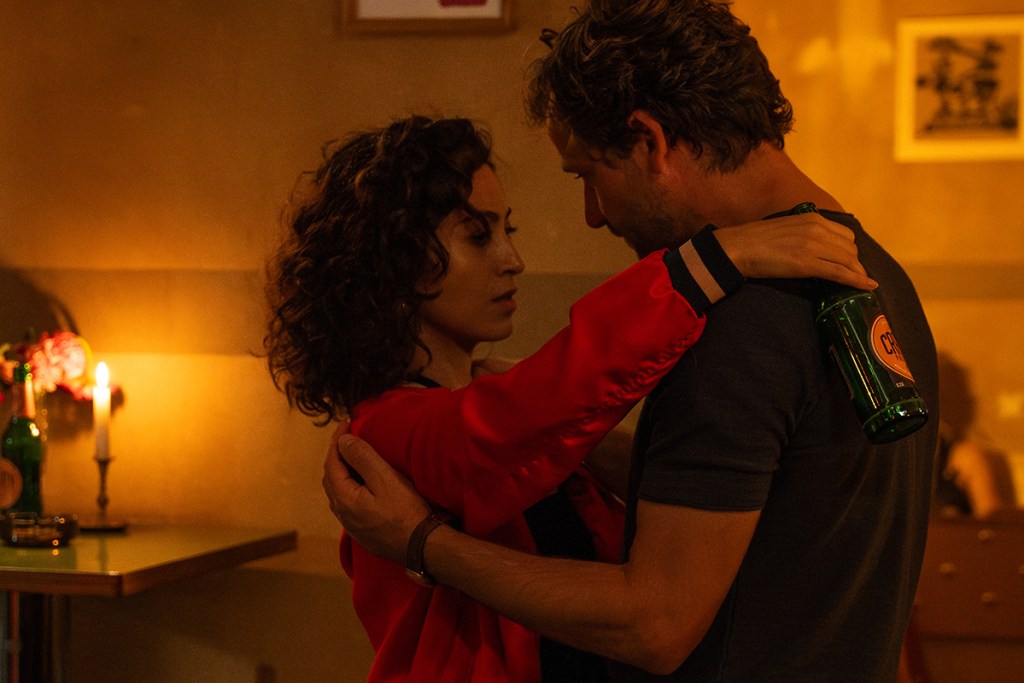
The “Maysoon” in question, in the writer-director’s potent film, is a young Egyptian woman living in Berlin with her young children and her German husband, who is going astray. Suddenly, her otherwise settled domestic life — in contrast to her revolutionary days in the Arab spring — is in peril, as is her very sanity, to some degree. Social and gender-based power plays are at work in this narrative, along with the fragility of displaced people and waves of parental angst.
What could be the makings of a melodrama that becomes an artful exercise in cinematic immediacy in writer-director Nancy Binidaki’s “anatomy of a breaking marriage” story. We are deftly placed in the emotional vortex of Macy’s unraveling life, through handheld camera work and an unsparing eye on her evolving meltdown — made all the more powerful through a stellar performance by Sabrina Amali.
Words of greater wisdom suddenly arrive late in the film as a sagely beautician, an older Egyptian emigre, tells her, “You don’t own your husband, you don’t own your homeland … you own your soul, and you own your children — for a while. Strengthen your soul.” It’s solid advice, duly learned and taken by film’s end.
Recommended Fare Zone
Here is a short list of films screening soon, which I’ve seen and can vouch for as worth our time (IMHO):
Tenor: My Name Is Pati (Rebecca Tansley)
Adam’s Sake (Laura Wandel, Belgium)
Dear Lara (Lara St. John)
A Life Illuminated (Tasha Van Zandt; US)
Monday kicks off phase two of the festival program, bringing with it a new batch of titles to check out and lose sleep over.












You must be logged in to post a comment.