


Stay up-to-date with all things film fest by subscribing to our Dispatches from SBIFF newsletter featuring
daily reports of what happened last night, and previews of what’s next at the
Santa Barbara International Film Festival. Subscribe here.
Santa Barbara Independent is a proud sponsor of SBIFF’s Audience Choice Award.
Don’t forget to vote for your favorite films.
And then, the rains fell, like manna from heaven. Rain is always a blessing in Santa Barbara, for various reasons, but it feels like a double blessing when it appears at film festival time. Apart from the logistical nuisance of craving the wetness while in lines for films, the arrival of inclement weather helps to justify long hours spent in the indoor sport of festival going. Bring it on.
When Sean Penn showed up at the Arlington on Monday night, with his One Battle After Another heavyweight pals Leonardo DiCaprio and Benicio del Toro, he made multiple reference to the almighty power and centrality of the writing in what makes cinema work at its best. It was probably partly a self-effacement gesture, from a great actor trying to deflect the glaring spotlight. And he also insisted that, “ultimately, film is a director’s medium.”
That theory got a good run for its money at the Tuesday-night tribute club at the Arlington, with a solid four-person “Outstanding Directors of the Year” tribute. To a person, the artists onstage validated the idea of director as visionary head of the ship, with distinctive films combining consummate craftsmanship and a flair for innovation.
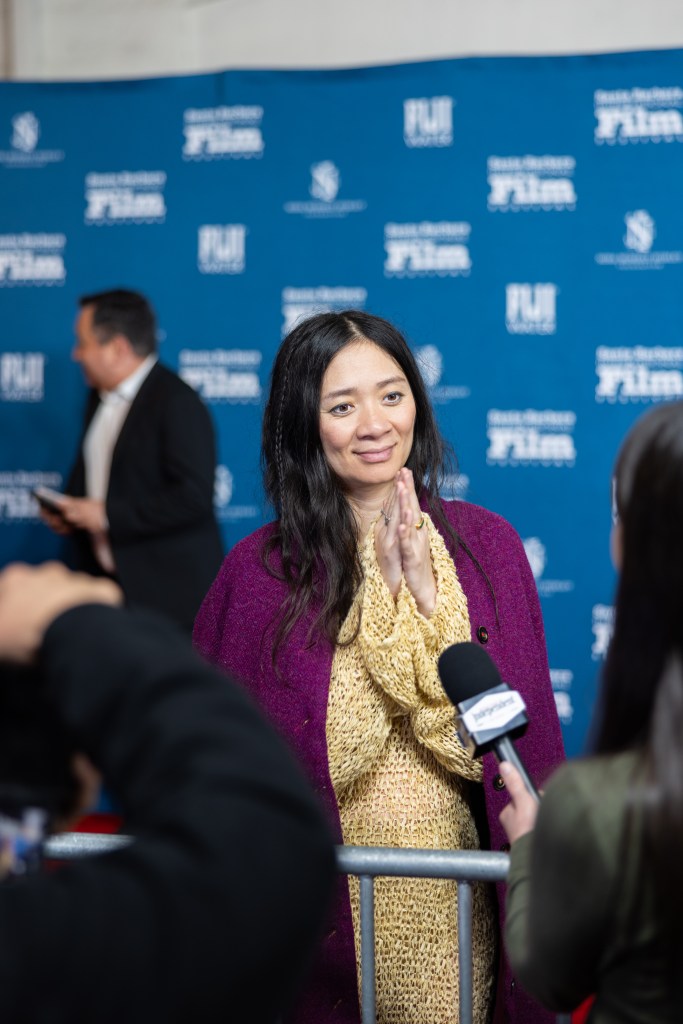
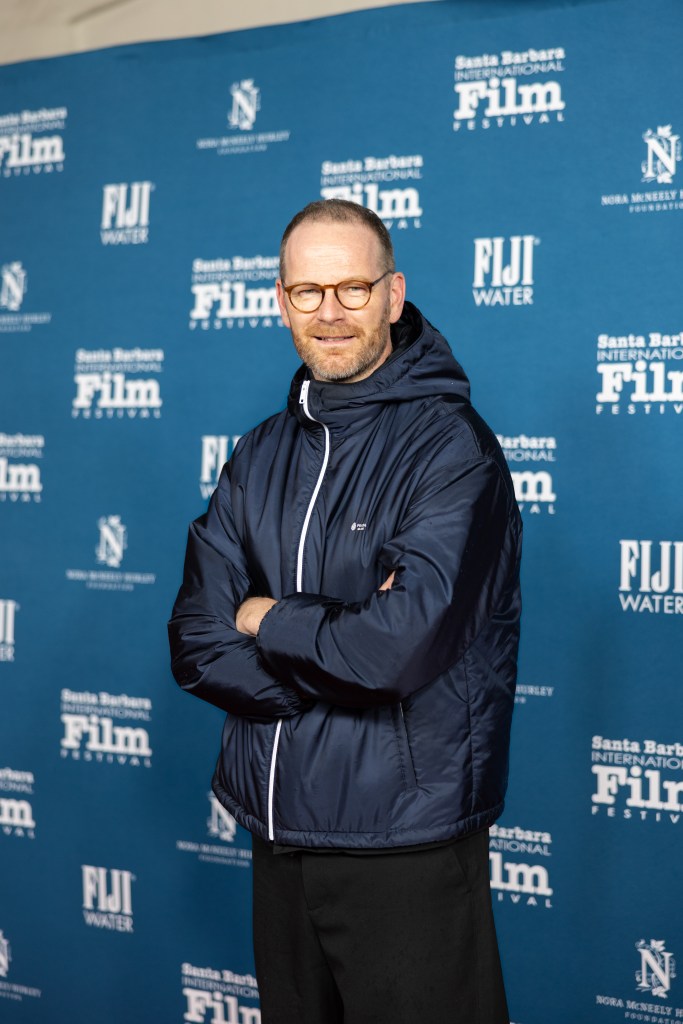
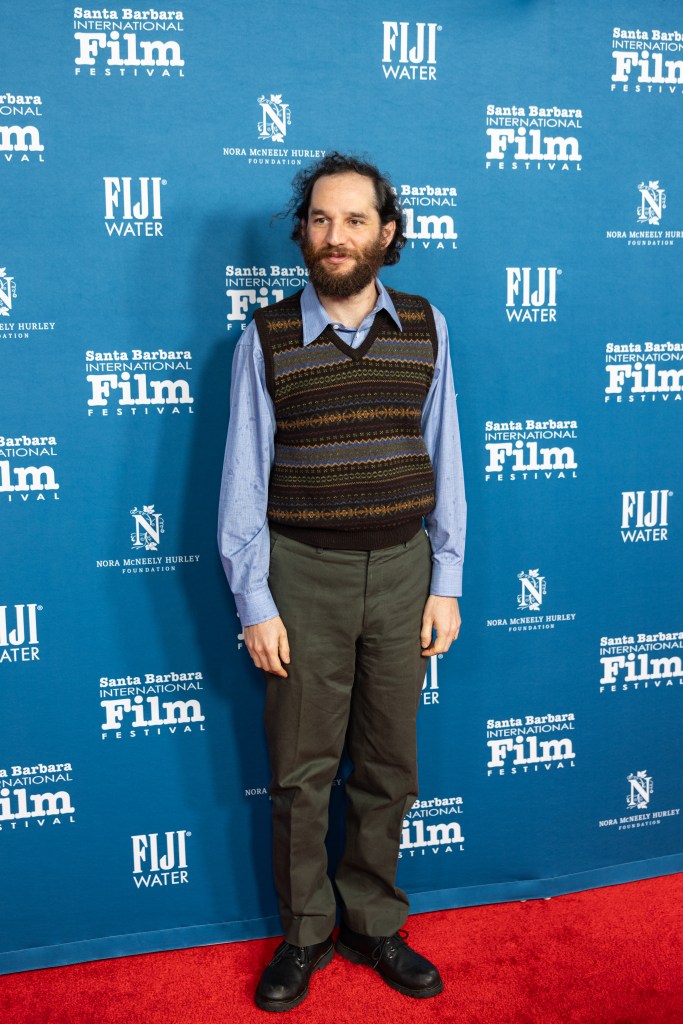
And the directors were… Ryan Coogler (Sinners), Josh Safdie (Marty Supreme), Joachim Trier (Sentimental Value), and Chloé Zhao (Hamnet). All are worthy recipients of Oscar nominations, the only missing party being PT Anderson, of One Battle fame, who ironically had his moment in the Arlington spotlight when he gave the power of trio their awards on Monday.
Zhao, conjurer of the poetic Bard saga Hamnet, spoke in the most metaphysical terms of the four, and the sometimes-Ojai resident told Santa Barbara, “I think I’m talking to the right crowd here.”
The China-born, NYU-trained director, whose filmography includes the Oscar-kissed Nomadland and the splashy Marvel landing of The Eternals, spoke of her need to pull back from the career train before launching into the inventive Hamnet.
She deployed unique directorial methods to get inside of the unfolding story and process of making the film, including guided meditations on the set. “I believe actors are modern-day shamans,” she said. “They channel spirits, as medicine…. Filmmaking is a sacred ceremony.”
For Trier, film can also be a family affair, with the anchoring theme of past and present familial tensions surrounding a famous director (Stellan Skarsgård, heading to the Arlington tonight) and absentee father coming to terms with his grown daughter in the striking film Sentimental Value. The Norwegian director, who jokingly called himself a “nepo baby” with his father’s and grandfather’s film connections, also spoke about his love for and cinematic treatment of his hometown of Oslo. He referred to the concept that “city is material. I still want to show you something I’ve seen in Oslo. There are still streets I want to show you.”
Trier also noted that “I’m an old punk guy with ironic tendencies, but I now have two kids and feel that, with this film, I wanted to show some hope.”
In Safdie’s case, he wants to show us his hometown, N.Y.C., as he does in 1950s period-piece glory (thanks to the great veteran set designer Jack Fisk) with Marty Supreme. As seen in the frenetic new film and Uncut Gems, Safdie tends to load his films with multiple narratives, an intensity tailor-made for the jacked-up intensity of actor Timothée Chalamet as Marty. He had long wanted to tap into Chalamet’s amped-up wild side, adding, “He is Timmy Supreme.”
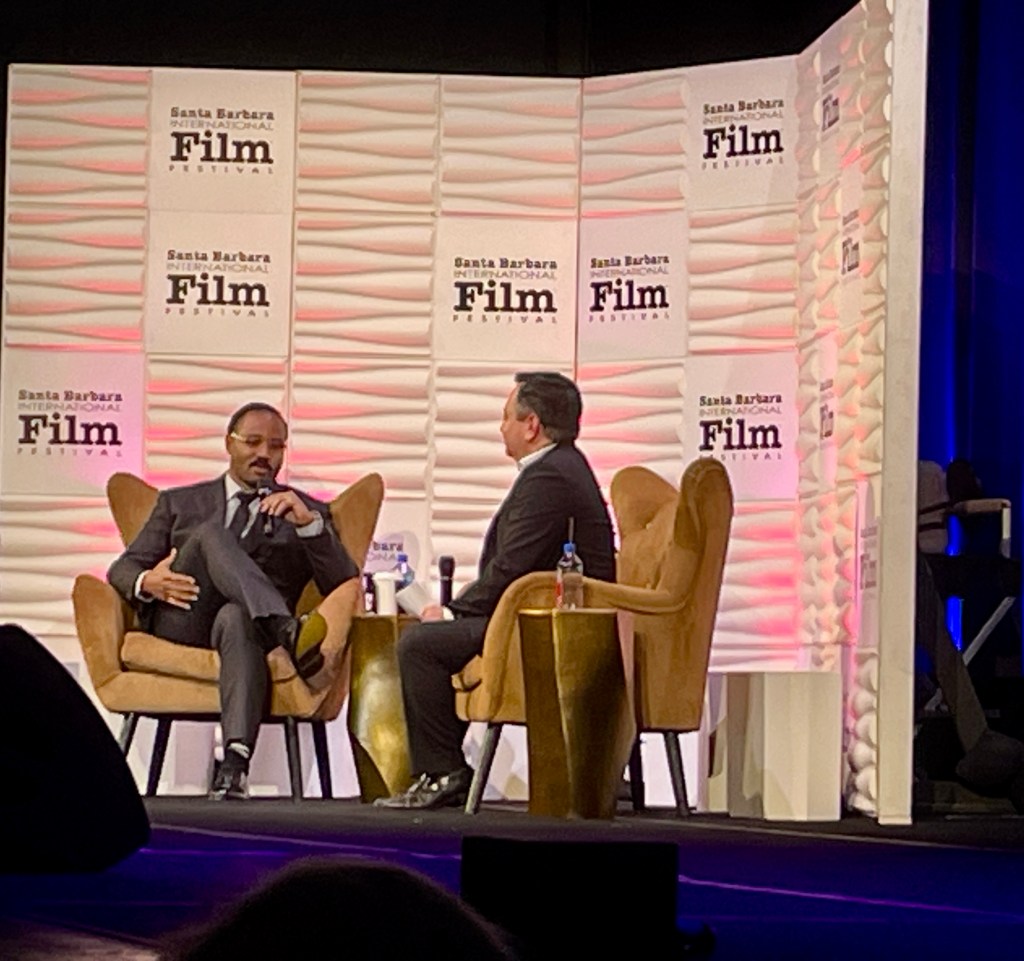
Coogler, who launched his brilliant career-in-progress with the bold Fruitvale Station — about his native Oakland — and helmed the thinking person’s blockbuster Black Panther, has outdone himself with Sinners, recipient of more Oscar nominations than any film in history. Asked by moderator Scott (Hollywood Reporter) Feinberg about how he keeps his sanity in check, Coogler said, “I try to keep it in perspective in a healthy way. …. It’s important to not look back on a particular accomplishment. I’m becoming more comfortable with reflection at this point in my life.”
One strong takeaway of Tuesday’s toast: 2025 was a very good vintage for important and groundbreaking cinema.
Up Close and Frontal Fest-Going
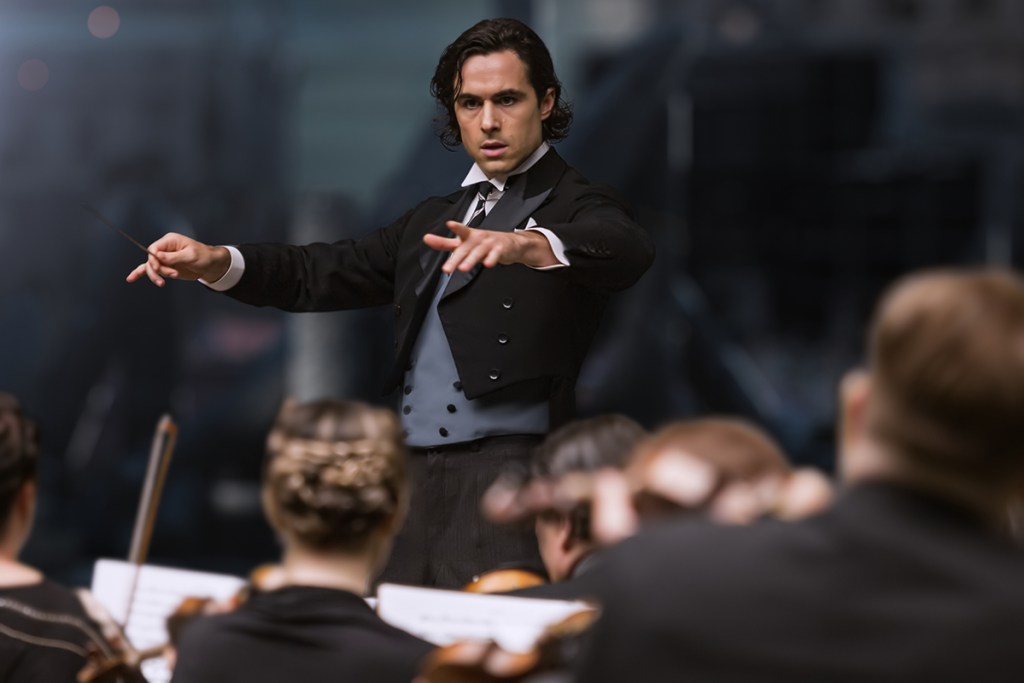
By some strange coincidence — or was it divine providence? — I had to sit in the front row for two films, which happened to be music-based: The Yellow Tie, about legendary Romanian conductor Sergiu Celibidache, and Tenor: My Name Id Pati, about a legend-in-the-making, Samoan operatic tenor Pene Pati. I quickly realized that a front-row seat in a concert hall is very different from one in a movie theatre. And yet, once acclimated, it can be an immersive sensory experience, especially when the film is about larger-than-life musical subjects such as a symphony orchestra and a big-voice, Pavarotti-sized, charismatic tenor.
Sharply and sensitively crafted by New Zealand documentary director Rebecca Tansley, the doc traces the remarkable upward trajectory of the Samoan singer, from his family roots in New Zealand through regional game with his trio Sol3 Mio to his arrival in the upper echelons of the opera world. An auspicious debut at the San Francisco Opera in 2022 quickly led to invitations to the finest houses worldwide, including the Metropolitan Opera and La Scala in Milan. Comparisons to Pavarotti have become commonplace, and the blend of power and tenderness in his voice is palpable across the film’s multiple musical scenes. To boot, his humility, sense of humanity, and devotion to family are more than endearing.
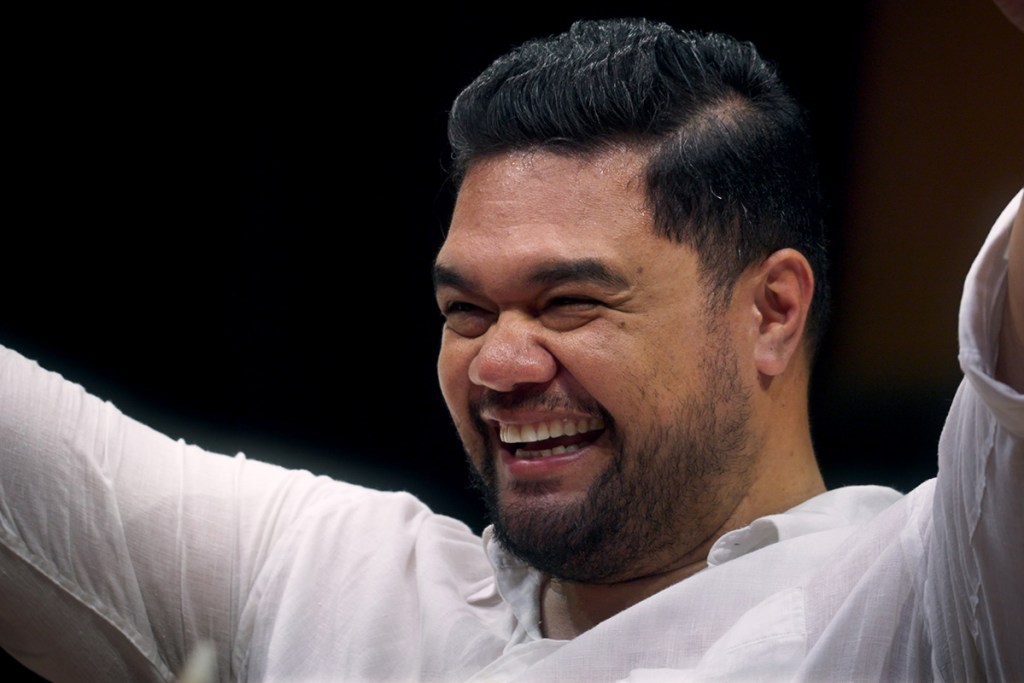
To its great credit, Tansley’s film has a capacity to appeal to genuine opera fans, the casual curious, and anybody attuned to a backstory — and side story — involving a dedication to family and community. It’s the Samoan way, regardless of international glitz and fame.
One thrilling moment in the theater came after a truly enchanting performance of the aria “Nessun Dorma” (from Turandot), in a recording studio, so moving that the Film Center audience burst into applause when it finished. It was a rare case of a reel moment bleeding into dimensions of real life, real space, and real audience. Tenor takes its place on the list of the most moving and heartwarming titles of the SBIFF 2026 harvest.
Beyond Innocence
Two of the finest films on the SBIFF lineup this year address the harsh, blurry edges of innocence through artfully crafted, well-told storytelling. Young women in compromising situations are at the heart of the Czech film Broken Voices and the Swiss Silent Rebellion. In both cases, the directors — Ondřej Provazník and Marie-Elsa Sgualdo, respectively — bring a patient, nuanced approach to cinematic storytelling.
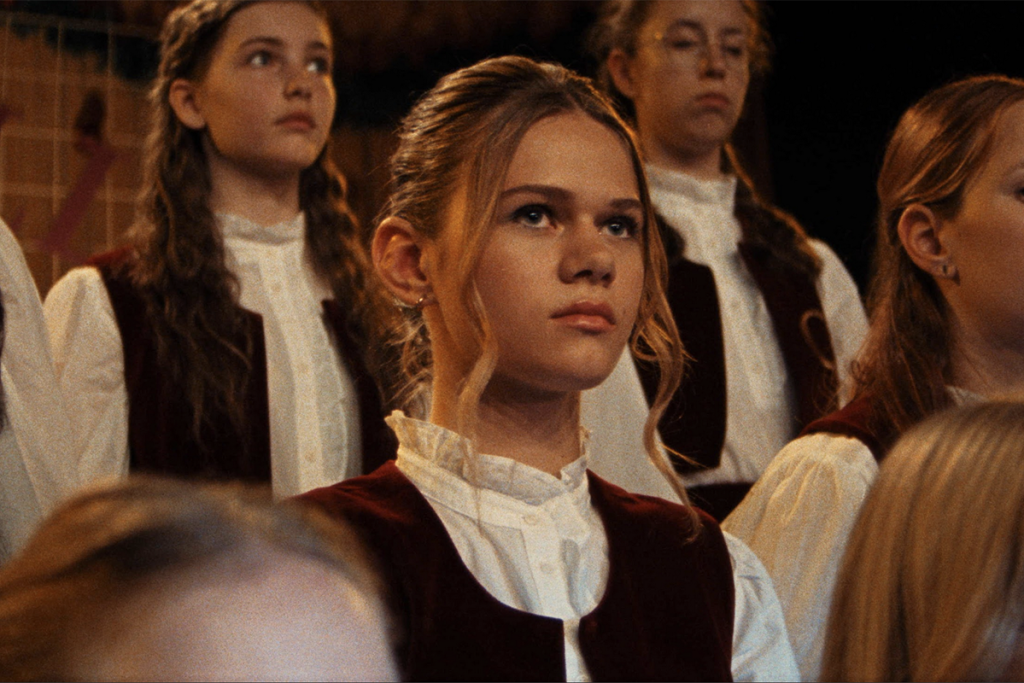
Everything clicks in Broken Voices on a cinematic level. Cinematographer Lukáš Milota creates a blend of intimacy and detachment in his visual scheme, and young, braces-wearing actress Kateřina Falbrová is impeccable as the initially sweet and idealistic soprano Karolina, who is braced for a fall. But the film, loosely based on a sexual abuse scandal involving the Bambina di Praga girls’ choir in 2011, also shines in giving due affection and all-important screen time to glorious, mostly a cappella choral music. Music is in the spotlight, not an incidental plot device, making Broken Voices also one of the many SBIFF films this year, putting a welcome spotlight on the power of music, whatever the genre or musician’s age set.
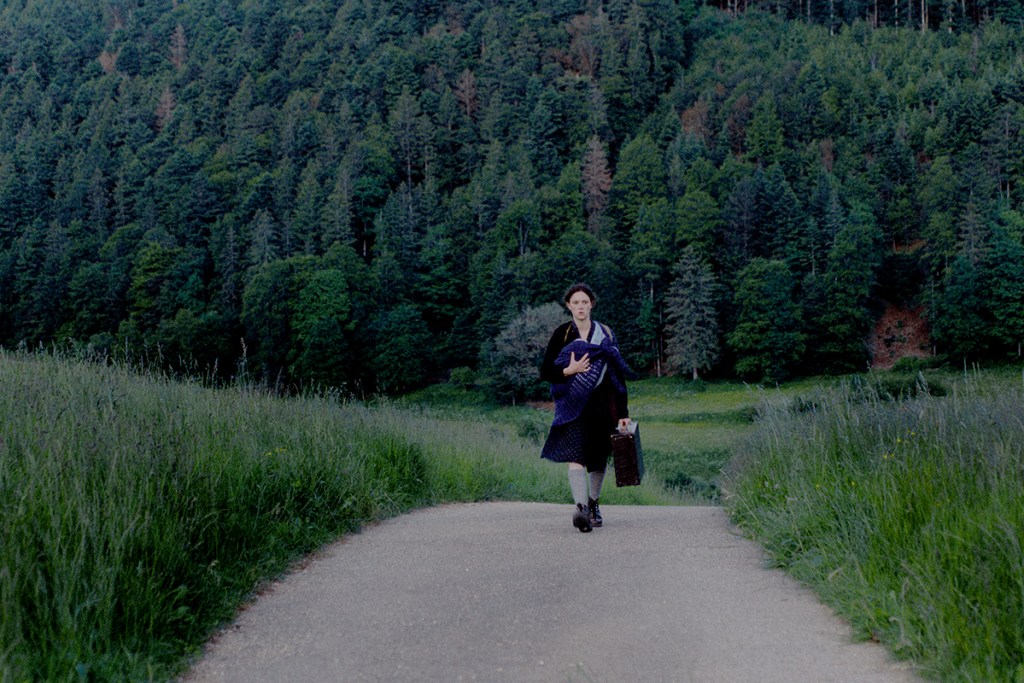
At the risk of betraying the plot spoiler cause in the critic’s code of conduct, Silent Rebellion is graced with a happier, more triumphant ending than Broken Voices, but it’s a hard-won happiness. At the film’s end, we finally see our young protagonist (Lila Gueneau, in a master stroke of minimalist restraint) smile and dance, to our great delight, after a hard-luck tale about systemic sexism in a rural village in Switzerland at the end of WWII. Swiss director Sgualdo takes charge of her tale of repressive, puritanical forces and ultimate female empowerment, with a sure but slow sense of cinematic command. Although rooted in its vintage rural setting, the film is, in the end, a classic and a broader case of a film by and about women, and of a self-determined victory beyond unjust societal norms.
Laughing Until We Cry
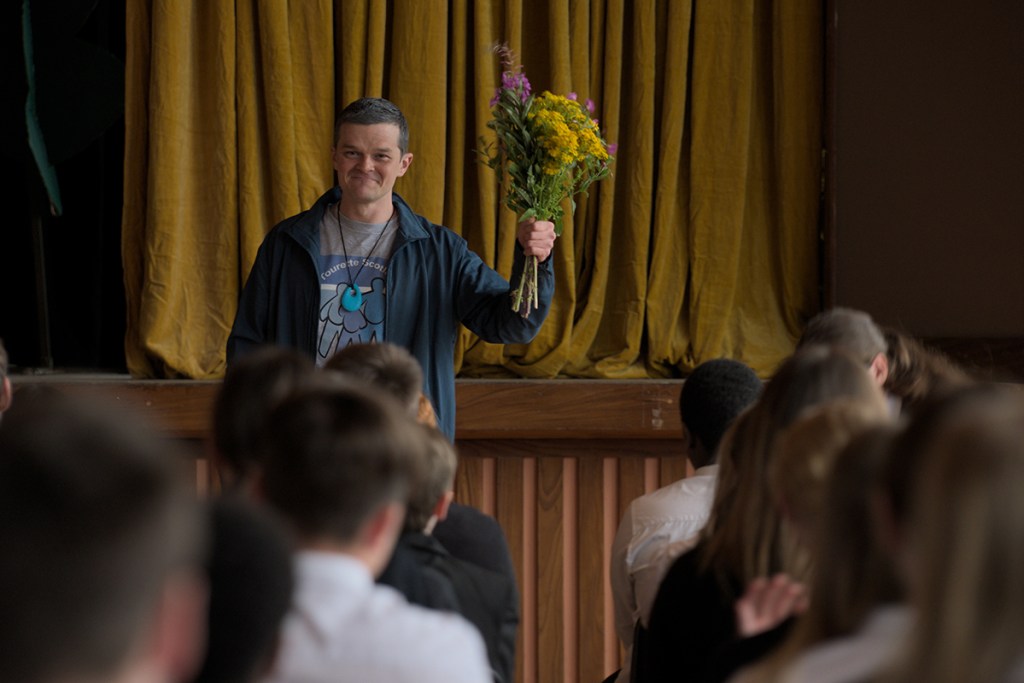
Watching the affecting British film I Swear, about famed Tourette syndrome activist John Davidson, I realized I’ve rarely been to a movie that inspired both tears and laughter — and also shame for misplaced laughter. But it’s not entirely our fault. In telling the poignant story of an earnest man afflicted with Tourette’s, often blurting out obscenities and incriminating confessions, writer-director Kirk Jones calculatedly plots some hilarious moments along the way.
Those common moments begin when he visits the queen, who anoints him with an MBE (Most Excellent Order of the British Empire) medal, and later, a hilarious scene involving a faithful and fitful meeting of two people with Tourette’s in a car. What ensues is a feverish and funny tic-fest between them. Of course, Tourette’s is no laughing matter, and the film takes good care with the sensitivity required to draw us into empathy with the protagonist, dazzlingly played by Robert Aramayo. With the help of significant nurturers, the tortured young man grows into a force for good in the larger Tourette’s community.
Last Wording
Zhao, connecting her concept of film to a surprising analogy: “Whenever I hear Mongolia music, I could cry. Mongolian music is songs about horses on the landscape. There are no rules except as an individual experience, with an environmental connection.”










You must be logged in to post a comment.