


For a week and change, the Arlington Theatre stage has been a staging ground for celebrity-grade talent. Bona-fide superstars filed into the SBIFF spotlight, fueled by Oscar nominations. A quick name check wrap-up: Adam Sandler, Ethan Hawke, Leonardi DiCaprio, Sean Penn, Benicio del Toro, Michael B. Jordan, Kate Hudson, Stellan Skarsgård, and high-voltage artists in the director and screenwriter zones.
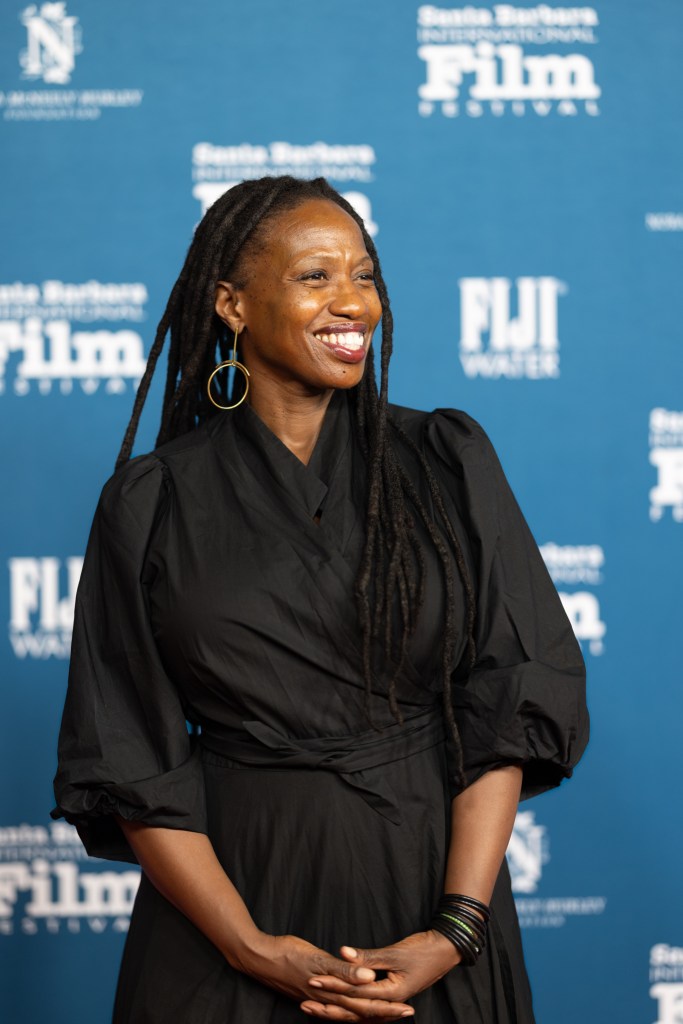
On Sunday’s closing night of the festival, a different population filed onto the stage. A veritable village of SBIFF staff and assorted facilitators congregated to take their bow, acknowledged by the festival’s development director Benjamin Bhutani Goedert. Here we had the keepers of the machinery behind Santa Barbara’s grandest festival, ready for their collective close-up.
As a fitting finale to SBIFF 2026 (number 41), attention turned to the U.S. premiere of the South African film Laundry. First-time writer-director Zamo Mkhwanazi’s engaging, beautifully crafted, and necessarily tragic portrait of life under Apartheid, circa 1968, was in keeping with the festival’s program’s focus on issues of social injustice, historical lessons, and films directed by women — 50 percent of the 200-plus titles this year.
The film’s saga of an enterprising family-owned laundry in white-domineered South Africa becomes a tragedy, almost by its very nature and context. Moral quandaries are woven into the carefully constructed narrative, involving a young aspiring musician, Khuthala (Ntobeko Sishi), who is forced into a position of compromise to free his unjustly jailed father (Tracy September). Although Mkhwanazi’s is a matter of historical record, before the liberation from Apartheid in 1994, an implicit message of the film links to current and ongoing flagrant violations of human rights and racial inequities, in Gaza, the ICE age in America, and elsewhere in the world.
As a brightening agent, the film’s more ecstatic moments emerge through the power of music, both purely African and African-informed in American rock and soul.
Word Workers Circle
Of all the verbiage flowing from the Arlington stage, some of the most articulate and witty material came from the mouths of the Writers’ Panel — always a well-attended SBIFF high point and tradition. It makes sense, given that these workers use words and concepts as their content putty.
This year’s gathering of screenwriters, all basking in the glow of Oscar nominations, was a varied lot. Refreshingly, it included three inspired “foreigners” (note quotation marks) — intrepid Iranian director Jafar Panahi (It Was Just an Accident), Eskil Vogt (Sentimental Value), and Mexican director in Hollywood,\ Guillermo del Toro (Frankenstein). (Del Toro, incidentally, was treated to a rockstar-like convergence of autograph seekers and “Viva Mexico” fans at the end of the show, replete with Mexican flags representing the home country.)
Hailing more directly from the shores was Clint Bentley (Train Dreams), returning to the festival after last year’s Sing Sing moment in the sun. Ronald Bronstein (Marty Supreme), the salty stand-up-comic-like cut-up of the group, and reformed comedy writer Will Tracy, behind Bugonia, given its due vivid ferocity by director Yorgos Lanthimos.
Panahi, speaking through a translator, as he did at the International Directors Panel and at a Cinema Society appearance at the Riviera last fall, recounted his ambition to channel his own experience of a prison sentence and, specifically, interrogation practices in It Was Only an Accident — which also folds humor into its storytelling. Like others in his acclaimed filmography — including Taxi, No Bears, and This is Not a Movie — Panahi, presently under arrest if/when he returns to Iran, bravely takes on the harsh current regime, presently unleashing inhumane and murderous responses to widespread protests.
As he said, “These films are quite risky and not supposed to be made when the regime is in power. They are usually made after the regime falls, but I wanted to make them now.”
Bentley talked about the delicate process of bringing the Denis Johnson novella Train Dreams to the screen, a process further altered by the input from the soft-spoken lead character played by Joel Edgerton. “Joel can say so much in his acting,” said Bentley, “what he was doing silently was sometimes more interesting than what I had written.”
Del Toro has often stated that he has wanted to make his own version of Frankenstein since childhood. The forces converged to make the ambitious new take possible. He proudly points out that he came in on time and $600,000 under budget, reasoning, “If you are a Mexican director, you want to be employable.”
He commented, “This is something that a kid at 11, in Guadalajara, wanted to do. It happened when it was supposed to. I felt, at 60, you’re not sharing your wisdom but your experience.”
Asked by moderator Anne Thompson (Indiewire) about writing practices and habits, Bronstein launched into a whirlwind account of his long-standing collaboration with writer-director Josh Safdie. “It’s brutal,” he said, tongue only halfway in cheek. “I mean, it’s voluntary work, not indentured servitude, but you’re bringing personal material and funny stuff, and then the other person is tying it to a chair, beating it and trying to get it to confess.”
For his part, Eskl — who, like Bronstein, has had a long partnership with his collaborator, director Joachim Trier—explained that “our process is like that of Ron and Josh, but with less pain. We just talk, listen to music, take our time. We can make bad jokes. It’s a safe space. Then we slowly gravitate toward an idea.” One profound idea emerged in the form of Sentimental Value.
Meanwhile, Back at the McHurley….
Three blocks down from the Arlington, the biggest news of SBIFF 2026 was the eagerly awaited opening of the five-screen McHurley Film Center, an elegant and spiffy hub of activity and swarming crowds for the 10-day festival. Saturday’s programming grid belonged largely to TBA slots, bringing returning favorites for an encore.
One of the clear standouts of the Saturday pack was the documentary Alabama Solution, a bracing call for prison reform built on insider intel. With this film, nominated for a Best Documentary Feature Oscar, directors Andrew Jarecki and Charlotte Kaufman transcended the superficial approach of staged and embedded media access by connecting directly with inmates through cell phone interviews and footage. Most of the action and abuses take place in the Easterling Correctional Facility, but the focus zooms out to indict conditions more generally in the prison system in Alabama and, by extension, elsewhere in America.
In a post-screening Q&A with festival chief Roger Durling, Kaufman said that “because of these men [interviewees cell-phoning in], we were able to meet and because of the work they’re doing, we were able to see inside the prison and see a side of the prison system that the authorities don’t want you to see.”
Their unique documentary approach, without the customary talking heads and outside “experts,” goes directly to the source. Kaufman explained that the subjects were asked how their project differed from other prison-related journalism. “They said two things,” Kaufman noted. “One was that they are often reduced to a statistic or were reduced to victims of their surroundings, versus full people that are continuing to have lives that develop. And then the second thing they said was they rely on experts outside to tell the story, vs. understanding that we are the experts of the conditions and circumstances in which they live.”
Bringing the topic home to a current day and place relevance, Kaufman added that “ICE have masks. Prison guards have walls to protect them.”
And the Winners Are…
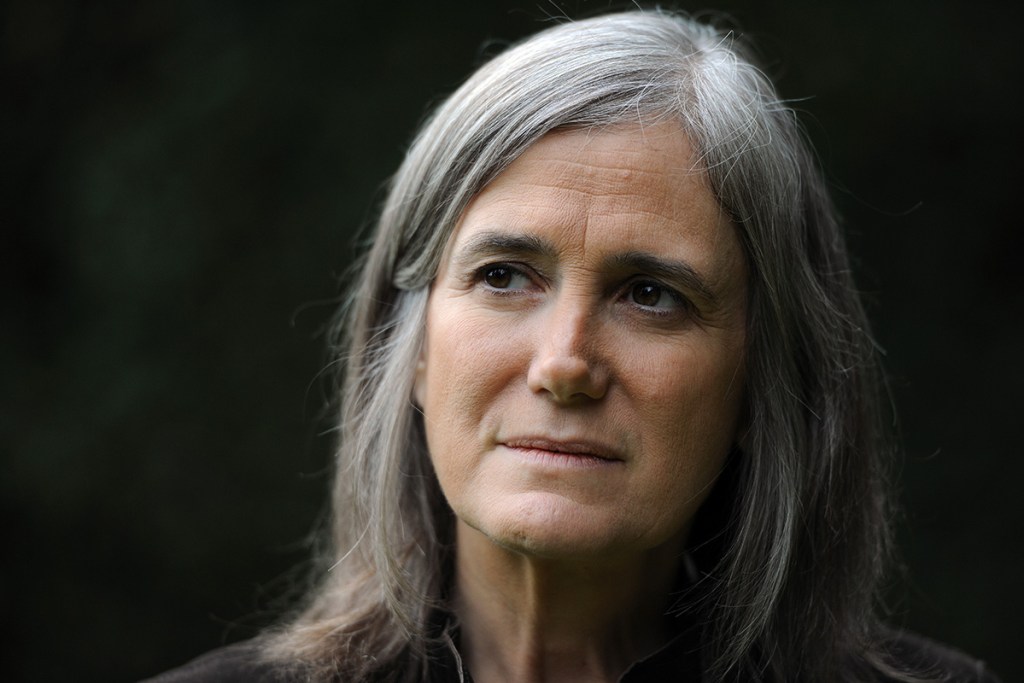
A fairly recent and now hopefully baked-in tradition at SBIFF has been the savory fine awards breakfast at the scenically endowed El Encanto Hotel on the second Saturday of the festival.
In-house-wise, the annual Independent-sponsored Audience Choice award went to the superb Amy Goodman doc Steal This Story, Please! (directed by Tia Lessin and Carl Deal), which double-dipped, also winning the Fund for Santa Barbara’s “Social Justice Award.”
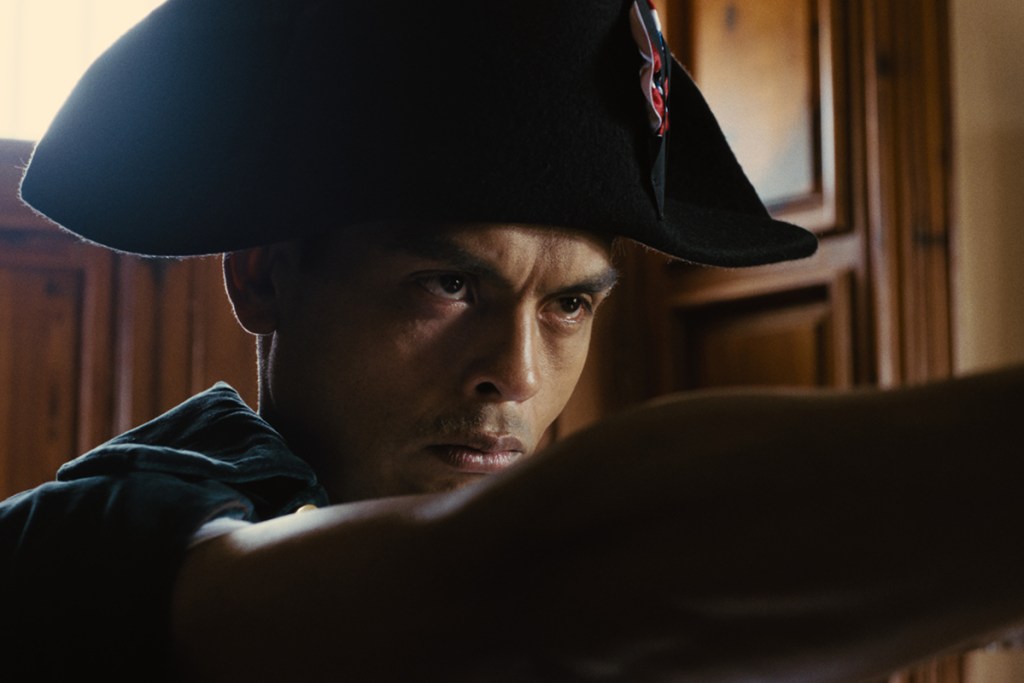
I was very happy to hear that the Nueva Vision Award for Spain/Latin America Cinema went to the extra-spicy political satire Versailles, one of my personal festival faves. Writer-director Andrés Clariond Rangel, whose film had its U.S. premiere here, noted that “supporting a film so politically incorrect is not so easy. I have always admired this festival, so it’s wonderful to start this film on the right foot here.”
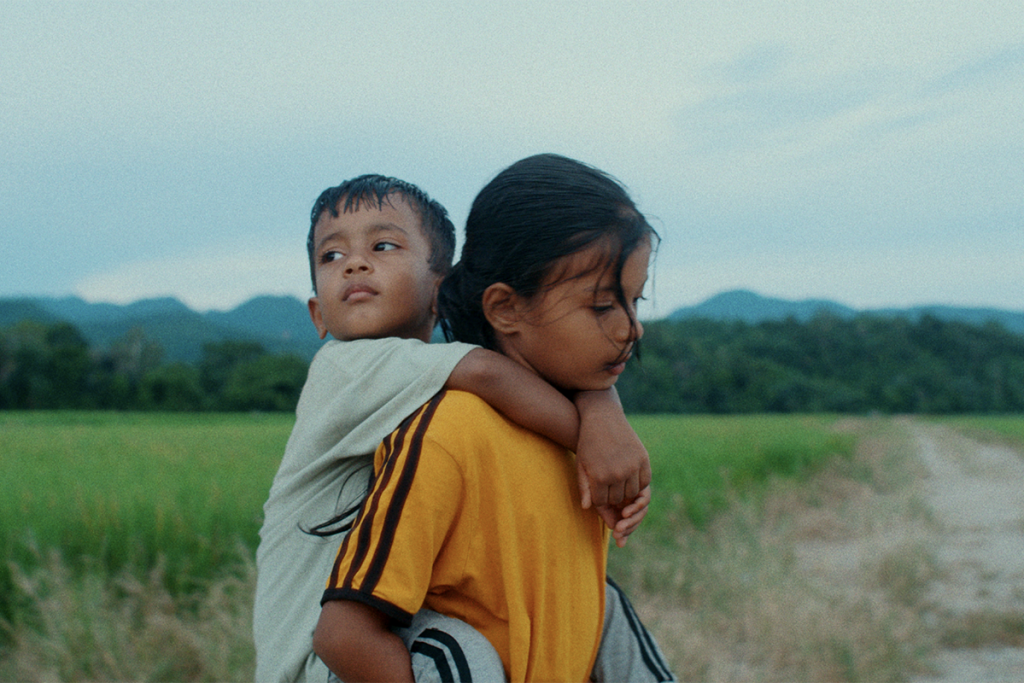
Justice was also served with the ASC cinematography award going to Akio Fujimoto’s rough and rapturous work on the compelling film Lost Land, about Rohingya children in the wilds of refugee flight. The presenter lauded Fujimoto for doing “an amazing job of making digital material look like 16mm documentary film.”
Other winners: Panavision Spirit Award for Independent Cinema to A Mosquito in the Ear (Nicola Rinciari), the Jeffrey C. Barbakow Award for Best International Feature Film to Adam’s Sake (Laura Wandel), Best Documentary Award to Gaslit (Katie Camosy), Best Animated Short Film Award to Papillon (Florence Miailhe), Best Documentary Short Film Award to A Short Documentary About a Giant Pencil (Daniel Straub), Best Live-Action Short Film Award to Agnes (Nora Arnezeder), and the ADL Stand Up Award to Bookends (Mike Doyle).
Short Takes

Poring over my pile of notes from the 50-plus films screened during the festival, I’m catching up with some as-yet unmentioned titles of interest.
In the Room takes its title from the experience of famed Afghan singer Mozhdah Jamalzadah, whom Afghan-Canadian director Brishkay Ahmed interviews in this intriguing film. Jamalzadah regales us with her life-changing 15 minutes of fame, being in the room of the White House during President Obama’s tenure. As a result, she was deemed “an American agent” and had to flee her homeland. She tells Ahmed, “I realized that I lost my freedom to give other women a voice.”
With In the Room, Ahmed seeks to transcend and explore the sense of alienation and displacement she originally felt migrating to Canada from Afghanistan as a preteen. She cast a revealing spotlight on a series of successful Afghan women, including actress Nelofer Pazira-Fisk (Kandahar), and Vida Samadzai, who created controversy as a swimsuit-donning Miss Afghanistan.
Their place in a public limelight also resulted in official scorn and even death threats, given the blatantly sexist ideologies of the Taliban. The film, touching on the historical flash points of 2001 and 2021 and beyond, offers valuable insights and up-close portraits that encourage female self-determination.
Americana Unreeled
My vote for best entry in the festival’s “film about film” subcategory is Kim Novak’s Vertigo, and an unexpectedly fascinating then-and-now portrait of the now 92-year-old actress. But a close second on the roster was The Last Picture Show, an affectionate and wistful ode to movie houses and palaces around America.
Director Rustin Thompson roamed 10 western states and showcases 123 vintage theaters — some with still photography-like elegance, in their faded, and often revitalized, glory. The film has special resonance this year, as the SBIFF McHurley Film Center defies the supposed gravity of prospects for brick-and-mortar cinemas.
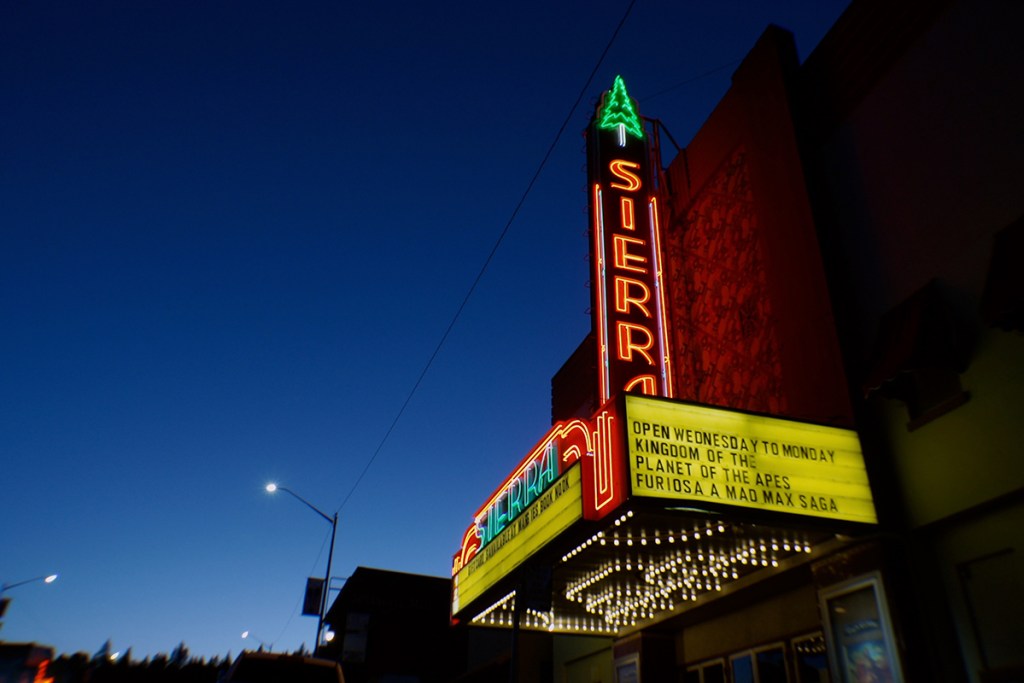
Local angles abound, in the film and in the 805. This region is blessed to have examples of Golden Age movie houses, most notably Santa Barbara’s glorious Arlington Theatre (1931), but also including San Luis Obispo’s Fremont Theatre (1942) and Oxnard’s dormant but historic landmark Teatro (1929) — transformed into a studio hosting Bob Dylan, U2, and Willie Nelson, whose Daniel Lanois–produced and Wim Wenders–documented 1998 album features the face on its cover. Thompson’s film also features commentary by Ross Melnick, a film historian who teaches at UCSB, and naturally includes snippets of the Great American film, Peter Bogdanovich’s The Last Picture Show, featuring Santa Barbara’s own Tim Bottoms and Jeff Bridges.
But the real stars of the show are the many theaters dotting the landscape of the western U.S., often in small towns Peter Bogdanovich would have liked to check out. Some of the prizes Sierra Theater, The Alpine, Mojave Theatre (in Mojave, California), Noyo, The Gem, Elysium, M-F Drive-in (where the proprietor says, “What happens at the drive-in, stays at the drive-in”), and the Ruby Theater in Chelan, Washington, launched in 1914 — the state’s oldest theater — and named for the founder’s daughter.
Thompson’s loving film pays homage to the past and, with luck and passion, to the future of cinema on the brick-and-mortar, big-screen plan.
Top Tenmanship
It’s a good sign of artistic health when settling on a Top 10 (plus one) list at the festival’s end is tricky business. Forthwith, a humble list of favorites, which could be reconsidered and subject to change upon further reflection. It’s a highly subjective game.
Silent Rebellion, Abril (Hernan Jimenez; Costa Rica), Versailles (Andrés Clariond Rangel), Adam’s Sake (Laura Wandel, Belgium), You Had to Be There (Nick Davis; Canada), Steal This Story, Please! (Tia Lessin, Carl Deal; U.S.), Broken Voices (Onjrej Provaznik), Lost Land (Akio Fujimoto), A Cowboy in London (Jared L. Christopher), Peter Asher: Nowhere Man (Dayna Goldfine, Dan Geller), Yunan (Ameer Fakher Eldin).
SBIFF 41 is a wrap.







You must be logged in to post a comment.