

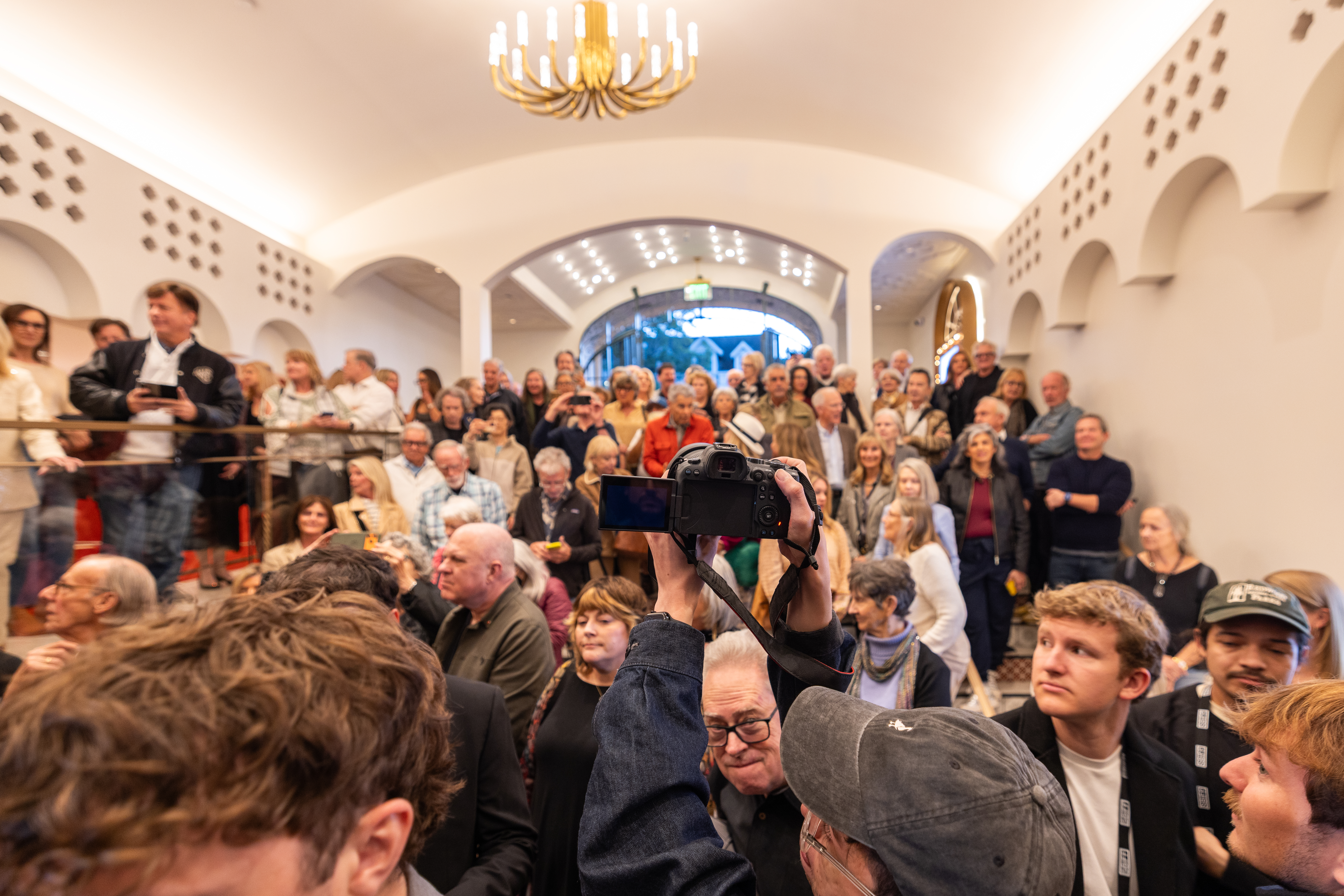
In the final rub and wrap-up, SBIFF 2026 was all about the McHurley.
Yes, as we’ve come to expect, townies and tourists were lavishly regaled with the usual profusion of Oscar-baited celebrities and a wondrously global pantheon of films over the festival’s 10-and-a-half-day spread. But the lingering highlight was the grand opening of the renovated — and rethought — five-screen McHurley Film Center (courtesy of a village of patrons and, principally, Nora McNeely Hurley and Michael Hurley).
Not only was the Film Center the hub of festival screenings, with tributes at the Arlington and other events at the Riviera, but the McHurley also represents a symbolic and actual upward move in this festival’s expanding life force. To boot, the venue becomes a year-round asset to Santa Barbara’s cultural landscape and helps cement SBIFF’s integral role in S.B.
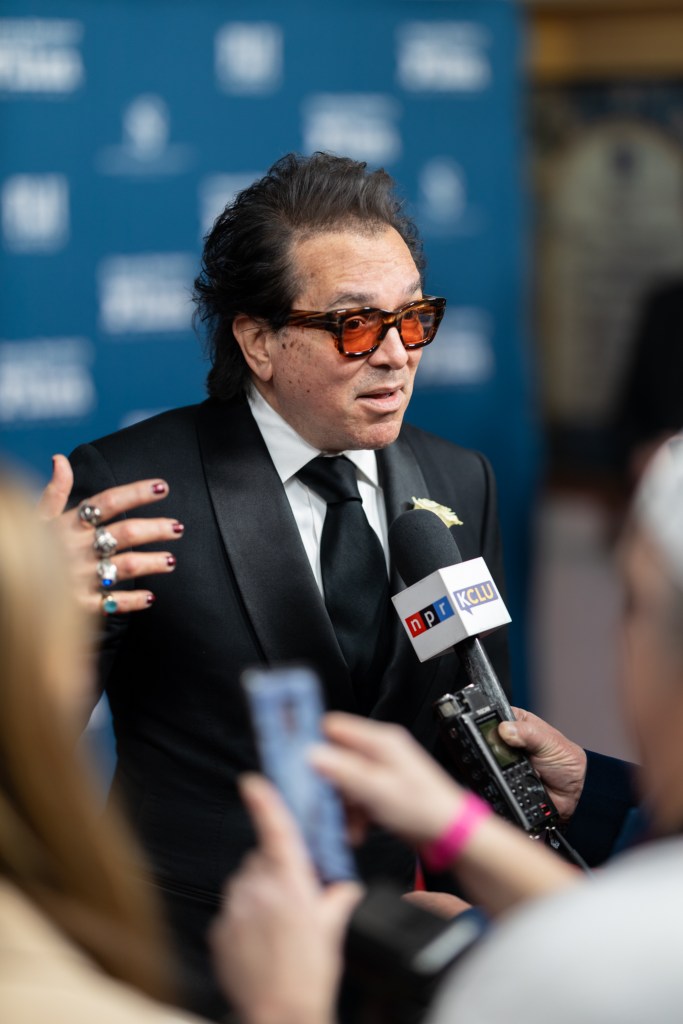
Durling was, to quote the title of the strong Peter Asher documentary that premiered at the festival, SBIFF’s “everywhere man.” There he was, sidling up to the stars on the red carpet, conducting multiple Q&As, supplying booster-ist warmth at a myriad events, and screening introductions.
Not incidentally, he also kicked it all off on opening night by delivering a powerful address on the power of art and the dangers of authoritarianism, logically comparing Cabaret and Hitler’s rising terror and the arts in the time of Trump, when Kid Rock and Lee Greenwood are held up as cultural icons. As he said, in conclusion to his speech, “I beseech you to remember that we have to protect the arts and human rights, immigration, and the right to love whoever we choose…. The arts ultimately unite. Two thousand of us are together, under one roof.”
SBIFF’s celebrity roster was solid, once again, and directly tied into the Oscar sweepstakes: Adam Sandler (Jay Kelly), Ethan Hawke (Blue Moon), the titanic trifecta of Leonardo DiCaprio, Sean Penn and Benicio del Toro (One Battle After Another) — with great American director PT Anderson giving the award — Stellan Skarsgård (Sentimental Value), Michael B. Jordan (Sinners), and Kate Hudson (Song Sung Blue).
But in a real sense, the dense thicket of programming at the Film Center and the Riviera was the meat of the festival, an impressive array of cinema from far and wide. Two films taking on the scourge of sexual abuse, Silent Rebellion and Broken Voices, were among the finest films this year, along with the wild political satire from Mexico, Versailles, and key documentaries, with real-world subjects and sometimes with points of advocacy, including Steal This Story, Please!, Gaslit, Alabama Solution, and Cuba & Alaska. On the lighter arts-and-entertainment front, docs of note included the operatic lovefest of Tenor: My Name Is Pati, the sweepingly cool Peter Asher: Everywhere Man, and, for Charley Crockett fans like myself, A Cowboy in London. Feel-good fare came in the form of Abril, The Fisherman (from Ghana), and I Swear.
I didn’t catch much in the way of experimental or poetic cinema this year, except for two chance-taking Iranian films, Mortician and Sunshine Express, and the mesmerizing, meditative poem of a film, Yunan, by Syrian-in-Germany director Ameer Fakher Eldin.
If there was a lemon in the festival lineup, it had to be Julian Schnabel’s pretentious mess In the Hand of Dante, given its North American premiere here (maybe it should have gone straight to streaming). The meandering swirl of swirls was reminiscent of Terrence Malick’s Knight of Cups, which had its U.S. premiere on the closing night of the 2016 SBIFF. Both directors have made substantial, innovative films in the past — including Schnabel films screened at the festival — but have also made missteps. We want our two and a half hours back.
Overheard at the Fest
Brazilian filmmaker Kleber Mendonça Filho (The Secret Agent) on the Outstanding Directors’ panel and in obvious admiration of the Arlington: “Each movie palace has its own history. I come to this place. I look at the architecture, and you [Durling] tell me that the first test screening for Gone with the Wind took place in this place. We [are] immediately talking about tens of millions of people that have come into this place, starting early in the 20th century.
“This is a place of congregation. This is not a religious place. But it can be religious depending on how you describe your relationship to cinema. So these places, I think they are incredibly important for life in society. And this is why I think we all should fight to keep the cinema-going experience alive.”
Hudson, on her connection to the rom-com genre: “I think it’s the hardest genre to get right. The great ones are those we keep going back to, like a warm blanket. You can just go for the standard rules of the genre, but I’m interested in films where the goal is to make a great movie, regardless of the genre.
“I love movies, no matter what genre, if they get people in the seats and create a great collective experience.”
Guillermo del Toro on his almost lifelong desire to create his own version of Frankenstein, on the directors’ panel: “This is something that a kid at 11, in Guadalajara, wanted to do. It happened when it was supposed to. I felt, at 60, you’re not sharing your wisdom but your experience.”
Ron Bronstein, co-writer on Marty Supreme on the writing process with director Josh Safdie: “It’s brutal,” he said, tongue only halfway in cheek, “I mean, it’s voluntary work, not indentured servitude, but you’re bringing personal material and funny stuff and then the other person is tying it to a chair, beating it and trying to get it to confess.”
Neo-classic country hero Charley Crockett, on a hoped-for takeaway from the doc A Cowboy in London: “These days, authenticity is hard-won. I hope young people take away that being themselves is worth it.”
Hawke, accepting his award from local Jeff Bridges: “The Santa Barbara International Film Festival is part of the ecosystem helping to keep cinema alive. This is my church of choice.”
One Fest-goer’s Top 10, from the Church of SBIFF
Assembling a list of favorites is a natural rite for all obsessive festivalers worth their salt. Here’s one subjective overview, culled from a pile of 59 films caught this year. Time for a winter’s nap now. Silent Rebellion, Abril (Hernan Jimenez; Costa Rica), Versailles (Andrés Clariond Rangel; Mexico), Adam’s Sake (Laura Wandel, Belgium), You Had to Be There (Nick Davis; Canada), Steal This Story, Please! (Tia Lessin, Carl Deal; US), Broken Voices (Onjrej Provaznik; Czechoslovakia), Lost Land (Akio Fujimoto; Japan), A Cowboy in London (Jared L Christopher), Peter Asher: Nowhere Man (Dayna Goldfine, Dan Geller), Yunan (Ameer Fakher Eldin; Germany).



You must be logged in to post a comment.