
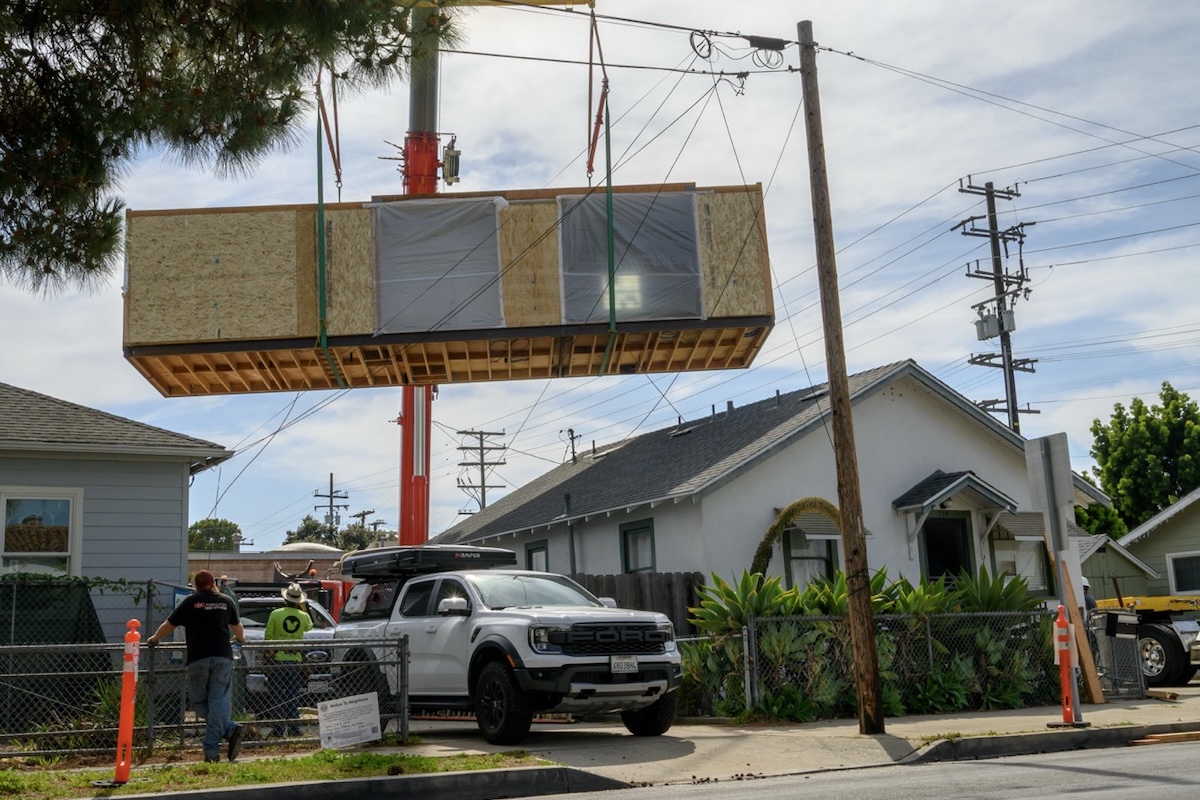
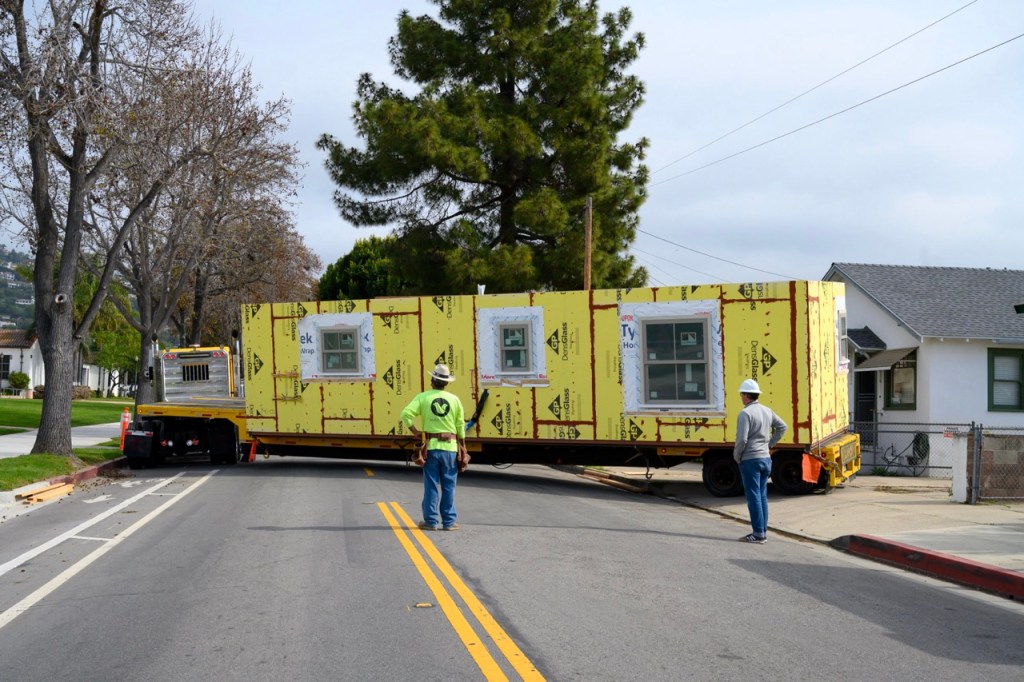
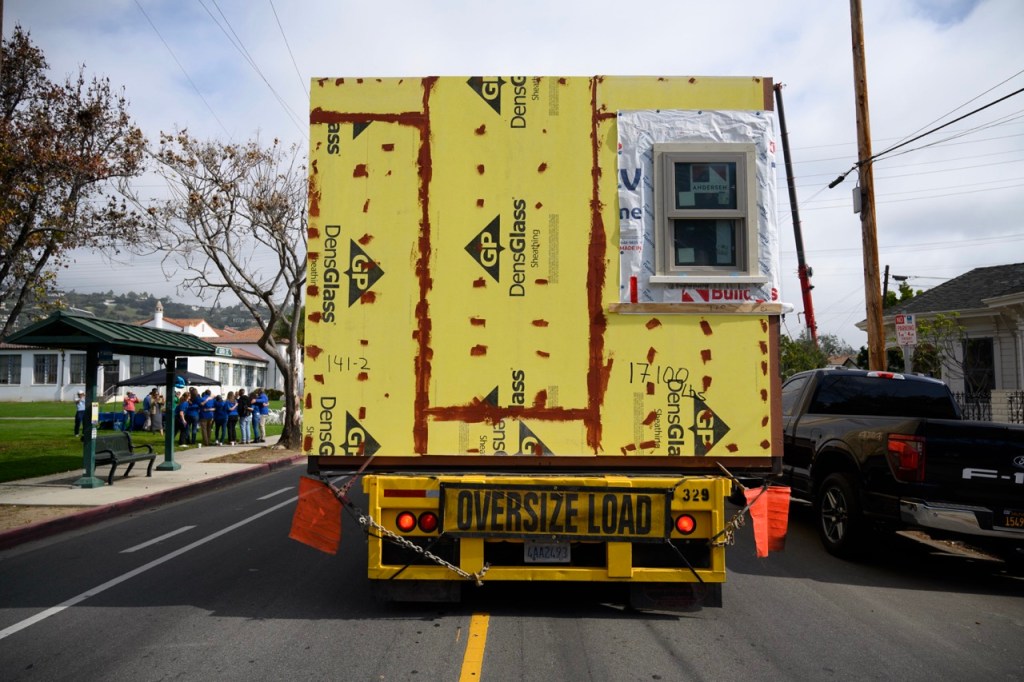
Swaying from a crane above Habitat for Humanity’s old office building, a prefabricated accessory dwelling unit (also known as an ADU) provides a new avenue for home ownership in Santa Barbara.
Typically, ADUs are small rental units located in the backyards of single or multifamily homes. But, with the passage of Assembly Bill 345 back in 2021, nonprofit housing developers — such as Habitat for Humanity — are able to sell ADUs rather than renting them out. The unit installed on Tuesday is the first ADU to be sold as affordable housing on the Santa Barbara housing market.
The preselected buyers of the unit, Tony and Sierra, underwent a rigorous selection process conducted by Habitat more than a year ago and will be moving in this summer. They will pay a portion of their down payment with “sweat equity” after spending 250 hours of work renovating the property. The rest of the payment is calculated based on their incomes.
In order to keep the home accessible to low-income owners in perpetuity, it comes with a 90-year affordability covenant, meaning that the ADU cannot be sold at market rate. If it were to be sold, that 90-year clock would reset for the next owners.
“We want to keep these units affordable forever,” says Habitat for Humanity Director Susan Renehan.
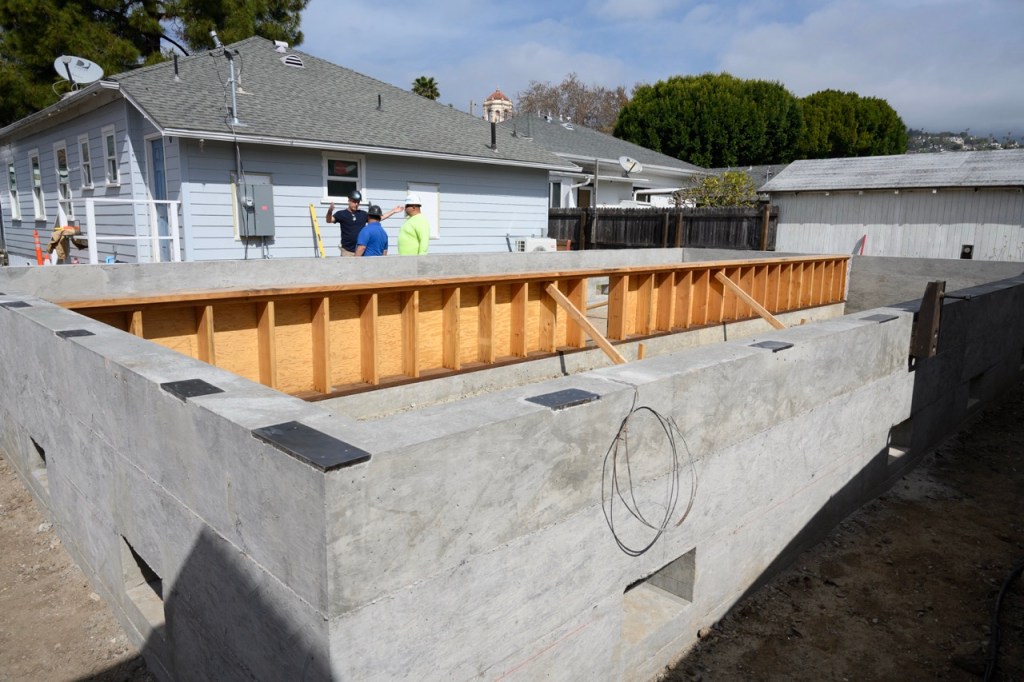
This ADU was installed behind a more-than-100-year-old house located at 712 East Cota Street, which is owned and being renovated by Habitat for Humanity. The owners of the ADU will share ownership of the land with the original building on the property in what Renehan calls “fractional tenants in common.” She says that the land will be divided into units — some to be designated as private and some communal — and the owners of the two buildings will each own a percentage of the land their homes sit on.
Next door at 710 East Cota Street, Habitat for Humanity’s old office building is also getting an ADU in the future. Instead of a prefabricated unit, this one will be stick-built. Habitat for Humanity’s CEO Jessica Wishan de L’Arbre says that the organization is using these units as prototypes, and will be comparing cost and time efficiencies between the two building models, giving valuable insights for future ADU projects.






You must be logged in to post a comment.