
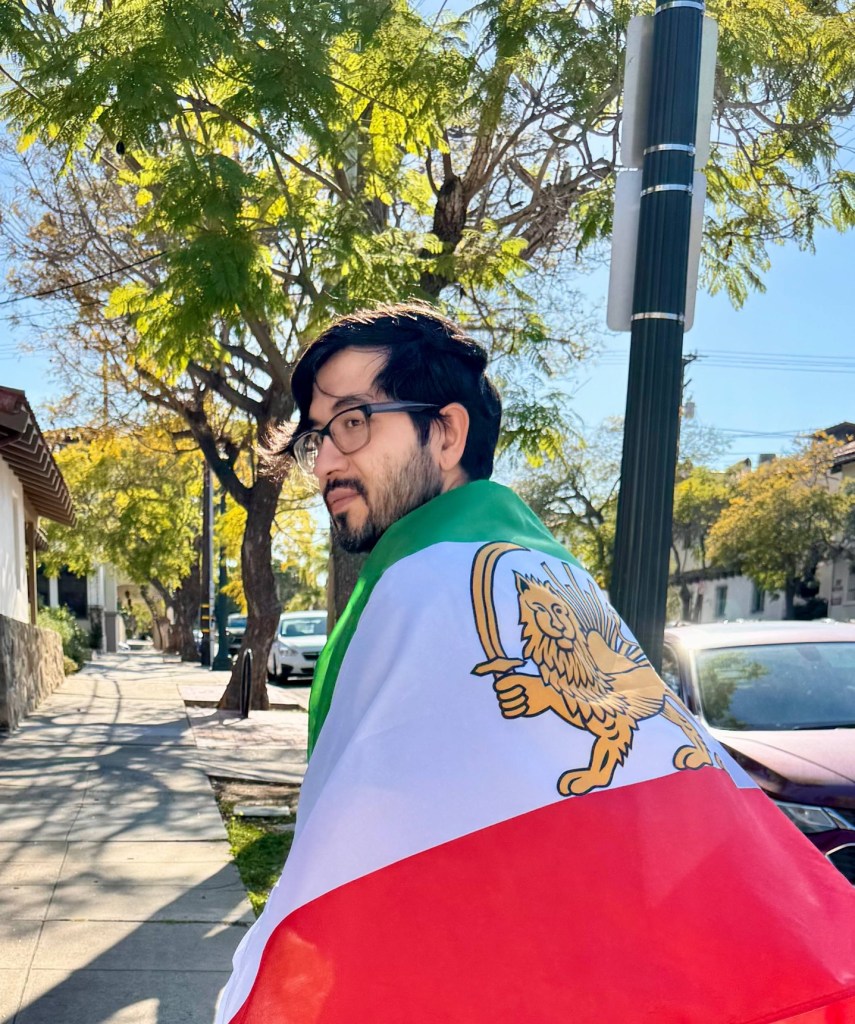
Obsessively refreshing social media and news sites, research scientist Ehsan Sayyad was working remotely on Saturday at his apartment off State Street. He was waiting for a confirmation of the rumors he heard all morning, and just before 2 p.m. PST, Trump announced that Supreme Leader of Iran Ayatollah Khamenei was killed by U.S. and Israeli air strikes.
Sayyad grabbed his Lion and Sun flag — the official flag of Iran before the Islamic Revolution and used by protesters of the Islamic Republic — threw it across his shoulders, and walked down Anacapa Street in celebration. His destination was Press Room bar, where he greeted the measly early-afternoon crowd and bought everyone a round of shots.
Sayyad felt strange to be celebrating death and destruction, but Khamenei’s death was a signal of hope to Iranians across the world that the repressive Islamic regime could possibly be toppled.
For him, and many others in the Iranian community, it was an intensely emotional moment. “I felt like crying,” said Sayyad.
On Saturday, February 28, after weeks of military ramp-up in the region, the U.S. and Israel launched strikes at about 10:30 a.m. local time in Iran. The then-stated goal of “Operation Epic Fury” was to prevent Iran from getting a nuclear weapon. Later that day, Trump announced on Truth Social that supreme leader Ayatollah Khamenei was killed in the strikes. A school was hit amid the strikes, killing 175 people, including children, in Southern Iran, which was adjacent to a targeted Iranian naval base.
As the U.S. and Israeli campaign continued through the week, Iran sent retaliatory strikes on the region’s U.S. bases and allies, severely impacting travel and global trade. By Thursday, both the Senate and the House of Representatives declined to limit Trump’s ability to wage war in Iran, implying congressional support. At least six U.S. service members have been killed in the wider regional conflict, so far. On Friday, Trump claimed that he would not accept anything but unconditional surrender from Iran and continued to insist that he should have a say in Iran’s next leader. On Friday evening PST, Israel launched a new wave of air strikes on Tehran.
Sayyad left his home in Tehran in 2015 and landed in Santa Barbara. He earned a PhD and met his American wife at UCSB and has been living in the community ever since.
He grew up under the Islamic regime, and his friends and family are still there.
“When I talk to my friends back home, they say that we are very happy to see these thugs getting obliterated. But again, everybody is shit scared of what is yet to come,” said Sayyad.
According to American Community Survey data collected by the U.S. Census Bureau in 2025, there are around 1,600 Santa Barbara County residents with self-reported Iranian ancestry.
Since the U.S. and Israeli intervention in the country and killing of Khamenei, the Iranian diaspora in Santa Barbara have been engaging in bittersweet celebration and are cautiously optimistic for the future of Iran. The diaspora have taken on the role of messenger of the voices of loved ones in Iran who are living in communication blackouts since the deadly January massacre, and have been living in constant worry of what may happen next in the region.
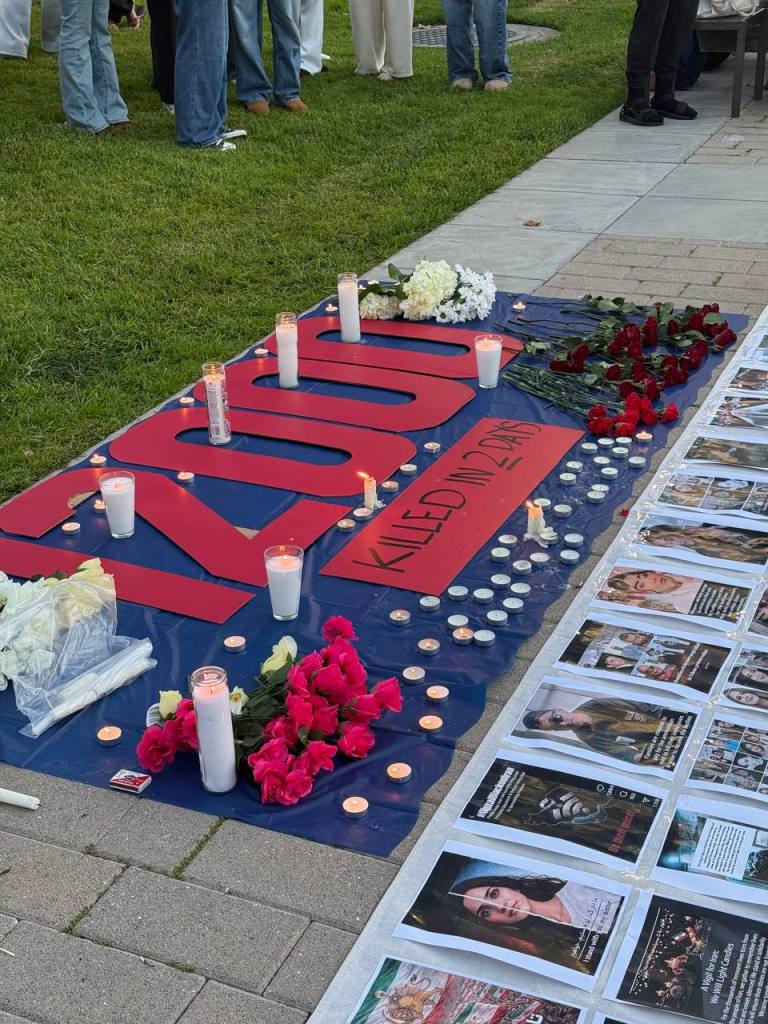
For Iranians, Trump’s military actions in the region are deeply connected to the Islamic Regime’s killing of an estimated 30,000 protesters in the span of 48 hours on January 8 and 9. An estimated five million Iranian citizens from across the country had come to the streets in what started as a protest over the economy after being called upon by the former Shah of Iran’s exiled son and Crown Prince Reza Pahlavi. Many in and out of the country see Pahlavi as a unifying figure, and are calling for the Crown Prince to become the interim leader of Iran.
Farah, who asked to go by her nickname for fear of retaliation on her and her family still in Iran, grew up under Khamenei’s rule. After finishing her degree at a university in Tehran, she moved to Santa Barbara and is well into her PhD program at UCSB.
Farah said that January’s protests were much larger than those in the past. “This time felt really different because our parents were out,” she said.
Her father and brother were protesting in the streets on January 8 when the Islamic regime cut off internet and communications when the situation turned deadly. Intermittent messages have come through giving her updates on the situation and notifying her that some of her extended family members were killed.
Since January, both protesters in Iran, and in the diaspora, have been calling on the international community to step in.
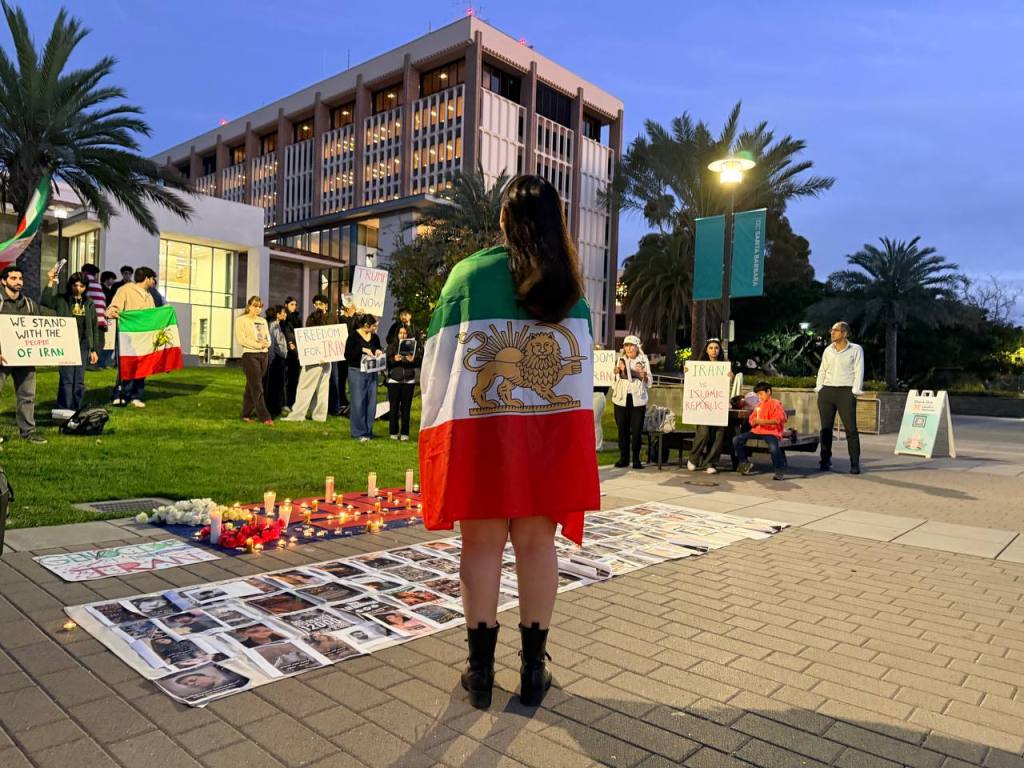
Sahand Ahmadi, Persian Student Group treasurer at UCSB and the son of Iranian immigrants, says protests on campus following January 8 and 9 were calling for the UN, of which the Islamic Republic of Iran is a member state, to invoke the Right to Protect principle. Adopted in 2005 in response to the Balkan and Rwandan genocides, it states that “each individual State has the responsibility to protect its populations from genocide, war crimes, ethnic cleansing, and crimes against humanity.”

The fourth-year undergraduate student said, “We were protesting because the international community was for some reason very silent about what was happening.” And speaking in his personal capacity, Ahmadi believes that external military intervention was “100 percent justified.”
“I, like millions of Iranian people, suffered under his regime,” Farah said of the Ayatollah. When asked about his death, she responded, “I never thought that one day I could breathe.”
UCSB Persian language and literature professor Aazam Feiz said speaking on her personal behalf, “There is hope that sustained international engagement may create conditions in which Iranians can determine their own future and eventually live normal lives marked by dignity, stability, and freedom.”
But this joy is overshadowed by the pain and complexity of war. In a statement to the Santa Barbara Independent, UCSB postdoctoral researcher Ryan Solgi, who was born and raised in Iran, said on behalf of himself and his community both in and outside of Iran:
“For many of us, the situation feels like a loved one diagnosed with a deadly cancer who waited years for the necessary surgery until President Trump finally acted. The procedure is painful, but many hope it will ultimately lead to the dismantling of the Islamic regime that has brutally oppressed Iranians for more than 40 years.”
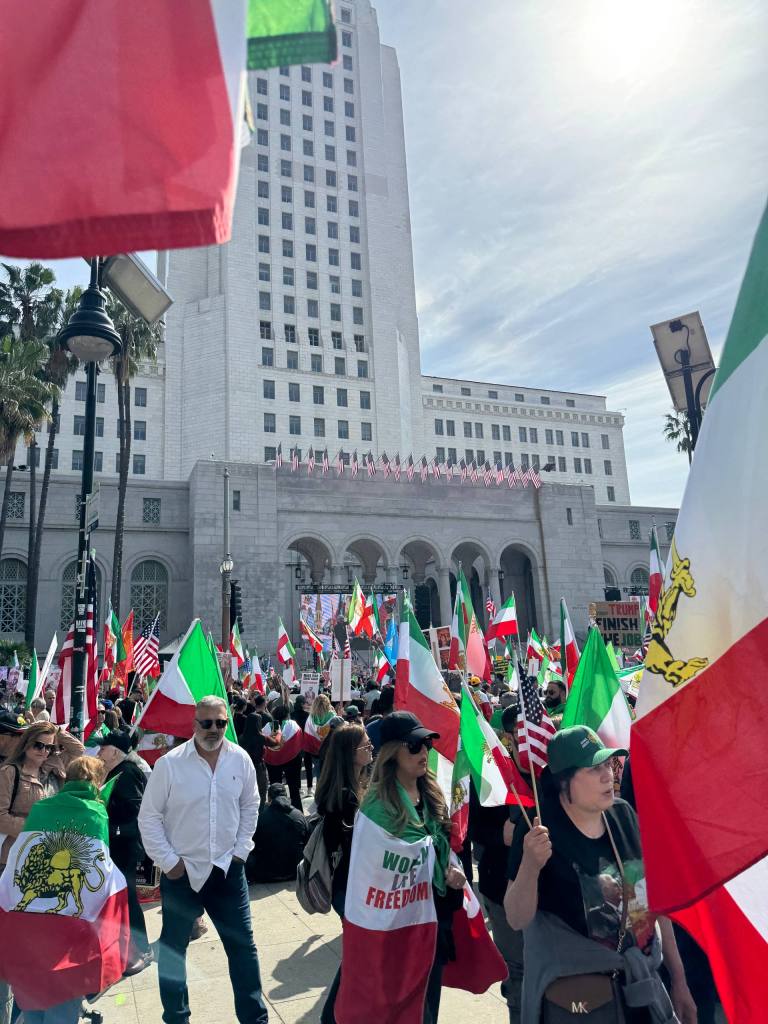
“We for sure do not want the U.S. to leave us halfway in this war,” said Sepi, a Carpinteria resident who left Iran in 2013, and who requested to go by her nickname for fear of retaliation on family members in Iran. “I know a lot of people in the U.S. are against Trump,” Sepi said that she too, does not agree with Trump on most of his actions. “But this is one good thing.”
“This is not a war [of the] U.S. versus the people of Iran,” she said. “This is a war against the terrorist regime.”
With communication blackouts across the country, family members abroad have been hearing from loved ones through intermittent international or landline phone calls and messages sent through VPNs, often in code. Protesting in Iran is considered a serious crime, and “many Iranians living abroad feel it is their duty to be the voice of those inside the country,” said Feiz.
Before talking to an Independent reporter, Sayyad spoke to his friend from high school in Tehran who had been in the middle of the January protests when they turned deadly. His friend had been pulling bodies from the streets when he sustained an injury to his eye. Sayyad asked him if there was anything he wanted a journalist to know.
Sayyad’s lips whispered in Farsi as he translated the messages relayed through a messaging app that could potentially be surveilled by the Islamic Republic.
“Tell them that the people want this,” his friend’s text read. “Their forces are not little. They have shut off the internet. This [U.S. military intervention] must continue.”
Related Posts

Premier Events
Thu, Apr 02
5:00 PM
Santa Barbara
Paintings by Michael Vilkin at ART & SOUL GALLERY

Sat, Apr 04
9:00 AM
Santa Barbara
Mesa Harmony Garden Spring Plant Sale
Thu, Apr 09
7:00 PM
Santa Barbara
POSTPONED – Journey Within: Wisdom & Meditation with Gurudev – POSTPONED
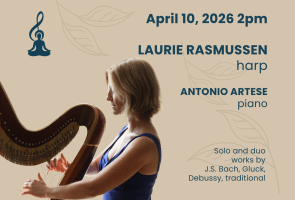
Fri, Apr 10
2:00 PM
Santa Barbara
Music & Meditation SB – Concert April 10, 2026
Thu, Apr 02
2:00 PM
Santa Barbara
S.B. Rescue Mission Annual Easter Feast

Thu, Apr 02
4:00 PM
Santa Barbara
Organic Soup Kitchen’s Souper Bloom Soup Social!
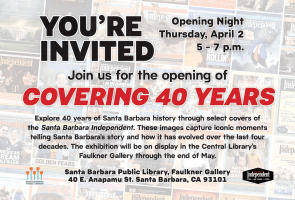
Thu, Apr 02
5:00 PM
Santa Barbara
Exhibit Opening: The Santa Barbara Independent: ‘Covering 40 Years’

Fri, Apr 03
2:00 PM
Santa Barbara
Ensemble Theatre Company Presents “A Night with Janis Joplin”
Fri, Apr 03
5:00 PM
Lompoc
Filipinos’ Contributions to Once Making Lompoc…
Fri, Apr 03
7:30 PM
Santa Barbara
Lahaina: Voices of Change
Sat, Apr 04
9:00 AM
Santa Barbara
Mesa Harmony Garden Spring Plant Sale
Sat, Apr 04
9:00 AM
Santa Barbara
Passport Fair, hosted by Congressman Salud Carbajal

Sat, Apr 04
9:30 AM
Santa Barbara
The Great Egg Hunt
Sat, Apr 04
5:00 PM
Santa Barbara
Classical Guitar at Art & Soul
Thu, Apr 02 5:00 PM
Santa Barbara
Paintings by Michael Vilkin at ART & SOUL GALLERY
Sat, Apr 04 9:00 AM
Santa Barbara
Mesa Harmony Garden Spring Plant Sale
Thu, Apr 09 7:00 PM
Santa Barbara
POSTPONED – Journey Within: Wisdom & Meditation with Gurudev – POSTPONED
Fri, Apr 10 2:00 PM
Santa Barbara
Music & Meditation SB – Concert April 10, 2026
Thu, Apr 02 2:00 PM
Santa Barbara
S.B. Rescue Mission Annual Easter Feast
Thu, Apr 02 4:00 PM
Santa Barbara
Organic Soup Kitchen’s Souper Bloom Soup Social!
Thu, Apr 02 5:00 PM
Santa Barbara
Exhibit Opening: The Santa Barbara Independent: ‘Covering 40 Years’
Fri, Apr 03 2:00 PM
Santa Barbara
Ensemble Theatre Company Presents “A Night with Janis Joplin”
Fri, Apr 03 5:00 PM
Lompoc
Filipinos’ Contributions to Once Making Lompoc…
Fri, Apr 03 7:30 PM
Santa Barbara
Lahaina: Voices of Change
Sat, Apr 04 9:00 AM
Santa Barbara
Mesa Harmony Garden Spring Plant Sale
Sat, Apr 04 9:00 AM
Santa Barbara
Passport Fair, hosted by Congressman Salud Carbajal
Sat, Apr 04 9:30 AM
Santa Barbara
The Great Egg Hunt
Sat, Apr 04 5:00 PM
Santa Barbara


You must be logged in to post a comment.