

PAST IS PROLOGUE: Way back in 1986 — on September 3, to be precise — Don Cornett, Exxon’s much-aggrieved front man at the time, famously told the county supervisors they could “stick it in their ear.” He then stormed out of the supervisors’ chambers on the fourth floor of the county building. Fast-forward almost 40 years, and Donald J. Trump told everyone living in Santa Barbara County late last week that we could stick it up our rear ends.
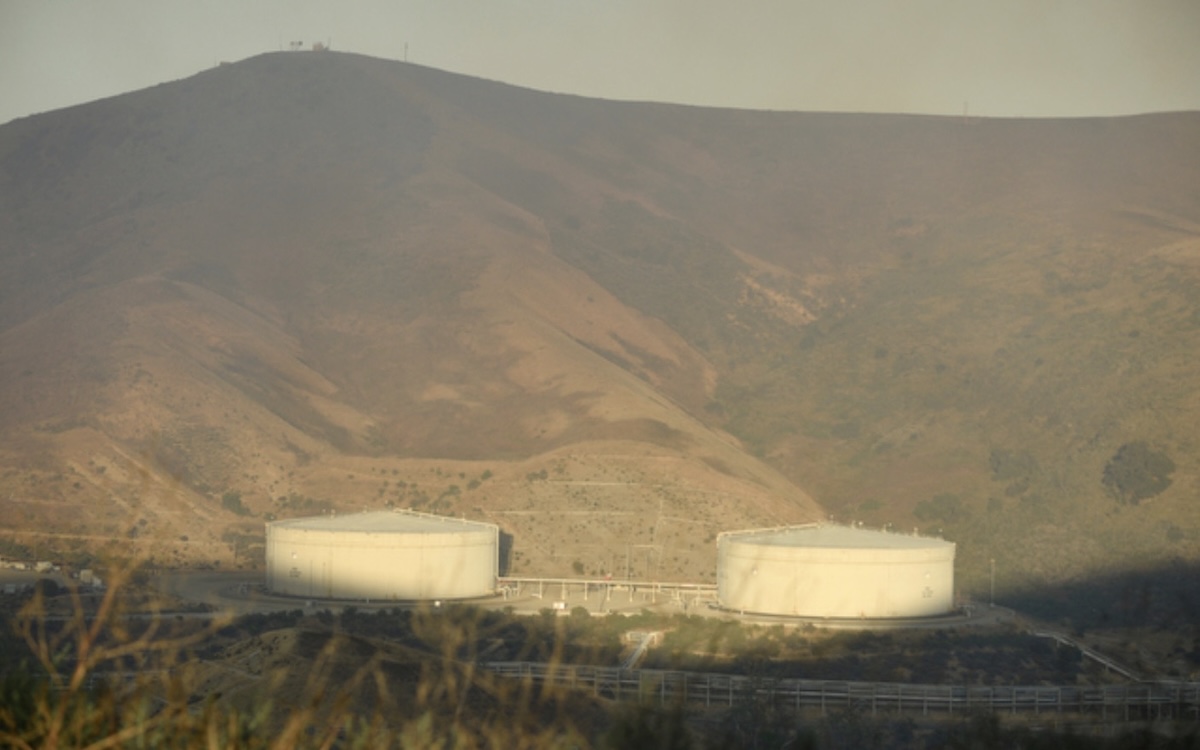
With a stroke of his mighty pen, Trump made the oil flow on behalf of Sable Offshore — oil that hadn’t flowed for 10 years. It began flowing from underwater oil wells located seven miles out to sea. It flowed up to what used to be Exxon’s massive industrial plant along the Gaviota Coast. And, ultimately, it flowed into two old pipelines that caused the 2015 massive oil disaster, pipelines so corroded that Sable had to spend hundreds of millions of dollars to patch them up in 188 places.
That’s a whole lot of Band-Aids.
Trump did for Sable what Sable could not, and would not, do for itself. Get the necessary permits to restart the major integrated oil facility along the coast of Santa Barbara — a place, by the way, where residents have learned that when it comes to oil production, there’s no such thing as being too careful.
Admittedly, getting the necessary permits is far from easy. It just takes time. But time was something Sable didn’t have; Sable was in a stupid rush. I say “stupid” because it had struck an impossible deal with Exxon: They accepted a loan of more than $700 million from Exxon so they could buy Exxon’s Santa Ynez Unit. But the loan required Sable to secure all the necessary permits and begin production within two years or the plant would revert back to Exxon and Exxon would get its money back.
A truly impossible task. Still, it’s no excuse.
Little wonder Sable got in such hot water with every agency from which it needed permits. The Coastal Commission famously fined the company $18 million for refusing to apply for the necessary permits and then refusing to stop work despite multiple orders to do so. The Santa Barbara County District Attorney filed a criminal complaint against the company with 21 counts — five are felonies, the rest misdemeanors.
The list goes on. I will spare you.
My point is this. With Trump’s ex-machina intervention on Sable’s behalf, one would think the proverbial Fat Lady had sung. But I’d also caution this: It ain’t over yet. Not remotely.
Have you ever sat in Santa Barbara Superior Court Judge Donna Geck’s courtroom? Donna Geck does not blink. She does not waste time with congenial blandishments. She’s strict about sticking to the law. Right now, Judge Geck seems stuck on a key point. If Sable wants to resume production, she wrote in her most recent tentative ruling, the company absolutely needs to get the approval of the Office of the State Fire Marshal.
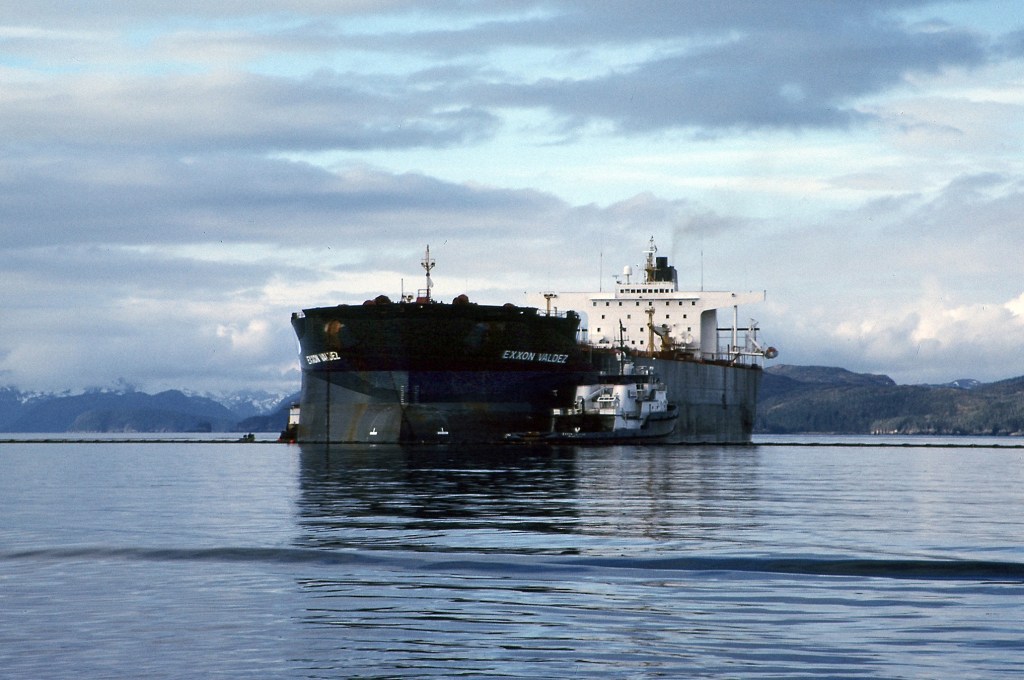
To date, the Fire Marshal has withheld final restart approval, explaining that Sable has not completed all the pipeline repairs needed to ensure its safety. When the pipeline burst 10 years ago, spilling out 142,000 gallons of crude, it burst from an eight-inch-long gash located on a stretch of pipe that was 89 percent corroded.
Can a pipe like that be safely repaired? Maybe? Who knows? According to Geck and the California Attorney General — who filed emergency legal papers this week to block Trump’s action — it is up to the Office of the State Fire Marshal to make that determination. Why him?
After the 2015 oil spill, the groups involved in cleaning up the mess — federal and state agencies, along with UCSB — met with the then-owner of the pipeline and came up with a plan to be followed if the pipeline were ever to be brought safely back to life. Key to that plan, known as the “Consent Decree,” is that the California Fire Marshal has the last word.
Late last year, the Fire Marshal informed Sable that it was “close, but no cigar.” Before then, Sable representatives spoke of the Consent Decree as if it were the Ten Commandments. But after the Fire Marshal announced that Sable hadn’t done all the needed repair work, Sable claimed it was the victim of a political hit.
It then went shopping around for a new agency to call the shots. Specifically, Sable petitioned the federal agency in charge of pipeline safety — which was also a signatory to the Consent Decree — to take jurisdiction away from the Fire Marshal.
This being the Age of Trump, it did so, justifying its action with a host of undeniably creative but untested legal theories generously provided by the best legal minds Sable could hire. Not to split hairs, this same federal agency signed a document in 2016 decreeing that the Fire Marshal had jurisdiction over the pipeline in question. In 2020, it signed the Consent Decree. But just two days before Christmas, this same federal agency issued Sable an emergency declaration greenlighting the restart of production.
So right now, the $1 billion question is whether Trump’s edict last week trumps the Consent Decree — an order issued by a federal court. Does the Defense Production Act, a bill written by Congress back in in 1950, bestow upon Trump such unfettered executive authority that he’s immune from even the laws of physics? Or is he still bound by law?
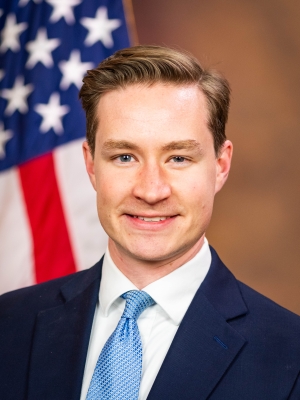
If you listen to the Trump administration’s attorney, there’s nothing the Defense Production Act — admittedly very expansive — won’t let Trump do. But then, the same attorney also wrote an opinion arguing the 2020 election had been stolen from Trump and another one saying that Trump is legally entitled to blow up foreign drug boats, killing everyone on board — due process be damned — on the legal grounds that the drug smugglers are enemy terrorists.
I confess I was pretty much ready to concede the point until I read an emergency legal brief filed by the California Attorney General’s office early this week. It’s that whole “rule of law” thing. In these times, I know this might sound quaint. But every now and again, the law still has teeth. This could be one of them.
California’s Attorney General argued that nothing in the Defense Production Act actually gives the president power to ignore court rulings or decisions made by a state government: “Federal government cannot commandeer state agencies,” the filing read. And if the Consent Decree is to be modified or set aside, the Attorney General argued, that’s up to a court to decide, not the executive branch. “It is for the court to say if its order need no longer be followed; it is not for the executive branch to say so. Allowing the executive branch to alter the effect of a court order by its own declaration would violate the separation of powers.”
Will it prevail? Who knows? I’m just saying it ain’t over.
The reason I brought up the “stick it in your ear” episode is to remind ourselves that just because something seems unlikely doesn’t make it impossible.
Back in 1986, Exxon took Santa Barbara County to court for trying to impose air-quality regulations that Exxon claimed were illegal. The Federal Department of Commerce agreed with Exxon. A Republican was in the White House. I’ll spare you the long shaggy-dog story. The punch line is that the county won that battle with Exxon. The air-quality standards stuck, and Exxon complied. Looking back, of course, the outcome seems inevitable. At the time, however, it all seemed insanely impossible.
It ain’t over.






You must be logged in to post a comment.