
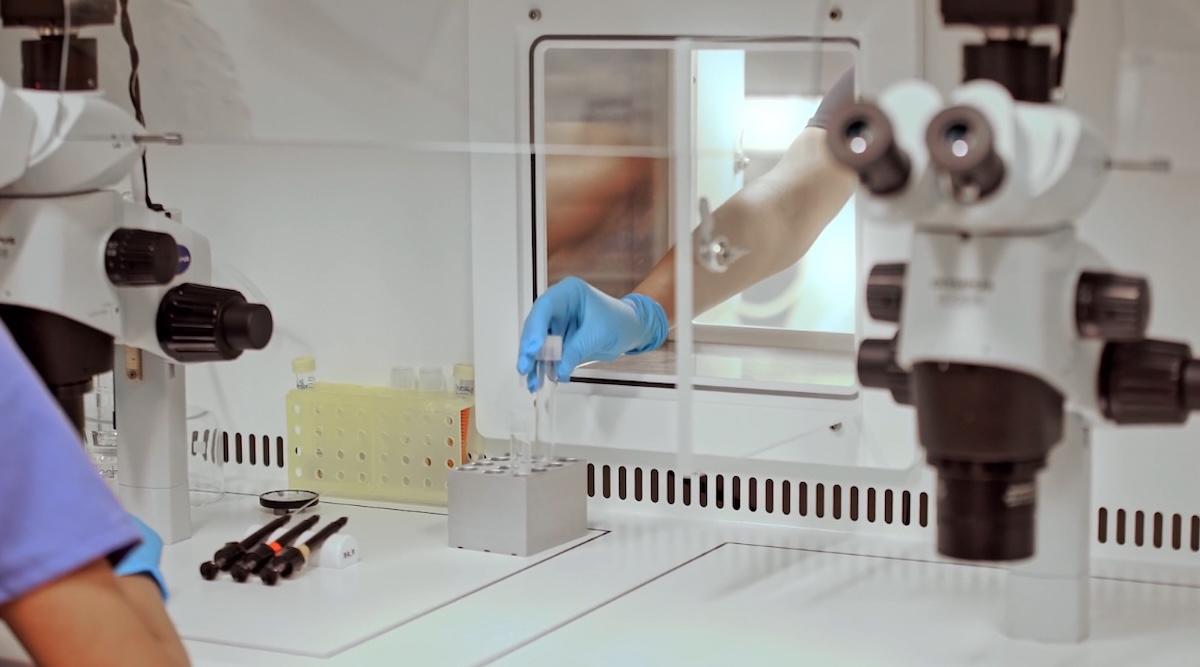
Down in Los Angeles, an in vitro fertilization (IVF) doctor is being sued by multiple patients — accused of moving embryos without consent, allegations tied to broader issues including failure to pay rent on his clinic and cocaine use that led to the suspension of his medical license.
Now, a Santa Barbara doctor says he is seeing those patients — and that the case opens a broader conversation about embryo storage.
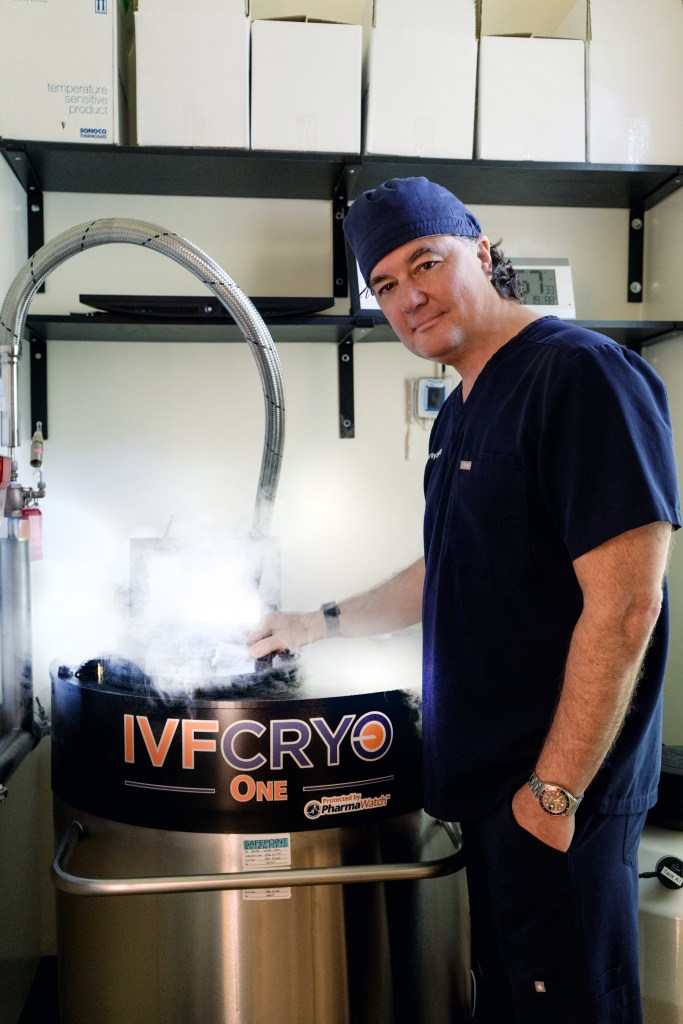
Dr. Daniel Rychlik, a Santa Barbara–based fertility specialist, said his clinic has begun seeing former patients of Dr. Brian Acacio, the Orange County physician at the center of a lawsuit filed last month by more than two dozen couples. The suit alleges Acacio continued practicing after a license suspension and transferred embryos without authorization.
Rychlik said his office has taken in about a dozen of those patients. They arrive, he said, with uncertainty.
“They don’t know why they were being treated the way they were,” he said. “They don’t know their diagnosis. They don’t know what the next step is.”
Acacio was once a prolific and highly sought-after IVF doctor based in Los Angeles, known for a high success rate. His medical license was suspended in December 2025 after allegations of cocaine use were brought before the California Medical Board, which later ordered a psychological evaluation that found him unfit to practice.
The lawsuit, filed March 3 by 26 couples in Orange County, alleges Acacio failed to inform patients of his license suspension and moved embryos from his Laguna Niguel facility to an office in Bakersfield without consent. Many patients, according to the complaint, only discovered the transfer when attempting to proceed with the next step in the IVF process — implantation.
Reached for comment, Acacio’s Bakersfield office said he is out of town for the next several weeks. A request for comment from Santa Barbara Fertility Center regarding whether it has seen similar patient transfers was not returned by deadline.
For those now seeking care elsewhere, Rychlik said the process is emotional, logistical, and “stressful.” Fertility treatment is costly and uncertain, with success rates typically ranging from 35 to 55 percent depending on individual factors.
Retrieving eggs requires weeks of hormone injections to stimulate follicle growth before a surgical extraction. Only mature eggs are preserved, using a flash-freezing process known as vitrification, in which eggs are rapidly cooled in liquid nitrogen to prevent cellular damage. From there, they may remain at the clinic or be transported elsewhere for long-term storage.
A single cycle of egg freezing typically costs between $4,500 and $8,000, with injectable medications adding another $4,000 to $6,000. Storage fees can exceed $500 annually.
Beyond the emotional and financial stakes, the legal framework governing embryos — including their storage and transfer — remains unsettled.
“There’s not a lot of laws with embryos,” Rychlik said.
In California, embryos are generally treated as a form of shared property between patients, with clinics acting as custodians. But across the country, that definition can shift. Some states, such as Georgia, have moved toward recognizing embryos as a form of “potential life” deserving of legal protection.
In 2022, the Supreme Court’s decision in Dobbs v. Jackson Women’s Health Organization overturned federal abortion protections, deepening that ambiguity as states diverged over how reproductive material is defined and regulated. Legal scholars have described embryo disposition as a “conundrum” for patients, providers, and lawmakers alike, with no unified national standard governing how embryos are stored, transferred, or ultimately used.
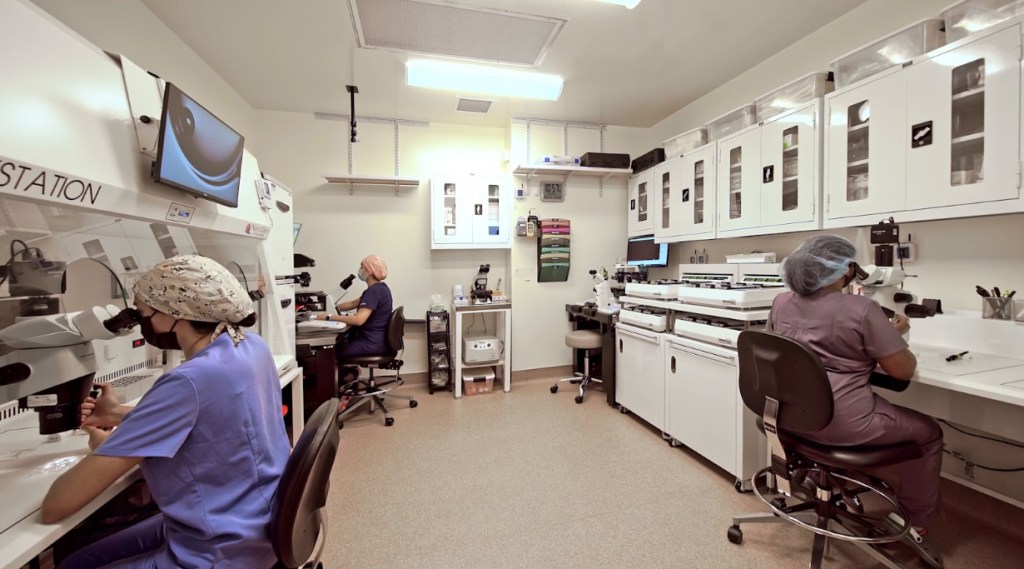
Here that means the rules surrounding embryos — including who controls them, how they can be moved, and what happens if something goes wrong — are largely determined by contracts and clinic policies.
Even under controlled conditions, moving embryos is a complex process. Transfers require consent from all parties, coordination between clinics, and specialized transport systems equipped with temperature monitoring and motion sensors to ensure stability in transit. Embryos are typically shipped overnight in cryogenic tanks, with continuous data tracking throughout the journey.
“Thousands of embryos are being transferred every day,” Rychlik said. “For us, it’s commonplace. For patients, it doesn’t feel that way.”
Clinics are also increasingly planning for long-term risks. Rychlik said that facilities have conducted risk assessments tied to environmental threats, including wildfires and other climate-related hazards. Storage infrastructure is built with those risks in mind — including reinforced flooring to support cryogenic systems — and, in some cases, embryos are moved to centralized facilities designed for transport access, such as Rychlik’s long-term storage facility near Los Angeles International Airport.
“You’re responsible for something that represents someone’s future family,” he said.
For some patients, embryos are already moving across state lines, driven not by medical need but by differences in state laws. Rychlik said his clinic has received embryos from states with more restrictive laws, as patients seek what he described as a more “hospitable” regulatory environment.
For patients displaced by the Acacio case, that movement was tied to a doctor who could no longer practice and a clinic that could no longer operate. More broadly, it points to a system in which the location — and security — of embryos may increasingly hinge on legal uncertainty and environmental risk.
Related Posts






Premier Events

Thu, Apr 09
7:00 PM
Santa Barbara
POSTPONED – Journey Within: Wisdom & Meditation with Gurudev – POSTPONED
Fri, Apr 10
2:00 PM
Santa Barbara
Music & Meditation SB – Concert April 10, 2026

Sat, Apr 11
7:00 PM
Santa Barbara
Dinner & Standup Comedy @ Wine Cask Gold Room

Sun, Apr 12
11:00 AM
Solvang
Santa Ynez Valley Home + Build Showcase

Mon, Apr 13
7:00 PM
Santa Barbara
New Horizons – Antonio Artese West Coast Trio

Tue, Apr 14
7:00 PM
Goleta
Wild and Free Film Festival Spring Movie Night

Wed, Apr 08
11:00 AM
Santa Barbara
True Story of Fremont Foxen & the San Marcos Pass

Wed, Apr 08
1:00 PM
Santa Barbara
Día de los Niños
Wed, Apr 08
2:00 PM
Santa Barbara
Online Talk: The Work of a Fashion Curator w/ ASU FIDM Director

Thu, Apr 09
6:00 PM
Santa Barbara
Chaucer’s Books – Poetry Night

Thu, Apr 09
7:00 PM
Santa Barbara
CWC Docs: The Other Roe

Thu, Apr 09
7:30 PM
Santa Barbara
Doublewide Kings Benefit Concert

Fri, Apr 10
7:00 PM
Ventura
Rubicon Theatre Presents “Somebody to Love”

Fri, Apr 10
7:00 PM
Santa Barbara
Unity Singers’ Spring Concert

Sat, Apr 11
10:00 AM
Los Olivos
Tomatomania! Santa Ynez Valley

Sat, Apr 11
12:00 PM
Isla Vista
Music in the Park: Spring Concert Series – Anisq’Oyo Park
Thu, Apr 09 7:00 PM
Santa Barbara
POSTPONED – Journey Within: Wisdom & Meditation with Gurudev – POSTPONED
Fri, Apr 10 2:00 PM
Santa Barbara
Music & Meditation SB – Concert April 10, 2026
Sat, Apr 11 7:00 PM
Santa Barbara
Dinner & Standup Comedy @ Wine Cask Gold Room
Sun, Apr 12 11:00 AM
Solvang
Santa Ynez Valley Home + Build Showcase
Mon, Apr 13 7:00 PM
Santa Barbara
New Horizons – Antonio Artese West Coast Trio
Tue, Apr 14 7:00 PM
Goleta
Wild and Free Film Festival Spring Movie Night
Wed, Apr 08 11:00 AM
Santa Barbara
True Story of Fremont Foxen & the San Marcos Pass
Wed, Apr 08 1:00 PM
Santa Barbara
Día de los Niños
Wed, Apr 08 2:00 PM
Santa Barbara
Online Talk: The Work of a Fashion Curator w/ ASU FIDM Director
Thu, Apr 09 6:00 PM
Santa Barbara
Chaucer’s Books – Poetry Night
Thu, Apr 09 7:00 PM
Santa Barbara
CWC Docs: The Other Roe
Thu, Apr 09 7:30 PM
Santa Barbara
Doublewide Kings Benefit Concert
Fri, Apr 10 7:00 PM
Ventura
Rubicon Theatre Presents “Somebody to Love”
Fri, Apr 10 7:00 PM
Santa Barbara
Unity Singers’ Spring Concert
Sat, Apr 11 10:00 AM
Los Olivos
Tomatomania! Santa Ynez Valley
Sat, Apr 11 12:00 PM
Isla Vista


You must be logged in to post a comment.