
Choosing When to Let Go
There Is Never a Right Time to
Say Goodbye to a Dog You Love
By Tiana Molony | June 11, 2026
Read more from our 2026 Pets & Animals cover story here.
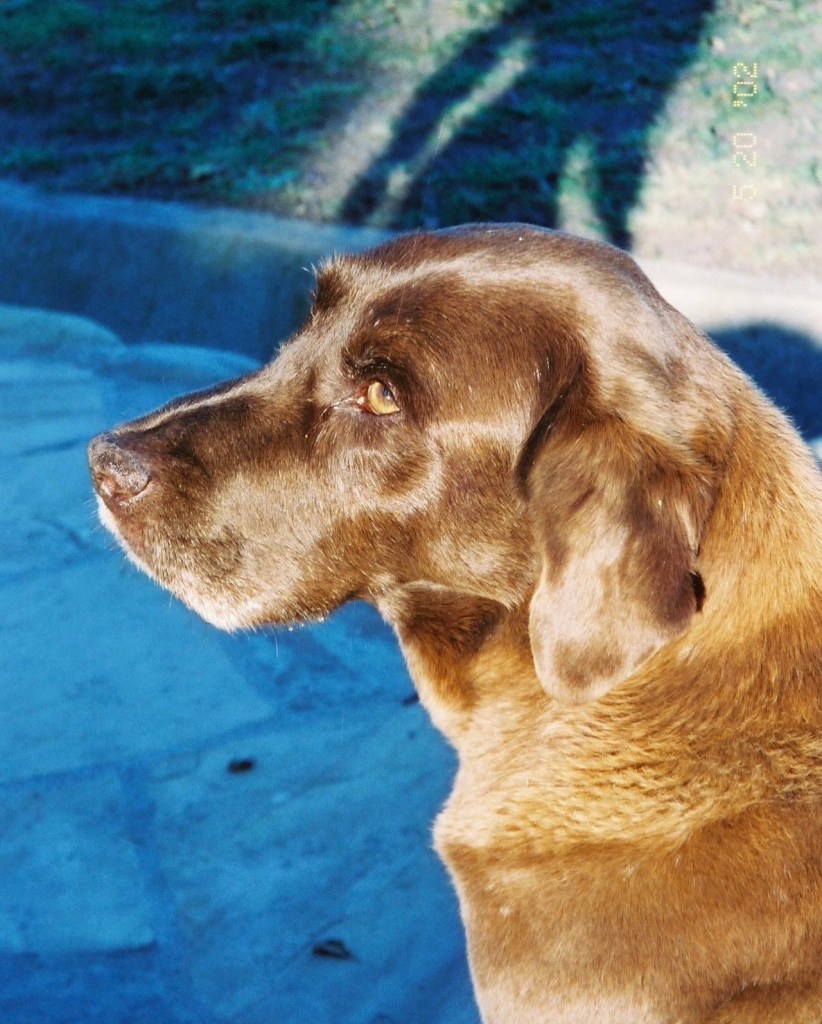
“He’s near the end of his life,” said the veterinarian one afternoon in June 2024. Chili, my chocolate Labrador, lay sprawled on the icy tile, completely and utterly unaware of the sad news that had just been delivered.
“He’s an old boy — maybe start putting together a bucket list for him.”
I wondered what kinds of things one puts on a bucket list for a dog; the stuff humans usually choose came to mind: skydiving, cliff jumping, and the like. Why is it always some version of falling? Of narrowly escaping death?
“Make him comfortable,” the vet continued, breaking me from my thoughts of Chili skydiving and wondering how he might deploy his parachute without opposable thumbs.
She prescribed him two doses of Glucosamine a day to help with the pain, and one dose of Gabapentin for inflammation. Chili glanced up at me upon this news, smiling; the vet technician handed me a box of tissues and offered her condolences.
Like many delusional pet owners, I had gone to the vet that day looking for a solution to Chili’s decline. I didn’t want to hear that he was old, because you can’t fix old, and as much as I knew that, a small part of me still hoped she might offer some kind of breakthrough — maybe there was a scientist in an underground lab somewhere in the Arctic on the brink of inventing the cure for canine aging.
At some point, I had to accept two irrefutable facts: There was no secret scientist, and Chili was old. Thirteen years, to be exact. And although nothing was inherently wrong with him, no cancer, no sickness; his body just wasn’t allowing him to be himself anymore — his back legs buckled when he tried to stand, and his muscle mass was a third of what it used to be. One pet of his shoulder, and you would feel his bones.
“Like an old man with a walker” is how the vet described his “condition” to me.
“His heart is still in it, but his body is not,” is what my dad offered.
Both were just clever ways of saying that his days were numbered.
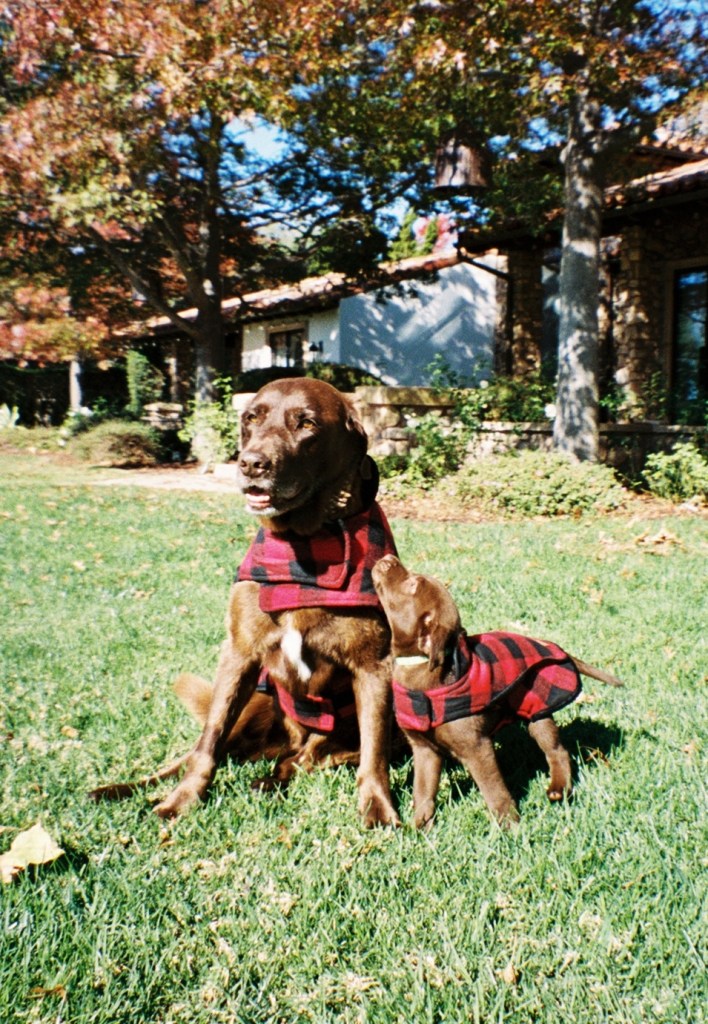
Somehow, it’s harder — the knowing. I lacked that clarity when my last two dogs, Mocha and Lola, passed. Their deaths were imminent but abrupt. Bear with me as I explain these three and their family tree: Lola, Mocha, and Chili were all related. Lola was a yellow Labrador my family brought home when I was 3 years old. A few years later, after a clandestine rendezvous with the ranch’s Border Collie, she became pregnant. She gave birth to a litter of puppies, and we kept the only brown one, naming her Mocha.
Then, when I was 16, Lola died. She was 13 years old with arthritis when she fell down the stairs. And that was all it took. My parents pulled my sister and me out of school and summoned us to the vet. We said our goodbyes gathered around the sterile metal table. Now, there was just Mocha.
I remember the day we got Chili. One of Mocha’s siblings had puppies, and my sister kept one. He lived with her for a few years until we took him in. Mocha and Chili were inseparable, living happily ever after on the ranch, running through fields and fetching sticks in the ocean; they did everything together, even sharing a leash on walks.
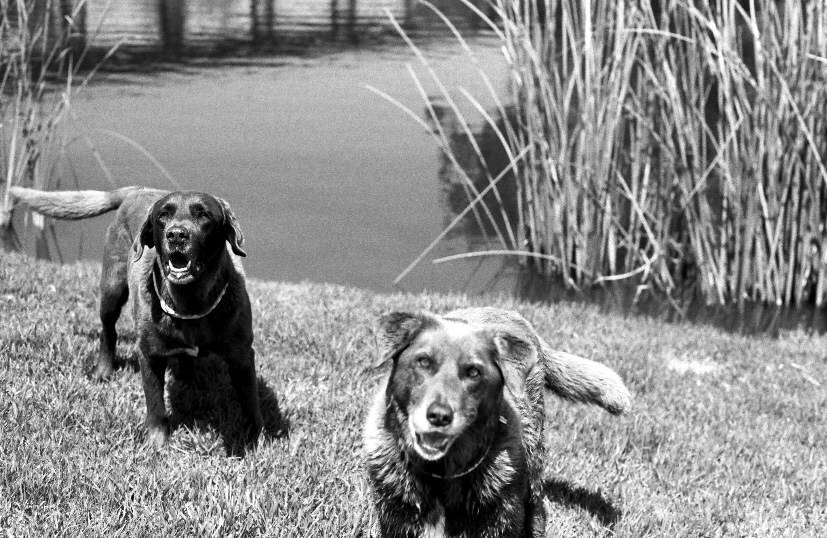
Then, in 2022, Mocha was diagnosed with cancer and given two weeks to two months to live. Two months later, my dad found her in the grass while the sprinklers were running, just lying there. She always hated the sprinklers. She died later that night. I barely made it home to say goodbye.
Mocha’s and Lola’s deaths loomed, but we didn’t get to choose their last day. With Chili, it was up to my family and me to decide when to end it, but given my close relationship with him, the burden inevitably fell to me.
The last three months of Chili’s life trudged, like the last leg of a race — both equally hard to watch for the runner and the onlooker. In those months, I assumed the role of caretaker: maneuvering him up and down the stairs, attaching “sticky paws” to keep him from slipping on the wood flooring, wrapping a sling around his torso to help him stand, and applying ointment to his sores (my Amazon orders that month told the whole story).
Some days were better than others. But toward the end, the bad days far outweighed the good.
Over those last few months, we often sought the vet’s opinion. “When will we know it’s time?” we asked her, hoping she might decide for us. “I really think it’s not too early at this point,” she relayed, just three months after she saw him in June. “It’s going to hurt no matter if it’s next week or years down the road. His quality of life is bad, and it’s not fair to let him suffer.”
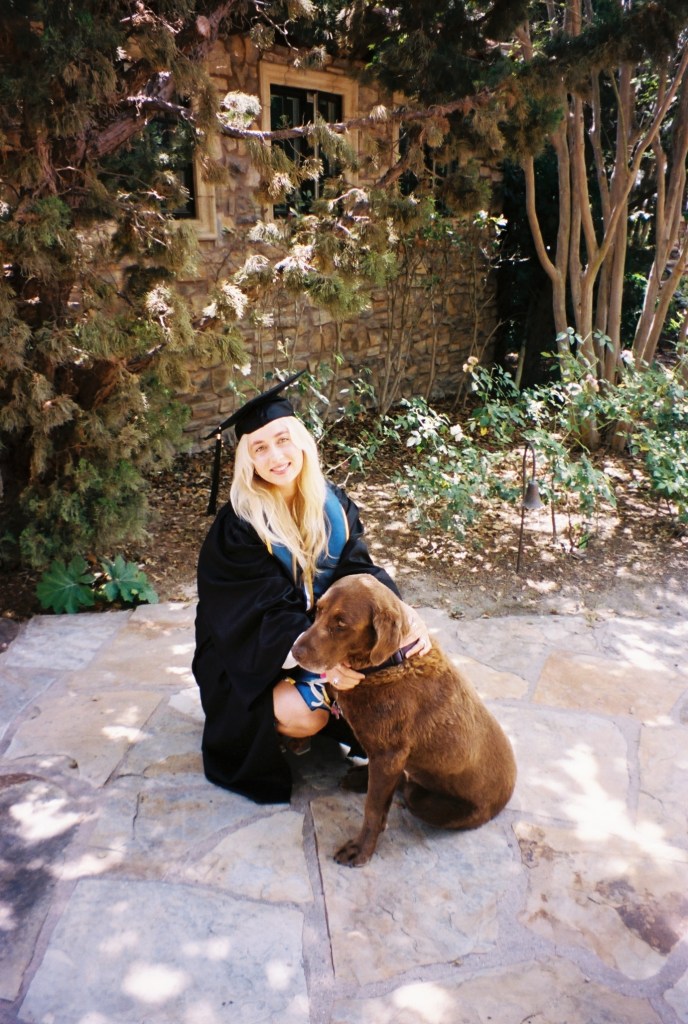
During his final weeks, I rescheduled the dreaded appointment three times.
“Tiana,” my mother would call from the other room, “the vet’s on the phone. Are we moving it again?”
“Yes,” I’d answer. “He seems better. Maybe just a few more days.”
In the end, there were no more postponements to make. We settled on Wednesday, September 3, at 4 p.m.
On the day he was scheduled to die, Chili slept beside me on his bed, doing what he does most days: feeling the breeze on his face and soaking up the sunshine. The night before, I gave him my sweatshirt to sleep with, which, two years later, I still haven’t worn or washed. I stayed with him and watched the stars twinkle in the sky. I thanked him for his unconditional love and recounted some of our favorite memories, such as the time my sister and I took him to the snow in the Santa Ynez Mountains. He sniffed the crisp air and let the flakes fall upon his nose. I hope he crossed “see snow” off his doggy bucket list.
September 3 was a Goldilocks day in Santa Barbara: The wind blew softly, and it wasn’t too hot nor too cold, just right. I spent the day beside him outside, feeding him treats, knowing he would be gone by dinnertime. It’s an odd thing to know that it is someone’s last day on earth, but for them to be utterly oblivious to it. I stared at his face, caught on that thought, scanning and memorizing every feature: his wise eyes and the white diamond-shaped mark on his chest representing the 25 percent Border Collie in him. I cut off some of his hair but am unsure why; it just seemed like something I was supposed to do (the hair remains in a plastic baggie in a drawer).
The vet arrived late, at 4:30. I wondered if this was on purpose, to give us just a little more time. She spoke softly, the way you might around a sleeping infant. She had kind, reassuring eyes and knelt beside me, meeting my gaze as if I were a wounded baby bird — which I kind of was.
“It’s not going to be easy,” she warned, placing a hand on my shoulder. “You’re going to accidentally call his name or think he may come around the corner. But you’re doing this for him.”
She told us that we could stay or leave, that it was our choice. My sister went for a walk, and my mom retreated to the house. My dad and I lay with him under a tree in the backyard, holding him on either side. The light filtered through the leaves and onto his fur. I learned a few years ago that the Japanese word for this sight is komorebi.
The vet unpacked her bag and pulled out two vials. One was filled with pink liquid, and the other with clear. One was sleep, and one was death, but to this day I do not remember which one was which. She administered sleep first, and although he was still alive, I knew this was the moment when he would go. My hairdresser, who had lost her beloved dog two weeks prior, prepared me for this. “You have to say goodbye before the anesthesia,” she warned as she shampooed my hair.
I did. For what felt like the thousandth time that day, I told him I loved him and kissed him in my favorite spot between his eyes. The vet asked if I was ready. I nodded.
A few seconds later, I watched his eyes soften, the light still trickling through the trees onto the place where our eyes met.
Then she administered the second vial, and slowly, death took control.
When I finally lifted my head from his face and made eye contact with the vet, I felt embarrassed to have held my dead dog for so long. It occurred to me then that I had never seen death so up close before. Really, it looked no different than sleep.
I moved aside so the vet could press her stethoscope to his side and listen for a heartbeat. “I’m sorry, but Chili has passed,” she said.
I gave him a final kiss between his eyes.
Maple, our new Labrador, who was barely a year old at the time, sniffed his body and then walked away.
The vet wrapped him in a white blanket along with the letter I had written to him. I left before they put him on the stretcher, so in my last memory of him, I could still believe he was just asleep under the trees.


You must be logged in to post a comment.