

For more than three decades, Boxtales Theatre Company has shaped the inner landscape of Santa Barbara: The places where imagination and reality blur, traditions are passed from one generation to the next, and the public discovers new ways of seeing the world.
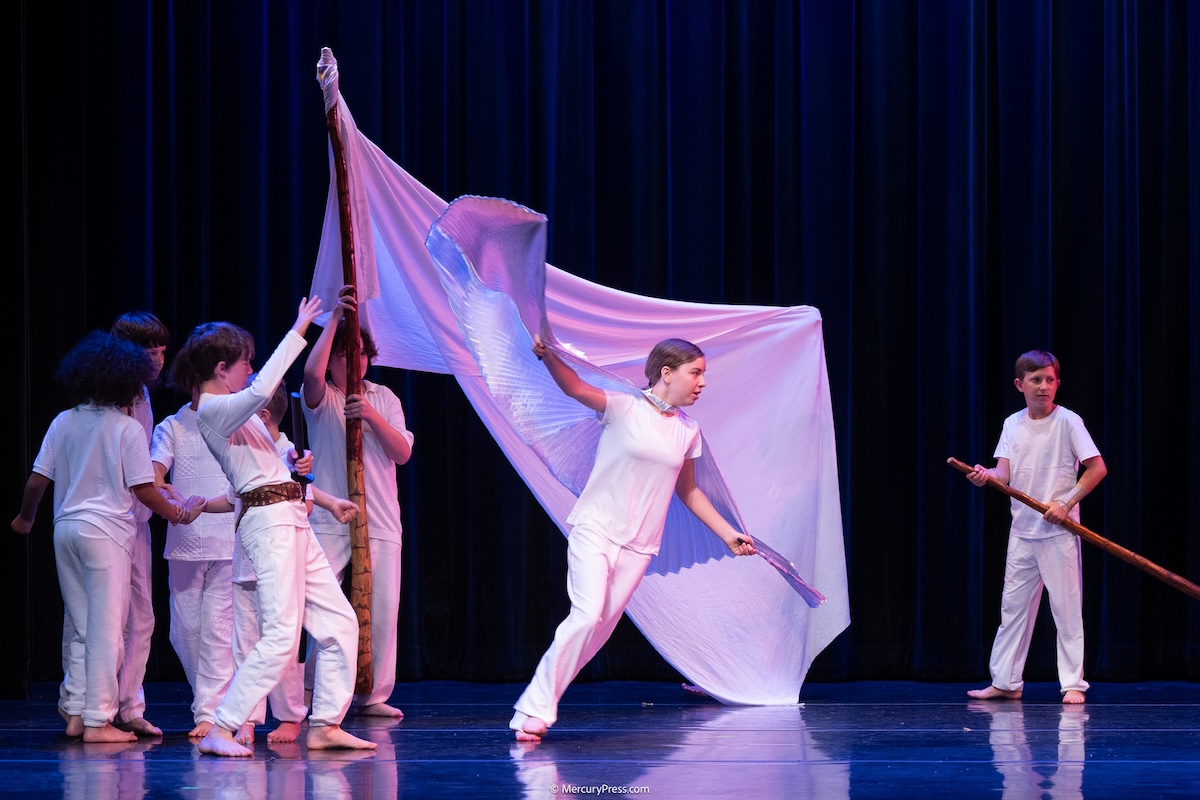
This summer, Boxtales presented two ancient stories that were also unexpectedly contemporary: The Theft of the Sampo, drawn from Finland’s Kalevala, and Demeter and Persephone, of the Greek world.
In The Theft of the Sampo, a mysterious object capable of generating abundance becomes the center of a struggle over prosperity, power, and the common good. Although rooted in Finnish folklore, the story asks questions every generation must answer: Who benefits from abundance? What belongs to a community? What responsibilities accompany power?
In Demeter and Persephone, beneath the familiar explanation for the changing seasons lies a meditation on love, separation, grief, and renewal. Winter is not defeated. It is endured. Hope returns because life itself moves in cycles.
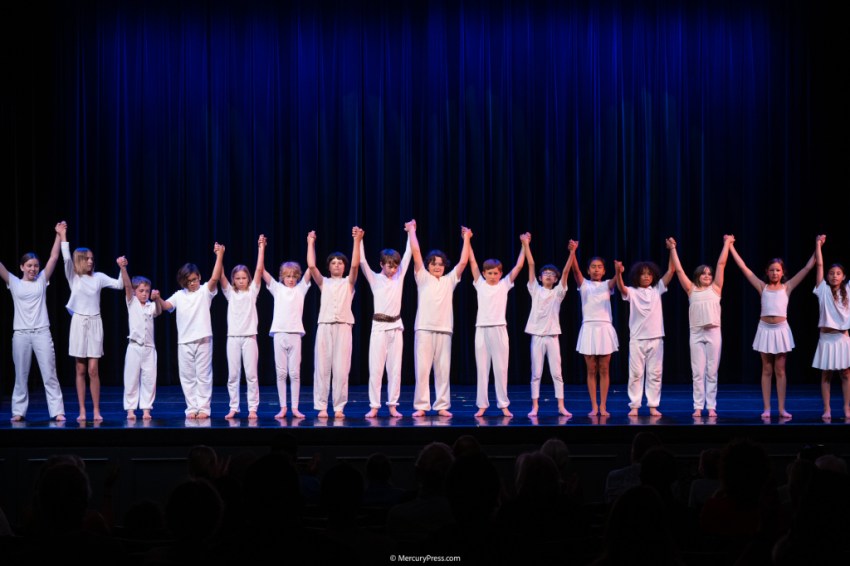
Produced through the company’s summer theater camp at the Marjorie Luke Theatre, the performances revealed what can happen when mythology is entrusted to young actors and guided by teaching artists who understand that theater is about transformation.
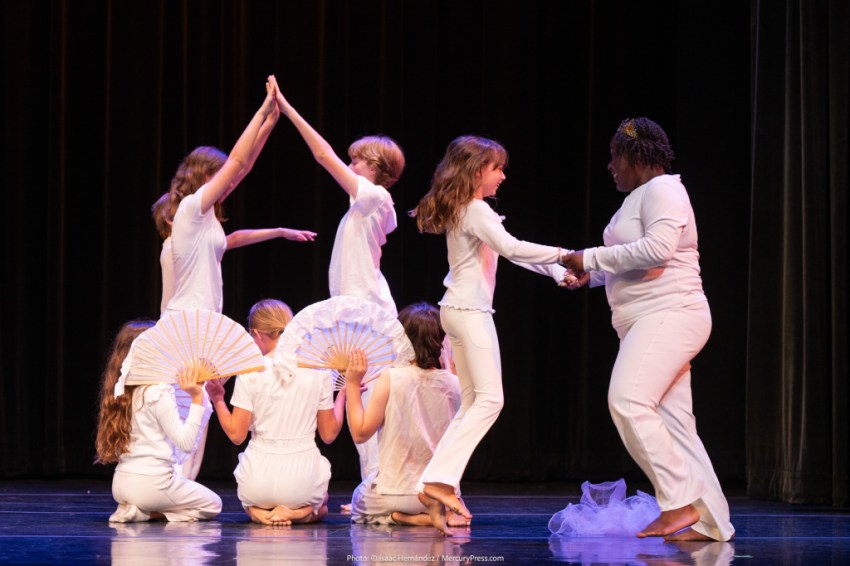
Though separated by geography and centuries, these stories ask enduring questions. What sustains a community? What must be lost before renewal becomes possible? How do we endure grief without surrendering hope?
These are not children’s stories. They never were.
Myths are among humanity’s oldest conversations about power, grief, justice, generosity, love, sacrifice, and renewal. They survive because every generation discovers something of itself within them.
Boxtales understands this: Stories told aloud, shared for a community, carried forward through performance.
Watching the final expression of Michael Andrews’s and Matthew Tavianini’s artistic vision is to witness theater reduced to its essential language. Movement carries as much meaning as dialogue. A scarf becomes an ocean. A wooden staff becomes the mast of a ship. A circle of children becomes a village, then a forest, then a gathering of gods. The audience is not watching an illusion. It is participating in an act of imagination.
The aesthetic recalls the abstraction of the early twentieth-century European avant-garde, where suggestion carries greater force. Nothing is wasted. Nothing is decorative. Empty space becomes possibility.
Children enter this world without hesitation.
Adults need an invitation.
This is why Boxtales continues to resonate across generations.
In an age of endless content and dazzling visual effects, Boxtales asks audiences to do something increasingly uncommon: imagine. The stories are completed not by technology, but by the shared work of performers and audience.
That collaboration is essential.
Michael and Matthew are teachers in the deepest sense of the word. For decades, they have introduced thousands of Santa Barbara children to theater as a way of understanding themselves and the world around them. Students learn presence before performance. They discover that listening is as important as speaking, that the body communicates long before words arrive, and that confidence grows through practice.
This summer, in Boxtales’s Theater Camp, children inhabited worlds of gods, heroes, monsters, and magical objects.
Programs like this exist because generations of Santa Barbara philanthropists, foundations, volunteers, and audiences have chosen to invest in arts education. Their gifts preserve a tradition in which children encounter ideas larger than themselves, inhabit another person’s story, and learn that creativity belongs to everyone.
It is easy to think of theater education as preparation for the stage.
Yet, it is also preparation for citizenship.
Theater teaches children to stand before others with confidence. It develops empathy by asking them to inhabit another person’s perspective. It cultivates collaboration, resilience, adaptability, and creative thought. These are not theatrical skills alone. They are the habits of engaged citizens, thoughtful leaders, and generous neighbors.
As artificial intelligence reshapes education and work, these capacities become more valuable, not less. Information is abundant. Judgment, imagination, empathy, and ethical discernment remain human work. It is no surprise that conversations across higher education, including recent essays in The New York Times, have renewed the case for the liberal arts. They cultivate capacities that technology cannot replace.
Theater has always understood this.
Before PowerPoint presentations, podcasts, or video calls, actors learned how to command a room, read an audience, tell stories, and move people to reflection and action. Those same abilities remain central to leadership in classrooms, hospitals, businesses, nonprofit organizations, and public life.
Myths have endured for thousands of years. They remind us that life unfolds in seasons. That loss often precedes wisdom. That darkness is one of hope’s conditions.
Through theater, Boxtales renews the power of myth for contemporary audiences. In teaching children to imagine another world, the company prepares them to shape this one.
After the stage has been cleared and the costumes returned to their racks, that work of imagination and its impact remains.
Related Posts


Premier Events
Sun, Oct 25
11:00 AM
Santa Barbara
Free Family Day: Día de los Muertos
Sun, Oct 25
12:00 PM
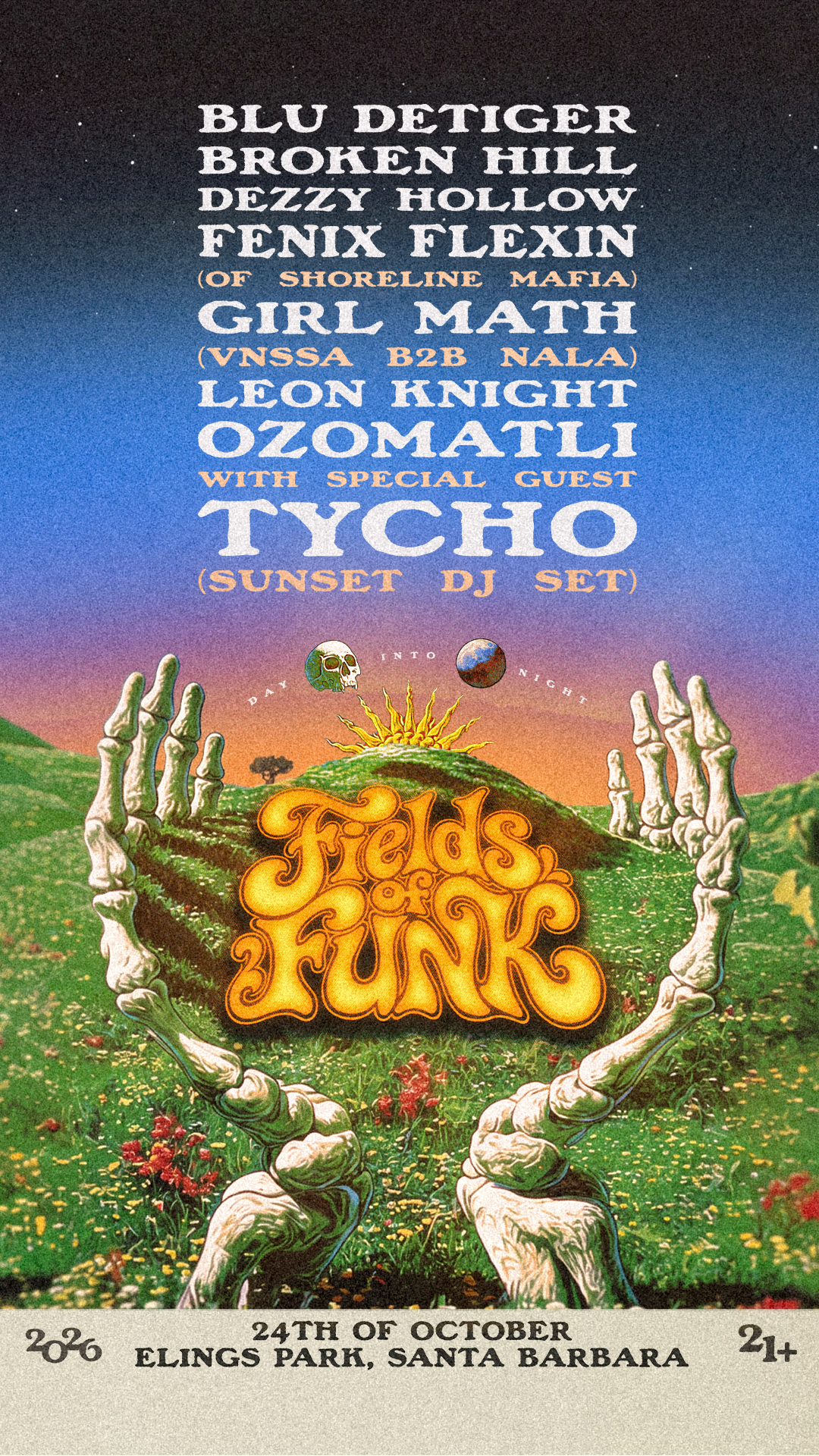
Fields of Funk

Sun, Oct 25
2:00 PM
Santa Barbara
Halloween Pooch Parade
Sun, Oct 25
3:30 PM
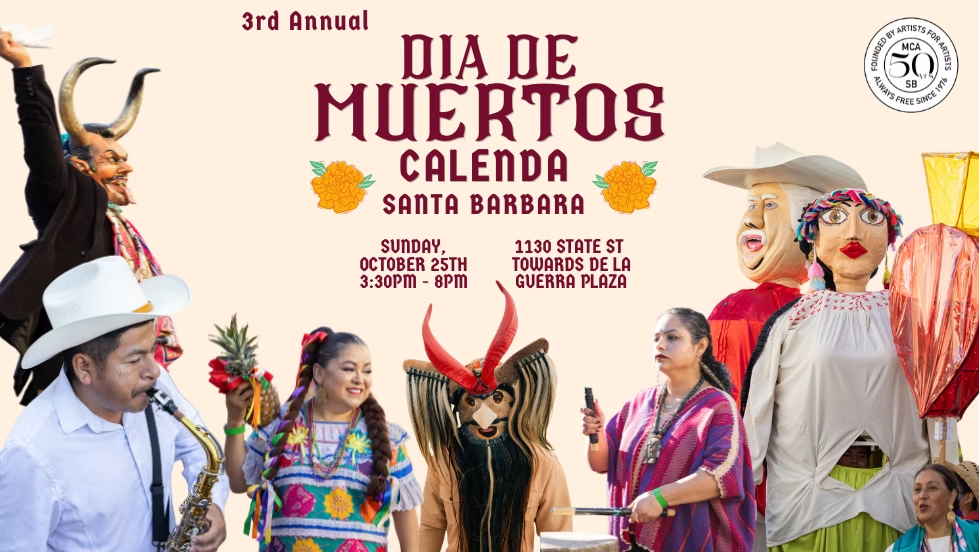
Dia de Muertos Calenda 2026
Sun, Oct 25
4:00 PM
Santa Barbara
S.B Revels Annual S.B Harbor Sing
Sun, Oct 25
7:30 PM
Santa Barbara
Comedy is a Drag Halloween Spooktacular
Mon, Oct 26
5:00 PM
Montecito
Halloween at The Speakeasy at San Ysidro Ranch
Mon, Oct 26
6:00 PM
Santa Barbara
Chaucer’s Book Talk & Signing with Jennifer Chassman Browne “See Us, Know Us: Profiles of Disability”
Wed, Oct 28
5:00 PM
Santa Barbara
Fundraiser for Domestic Violence Solutions

Wed, Oct 28
7:00 PM
Santa Barbara
Reel Rock 20 Climbing Film Tour
Sun, Oct 25 11:00 AM
Santa Barbara
Free Family Day: Día de los Muertos
Sun, Oct 25 12:00 PM
Fields of Funk
Sun, Oct 25 2:00 PM
Santa Barbara
Halloween Pooch Parade
Sun, Oct 25 3:30 PM
Dia de Muertos Calenda 2026
Sun, Oct 25 4:00 PM
Santa Barbara
S.B Revels Annual S.B Harbor Sing
Sun, Oct 25 7:30 PM
Santa Barbara
Comedy is a Drag Halloween Spooktacular
Mon, Oct 26 5:00 PM
Montecito
Halloween at The Speakeasy at San Ysidro Ranch
Mon, Oct 26 6:00 PM
Santa Barbara
Chaucer’s Book Talk & Signing with Jennifer Chassman Browne “See Us, Know Us: Profiles of Disability”
Wed, Oct 28 5:00 PM
Santa Barbara
Fundraiser for Domestic Violence Solutions
Wed, Oct 28 7:00 PM
Santa Barbara


You must be logged in to post a comment.