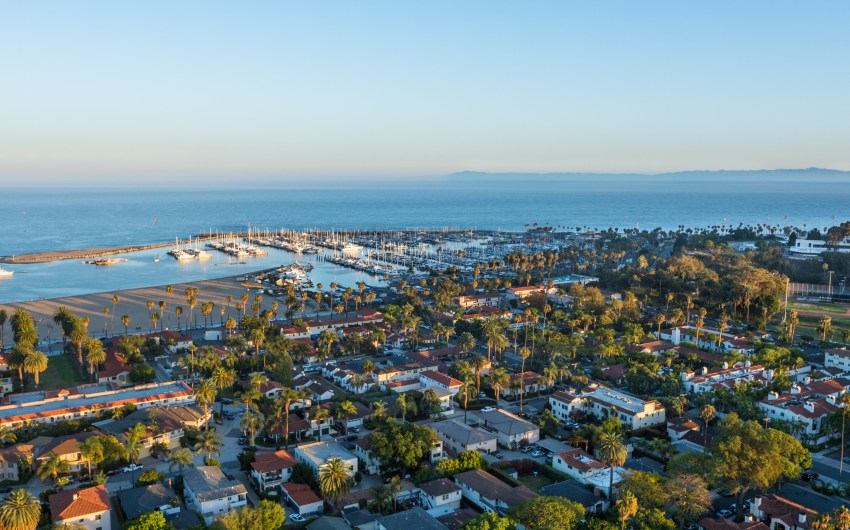
If you want to identify the friction point over the next 35 years caused by the county’s projected job, population, and housing growth, look no further than the City of Santa Barbara.
According to a major growth forecast just released by the Santa Barbara County Associations of Governments (SBCAG), population growth within city limits is expected to rise by a scant 6 percent in that time, reflecting the high age, low birth rates, and small household sizes of its residents. By contrast, the number of new jobs within city limits is expected to jump by 26 percent, while the number of new housing units is slated to grow by a modest 10 percent.
Ninety miles to the north in the City of Santa Maria, the numbers paint a starkly different picture. There, SBCAG — a super agency of local government bodies that allocates state and federal transportation dollars based on documented need and political sway — suggests that a population rise of 29 percent is likely, the number of new jobs will jump by 26 percent, and the number of new households — newly built homes — will grow by a whopping 51 percent.
Countywide, Santa Barbara is expected to experience a modest 17 percent bump in population. The number of new households — 25 percent — will slightly exceed the in new jobs — 21 percent.
This teeter-totter between homes and jobs suggests a lot more commuters will be on the road, but SBCAG spokesperson Lauren Bianchi Klemann said no tabulations or projections have yet been run. In 1990, the number of commuters was 5,000; in 2010, it had doubled to 11,000. By 2060, it’s expected to hit 25,000.
Overall, the numbers suggest the county’s population is getting older and more ethnically diverse. By 2060, Santa Barbara will be 53 percent Hispanic. Right now, it’s 50 percent.
Perhaps the most striking factoid in the report is the sharp jump in number of people employed in either healthcare or education. Together, these sectors are projected to double from 30,000 to 63,000; that’s a jump from 13.3 percent of the total workforce to 22.8 percent. Again, these numbers reflect the growing number of residents 65 years old or older. Meanwhile, leisure sector is projected to drop from 12.4 percent of the workforce to 11.7 percent.