
A Man Among Megafires
In New Book, Jordan Thomas Brings an
Anthropologist’s Eye to the Los Padres Hotshots
By Tyler Hayden | August 28, 2025
It was a trip to a Maya community in southern Mexico that set anthropologist Jordan Thomas on the path to fire. He was skeptical of the idea that human beings are inherently destructive to their environments, and he wanted to determine how these indigenous people had sustainably managed their forests since the last Ice Age. What he found were flames.
When the weather was right, the Maya farmers set small fires (a version of what we now call “prescribed burns”) that would enrich the soil, encourage plant growth, and boost the diversity of the forest. Without these carefully managed burns, the farmers told Thomas, the health of their food web — and the forest itself — would be at risk.
Thomas was fascinated, and hooked. He read every book on fire that he could. He studied how it is an essential ecological part of nearly every landscape on Earth, from tropical jungles to arctic peatlands to the California coast, and how throughout history, it was wielded by native peoples to maintain the harmony of their environments.
That begged the question, as Thomas writes in his new book, When It All Burns: Firefighting in a Transformed World, “What did it mean that so much of the planet was now experiencing continental conflagrations?”
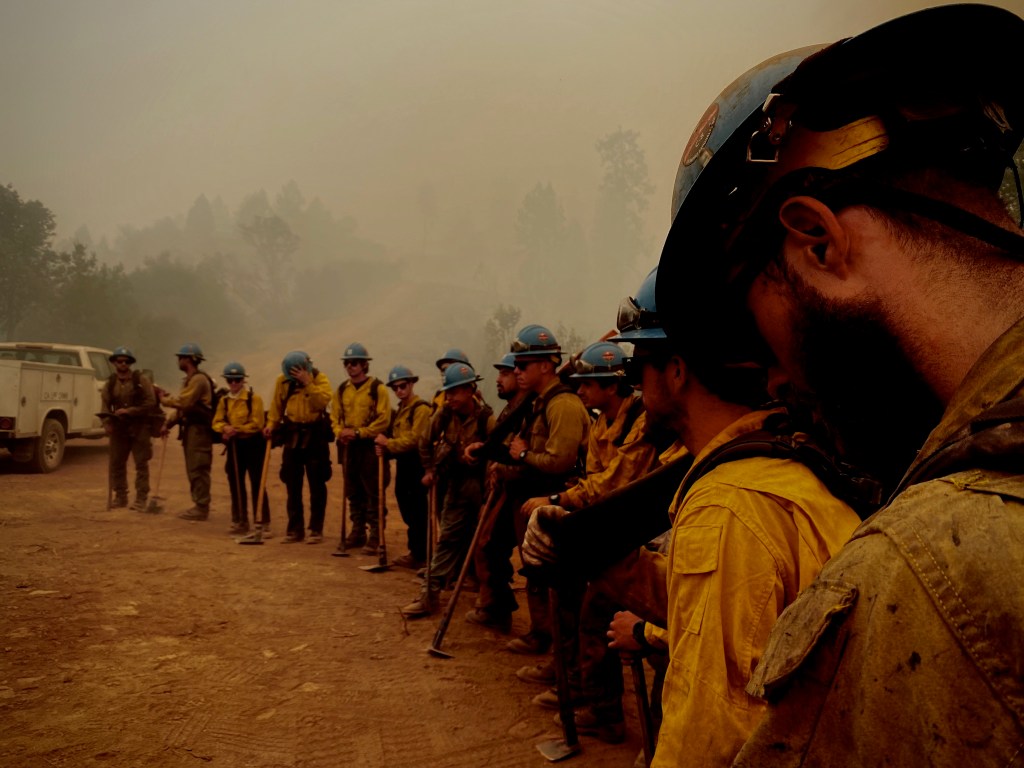
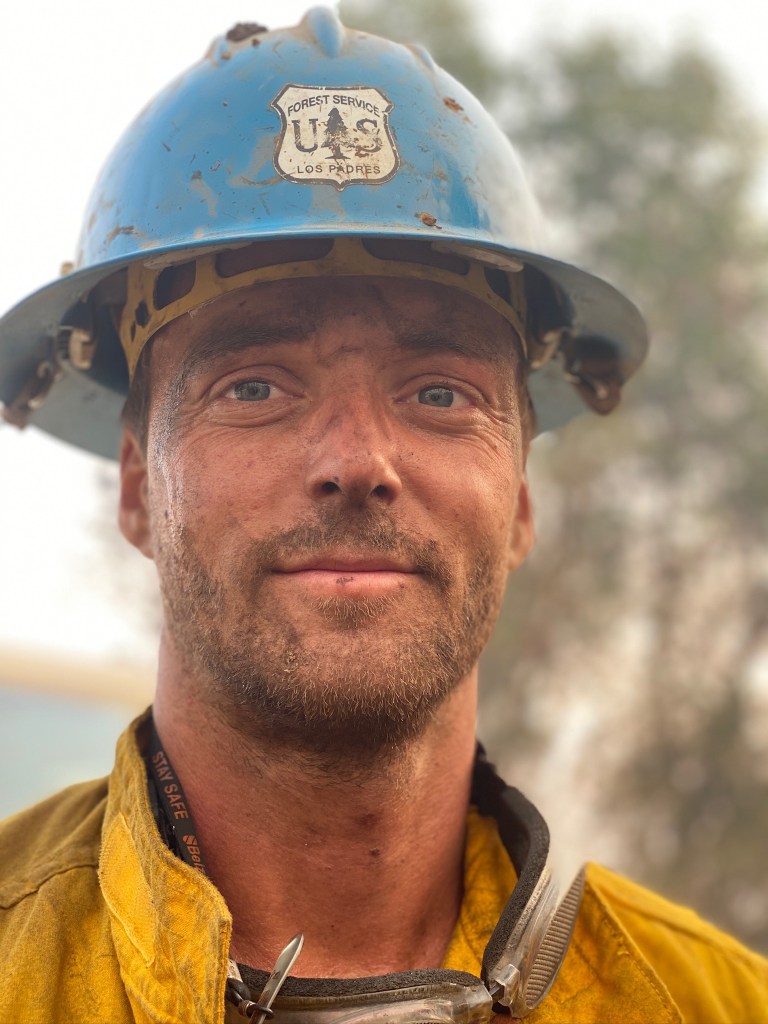
Not content to simply study the issue while pursuing his doctorate at UCSB — and needing money to pay Santa Barbara rents — Thomas joined the Los Padres Hotshots, an elite firefighting unit of the U.S. Forest Service. He was hardly a shoo-in, and trained for months to meet the physical demands.
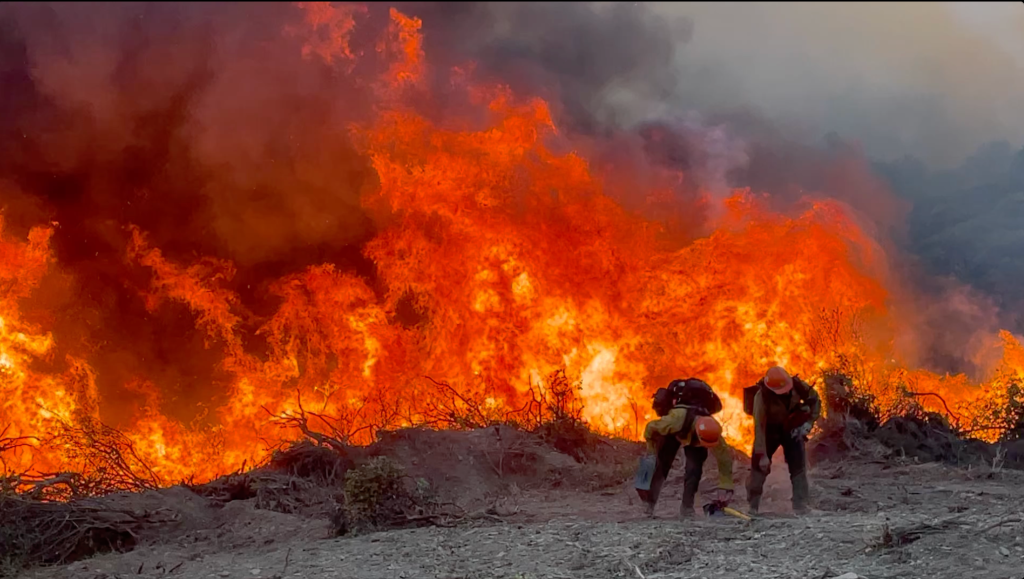
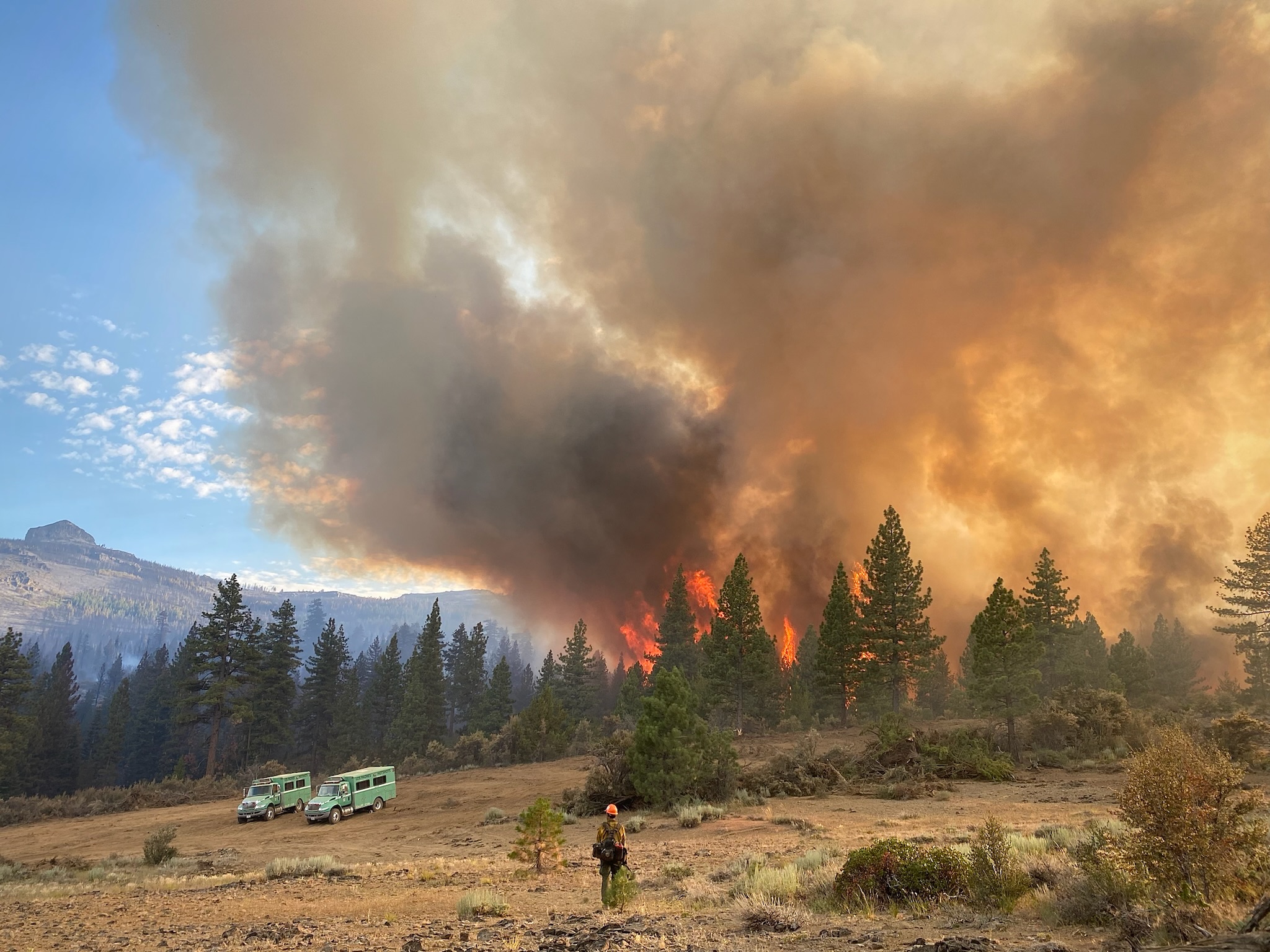
When It All Burns follows Thomas and the hotshot crew on a brutal six-month fire season in 2021, when record-setting fires raged across California, including the 18,000-acre Alisal Fire here in Santa Barbara County. The harrowing action sequences are interspersed with deep dives into the ecology, science, economics of fire.
To understand how fires evolved from regenerative tools of Indigenous communities to deadly infernos requiring militaristic suppression campaigns, Thomas begins with Spanish settlements in North America, where native Californians were enslaved and tortured and their traditional fires outlawed because they ruined grazing fields — “burnt off by the heathens,” wrote an indignant associate of Junípero Serra.
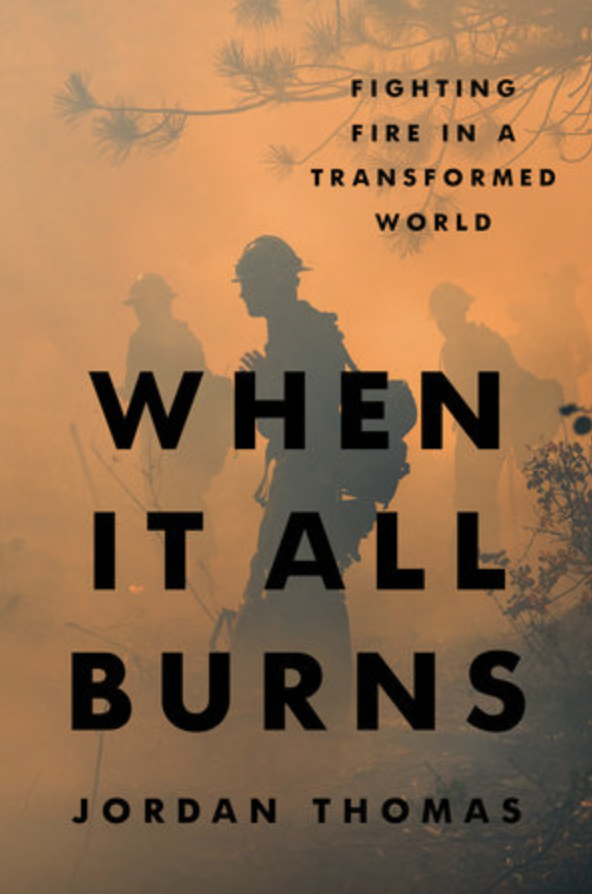
The book, critically lauded by both The New York Times and the Los Angeles Times, traces public policy and private interests all the way to the present day. It examines which stakeholders benefit from our current fire strategies which, perhaps unsurprisingly, are often corporations. In 2021, Thomas points out, the U.S. Forest Service purchased 50 million gallons of Phos-Chek — a flame retardant developed by Monsanto — at around $2.50 per gallon.
Thomas also lays bare the startlingly unfair labor practices faced by hotshots, many of whom are forced to turn to GoFundMe campaigns to cover medical bills. In one passage, Thomas recounts an incident where his crew saved a multimillion-dollar mansion from destruction. The owner tried passing out $100 bills as tips. One of Thomas’s fellow firefighters suggested he instead keep paying his taxes. Or, even better, pay more taxes.
As the Gifford Fire crested 100,000 acres earlier this month, we spoke with Thomas by phone about his book, the fire-industrial complex, and how humans could one day reestablish their symbiotic relationship with flames.
What kind of response have you gotten from the guys on your crew? Because you didn’t pull many punches when describing the ups and downs of the experience. When I was working on the book, that’s what would keep me up at night — making sure I was doing justice to the hotshots. But overall, the response has been incredibly positive. The son of the first superintendent of the Los Padres hotshots in the 1940s reached out to me and said the book gave him a whole new appreciation for the work that his dad did. The New York Times and the L.A. Times can say whatever they want about it, but if it doesn’t resonate with the firefighters I’m writing about, that would invalidate it for me.
Did you know you wanted to write a book when you joined the Los Padres team? No. When I was part of the crew, that was my first and foremost duty. But since I was taking time off from my PhD to do this work, I had so much of the historical, ecological, cultural, and social context already. When we were up in Plumas National Forest in Northern California, I was thinking, wow, this fire intersects with history in really interesting ways — the Gold Rush, the genocide of Indigenous people, and the first huge wave of fire suppression that came with that. My brain was already taking notes.
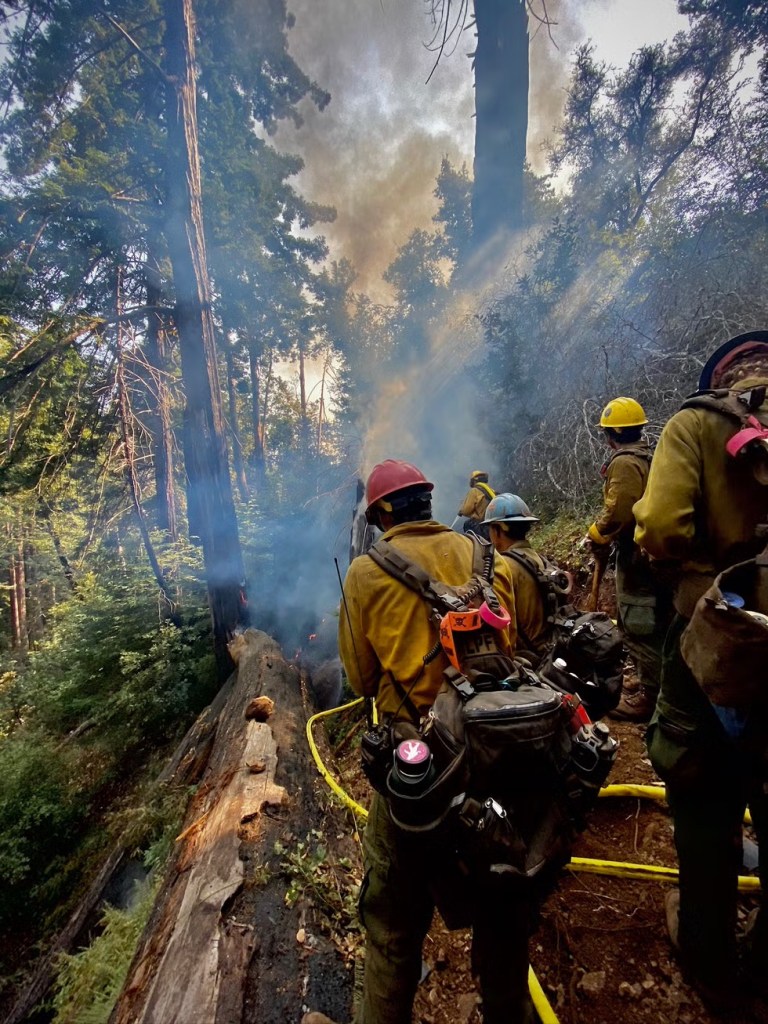
What do you want people to take away from this book? The first — and I think a lot of people in California already have this intuition — is that wildfires aren’t natural disasters. They are products of a series of choices that have been made by powerful people through time that we’re dealing with today. And the future of them will be dictated by the decisions we make now, largely politically, in terms of how we regulate the fossil fuel industry and roll out renewable energy to get a handle on climate change.
The second is forest management. It is largely a labor issue, and I try to emphasize that in California, it is more or less a euphemism for controlled burning because so much of California needs fire. And what does controlled burning actually take? It takes people with the skills and expertise to do it. Across California around half the land is federal, so it really requires the federal government to invest in the labor — the people — to carry out these sorts of projects.
You drive home the point that planes and helicopters, which get a lot of public attention, don’t put out fires; they just slow them down. It’s the crews who ultimately put them out. Yeah, everyone gets excited when the air support rolls out, but I think that prevents people from understanding the issue is more complicated, and to get the upper hand [on wildfires], it will take providing better health care and compensation for these federal workers because, at the end of the day, they are the ones who are controlling these fires.
Why isn’t there more bipartisan legislation — or at least recognition — for this national need? Climate change is moving so fast it’s hard to keep up. The current job descriptions for hotshots and other wildland firefighters — hours, pay, benefits — were written in the 1980s. And it is widely accepted that we are living on a different planet than we were in the 1980s. You might encounter one megafire in your entire career back in 1980, but we fought four in 2021. And now there are million-acre fires.
There is also a pervasive right-wing opposition to public land that has persisted since the foundation of the United States Forest Service. There are powerful lobbying groups that benefit from the privatization of public land — or at least from that land being under-resourced — so that its management is contracted out, which opens up opportunities for extraction. One of the ways you do that is by opposing support for public land, which means opposing support for the public servants working on public land. There are a couple key Republican politicians involved in this, among them Congressmember Tom McClintock from California.
The same Tom McClintock from your book who voted against a living wage and affordable healthcare for hotshots, arguing “Wildland firefighting is hot, miserable work, but it is not skilled labor”? Precisely. And this feeds into one of my big objectives of the book, which is reimagining what we consider to be technology worth investing in.
It’s becoming extremely difficult to keep hotshot crews fully staffed. Wildland firefighting across the United States is less than 75 percent right now because of all the uncertainty with DOGE and the administration cutting funds in the name of efficiency.
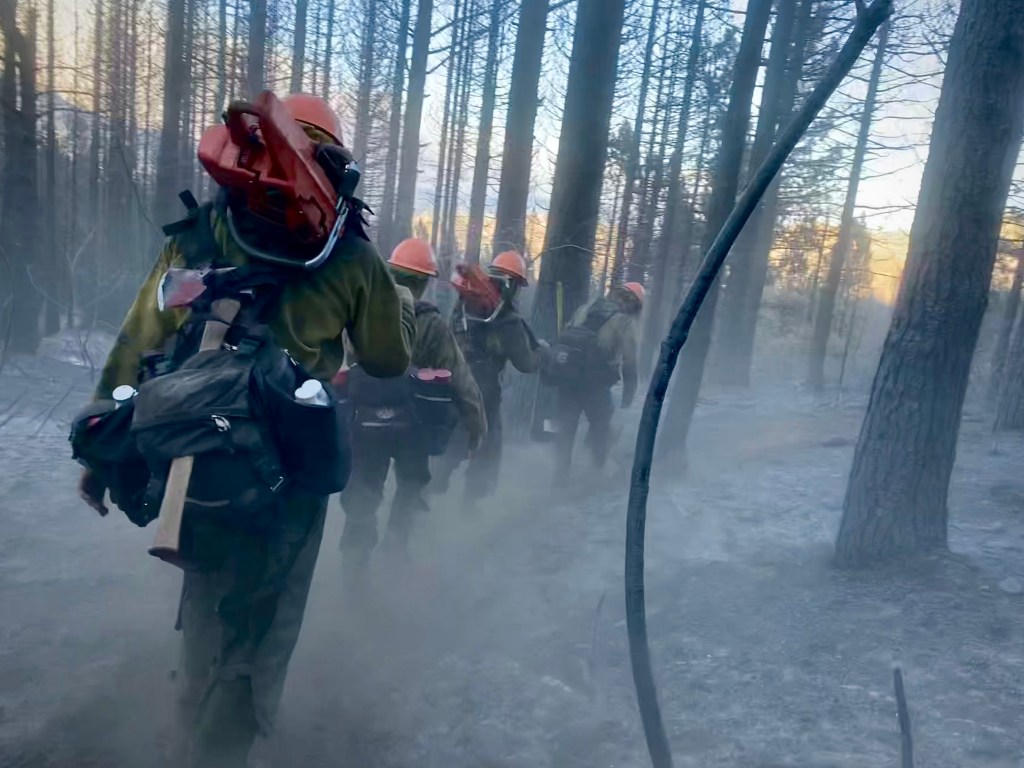
How long do hotshots typically last in the field? It’s changed with the slipping of compensation, as fire conditions have grown more extreme, and as jobs for the Forest Service have grown less competitive than jobs for Cal Fire and municipal fire departments. Before climate change started galloping along, people would stay in for five or 10 years to really gain that expertise. Nowadays a lot of time people only last one or two because it’s such brutal work for very low pay.
Talk to me about the cool reception you received from some communities who used to welcome U.S. Forest Service hotshots with open arms. It’s something that was happening in real time while I was on the crew. There was this shift all of the sudden where public agencies that have historically been viewed with a lot of trust, like the CDC, started being seen with so much skepticism. It’s really difficult for me to wrap my head around — dismantling different institutions of the federal government by sowing public mistrust, making them less effective, which justifies defunding them even more, and so on.
With the current administration, we’re seeing these policies very starkly, but they’ve been building since the Reagan movement in the 1980s with the deregulation of industry, the beginning of the gutting of the public sector, and the erosion of guardrails between the public sector, public policy, and transnational corporations.
One of the things I was trying to express what I was feeling on the fire line, which is that this shit is not abstract. Climate change is not some distant thing. People are feeling the effects right now. People are dying.
Somehow the fossil fuel industry and its political supporters have created this fake machismo around fossil fuels when, really, I can’t imagine anything more cowardly than supporting such a backward industry fueled by a couple billionaires at the expense of hardworking people on the fire line.
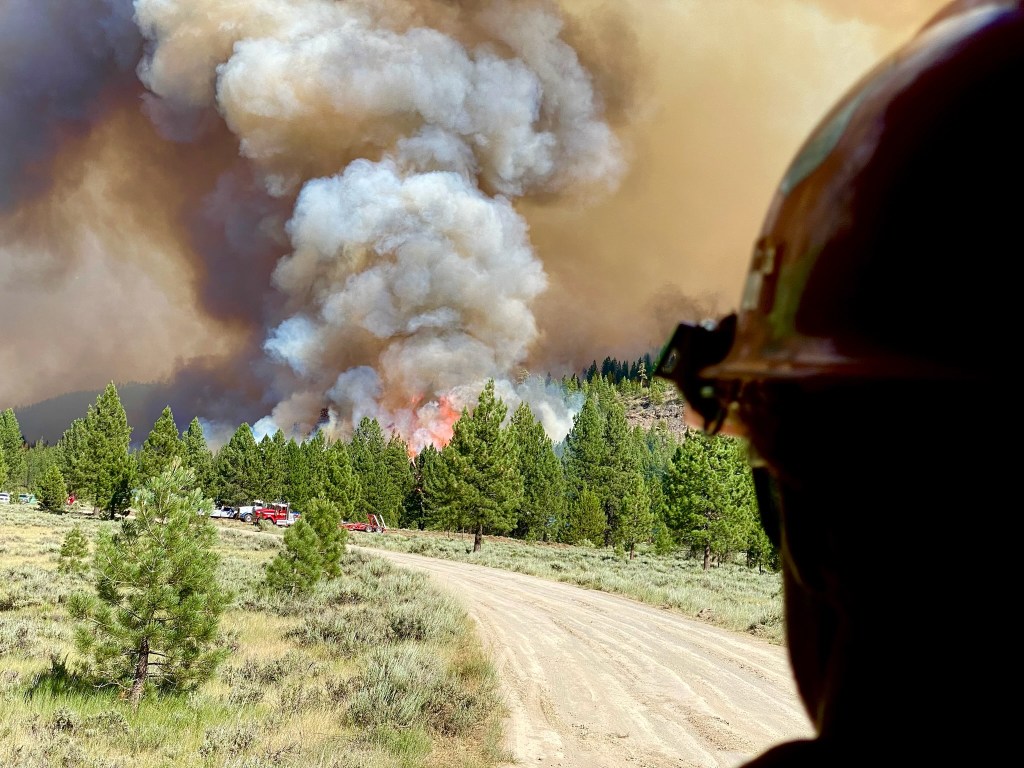
Did you think the Palisades and Eaton fires would perhaps spark more of these conversations? [Conversation] is great when you have a solid grasp of facts, but I think that also makes wildfires really prone to misinformation. Those fires were such a wild example of that because Trump was blaming water policies and Elon Musk was blaming DEI initiatives because the L.A. fire chief was a queer woman. It was a whole other level of cynicism.
And what does this all do at the end of the day? It keeps people from talking about climate change. It keeps people from talking about the fact that so many of the firefighters in there didn’t even have respirators or masks, they didn’t have health care, and they were breathing toxic urban fumes.
Your crew was pretty diverse in terms of race, upbringing, and political affiliation. What are some common characteristics among hotshots? It’s often assumed to be a high-end adrenaline job that attracts people who are addicted to risk. But when you actually get in these spaces, you see that there’s a lot of value placed on the opposite. You don’t want to be around risk takers or adrenaline junkies. You want to be around people who are really clear-eyed and lead you into the least dangerous situations. The danger is more of a constant background noise that goes up and down, but the adrenaline spike is relatively rare, and it should be, because those are the positions you don’t want to be in.

It is very much a lifestyle, and you have to be committed to that lifestyle. It’s the ability to handle pain and work through it and maintain your commitment. You also need a sense of humor. It’s a way of dealing with the discomfort. I don’t think I’ve ever laughed so much as I did with the hotshots. There’s a real levity that comes with being with such a tight-knit group of people.
Do you ever think about rejoining the Los Padres crew? I wouldn’t say I’m actually considering it. I scratch that itch by keeping my certifications up and helping with prescribed burns. There’s a whole subculture of former fire suppression workers, former wildland firefighters, who are using the skills and knowledge that they gained on the fire line to, as people like to say, get on the “good side” of fire. I’m living in Boston now, so I’m getting to know fire in the northeast and getting involved with initiatives to put more fire on the ground. It’s hard to get away from fire. Once you’ve been around it a lot, it kind of attaches itself to you.
What was your biggest “aha” moment when researching the book? What really stood out to me is the information that’s in the public sphere about the origins of fire suppression. It’s usually talked about as a century of mismanagement by the Forest Service, starting in 1905 with its foundation.
That narrative erases the entire century and a half that preceded it in which fire suppression was occurring through the oppression of indigenous people. It wasn’t just some quirk or mistake that the Forest Service made. By the time the agency was founded, most fires had already been extinguished because they’d been criminalized, because indigenous people were lighting most of the fires in the American West. That narrative also short-circuits people’s imaginations for how we can safely bring fire back to California’s landscapes.
Prescribed burns often involve a whole mess of stakeholders. How do you get everyone on the same page? Right, there’s different interests and different approaches. State agencies like Cal Fire often burn to reduce fuel to reduce wildfire risk, while burns that are being led by California’s tribal people are often based on what ecosystems they want to cultivate, what plants they want to emerge. They’re often less concerned with scale than with ecological and cultural outcomes.
The very first fire regulations in the American West were instituted in Santa Barbara County in 1793 or 1794, when the first Spanish governor criminalized Chumash burning. So, fire has really been extinguished in Santa Barbara perhaps longer than anywhere else in the state, which makes it hard to tap into generational knowledge the way you can in Northern California, where colonialism came over a century later.
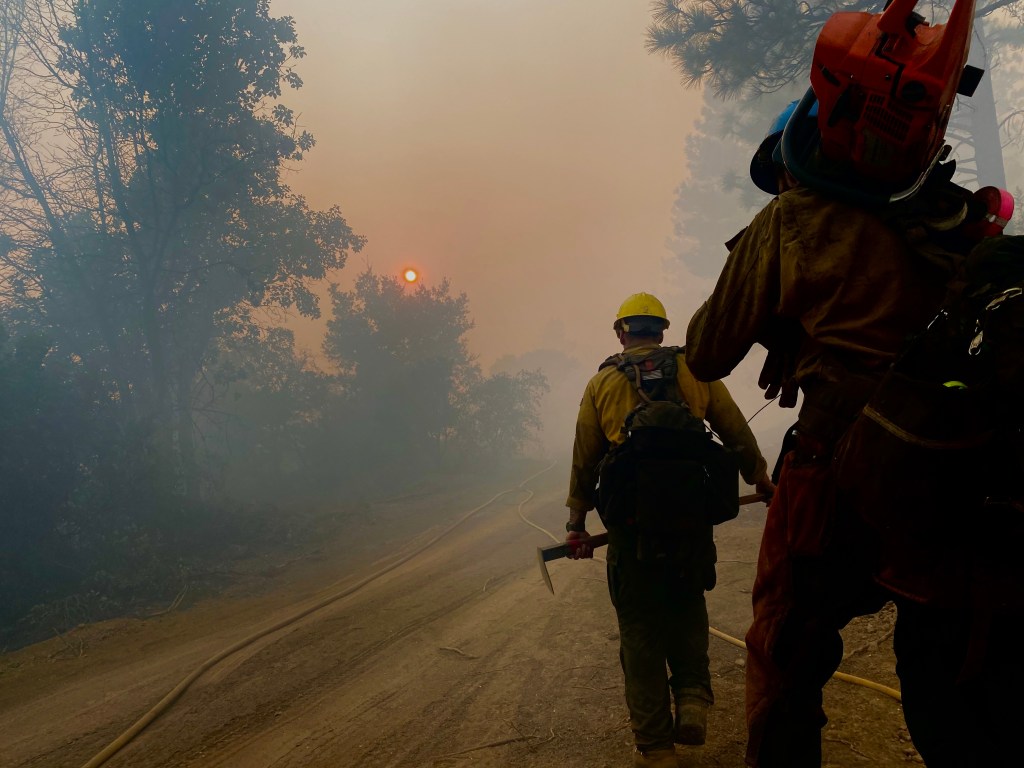
From your experience all over the state, how are we doing in Santa Barbara County in terms of collaborating for controlled burns? The Chumash Good Fire Project is a great initiative. I was also very impressed by the ranchers. Regulations in the 1980s made it much more difficult for them to burn, but they are really active and making a lot of effort.
I was also really impressed by Santa Barbara County public officials — their understanding of fire, commitment to be involved in prescribed burns, and their real attempts to get fire on the ground, sometimes in spite of the gripes of constituents.
I was also encouraged by the public. I encountered very few people who are against prescribed burns. It seems to be widely understood in Santa Barbara that they are desirable and necessary.
The major issue in Santa Barbara County is viticulture and grape taint from smoke. It’s been a huge point of conflict. At this point the people involved with wine and the people involved with fire are so mad at each other that it’s really hard to even get them in the same room, let alone come together for a prescribed burn. There’s a lot of mistrust, and I think it’ll take some real humility on both sides to overcome that and figure out a way to give Santa Barbara County the kinds of fire it needs, while respecting the economic needs of everybody else, including the vineyards.
Where do you find signs of hope? I think you find hope where you find action — real, legitimate hope, not naive optimism. It takes time to give these landscapes the kinds of fire that they need, which requires a couple of things. It takes an understanding of the ecosystems, but it also takes conversations with all the different people living in these landscapes — what they want and what they need. And that brings people together, physically and socially, and causes them to communicate. I know that sounds really basic, but it’s fundamental.

The following is an excerpt from
When It All Burns
One afternoon in September 2021, as a megafire burned through Sequoia National Forest, my hotshot crew marched into a grove of its ancient trees. In the crisp air of high country, the sounds of creaking wood and swishing pine muted our footsteps. Sequoias towered through the smoke. Their canopy closed hundreds of feet above. We moved between trunks the size of cabins, the bark grooved and red. Small squads dropped off from our crew of twenty, spreading along the ridge to prepare for the megafire hurtling toward us.
My own group peeled off near the top of the ridge to await orders. After fighting this fire for the past week, my knees ached, my blisters stung, and my head hurt. I was tired. I knew the other hotshots felt the same. They were chewing tobacco and sharpening their tools — hybridized shovels, axes, and hoes with macho names: the Rogue, Pig, Chingadera. I set my chainsaw on the forest floor, removed my gloves, and, for the fifth time that day, pricked my thumb on the chain’s teeth to make sure they were sharp. The grove made me restless.
In the past two decades, wildfires have been doing things not even computer models can predict, environmental events that have scientists racking their brains for appropriately dystopian terminology: firenadoes, firestorms, gigafires, megafires. Scientists recently invented the term “megafire” to describe wildfires that behave in ways that would have been impossible just a generation ago, burning through winter, exploding in the night, and devastating landscapes historically impervious to incendiary destruction — like the sequoia groves of California. Sequoias are among the oldest organisms in existence, with fire-resistant bark several feet thick and crowns that can recover when 90 percent is scorched. They even rely on fire to reproduce, as flames crack their cones so seedlings can germinate. Now, the same ecological force they once depended upon is pushing them toward extinction.
Sequoias’ lives are monuments of deep time. Their death would signify something else. If we could not hold this ridge against the megafire, the sequoias would become the largest torches on earth, carrying flames higher than the Statue of Liberty. After three thousand years of life, they would become charred monuments to a passing era, symbols of a violent future. By holding the ridge, I felt we were holding back a new, altered world. As I waited on the fireline with ash in my lungs, I still hoped this was possible.
A figure appeared through the smoke, huffing toward us. I stood, worried our superintendent, Aoki, the leader of the Los Padres Hotshots, would catch us sitting. I relaxed when I recognized Jackson.
“Jack!” someone called.
“What’s the word?” another asked.
“Fellas,” Jack greeted us, loosening his pack to catch his breath. His face and beard were caked in dirt. “Cancel your plans, boys. We’re gonna be up all night.” Word had traveled down the chain of command that we were going to burn our line that evening.
We had spent six days building that line, working from sunrise to sunset, cutting a path through brush and hills, up a mountain ridge into high timber and finally to an old logging road. Wildfires cannot burn without fuel-grass, bushes, and trees — and our line formed a fuel break, a continuous barrier of dirt that snaked around the mega-fire. When the conditions were right, we would set fire to its edges. The flames we lit would move toward the megafire and consume the fuel in its path. This is the fireline — a dirt band that holds fire back from the world.
Now, we only had a few hours before the megafire would hit us — a few hours to finish the line and set fire to the ridge.
“It’s gonna be a shitty burn,” Jack relayed. “We’ll be chasing spot fires all night.”
I asked if we had any safety zones, defensible spaces like meadows where we could survive if the fire got out of control.
Jack hedged, chewing the corner of his mustache. “There’re some bulldozers trying to plow one near the peak,” he said. “The thing is, we’ll be going downhill. So, if this thing gets away from us, we’ll need to run to our vehicles and get out of here.”
“It’s a forty-five-minute drive out of the forest,” I noted.
“Yeah, hopefully we’ll get out.”
A radio crackled. Through the static came a gruff voice. Márlon was reporting from his lookout position. “The fire seems a little more extreme,” he said. “Three-hundred-foot flames coming at us.”
Aoki’s laughter cut into the radio traffic. “Hoookay! Let’s get the rest of the line pushed through and get that burn goin’. ”
My group huddled in the trees in smoke and radio silence. We didn’t know where Aoki was or who he was telling to push the line. We often joked that he was a mountain spirit. Tall and willow thin, with black hair that fell to the small of his back, he moved with the smoke, drifting and reappearing through the trees. Aoki had turned fifty that season and was widely considered the most experienced hotshot in California — a state that claims the most skilled firefighters globally.
Now, the megafire was throwing embers ahead of its advance, starting smaller fires, spot fires, like raiding parties for an approaching army. Axel, a squad boss, called us toward one that was smoking in the valley below. If we let it grow, it would rush up and cross our line, igniting the forest behind us and trapping us in the path of the megafire. “If the fire gets behind us,” Axel said, “we’re fucked.”
Scrambling down loose rocks into the valley, we followed Axel’s shout and found the spot fire. It had grown to the size of a football field. We cut around it, choked with smoke. In the ringing silence that follows a chainsaw’s scream, I realized that the silence was becoming a roar, and the roar came from the megafire. It was close.
The dark understory of the forest began to glow, a vibration emanating from its depths, rising to the sound of a jet engine. The treetops groaned with wind created by the force of the megafire.
On the fireline, I rarely felt adrenaline. I experienced danger more as a pressure, a weight that never fully disappeared. As the danger grew, so did the weight. With the megafire roaring through the trees, I’d dropped my chainsaw and begun filing the saw’s teeth to new points. Now, the chainsaw shook in my hands.
“Listen.” Axel cocked his head with wild eyes and a feral grin.
“You hear it? Let’s get out of here.”
Axel led our escape, men sweating as the moon rose like a counterweight to the setting sun. A radio crackled, Aoki warning that the fireline was no longer safe and we should hurry down the ridge to our vehicles. I shouted to Axel, several headlamps ahead, that we were throwing away the past week of work. “It’s part of the job,” Axel replied. “You’ll get used to it.” His reply evoked a hotshot adage: You learn to let go of hope, or you get crushed.
As we walked, our headlamps cast beams through clouds of smoke and dust, illuminating the trees around us like pillars supporting another world. Forced to retreat, I felt like we were abandoning that world. Just before reaching our vehicles, I stopped to look back at the megafire. It was a billowing column of shadow and light. Briefly, I doubted what I’d seen: through a gap in the trees, a lone flame rose and flickered above the rest.
Only a sequoia — a tree that had coexisted with fire for millennia — could carry flames so high.




You must be logged in to post a comment.