
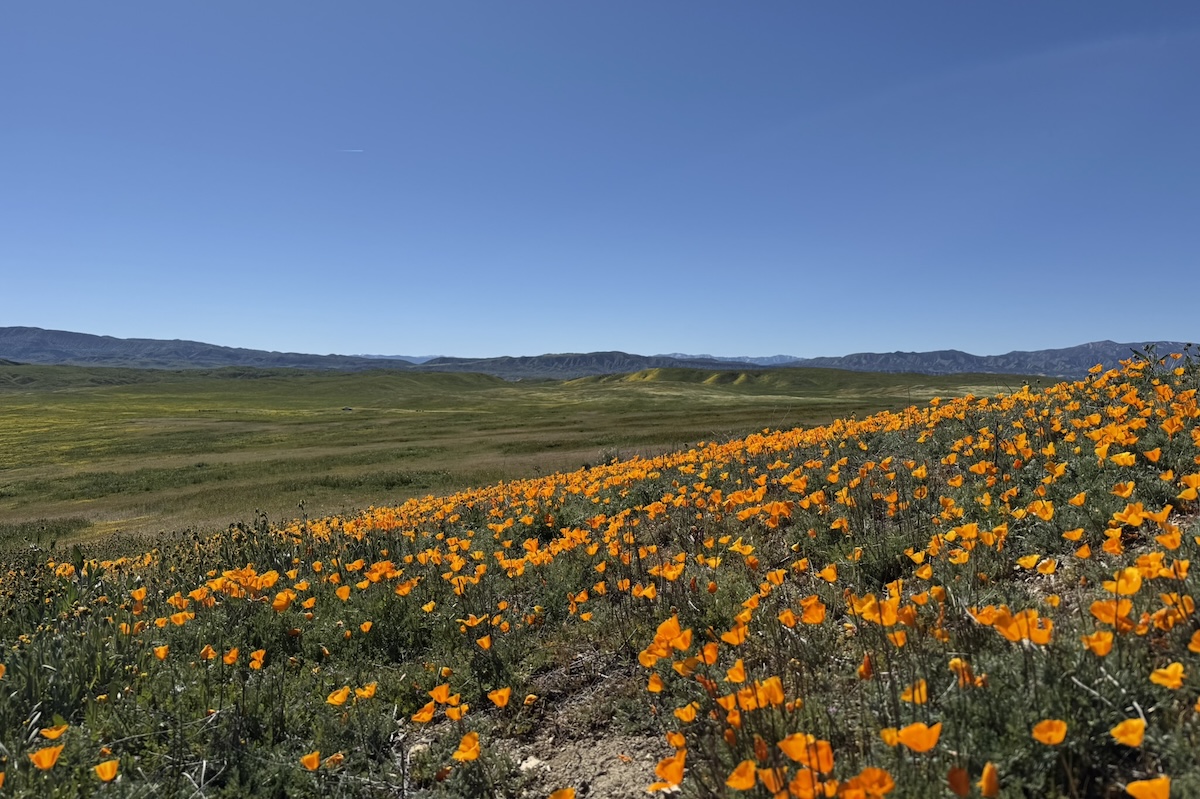
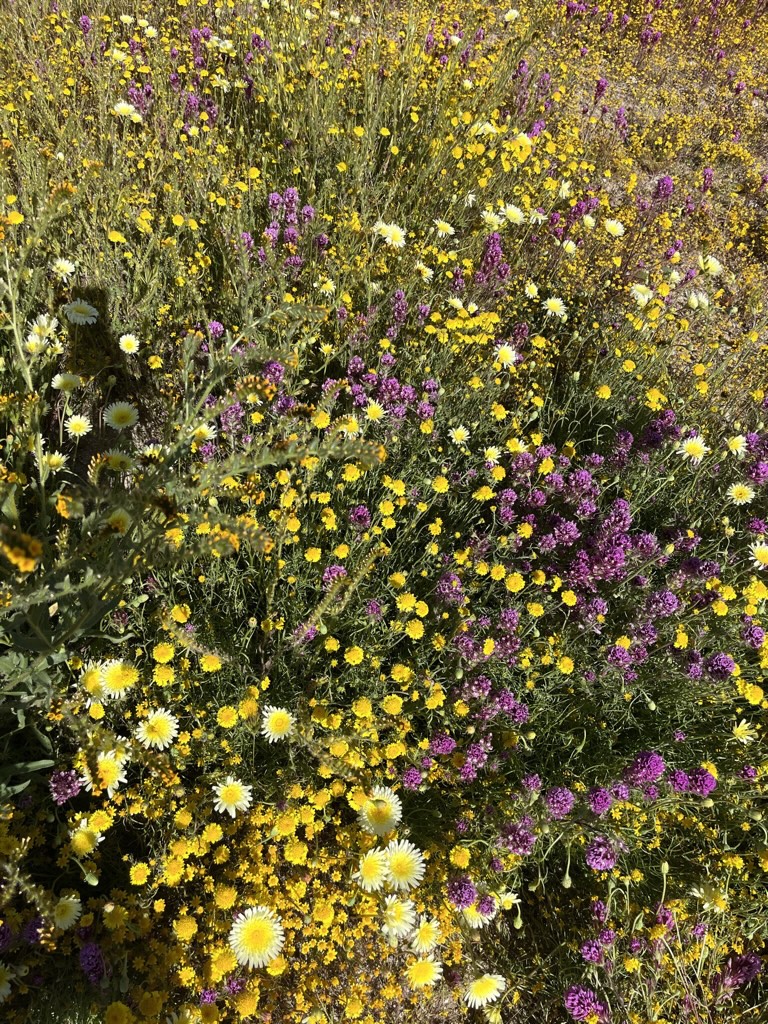
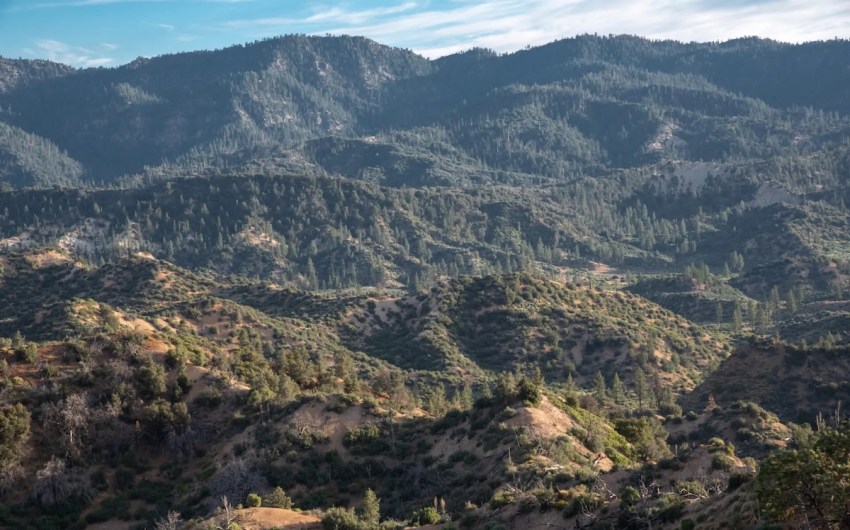
After a wet January and February, Carrizo Plain National Monument has entered bloom — the rare kind that earns the prefix “super.”
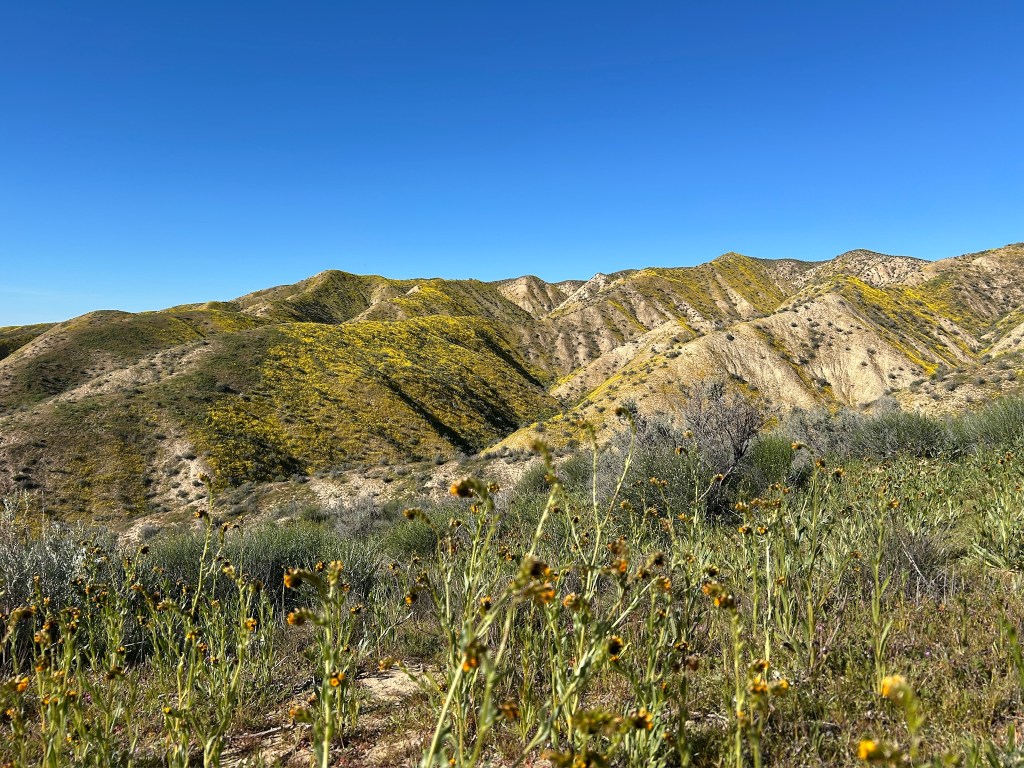
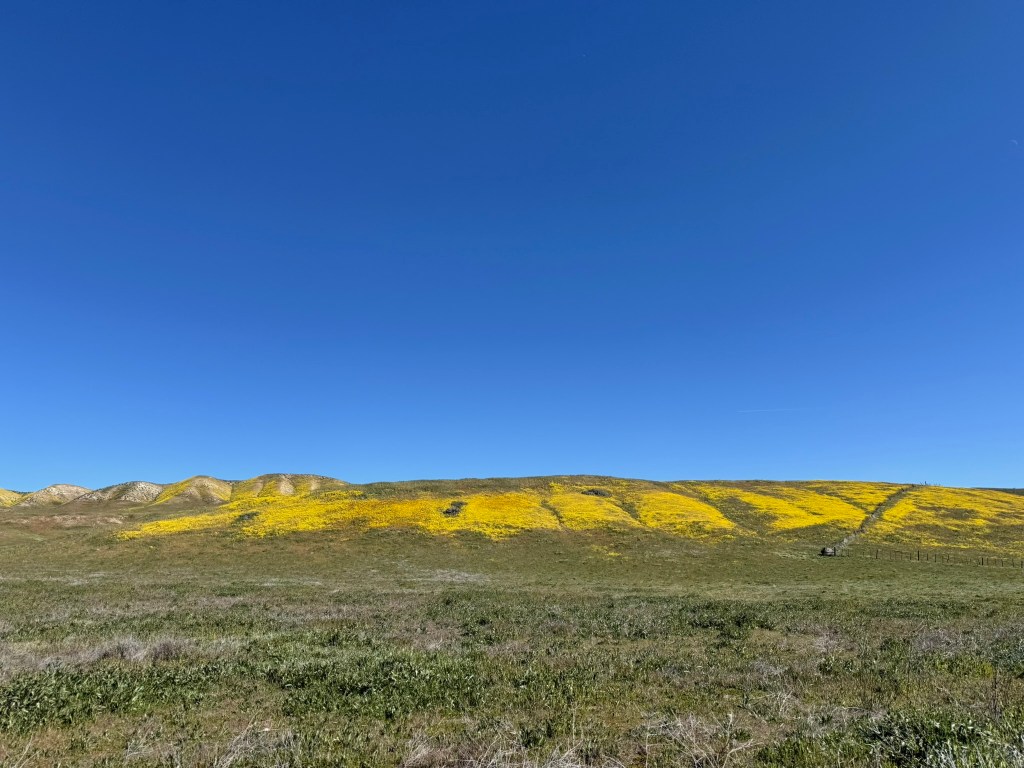
The mountain ranges have been flowering for weeks. The valley floor has begun to follow. And if the weather holds, the display could stretch into early April.
“The Carrizo Plain is in full bloom,” the Bureau of Land Management (BLM) confirmed in a written response. “This year, the flowers started early due to the abundant winter rains. The mountain ranges have been in bloom for about three weeks.”
Superblooms — episodic events that historically appear once every decade or more when significant autumn and winter rainfall is followed by mild temperatures and low wind — are not guaranteed. Carrizo experienced one in 2023. This year’s conditions have again aligned.
UC Santa Barbara senior Marina Pedemonte described her recent trip to the region succinctly: “It was so beautiful, it looked fake the whole time.”
The Bureau of Land Management is preparing for crowds that the colorful hills will inevitably attract. Parking lots can fill by 7 a.m. on weekends. Roads are largely dirt and can become impassable after storms. There are no services — no fuel, no water, no cell reliability — within 70 miles.
“We ask visitors to stay on trails, do not pick the flowers, respect private property, and be sure to be prepared,” the agency said. Temporary fencing has been installed in restoration areas, and satellite kiosks are being deployed to manage visitor flow.
The bloom arrives amid renewed federal discussion over the disposition of public lands.
The Senate version of President Trump’s “One Big Beautiful Bill” includes language that could mandate the sale of up to three million acres of federally managed public land across 11 western states. National parks and national monuments are excluded from direct sale under the current proposal. Adjacent Bureau of Land Management lands, which carry fewer statutory protections, could be eligible.
The broader debate also includes the pending confirmation of Steve Pearce, President Trump’s nominee to lead the Bureau of Land Management. Pearce has previously supported efforts to privatize federal lands and expand drilling, though he recently told lawmakers he would not seek to sell “large swaths” of public lands if confirmed.
As for Carrizo Plain National Monument specifically, Los Padres ForestWatch says it is protected from sale under the Presidential Proclamation that established it in 2021.
“All federal lands and interests in lands within the boundaries of this monument are hereby appropriated and withdrawn from all forms of entry, location, selection, sale, or leasing or other disposition under the public land laws …” the proclamation states.
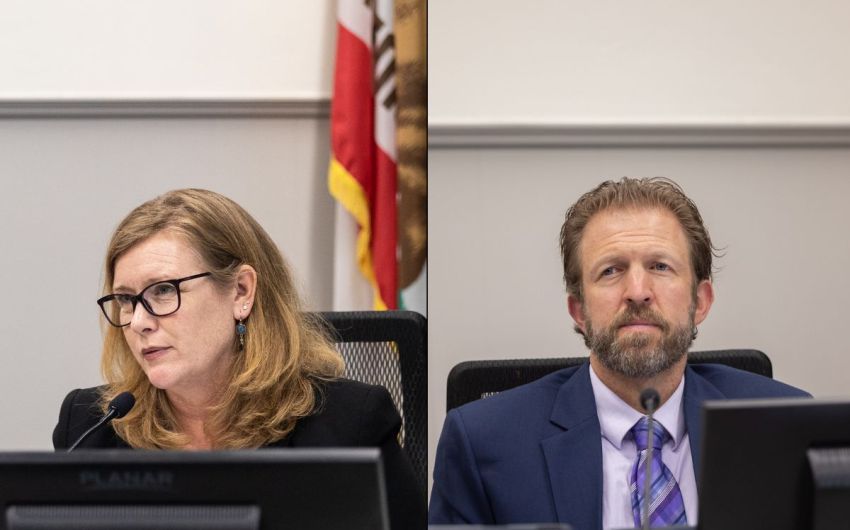
Still, Jeff Kuyper, executive director of Los Padres ForestWatch, cautioned that protection on paper does not eliminate political risk.
“This administration seems hell-bent on removing as many protections as possible from our public lands, whether it’s legal or not,” Kuyper said. “The monument review process has not been transparent, so the public is left in the dark as to which specific areas are being targeted and what mechanism will be used to weaken or eliminate them.”
Kuyper said that, while a direct sale of monument land is unlikely under current law, potential “boundary adjustment or weakening of the area’s management plan” could alter protections.
“One thing is certain: If there is any tinkering with the protections the Carrizo has enjoyed for the past 25 years, ForestWatch and our community and tribal allies will be there to defend it with all our might,” he said.
The Bureau of Land Management emphasized that the monument remains protected under both the Antiquities Act and the Federal Land Policy and Management Act, which “requires public lands remain in federal ownership unless Congress explicitly determines otherwise.”
“Visitors can be assured the BLM continues to manage the natural and cultural resources of the monument for the benefit of present and future generations,” the agency said.







You must be logged in to post a comment.