
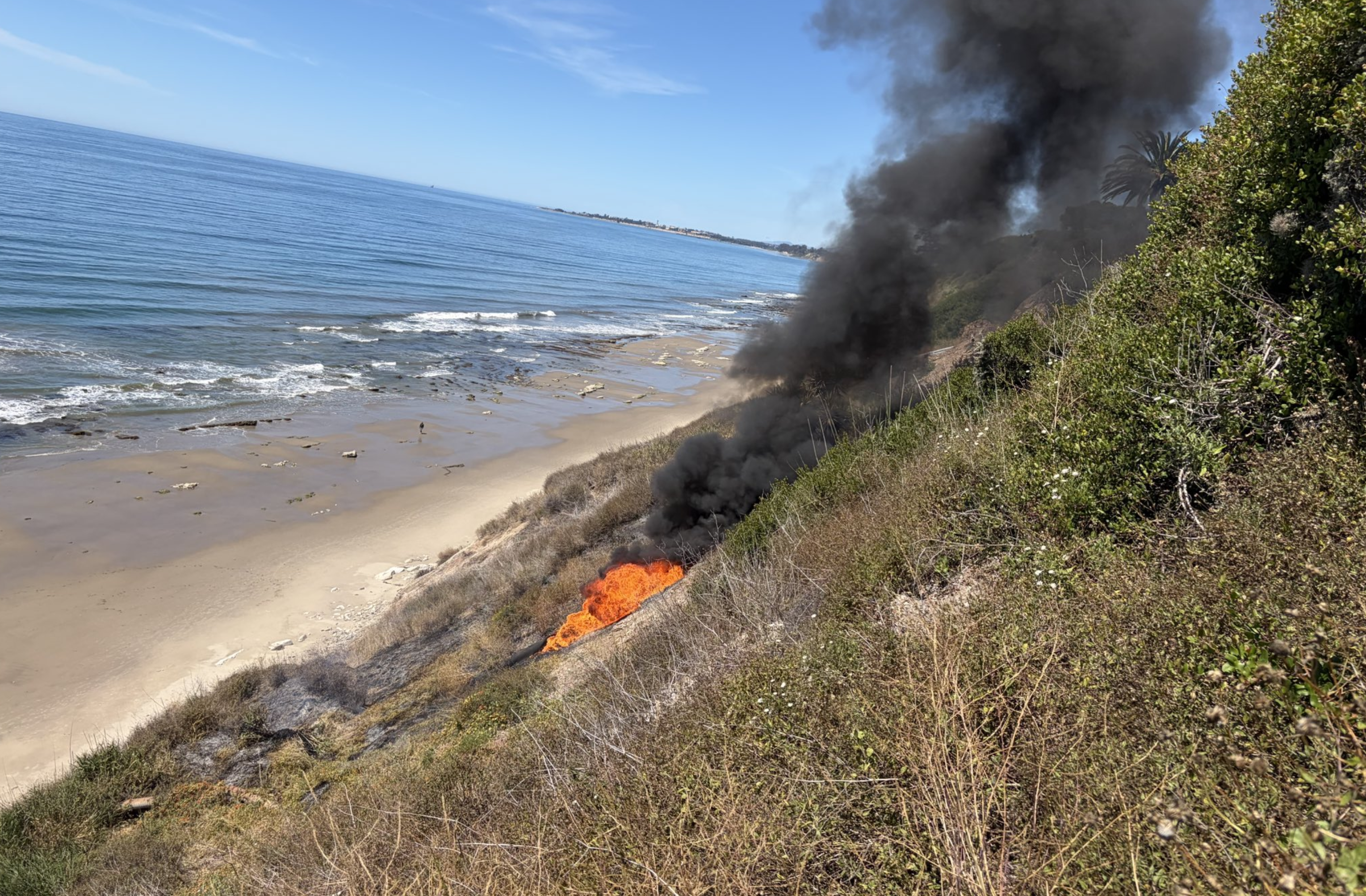
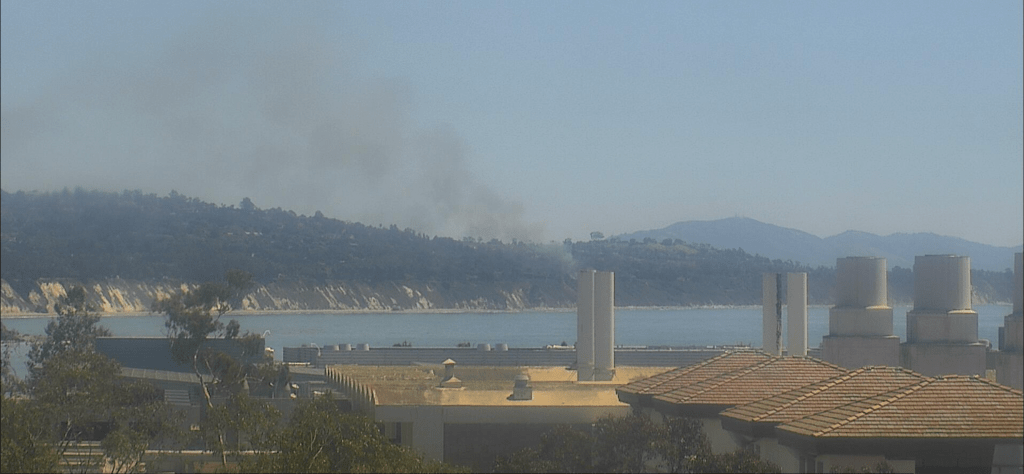
Plumes of smoke rising from the cliffs near Hope Ranch on Thursday prompted a response from local fire crews — and renewed confusion over what many residents refer to as the “Hope Ranch volcano.”
For the record: There are no volcanoes in Santa Barbara County.
What does exist is a recurring geological phenomenon along the bluffs, one that firefighters say typically requires little intervention.
“It’s something I’ve always just accepted as the Hope Ranch volcano,” said Santa Barbara County Fire spokesperson Michael Gray. “We monitor it until it stops.”
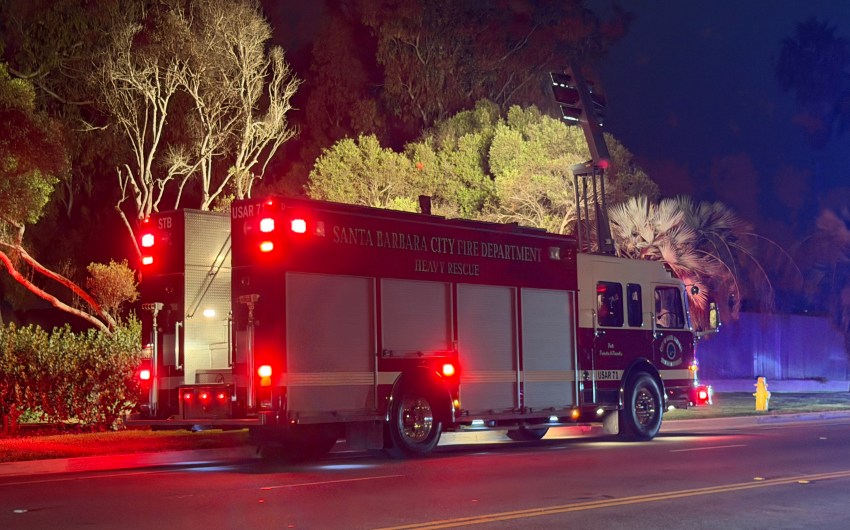
Crews were called to the area after smoke was reported near the cliffs. A fire engine and battalion chief responded and remained on scene to assess risk to nearby vegetation. Gray said the incident may have involved damage to underground drainage pipes, though crews are still working to confirm.
“A lot of times the locals know about it and don’t even call 9-1-1,” Gray said.

[Click to expand] A video shared by David Sabey shows the source of Thursday’s smoke: a smoldering fire burning through an underground PVC drainage pipe embedded in the cliffside. According to a social media post by Santa Barbara County Fire, crews quickly stopped forward progress and remained on scene working to fully extinguish the burn. No structures were threatened, though smoke lingered in the immediate area.
| Credit: David Sabey
When the Santa Barbara Independent last covered the so-called “Hope Ranch Volcano” in 2021, it had sparked a small vegetation fire along the same stretch of bluffs — and had done so in 2020, 2019, and 2017 as well.
Despite the nickname, the smoking cliffs are not volcanic. Previous reporting by Jean Yamamura identified the phenomenon as a form of spontaneous combustion linked to the region’s geology — not magma.
According to research from Jim Boles, the cliffs contain layers of iron sulfides and hydrocarbons. When landslides or erosion expose those materials to oxygen, a chemical reaction generates heat. Under the right conditions, that heat can build to the point of ignition, producing smoke — and occasionally small brush fires.
The phenomenon is sometimes described as a “solfatara,” a term for vents that emit sulfurous gases and steam. But even that label is not entirely accurate here, geologists say, as the activity is driven by surface-level chemical reactions rather than deeper geothermal processes.
As of Thursday afternoon, crews were continuing to monitor the site. No evacuations or structural threats had been reported.







You must be logged in to post a comment.