


When you think of films such as Kill Bill or Pulp Fiction, director Quentin Tarantino likely comes to mind — as does actress Uma Thurman. What about La La Land? Well, that’s Emma Stone and Ryan Gosling. And The Royal Tenenbaums? That’s Wes Anderson, of course.
Unless you’re especially versed in the film world, it’s unlikely the names that David Wasco and Sandy Reynolds-Wasco sprang to mind at the mention of these titles. And yet, in watching them, you’ve experienced their work.
The since-retired and married duo — production designer David and set decorator Sandy — have shaped the visual worlds of more than 40 feature films, including those mentioned above, crafting the spaces that give these stories texture, mood, and meaning.
Even after being in the industry for four decades, David and Sandy, Santa Barbara residents since 2012, say that they’re still surprised by how little most audiences understand about their roles — a gap they hope to close with their exhibit in the new SBIFF McHurley Film Center, which chronicles their work on La La Land, the film that landed them the 2017 Oscar for Best Achievement in Production Design.
Lining up with the film’s 10th anniversary, the exhibit, which is open to the public, is designed to show visitors how the world of La La Land was created by the film’s art department, step by step, from early ideas to the images you see on screen.

David and Sandy brought the exhibit to life with the help of Justin Huntsman, who handled construction; James Hapke and Pecos Pryor, who are in charge of installations at UCSB’s Art, Design and Architecture Museum on campus; and Installation Art Director Patricia Peter.
As you walk through the corridor, you’re essentially walking through the movie’s design process. Along the walls, the exhibit presents director Damien Chazelle’s original lookbook and early visual references, which outline the tone, color, and atmosphere he imagined for the film. These are paired with location photographs from around Los Angeles and the surrounding areas, showing the real-world places that inspired the film’s settings. Next to them are concept sketches and watercolor renderings that translate those ideas into stylized, cinematic spaces.

Further along, the display moves into more technical art department materials: drafting, refined illustrations, and stepbystep design boards that reveal how sets and key sequences evolved over time. A highlight is a smaller version of the huge painted backdrop from the film’s epilogue, surrounded by the artwork that led to its final form.
Taken together, the exhibit doesn’t just celebrate La La Land; it teaches viewers what production design is and how a team of artists quietly works in the shadows, building the world a story lives in.
“We’re supposed to remain in the background and be quiet,” said David. “Not overwhelming the story or the actors, just helping them do their job.”

For La La Land, they had roughly a year to put together what the world would look like, which was much longer than the usual eight to 10 weeks. That extended timeline gave them the chance to fully capture the spirit of the film, they say, and ultimately contributed to their Oscar win. “We captured L.A. so much so that the mayor designated April 21 asLa La Land Day,” David joked.
While David handles everything big-picture, Sandy’s role focuses on the psychological and storytelling layers. After the construction of the interiors, she brings in the furniture, artwork, objects, and details that peel back a character’s layers, working with the prop master so that everything surrounding the actors, even what they hold in their hands, provides subtle, subliminal story cues.
As Sandy put it, “You’ll be able to really explain what this person does by what’s in [their] office.”

On designing Mia and Sebastian’s spaces in La La Land, Sandy enjoyed exploring the two worlds of the main characters. Sebastian’s world was “masculine, more simple, more authentic,” she says. And Mia’s, “much more dreamy — that was a really fun contrast to develop.”
Mia’s and Sebastian’s apartments may seem insignificant to the plot, but David and Sandy point out that these spaces are essential to understanding the characters. “When an audience is sitting and looking at the image, there are these subliminal things that will help tell the story,” said David.
After our call, I found myself playing a game of I Spy, scanning my own space: the Polaroids on my refrigerator, the Post-It note taped to my computer with my grocery list from three weeks ago, and the random rock I found one day at the beach that sits under the window above my bathroom sink.
It’s those things, said David, those “weird little things.”
David and Sandy Wasco’s exhibit is free and open to the public at SBIFF’s McHurley Film Center (916 State St.). For more information, see sbifftheatres.com.


Related Posts

Premier Events
Fri, Sep 11
2:00 PM
Santa Barbara
Music & Meditation SB with Robert DeMaine, cello
Thu, Sep 03
5:00 PM
Santa Barbara
Seimandi & Leprieur: “Another Room” — Opening Reception & Live Music
Sat, Sep 05
10:00 AM
Santa Barbara
Raíces y Sueño: Día de los Abuelos

Sat, Sep 05
10:00 AM
Santa Barbara
SBJH and NITE LIFE Car Club Lowrider Car Show
Sat, Sep 05
10:00 AM
Carpinteria
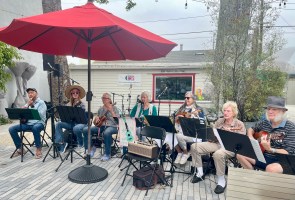
Carpinteria Arts & Crafts Faire

Sat, Sep 05
11:00 AM
Solvang
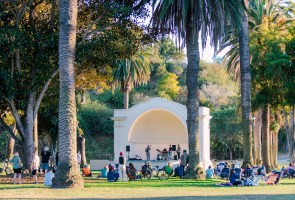
Dog Man’s Viking Pawty!
Sat, Sep 05
4:00 PM
Santa Barbara
Salty Strings at the Band Shell
Sat, Sep 05
7:00 PM
Santa Barbara
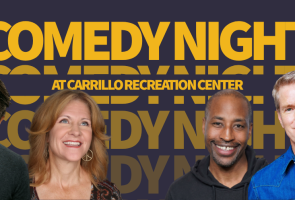
Comedy Night at Carrillo Recreation Center
Sat, Sep 05
7:00 PM
Santa Barbara
Comedy Night at Carrillo Recreation Center
Mon, Sep 07
12:00 PM
93103, Santa Barbara, CA
Daytime Disco with DJ Darla Bea

Mon, Sep 07
7:30 PM
Santa Barbara
SB Acoustic Presents: Transatlantic Guitar Trio at SOhO
Fri, Sep 11 2:00 PM
Santa Barbara
Music & Meditation SB with Robert DeMaine, cello
Thu, Sep 03 5:00 PM
Santa Barbara
Seimandi & Leprieur: “Another Room” — Opening Reception & Live Music
Sat, Sep 05 10:00 AM
Santa Barbara
Raíces y Sueño: Día de los Abuelos
Sat, Sep 05 10:00 AM
Santa Barbara
SBJH and NITE LIFE Car Club Lowrider Car Show
Sat, Sep 05 10:00 AM
Carpinteria
Carpinteria Arts & Crafts Faire
Sat, Sep 05 11:00 AM
Solvang
Dog Man’s Viking Pawty!
Sat, Sep 05 4:00 PM
Santa Barbara
Salty Strings at the Band Shell
Sat, Sep 05 7:00 PM
Santa Barbara
Comedy Night at Carrillo Recreation Center
Sat, Sep 05 7:00 PM
Santa Barbara
Comedy Night at Carrillo Recreation Center
Mon, Sep 07 12:00 PM
93103, Santa Barbara, CA
Daytime Disco with DJ Darla Bea
Mon, Sep 07 7:30 PM
Santa Barbara



You must be logged in to post a comment.