
The Once and Only Martha Graham
The Most Influential Choreographer of Modern Dance
Spent Her Formative Years Growing Up in Santa Barbara
By Eric P. Hvolboll | Photos by Imogen Cunningham
April 16, 2026
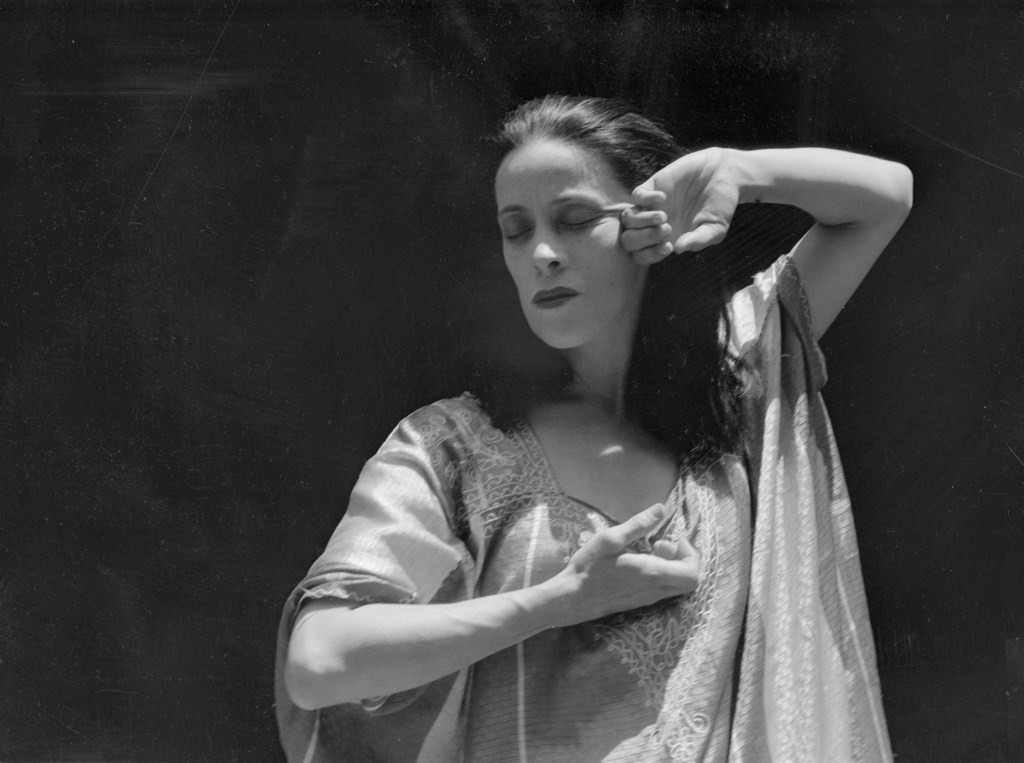
While the Santa Barbara region has long been home to many luminaries from the worlds of business, politics, music, science, sports, and entertainment, of those who have spent their formative years here, which individual has, after leaving Santa Barbara, made the most consequential impact on the world stage?
That person is, indisputably, Martha Graham, whom The New York Times once described as “the most honored figure in American dance — a prime revolutionary in the arts of the 20th century.”
This year marks the centennial of the Martha Graham Dance Company, and much is being written about her revolutionary impact on dance — how she freed women from the confines of the toe shoe, how she took to the stage in bare feet, and how the beauty of her work is based on what she described as a “grace in faith, faith in life, in love, in people, in the act of dancing.”
But it wasn’t until I was a student at Santa Barbara High School in the 1970s that I first learned of Martha Graham. My grandmother, who graduated from “The” high school in 1912, often told me how proud she was to have been a classmate and acquaintance of “the dancer Martha Graham.” But it took some years before I truly appreciated why my grandmother’s girlhood friendship was so important to her, and why Martha Graham stands as such a monumental figure in the world of dance today.
A Place of Light
Graham was 14 when she arrived in Santa Barbara from Pittsburgh in 1908. Her parents had moved west for cleaner air, as many East Coast families had done during that time, perhaps because of her younger sister’s asthma.
Martha Graham later described how dramatic a change Santa Barbara was to her family: “Here there was to be no coal, no afternoon darkness … no veil of soot to cover our home,” Graham wrote.
She described her early impressions of Santa Barbara as “a place of light and sun and air … a world of flowers, people with Spanish blood, a life completely different … it became a time of … freedom and curiosity. I was thrilled with it. California swung me in the direction of paganism, though years were to pass before I was fully emancipated.”
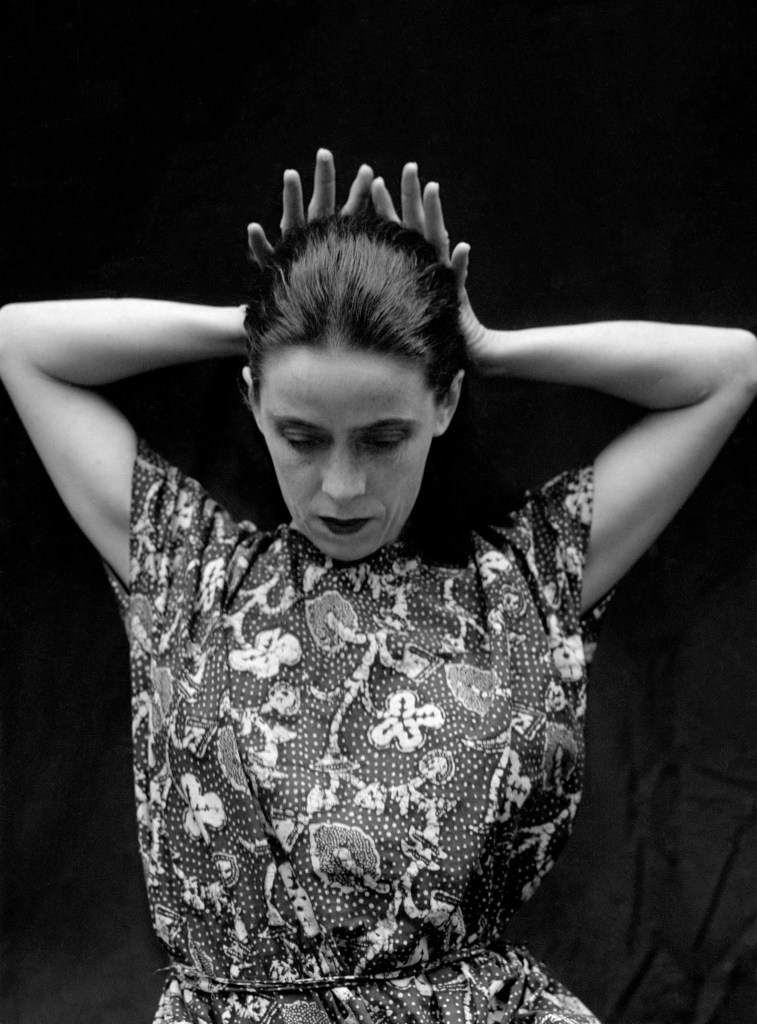
The Graham family first lived downtown, at 1633 Garden Street and later moved to 1323 De la Vina Street. In an interview as an adult, Graham described herself then as a “very difficult [child], the oldest and spoiled,” but she also said that it was here, in her early years, that she first became “interested in the drama of life.”
Her father, Dr. George Graham, a pioneer in the nascent field of psychiatry, came from a family of medical men. His grandfather had established a hospital in western Pennsylvania in the mid-19th century, and Dr. Graham worked there in its residential psychiatric facility as an “alienist,” as the early practitioners of psychiatry were then called.
Martha Graham attributed the genesis of her oft-quoted belief that “movement never lies” to evening conversations with her father about his patients’ involuntary bodily movements. After visiting with one of her father’s patients, Graham wrote, “Each of us tells our own story even without speaking.”
As a teenager, Graham and her friends swam and picnicked at the Santa Barbara beach below the Dibblee Estate (now City College): “… We could see the ocean and the dolphins … a living creature urging itself out of the living sea.”
Her family were Presbyterians, and she taught Sunday school at the nearby Presbyterian Church, though it was at the Unity Club at the Unitarian Church where she had her first invitation to a “young people’s dance.” Graham “learned to read for enjoyment in the one room library at Santa Barbara High School, then on De la Vina Street, [which had] an extraordinary female principal,” she wrote.
She characterized herself as “very shy and retiring in high school,” although she performed in plays, competed on the girls’ basketball team, and served as editor-in-chief of the Olive and Gold yearbook. Presaging a lifetime of positive reviews, Graham received an evaluation of her performance in her senior play as one of the aunts in Prunella, or Love in a Dutch Garden in that yearbook: “an artistic appreciation of proportion marked every moment of Miss Graham’s admirable work.”


[Click to zoom] Credit: © 2026 Imogen Cunningham Trust photos
My Fate Was Sealed
While still a student at Santa Barbara High, Graham was walking down State Street in 1911 with her father when she saw “a big poster” advertising a dance performance by Ruth St. Denis in Los Angeles. “[N]othing ever came to Santa Barbara in those days,” she said afterward, adding, “it was a little Spanish town…. I longed to go to the performance.”
That father/daughter stroll down State Street more than a century ago heralded revolutionary changes on the world’s dance stages that endure to this day.
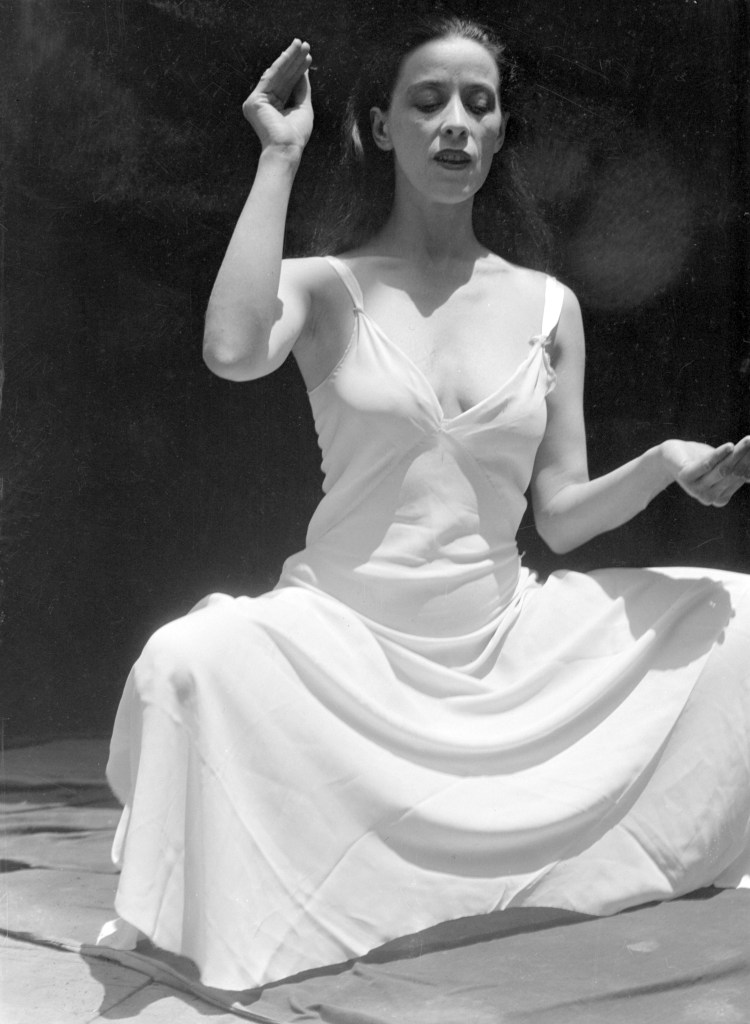
Her father agreed to take her to the performance at the Mason Opera House in Los Angeles, sailing by steamship, then a more genteel manner of travel than the train. “It was such a big event for me, [when I saw Ruth St. Denis] I knew I was going to get on that stage some way and I was going to be a dancer, good or bad…. I was transported … I just wanted to dance … from that moment on my fate was sealed … I couldn’t wait to get someplace where I could learn something.”
After her 1913 high school graduation, Graham went south to college at the women’s Cumnock School of Expression in Los Angeles, where dance classes were called “physical expression.” She graduated in 1916 and soon joined the Denishawn School of Dance recently organized by Ruth St. Denis. By then, Denishawn’s company was appearing in Santa Barbara and, in 1917, Graham performed a Javanese dance at the Peppers Estate on Hot Springs Road in Montecito.
After seven years with Denishawn, Graham felt it was time to find her own way, moving to New York City in 1923. She found work dancing for two years with the popular Greenwich Village Follies, but left in 1925 to create her “own dances” on her “own body.” Graham believed “if you followed what you believed to be beautiful, you would achieve what you were supposed to achieve.”
Martha Graham made her independent debut as a choreographer in April, 1926, at the 48th Street Theater in New York City, performing with her own troupe, The Martha Graham Dance Company.


[Click to zoom] Credit: © 2026 Imogen Cunningham Trust photos
One Hot August Day
One hundred years later, the Martha Graham Dance Company, the oldest dance troupe in the United States, is celebrating its centennial with a rigorous domestic and international tour schedule: GRAHAM100: The Centennial Celebration. Recently, on March 27, PBS premiered a television documentary on the company exploring Graham’s legacy: Martha Graham Dance Company: We Are Our Time.
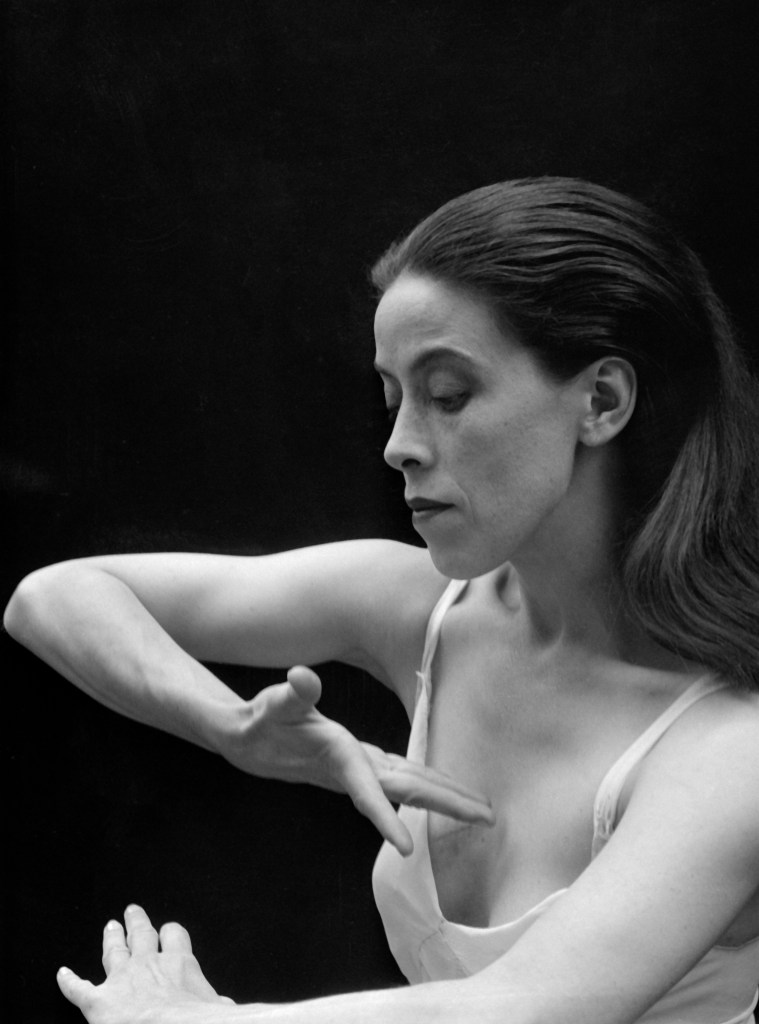
Although Graham never returned to live in Santa Barbara, she made a practice of visiting her mother, Jane Beers Graham, every summer, often performing at the Lobero Theatre. (After her father’s death, her mother later married Homer Duffey, who owned the Lyon Van & Storage Company in Santa Barbara. She died in 1958.)
Five years after launching her own dance company, Graham was visiting her mother in the summer of 1931 when she met the innovative West Coast photographer Imogen Cunningham at a dinner party. Cunningham was already recognized as a pioneer in 20th-century modernist photography. (Forty years later, in 1976, Life magazine cited Cunningham as “the best known woman photographer in America.”)
During the dinner party, Cunningham asked Graham if she could photograph her. The women soon met in rural Goleta for a remarkable and historic photo session.
The Getty Museum curator Paul Martineau wrote, “Cunningham’s 1931 photo shoot of Martha Graham is considered one of the most important collaborations in 20th-century art. It brought together two pioneers of American Modernism: a photographer who was redefining the ‘straight’ aesthetic and a dancer who was inventing a new physical language.”
Cunningham “captured Graham in high-contrast, tight close-ups that focused on physicality and psychological intensity rather than just movement. The photos became the definitive visual representation of the ‘Graham Technique,’ ” Martineau wrote, “characterized by sharp angles, contraction, and release.”
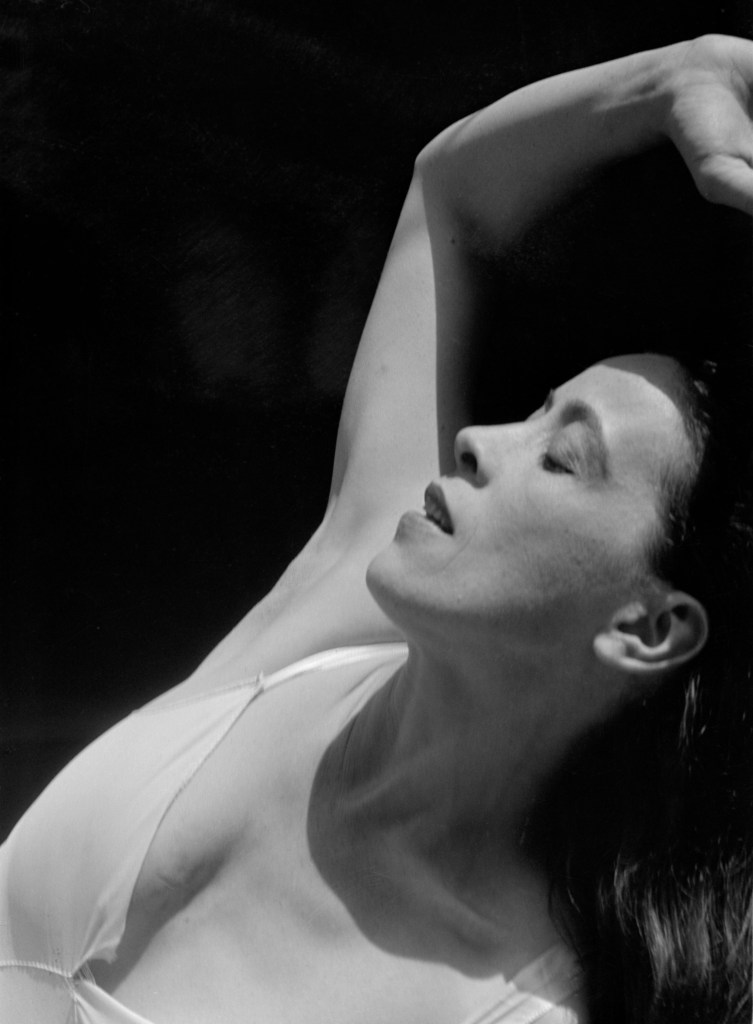
Cunningham also later recalled that photo session: “I remember the day well. Martha was rehearsing in front of a barn. It was hot, and the barn smelled, and those flies were buzzing around.”
Cunningham took almost 100 photos of Graham on that sultry Goleta day. The photographer recollected that at the time, Graham “was neither old nor young … [and] she didn’t mind being nude.” Graham told Cunningham she was 26, although she was actually 37 that summer. It was the only time Graham was ever “able to create in front of a photographer,” according to Cunningham.
Two of Cunningham’s photos of Graham at the Goleta barn were published in two-and-a-half-inch square format on page 51 of the December 1931 issue of Vanity Fair, which catapulted Cunningham into the national spotlight, according to Martineau.
Graham biographer, Neil Baldwin, has identified the site of the groundbreaking photo session as Graham’s mother’s “old farm in the Goleta Valley … against a backdrop of open barn doors.”
Graham’s father had bought the 35-acre walnut and apple orchard in partnership with the local Presbyterian minister in 1914, shortly before Dr. Graham’s death. It was known at the time as the Brastow Farm, noted for growing traditional Bellefleur apples.
Located on the west bank of San Jose Creek, north of the Goleta depot, it is, today, just north of the Elks Lodge and southeast of the corner of Kellogg Avenue and Coralino Road, now a quiet residential area. The barn is long gone.


[Click to zoom] Credit: © 2026 Imogen Cunningham Trust photos
Night Blooming Memories
This Goleta collaboration took place only a few months after Graham’s breakthrough work Primitive Mysteries premiered in New York City. Acknowledged almost immediately as a masterpiece, the stark, minimalistic choreography, inspired by Southwest Native American and Spanish Catholic ritual traditions, ignited Graham’s reputation as a major figure in American dance.
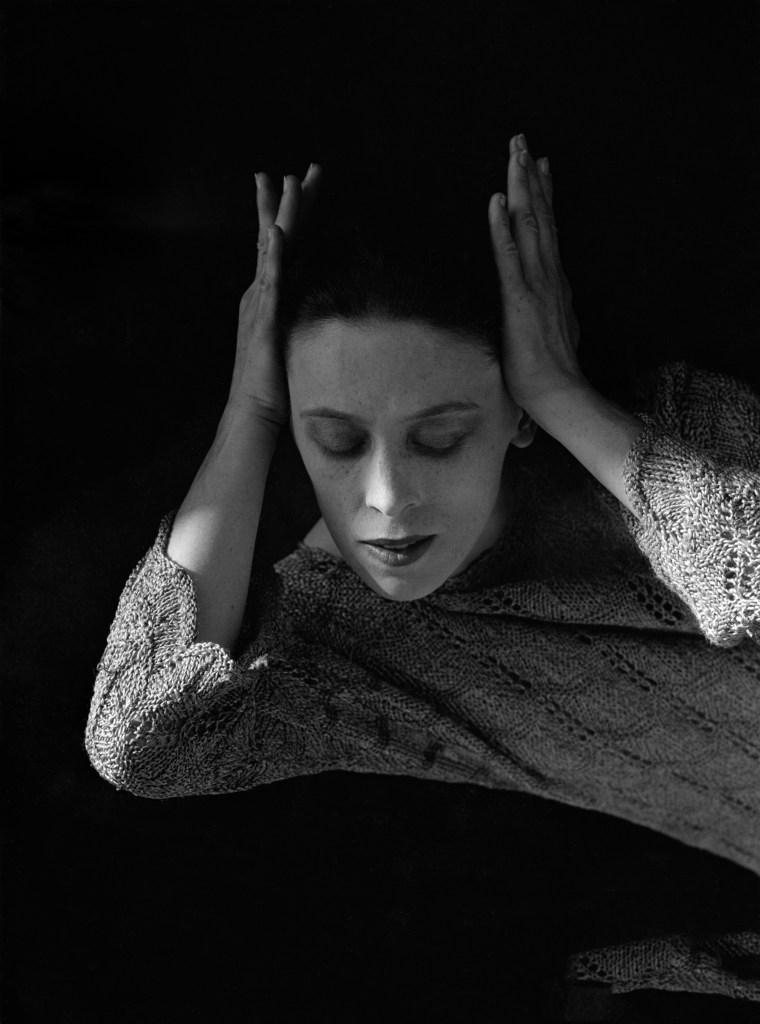
One aspect of the dance referenced night-blooming cereus, which Graham remembered from her girlhood home in Santa Barbara. “We had night-blooming cereus, a plant like fragrant jasmine, in the garden at the back of the house … the flowers … bloomed only in the moonlight.”
During her long and celebrated career, Graham performed for eight U.S. presidents and in 1937 was the first dancer invited to perform at the White House. She was awarded three Guggenheim fellowships, including the first dance fellowship in 1932. She also was the first dancer to receive the Presidential Medal of Freedom with distinction in 1976, and the first to receive honorary degrees from Harvard, Yale, Brandeis, and Smith universities.
As an adult, Martha Graham once remarked, “Nothing ever erupted [in Santa Barbara] but a nice day.” Today, a century after she launched the Martha Graham Dance Company, we can add that it also launched “the career of most important, distinguished, and honored dancer in American history.”
Graham died at 96 years of age, choreographing work until her death in 1991. Herobituary in The New York Times concluded that she had left “no immediate survivors.” But several days later, the Times published a reader’s astute correction: “This is not true. Every dancer, choreographer, artist, or musician is her immediate survivor. Every university or college dance department is her immediate survivor. Every child who has had a modern dance class is her immediate survivor.”




You must be logged in to post a comment.