This article was originally published in UCSB’s ‘The Current‘.
o support its work on the repatriation of Indigenous ancestors and cultural objects, UC Santa Barbara’s Walter H. Capps Center for the Study of Ethics, Religion, and Public Life has been awarded a $500,000 grant from the Henry Luce Foundation. The grant will fund the center’s five-year project, “Repatriation Futures: Living Tradition, Spiritual Vitality, Best Practices.”
With the grant, the Capps Center aims to further establish its position as a hub for research, community engagement, multi-genre storytelling and policy development on the topic of repatriation and its religious significance. The center seeks to help shape the future of repatriation thinking and practice, focusing attention on the spiritual and ethical dimensions of this work in addition to the legal obligations of institutions to return ancestral remains, funerary objects, sacred objects, and items of cultural patrimony.
“The return of ancestors and sacred objects is as spiritually important as it is morally urgent,” said Greg Johnson, director of the Capps Center and a professor of religious studies. “With promising legal foundations at state, federal and international levels, and with devoted Indigenous practitioners working tirelessly at various scales, this is exactly the right time to commit to the future of repatriation work.”
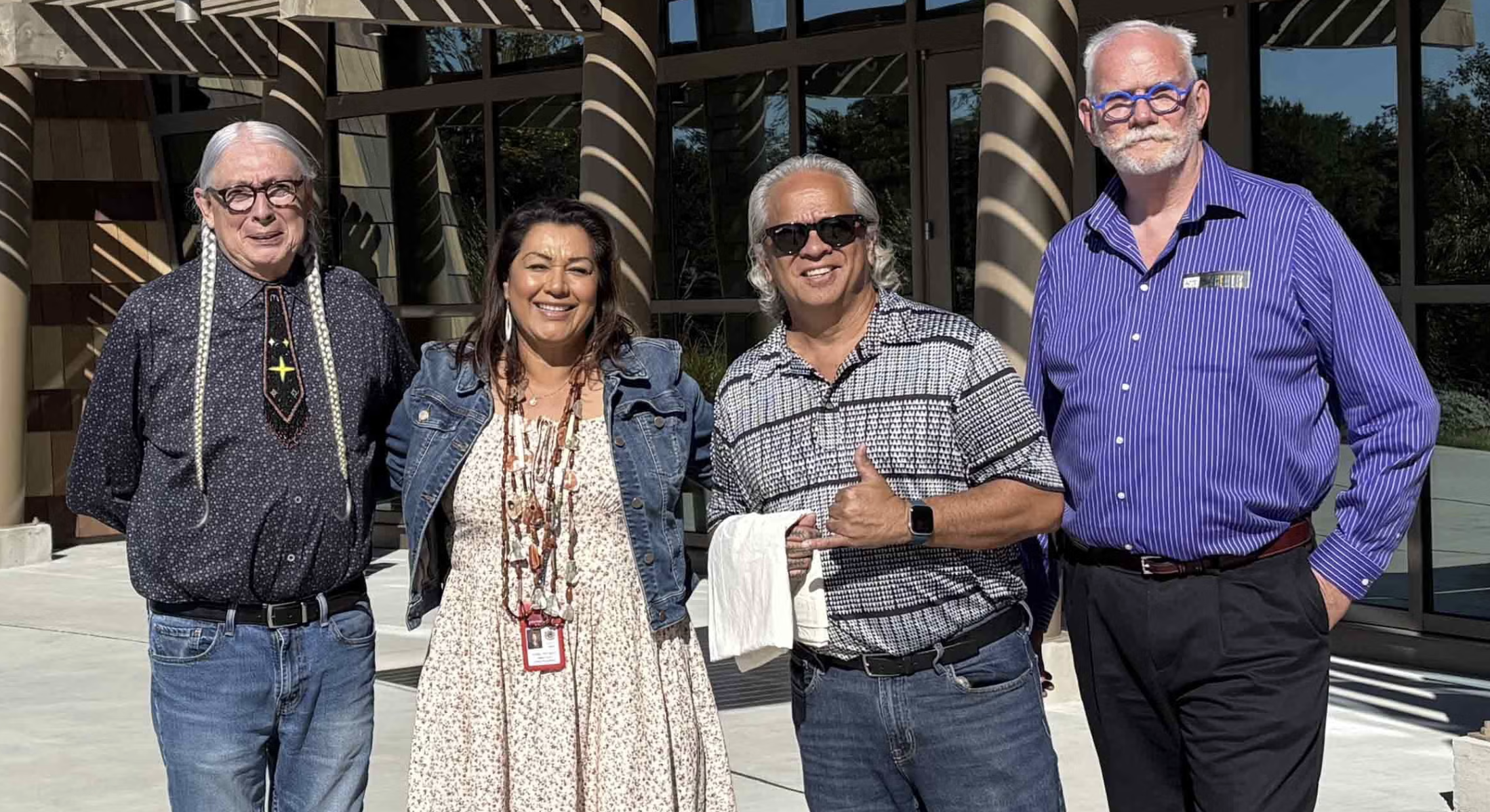
Johnson and project collaborator Dusty Hoesly, the center’s associate director, will lead a diverse team of field-leading experts in repatriation, including representatives from the Santa Ynez Band of Chumash Indians, the Coastal Band of the Chumash Nation, the Bishop Paiute Tribe, the Pawnee Nation of Oklahoma, Hawaiʻi, and the Naga community of Northeast India. Through relationship building, knowledge sharing, and resource deployment, the project will inform and support repatriation initiatives at and beyond the University of California, including with California tribal partners, Native communities across the U.S., and in international settings.
“The Capps Center project will model novel ways of bridging academic- and community-based modes of knowledge generation,” Johnson said. “We aim to establish a new baseline for what counts as engaged scholarship in the study of religion.”
Another core focus of the grant is to deepen relationships with Native nations in California in the context of land management and cultural resource protection. In partnership with a team from UC Irvine, UCSB’s Natural Reserve System (now known system-wide as UC Nature), and the Bishop Paiute Tribe, the Capps Center is developing co-stewardship agreements between the UC and tribal governments to promote best practices within UC Nature and to facilitate collaborative wildfire science and management between tribal, state, and federal governments.
“In the words of one of our core partners, Edward Halealoha Ayau, to say the ‘bones live’ is to invoke a spiritual relationship and a moral obligation to the ancestors who remain in non-Native institutions,” Johnson said.
The grant project builds on the Capps Center’s ongoing repatriation efforts with Indigenous communities. Johnson’s research and advocacy work focus on Native American and Hawaiian religions and law, particularly struggles over burial protection, repatriation, and sacred land. Johnson is a member of the UCSB NAGPRA Oversight Committee, which implements federal and state repatriation laws and ensures legal and ethical compliance and cultural respect in repatriation practices. The Capps Center has hosted several lectures and panel discussions about repatriation in recent years, two of which were also funded through the Luce Foundation.