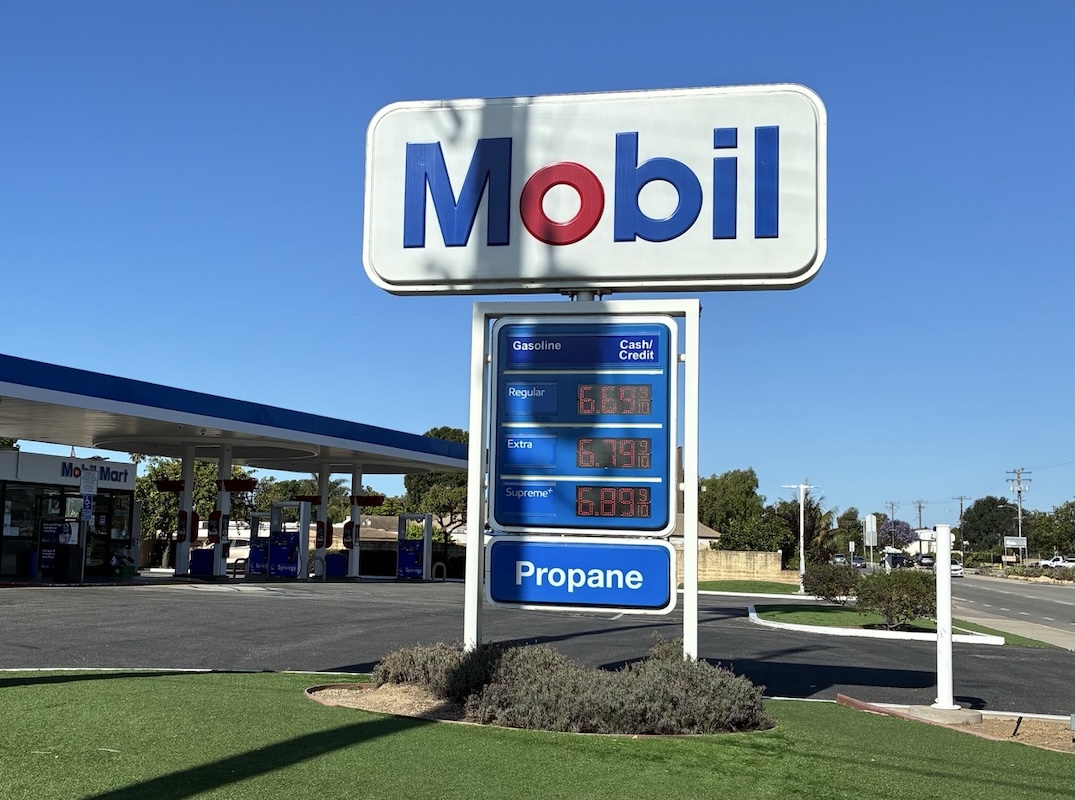
More than two months after Iran shut down the Strait of Hormuz following attacks by the United States and Israel, gasoline prices continue to rise across Santa Barbara and the nation. As of May 4, the average price in Santa Barbara was $5.95 per gallon, up 24.1 cents from the previous week and up more than $1.30 from the beginning of the conflict. The city’s cheapest station was selling gasoline for $5.39 per gallon, while the most expensive station was selling for $6.79.
The dramatic price increase in Santa Barbara reflects statewide and nationwide spikes. Roughly a fifth of the world’s crude oil supply transited through the Strait of Hormuz prior to its closure on March 2. The shipping disruption and ongoing conflict has caused extreme volatility of crude oil prices, which were hovering around $108 per barrel of Brent crude on Tuesday evening. As a result, gasoline prices everywhere have soared. California prices remain well above the national average, in large part due to strict environmental regulations and the state’s high gasoline tax; nonetheless, consumers everywhere are seeing painful price increases at the pump.
While the U.S. as a whole exports more oil than it imports, the majority of crude oil processed in California’s refineries is sourced from abroad. In 2025, 61 percent of the state’s oil was imported, while just 23 percent of crude oil originated in-state; another 16 percent came from Alaska. Twenty-nine percent of the foreign oil California processed was Middle Eastern, primarily from Iraq and the United Arab Emirates.
“Generally speaking, California has long relied on oil from the Middle East, because it hasn’t necessarily been able to buy oil from the Gulf Coast because of the cost-prohibitiveness,” said Patrick De Haan, the head petroleum analyst for fuel-price tracking platform GasBuddy.
De Haan pointed to the Jones Act, a section of the Merchant Marine Act of 1920, as a crucial factor in California’s minimal consumption of crude oil from the lower 48. The Jones Act mandates that goods transported between U.S. ports travel on ships built in the U.S. and owned and majority-operated by U.S. citizens. These regulations make domestic maritime transport of oil “extremely expensive,” De Haan said.
“It’s cheaper to get oil from the Middle East on a tanker that might be owned by India or another country, using a foreign-based crew that’s cheaper and not having to go through the Panama Canal, which adds hundreds of thousands of dollars,” De Haan said.
Moreover, oil from the Gulf Coast tends to be lighter, whereas California refineries are generally optimized for processing heavy crude oil, making Gulf Coast oil less desirable.
Oil tankers typically take between one and two months to make the journey from the Persian Gulf to the West Coast of the U.S. The New Corolla, the last California-bound oil tanker to pass through the Strait of Hormuz before its shutdown, docked in Long Beach this week and is in the process of unloading two million barrels of crude oil.
But De Haan said there is no risk of a crude oil shortage for California. “Refineries aren’t going to just stop refining oil. They’re just going to have to find other sources for it,” he said.
De Haan said shipments have already begun to pass from the Gulf Coast to the West Coast through the Bahamas, an effective loophole which allows companies to bypass the Jones Act, though it does not avoid the expensive tolls accrued from transiting the Panama Canal.
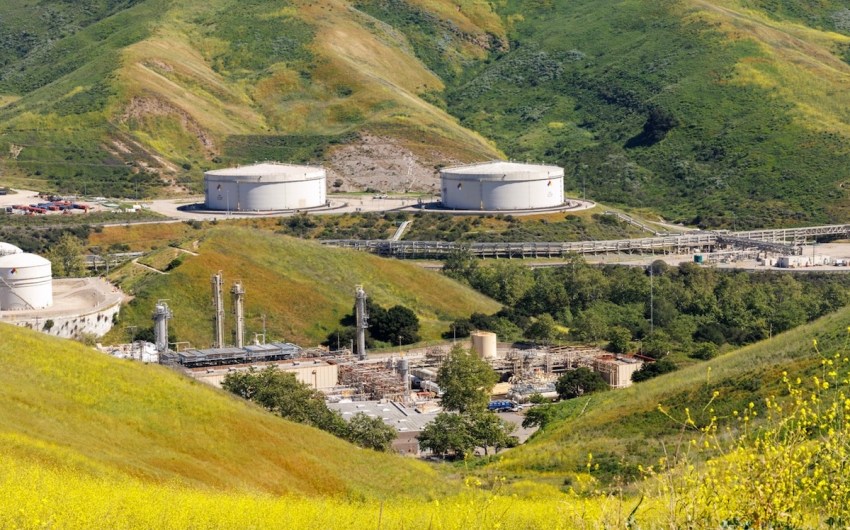
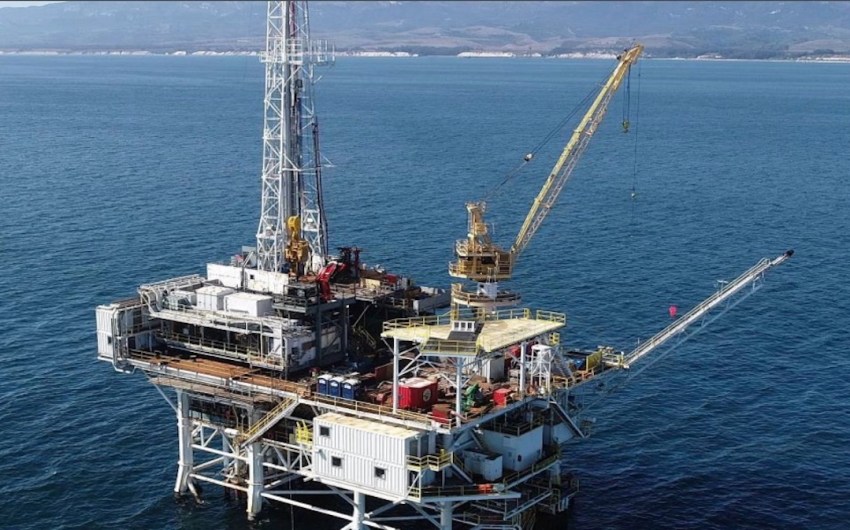
President Trump, meanwhile, has declared the situation an “energy emergency.” In March, the Trump administration invoked the Defense Production Act to allow Sable Offshore to restart offshore oil production in Santa Barbara County, circumventing challenges from state regulatory agencies in a move that critics allege was unlawful. Oil and gas production is ongoing at Sable’s Santa Ynez Unit off the coast of Gaviota.
Increasing in-state crude oil extraction will likely have little impact on supply or on gasoline prices. “This isn’t going to be an overnight game-changer for Californians,” De Haan said, noting that the amount of oil produced at the Santa Ynez Unit is miniscule compared with California’s daily demand.
“Once these projects get online and start raising output, it could have a larger impact over time, but for right now, it’s pretty negligible,” he added.
The Trump administration eased sanctions on Russian oil in light of the Strait of Hormuz stranglehold. While the sanctions were originally set to be reimposed on April 11, Trump later extended the relief through May 16.
In an April 29 Armed Services Committee hearing regarding the Department of Defense’s budget, Congressmember Salud Carbajal grilled Defense Secretary Pete Hegseth over the cost of the war in Iran.
“We know that the cost of oil and gas has gone up as a direct result of this war,” Carbajal said. “In an attempt to alleviate the high price of gas caused directly by this president, he lifted sanctions on Russian oil. The way I see it, this is a massive gift to Putin and Russia’s struggling economy.”
When Carbajal questioned whether the sanction relief benefits Russia, Hegseth boasted: “Do you understand the energy dominance this administration has unleashed?”
That claimed energy dominance is not translating to affordable prices for consumers, even if the spike in the cost of crude oil is enriching oil companies. The average price of gasoline in Santa Barbara is still rising, though the rate of increase has slowed since the beginning of the conflict in Iran. Until the Strait of Hormuz reopens permanently, this climb shows no signs of stopping — and even then, said De Haan, it may take more than a year for prices to return to pre-war levels.