
From Santa Barbara Schools
to 22 Million Students:
How ParentSquare Connected the Dots
A Local Mom’s Idea Has Grown into a
Nationwide Platform for
Seamless Campus Communication
By Tyler Hayden | August 13, 2026
Read more from our 2026 Indy Parenting cover story here.
Crumpled permission slips at the bottom of backpacks may not be gone for good, but a Goleta technology company is doing its best to make stray school messages a thing of the past.
ParentSquare, the campus-to-home communication platform now used by families across the United States, began with a problem that creator Anupama Vaid ran into herself.
A computer engineer and mom living in Goleta, Vaid craved an easier way to connect to her children’s school without sorting through a mess of classroom emails, newsletters, robocalls, paper forms, and last-minute reminders.

Before writing any code, she put together a slide show of the system she envisioned and took it to her kids’ principal. “I said, ‘Hey, if we were to build something like this, is it something that you would use?’” Vaid recalled. “She got so excited. She was like, ‘Here are three teachers. Go build it.’”
Those teachers helped shape the earliest version of the software, establishing what would become the company’s operating philosophy. “ParentSquare was never really built for schools,” Vaid said. “It was built with schools.”
Founded in 2011 by Vaid and her husband, Sohit Wadhwa, the company spent its first few years hopscotching from one Santa Barbara area campus to another. Vaid said those early days were slow-going, with the platform remaining almost entirely local despite their best attempts to attract wider attention.
What growth did take place came mostly through word of mouth. Teachers and administrators were willing to experiment with the service, while investors saw value in supporting an education-technology company, despite schools not being known for their wealth.
“I don’t know if the company would have done as well anywhere else,” Vaid said, crediting the region’s close-knit campuses, forward-thinking educators, and deep pockets of philanthropy.
Evergreen Learning Center was among the first locations to adopt the system, followed soon thereafter by the entire Santa Barbara Unified School District.
Now, the Goleta-headquartered company reaches more than 22 million students at more than 42,000 schools across all 50 states. That means approximately 40 percent of U.S. families rely on ParentSquare for their school communiques.
As a privately held company, its valuation and licensing fees are not publicly available. But it reported a 444 percent growth in revenue between 2021 and 2024, qualifying it for the 2025 Inc. 5000 list, a ranking of the fastest-growing private companies in America.
ParentSquare employs roughly 400 people, with 30 to 40 staff based in the Santa Barbara area and the rest working remotely all over the country.
Building a Town Square
Despite ParentSquare’s meteoric rise, its proposition remains painfully simple: Consolidate all school communications in one place, and deliver them in the way a family likes best.
Notices can arrive by email, text, voice call, mobile app, or web browser; users don’t need to download the app or create an account to receive them. Beyond general announcements, schools also use the platform for direct messaging, emergency alerts, payments, volunteer signups, and so on.
Educators do sometimes resist a new mandated platform, Vaid acknowledged. They might be spooked by the possibility of its learning curve eating into their teaching time. “There’s a natural tension between teachers and the district,” she explained. “They think, ‘Hey, another tool that I have to look at?’” But once they get their hands on ParentSquare, “They do come around,” she said.
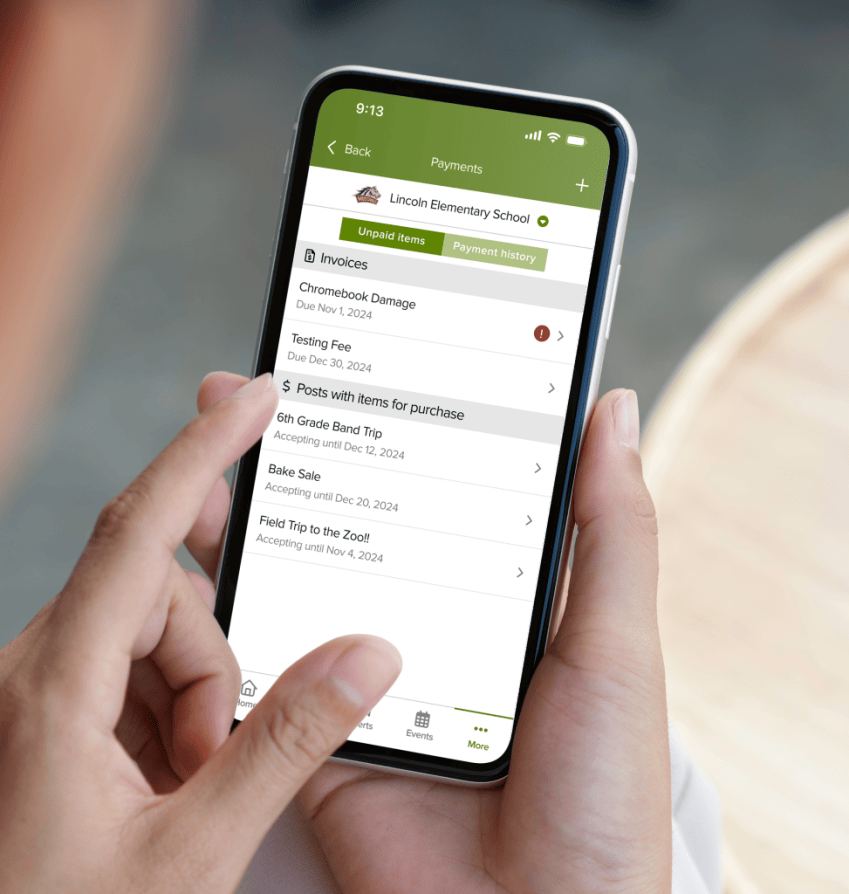
One of the system’s best features is automatic two-way translation that allows a teacher to write in English while a parent reads and responds in a different language. That capability is particularly useful in Santa Barbara County, where one in three families speak a language other than English at home. A case study at Adams Elementary School showed a marked increase in parent participation after the campus started using the platform.
ParentSquare’s general viewpoint, Vaid said, is that the desire for family engagement is already present on both sides. “Schools want that parent involvement, and parents want that parent involvement,” she said. “It wasn’t because of a lack of will. It was just not easy.”
“Just like the name, it’s the town square around a student,” Vaid continued. “It takes a village to raise a child. It’s that concept that we are bringing to reality.”
The company recently beefed up its software that tracks attendance, a chronic issue following the COVID-19 pandemic. The system now gives districts a clearer macro view of attendance patterns, automates family outreach, and emphasizes early, positive communication over intimidating notices sent after a student has already missed several days.
ParentSquare has also incorporated what it calls “purpose-built AI enhancements.” One new feature takes a teacher’s post and generates two age-appropriate questions that parents can ask their children — one factual and another intended to encourage deeper thought. A classroom post about a clothing drive, for example, might prompt a conversation at home about why schools organize such events.
“I’m excited about the promise of AI and what it can do,” Vaid said, adding she is less certain about children using the technology themselves.
So, What’s Next?
Vaid said the company decides what goes on its to-do list by listening for the problems that underlie customer requests — “digging deeper into the why behind the why” — and weighing potential additions against its central mission.
“Believe it or not, when you start solving problems, people start coming with more and more and more problems,” she laughed. “Our backlog is bigger than what we’ve built so far.”
ParentSquare was also initially offered without a set price, Vaid explained, but schools were reluctant to trust a free product. Charging for the platform gave districts some “skin in the game,” she said, and the company now boasts a customer retention rate of 99.4 percent.
Vaid recognizes the platform’s massive reach raises reasonable questions about privacy and data storage. ParentSquare holds SOC 2 Type II and ISO 27001 security certifications, she said, encrypts information in transit and at rest, and does not sell user information to advertisers.
As the company has expanded, Vaid said she’s learned to let go a bit and hire people who are better at their particular jobs than she could ever be. She looks for two qualities in potential hires that she describes as the “permission to play”: humility and a passion for helping schools. “Your heart has to be in the right place,” she said.
And despite ParentSquare’s national footprint, Vaid still sees the company as a product of the community where it started. The Goleta schoolchildren whose needs inspired the platform are now adults. Vaid’s own kids, who were in kindergarten and 1st grade during the company’s early years, have graduated from college.
ParentSquare cannot guarantee that parents will read every announcement, remember every spirit day, or produce a signed permission slip before the bus leaves. No technology is that powerful. But it continues to solve, one new feature at a time, the age-old dilemma: Schools need to communicate. Families need to know what is happening. And everyone involved would prefer fewer places to look.
See parentsquare.com.




You must be logged in to post a comment.