
This article was originally published in UCSB’s ‘The Current‘.
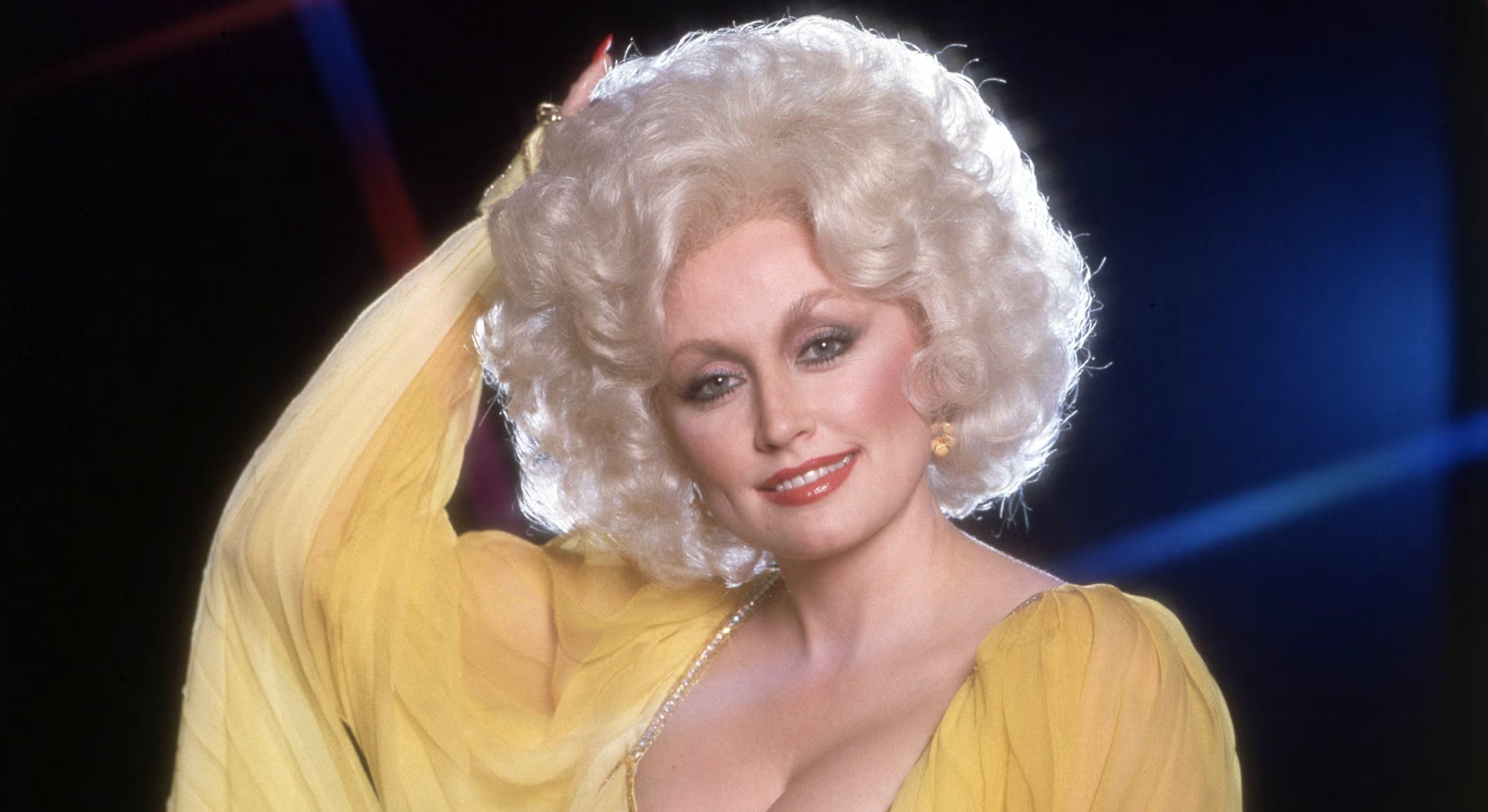
Dolly Parton’s cultural power was never simply a matter of popularity. It was the unlikely range of people drawn to her — people who often shared very little else — and the contradictions she seemed able to hold without resolving.
“Dolly’s ability to bring people together shows us something about ourselves: that we want to be unified and connected, even if we don’t always want to do the work of getting there,” said UC Santa Barbara classics professor and “original Dollyologist” Helen Morales, the Argyropoulos Professor of Hellenic Studies and author of “Pilgrimage to Dollywood” (University of Chicago Press, 2014).
Parton was deeply rooted in Appalachia but claimed far beyond it; beloved by conservative Christians and LGBTQ fans; extravagantly artificial in appearance yet unusually candid about the construction. Her songs could be funny, sentimental and commercially irresistible while returning again and again to poverty, violence, labor and women’s lives.
Those tensions aren’t incidental to Parton’s appeal; they help explain it. Across songs about prostitution, domestic violence, alcoholism and the double standards imposed on women and men, Morales sees what she calls an “insistent witnessing of women’s lives” — a sustained attention to experiences that popular culture could sentimentalize, sensationalize or ignore.
Parton’s public persona offered another kind of lesson. “She was very keen on self-irony, very self-aware and very self-ironizing,” Morales said. In a culture prone to moral certainty, Parton modeled something different: “forgiveness and understanding and dialogue.”
Over more than a decade, Morales has examined that interplay between the songs, the persona and the devotion surrounding Parton. Her “Dollyologist” title came from Jad Abumrad’s acclaimed podcast “Dolly Parton’s America,” which drew on her research and featured her as an interviewee.
The scholarship began, in part, with a question of literary value. Male singer-songwriters such as Hank Williams and Bob Dylan had long been treated as serious subjects of study, while Parton’s vast catalog had received comparatively little attention as a body of writing.
“She was underestimated as a lyricist, probably because her persona encourages some not to take her seriously,” Morales said, “because of the sequins and the hair and her telling jokes about herself.”
But the very persona that invited dismissal could also sharpen the force of Parton’s writing. In “9 to 5,” she built the song’s driving rhythm by clicking her acrylic nails together — “that’s how she wrote it,” Morales said. Beneath that percussive rhythm was a pointed account of labor, power and women’s working lives.
“There is a feminism to a lot of her songs,” Morales said. Parton might have resisted the label, she added, “but I’m not sure she rejects its spirit.”
In Morales’s reading, there is no need to strip away the theatrical Dolly to find a more authentic figure beneath. The performance itself matters: the artifice and the intelligence behind it are part of the same construction. That self-awareness also shaped the way Parton moved through public life. She could speak clearly about inclusion and care without assuming the posture of someone delivering moral instruction.
“What Dolly modeled was a different way of being political — one rooted in self-irony rather than self-righteousness,” Morales said. Parton could hold firm convictions without turning them into a verdict on everyone else, leaving room for disagreement and fallibility.
That ethic is central to what she calls Parton’s “radical empathy”: “She represents for so many people, not just LGBTQ folk, a kind of unconditional love and care.” Parton’s embrace of LGBTQ audiences coexisted with a devoted Christian and conservative fan base. The point was not the absence of disagreement, but the refusal to make judgment its inevitable conclusion.
“When Dolly Parton says, ‘We shouldn’t judge,’ that doesn’t mean don’t be discerning,” Morales said. “But it does mean don’t point the finger and criticize.”
Her power as a unifier lay not in erasing difference, but in leaving room for people to remain complicated — and still remain in relation to one another.

That capacity for connection is central to Morales’s framing of Dollywood as a site of pilgrimage. In “Pilgrimage to Dollywood,” she approaches the Tennessee theme park through a framework familiar from classical studies: a journey toward a place invested with meaning, undertaken not only as an act of homage but in search of understanding and community.
“You have different expectations of a pilgrimage,” Morales said — among them “a desire to learn” and “a desire to be with like-minded people.”
The boundary between pilgrimage and tourism, she noted, is rarely clean. Dollywood could be a theme park, a commercial enterprise and a place of homage all at once. For years, fans traveled there in part for the possibility of seeing Parton herself. Her death may change what they find there, but not necessarily what draws them.
“I think people will continue to make their own journeys to places that were meaningful to Dolly,” Morales said. What matters, she suggests, is what they carry away. Morales points to the ethos of Parton’s Imagination Library, the free book program for children: “Dream more, care more, learn more and be more.”
“Through her songs and the spaces she created, one can learn more about oneself — and perhaps find a framework for making your own journey.”
The sudden attention to Morales’s research is bittersweet. She would rather it not have been prompted by Parton’s death. But she also says “I feel a little bit of a responsibility to share what I’ve discovered about her, her work and her life.”
That close attention can itself become a form of homage: moving beyond the fact that Dolly Parton was beloved to consider what she made, how she moved through the culture and why people so different from one another found something there.
Related Posts


Premier Events
Thu, Aug 27
5:00 PM
Santa Barbara
Alzheimer’s Association Town Hall

Fri, Aug 28
3:00 PM
SANTA BARBARA
Family Movie Night at the Eastside Library: “Lilo & Stitch”
Fri, Aug 28
7:00 PM
Buellton
Speaker Series -James Bier, Director of the Chumash

Sat, Aug 29
10:00 AM
Santa Barbara
Wag, Play & Title Day
Sat, Aug 29
11:00 AM
Santa Barbara
🎉 INDY40 Fest 🎉
Sat, Aug 29
2:00 PM
Los Olivos
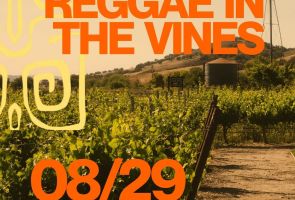
Reggae In The Vines

Sat, Aug 29
7:00 PM
Los Alamos
Carr + Kaena Winemaker Dinner – Full of Life
Sat, Aug 29
7:00 PM
Ojai, CA
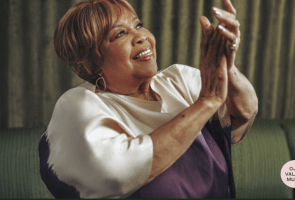
Mavis Staples at the Libbey Bowl
Sat, Aug 29
7:30 PM
Solvang
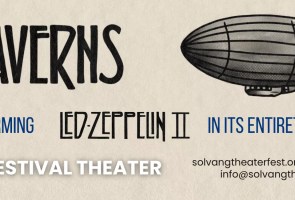
The Caverns Present: Led Zeppelin II
Sat, Aug 29
9:00 PM
Santa Barbara
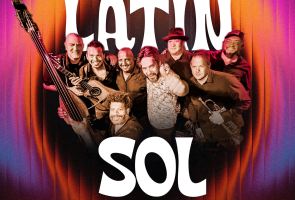
ME Sabor Presents: Salsa Night
Thu, Aug 27 5:00 PM
Santa Barbara
Alzheimer’s Association Town Hall
Fri, Aug 28 3:00 PM
SANTA BARBARA
Family Movie Night at the Eastside Library: “Lilo & Stitch”
Fri, Aug 28 7:00 PM
Buellton
Speaker Series -James Bier, Director of the Chumash
Sat, Aug 29 10:00 AM
Santa Barbara
Wag, Play & Title Day
Sat, Aug 29 11:00 AM
Santa Barbara
🎉 INDY40 Fest 🎉
Sat, Aug 29 2:00 PM
Los Olivos
Reggae In The Vines
Sat, Aug 29 7:00 PM
Los Alamos
Carr + Kaena Winemaker Dinner – Full of Life
Sat, Aug 29 7:00 PM
Ojai, CA
Mavis Staples at the Libbey Bowl
Sat, Aug 29 7:30 PM
Solvang
The Caverns Present: Led Zeppelin II
Sat, Aug 29 9:00 PM
Santa Barbara

