What began last spring as a pilot project dreamt up by scientists and commercial fishermen has restored an underwater forest in the Santa Barbara Channel. The project was renewed for another season and will be showcased in the feature-length documentary Harvest to Heal, premiering at the Santa Barbara Surf Film Festival at Arlington Theatre this Thursday.
Spoiler alert: this story has a good ending.
Reviving the Forest
Kelp forests, like trees in the Amazon, provide habitat and absorb carbon. But warmer waters and past El Niño storms decimated the once-abundant kelp forests that surrounded the Channel Islands and lined the coast from El Capitan to Rincon Point.
Overgrazing by purple urchins — whose populations went unchecked after disease killed off sea stars, their primary predator — only made the problem worse by creating “urchin barrens,” where they carpet areas of the seafloor and mow down any kelp in their path.
The pilot project asked, what if you took the urchins out? Divers removed purple urchins from a one-acre site on the backside of the remote San Miguel Island, around 45 miles offshore. It’s a win-win-win. Kelp gets a fighting chance to grow back, urchin divers get paid, and the urchins themselves get repurposed.
Instead of going to waste, the urchins are sold to restaurants and made into fertilizer for agriculture. They may soon even be transformed into countertops — a company called Primitives creates “urchinite” using the shells, marketed as world’s first “biomarble.” Such partnerships help offset restoration costs.
“It’s been the most rewarding project of my career,” said marine scientist Kim Selkoe, president of the Commercial Fishermen of Santa Barbara, who spearheaded the project alongside scientific research led by Dr. Jenn Caselle of UC Santa Barbara.
It brought together scientists, urchin divers, nonprofits, and local businesses. There were many moving parts, Selkoe said, but they quickly became a well-oiled urchin-harvesting machine.
“No one is the one expert that has all the answers, and we really had to work as a group,” Selkoe said.
First, the team scouted a location, and charted out a plan. In the summer of 2025, they embarked on clearing purple urchins from the project site off of San Miguel Island.
Phase three was monitoring. Divers from UC Santa Barbara’s Caselle Lab looked at how the kelp and urchins responded. After evicting the existing urchins, would others simply move in?
In the end, however, “the results were really phenomenal,” Selkoe said.
The kelp canopy grew back incredibly thick and any remaining urchins chilled out. Selkoe explained that urchin behavior changes when food becomes more abundant. Rather than roaming around hungrily hunting for any morsel of algae, they become content to hide in crevices and eat drifting scraps of seaweed.
With the pilot’s success, the team has focused on scaling the project and getting funding.
The Ocean Protection Council provided a $700,000 grant to continue the work, which will be led by the Bay Foundation out of Santa Monica. They will contract Santa Barabra urchin divers to continue clearing urchins at the Channel Islands and “build on the science,” Selkoe explained.
More urchins means more products. Selkoe’s Carpinteria-based company, Marino Soil Foods, a spinoff of her former venture Get Hooked Seafood, specializes in turning fishing scraps into sustainable fertilizer. She said the company is building a plant in Oxnard, which will be able to convert thousands of pounds of purple urchins into soil amendments.
Selkoe has also identified a new restoration target: the cove off of Refugio State Beach, an area familiar with urchin-infestation. In collaboration with international nonprofit Reef Check, they will monitor the site at Refugio to see how it responds to urchin clearing.
Harvesting began at Refugio Cove in October. To improve the speed and efficiency of the project this time around, urchin divers are training in scientific data collection methods.
“The urchin fishery is not doing that well, and the urchin divers have the vessels, knowledge, equipment, and the drive to participate in projects like this, and it becomes a good side-stream of income for them,” Selkoe said.
Selkoe said one reason they decided to target the coast was to understand the differences between ecosystems. Will the kelp grow back just as well on the coast, as it did near the islands? Will the same techniques be applicable? Will coastal urchins behave differently?
“We’ve already found that the urchins at the Refugio site are a lot larger than the urchins around the island, and that affects how many pounds you can clear in an hour, and how much it costs to do the project,” Selkoe said.
“With a good pilot, you end up with getting a lot of insight, but you also come up with a whole new set of questions that you can dive into… and that definitely happens with this project,” she said.
Nevertheless, they are increasing their capacity for responding to ecosystem changes, she said. With this year’s “super” El Niño currently underway, bringing with it warmer ocean temperatures, kelp forests are under high stress. Urchins, too, are dying off from disease around the Channel Islands, likely due to warmer waters.
“The system is shifting under our feet,” Selkoe said. “We’re going to keep studying it and keep adapting our approaches. But it’s not a one and done type of situation.”
Harvest to Heal
The feature-length documentary on the project, Harvest to Heal, will make its world premiere on Thursday, November 12, at 3:30 p.m. at the historic Arlington Theatre as part of the Surf Film Festival. The 52-minute film will be followed by a Q&A.
It was produced by Commercial Fishermen of Santa Barbara (CFSB) and Blue Ocean Production. Filmed over two years by Ventura-based filmmaker and Director of Photography Jim Knowlton, it documents the challenges of conducting underwater research and restoration at San Miguel Island through underwater cinematography and personal stories from those directly involved, according to the producers’ press release.
“I’ve been diving at San Miguel Island for decades, and it’s one of the most extraordinary places I’ve explored underwater,” Knowlton said. “Through Harvest to Heal, I’ve had the opportunity to share the beauty of this special place while telling the story of scientists, fishermen, and conservationists working together to restore kelp forests. The film shows what’s possible when people come together to protect and restore our oceans, offering a message of hope for the future.”
The film, funded by Eric and Wendy Shmidt and the Santa Barbara County Fish & Wildlife Commission, also “reflects a growing partnership between CFSB and Santa Barbara City College through the Ocean Collective, a regional blue economy coalition,” the press release states. SBCC film student Ana Sanchez served as cinematography assistant, and SBCC Horticulture student intern Tim Wardlaw appears in the film.
Learn more about the film here. For more on the Santa Barbara Surf Film Festival, visit santabarbarasurffilmfestival.com.
Related Posts
Premier Events
Wed, Nov 11
11:00 AM
Santa Barbara
S.B. Veterans Day Ceremony: Honoring Our Men and Women in Uniform

Thu, Nov 12
7:30 PM
Santa Barbara
UCSB Theater and Dance Presents All My Sons

Fri, Nov 13
2:00 PM
Santa Barbara
Music & Meditation SB presents Lina Bahn violin
Fri, Nov 13
6:00 PM
Santa Barbara
Fall Opening Party at SBMA
Sat, Nov 14
9:00 AM
Santa Barbara
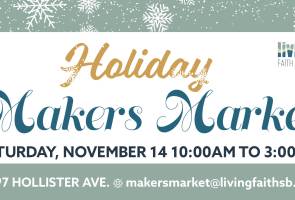
Holiday Makers Market

Sun, Nov 15
2:00 PM
Santa Barbara
Book Talk with Chris Hedges – “Requiem for Gaza”
Mon, Nov 16
7:00 PM
Santa Barbara
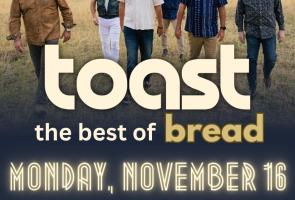
Toast – The Best of Bread at the Arlington

Tue, Nov 17
7:00 PM
Santa Barbara
CWC Screening and Conversation: “Criminal Minds” James T. Clemente
Wed, Nov 18
12:00 PM
Santa Barbara
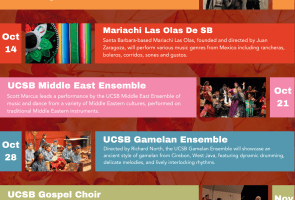
UCSB Son Jarocho

Wed, Nov 18
7:00 PM
Santa Barbara
Outside+ Showing of “Warren Miller’s Days Off”
Wed, Nov 11 11:00 AM
Santa Barbara
S.B. Veterans Day Ceremony: Honoring Our Men and Women in Uniform
Thu, Nov 12 7:30 PM
Santa Barbara
UCSB Theater and Dance Presents All My Sons
Fri, Nov 13 2:00 PM
Santa Barbara
Music & Meditation SB presents Lina Bahn violin
Fri, Nov 13 6:00 PM
Santa Barbara
Fall Opening Party at SBMA
Sat, Nov 14 9:00 AM
Santa Barbara
Holiday Makers Market
Sun, Nov 15 2:00 PM
Santa Barbara
Book Talk with Chris Hedges – “Requiem for Gaza”
Mon, Nov 16 7:00 PM
Santa Barbara
Toast – The Best of Bread at the Arlington
Tue, Nov 17 7:00 PM
Santa Barbara
CWC Screening and Conversation: “Criminal Minds” James T. Clemente
Wed, Nov 18 12:00 PM
Santa Barbara
UCSB Son Jarocho
Wed, Nov 18 7:00 PM
Santa Barbara