
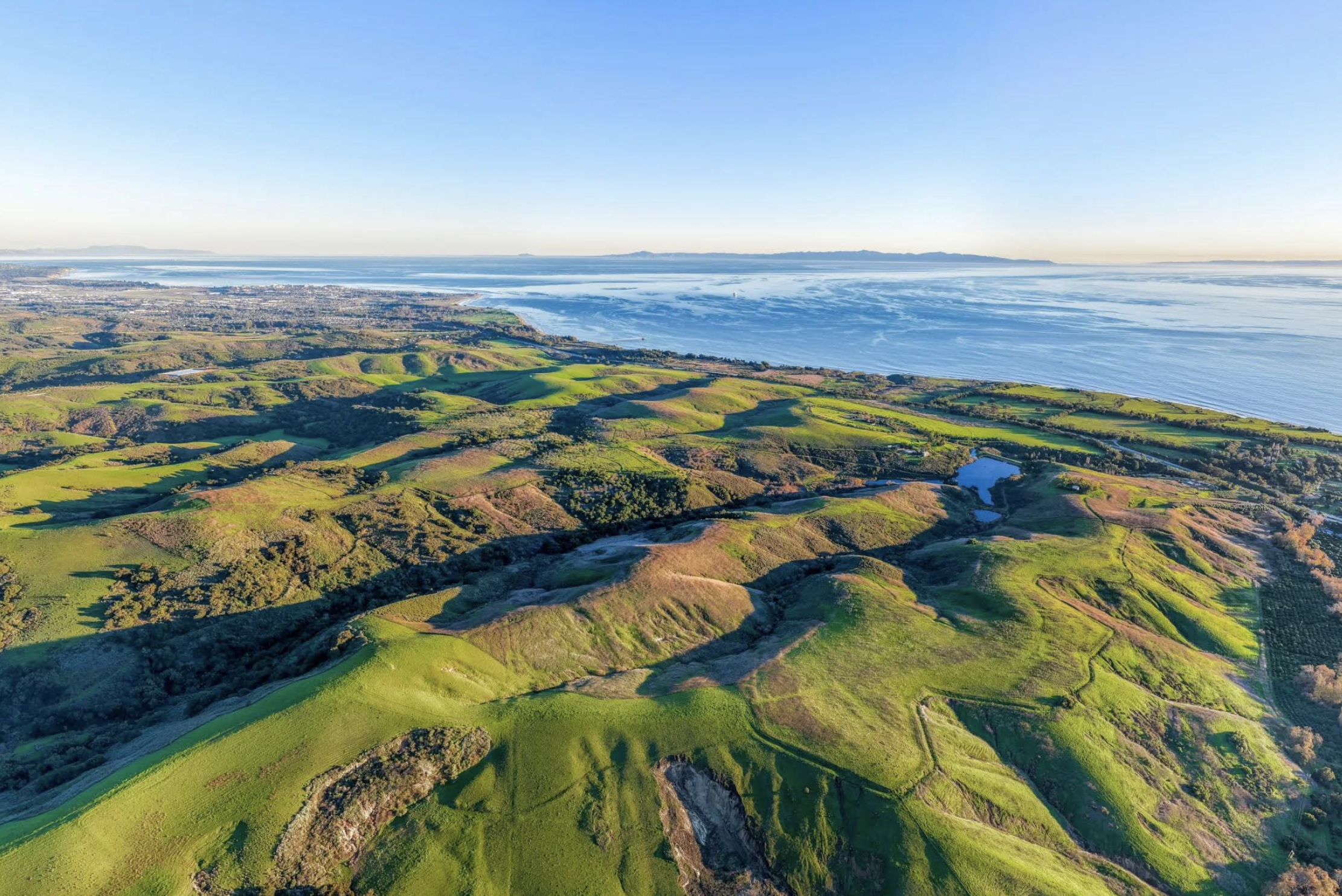
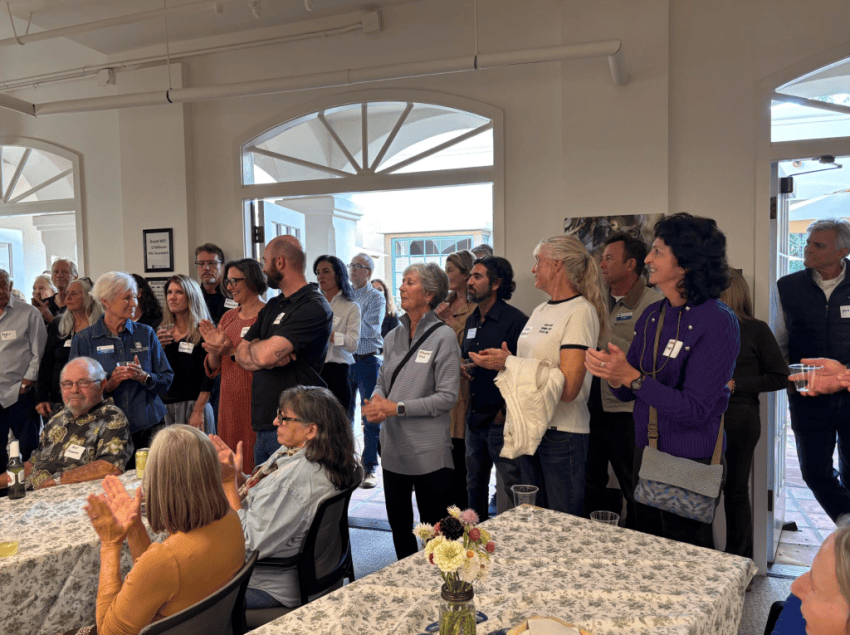
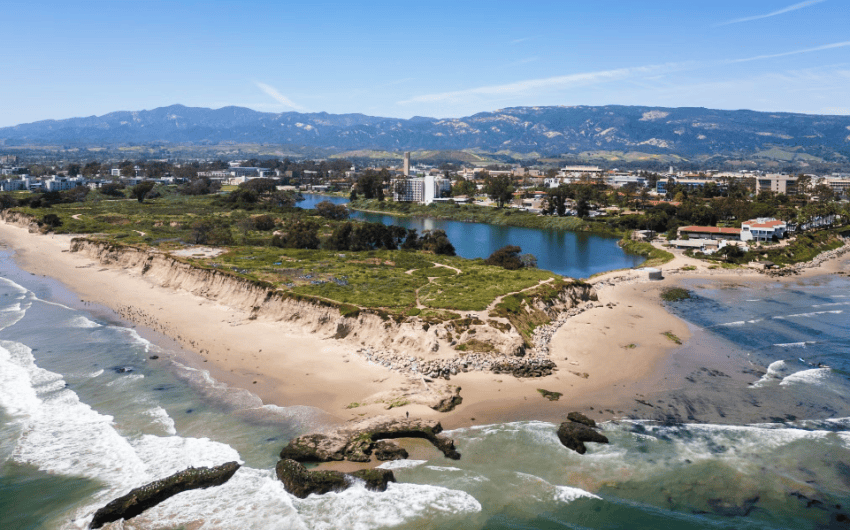
The Land Trust for Santa Barbara County is half a million dollars closer to their goal of permanently protecting Santa Barbara Ranch (locally known as Naples) on the Gaviota Coast, as of the nonprofit’s launch party on Friday, October 23. The Land Trust is still $15.5 million shy of its $81 million goal to buy and preserve Naples, including what it will take to restore and maintain it.
“We can now say it loudly and with full confidence: we are saving the Gaviota Coast,” said Land Trust Executive Director Meredith Hendricks to the crowd at their downtown office on Friday. “We are running like heck to buy this thing.”
Conservation groups who have fought development on the Gaviota Coast for decades are celebrating the win. But they want to remind people what it took to get there: blood, sweat, tears, and a lot of litigation.
Bob Keats, a founding member of Surfrider Santa Barbara and the first president of the Gaviota Coast Conservancy, spent 35 years entrenched in those efforts — including fending off Atlantic Richfield Company’s (former owner of ARCO) proposal in the ‘90s to build a golf course at what is now known as Paradiso del Mare on the Gaviota Coast, while also advocating against the efforts of developers to build on Naples next door.
The initial impetus for Keats’s advocacy to protect Gaviota, a coastal terrace between Haskell’s Beach and El Capitan, he explained, came in 1991, after the Citizens for Goleta Valley lost their fight against the development of the Ritz-Carlton Bacarra, the luxury hotel near Sandpiper Golf Club.
That made the entire coast more vulnerable, Keats said. He surmised that if ARCO had been able to build a golf course at Paradiso, Naples would be developed by now.
“We didn’t know what we were doing, but we loved that coastline,” he said, noting its ecological, aesthetic and cultural values as a biodiversity hotspot and historic Chumash site. And, “It was important for us surfers,” he added.
Around 2000, Surfrider retained the Environmental Defense Center (EDC), which was instrumental in deterring and delaying development through the courts.
Over the last 26 years, hearings big and small have been held over attempts to develop Naples: involving an antiquated map from 1888 laying out 400 potential lots, the court’s later validation of that map, the county’s eventual approval of 71 lots for development, and, subsequently, developer Matt Osgood’s proposal to build 71 mansions at Naples. To recap: Osgood went bankrupt during this very litigious process and the property was foreclosed on. It was bought by current owner David Liu in 2015, who is now on the cusp of selling it to the Land Trust.
In sum, it has been an incredibly involved process to protect Naples, emphasized EDC’s Chief Counsel Linda Krop, who has a 20-year stake in the saga. Conserving a piece of land that was on the trajectory of development for more than a century is no easy task: it takes decades of “really hard work,” spanning generations, from grassroots efforts to filing lawsuits. Krop said that Naples being saved “is a dream come true for us.”
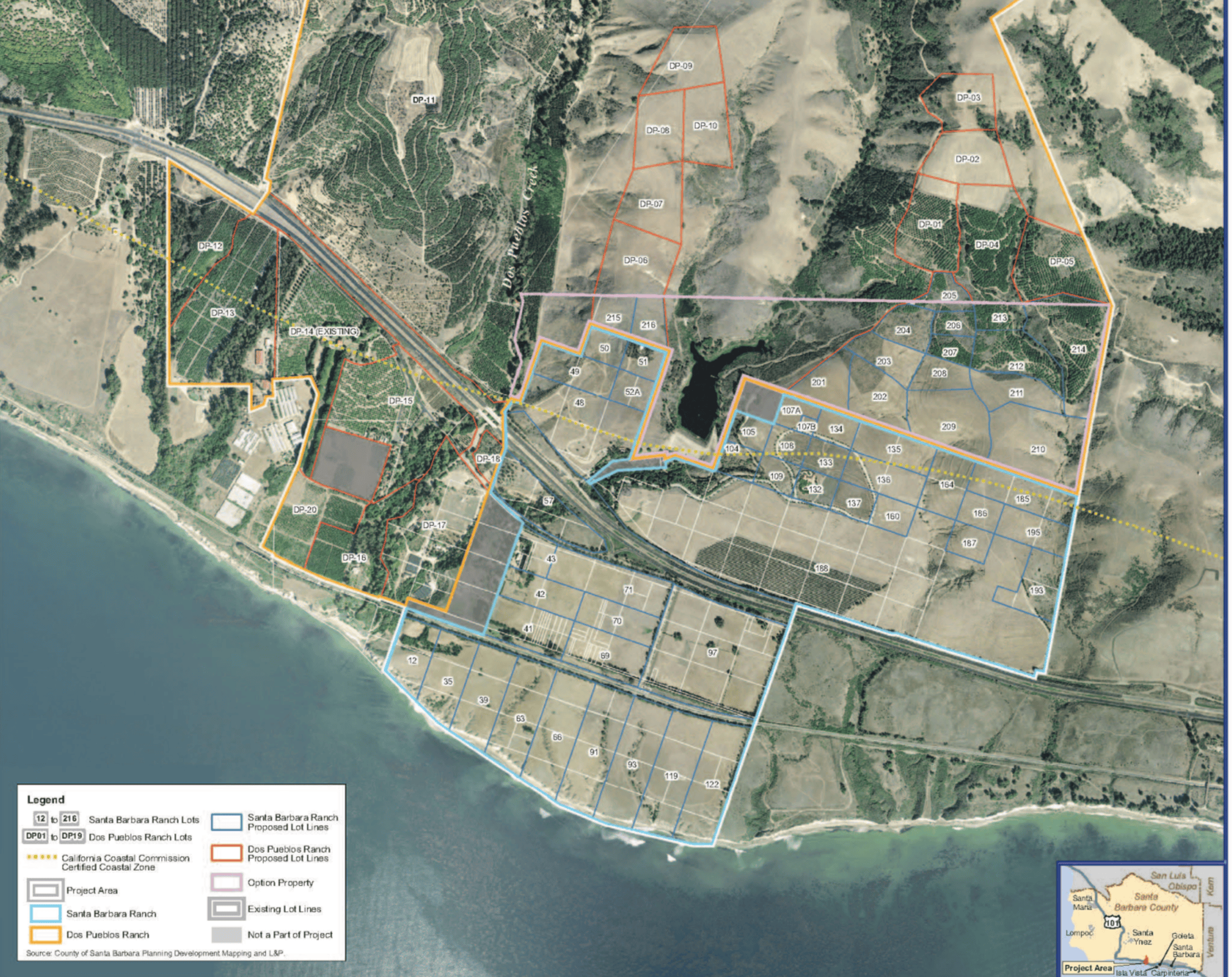
But their work is not over, she said. They are going “piece by piece.” Naples is the biggest piece, but she would ideally like to see the neighboring properties at Dos Pueblos Ranch (which is adjacent to Naples and is back on the market for $60 million) and the private lot dubbed “DMF” on the coastal side of the property also purchased and preserved.
Krop said EDC and Surfrider have been involved in litigation over alleged violations on the Dos Pueblos properties, Naples, and neighboring areas, including illegal disking — disturbing soil for agriculture — across the entire coastal bluff, and the ongoing advocacy to restore it.
The two groups have also been pushing against the development of the DMF property, or lot 66 of Santa Barbara Ranch, purchased around 2015, as it moves through the county’s process. The owner’s proposal to build a seaside estate, coupled with a restoration plan for part of the site, was approved by the County Zoning Administrator in 2025. Surfrider and EDC appealed that decision to the County Planning Commission, but the planning commission upheld the administrator’s decision at a 2026 hearing. The groups plan to appeal that decision to the Board of Supervisors.
Krop said they are still “poised” to fight development in Naples and at Dos Pueblos Ranch. “We want to work with the Land Trust on the restoration of Santa Barbara Ranch and potentially save the rest of Naples,” she said.
The Planning Commission hearing made Stephanie Boshers, who took over as chapter chair for Surfrider Santa Barbara in 2024, feel “very defeated,” she said. When she assumed the role after Keats, she “felt the weight of the last 30 years,” including all of the anxiety around the land being developed. But the Land Trust’s purchase of Naples brings with it a “great deal of absolute relief,” especially as she and other groups never thought it would happen, she said.
After 35 years of effort, how does it feel for Keats to see Naples so close to being permanently preserved? “Beyond words,” he said. Ideally, he said he would like to see it turned into a public park for daily visitors (but realizes this is a big ask for a nonprofit), while honoring Chumash presence and maintaining access to the coast for surfers. Surfrider will be part of the upcoming stakeholder process with the Land Trust as the nonprofit closes in on buying the property.
He said they are “keeping the battle going,” as land on the Gaviota Coast continues to be threatened by development. “Protecting all of it would be fantastic,” he said. “It’s important to the community and to nature.”
The Land Trust is heading toward the close of escrow at the end of the year, Hendricks said at the launch party on Friday. Private funding to the tune of $50 million has been secured, and the remaining funds to be raised will be used for maintenance and restoration of the land.
During the party, she announced that a “generous set of donors” committed to a $100,000 matching challenge for donations. Decades of restoration work, as well as the unspooling of easements and water agreements, lies ahead once the remaining $15.5 million is raised and the purchase is completed. After that, they will own and manage the land as one of their preserves, Hendricks said.
Related Posts




Premier Events

Thu, Oct 29
12:00 PM
Santa Barbara
Spook Fest at Loubud Wines Halloween Experience

Thu, Oct 29
5:30 PM
Santa Barbara
Silent Movies + Live Organ, Trunk or Treat & More

Thu, Oct 29
6:00 PM
Santa Barbara
Halloween Paint & Sip at Goodland Wine Shop
Fri, Oct 30
12:00 AM
Montecito
Día de los Muertos at The Speakeasy

Fri, Oct 30
11:30 AM
Santa Barbara
🌼💀 Join us for Día de los Muertos! 💀🌼

Fri, Oct 30
2:00 PM
Santa Barbara
“Sea to Summit “Art Exhibit & Benefit

Fri, Oct 30
3:00 PM
Santa Barbara
Family Movie Night at the Eastside Library: “Coco”

Fri, Oct 30
3:00 PM
Goleta
The Towbes Group presents: MONSTER MASH!

Fri, Oct 30
3:00 PM
Goleta
Halloween Paint Night at SAMsARA
Fri, Oct 30
6:00 PM
Goleta
Halloween @Draughtsmen: A KILLER RENAISSANCE FAIRE
Thu, Oct 29 12:00 PM
Santa Barbara
Spook Fest at Loubud Wines Halloween Experience
Thu, Oct 29 5:30 PM
Santa Barbara
Silent Movies + Live Organ, Trunk or Treat & More
Thu, Oct 29 6:00 PM
Santa Barbara
Halloween Paint & Sip at Goodland Wine Shop
Fri, Oct 30 12:00 AM
Montecito
Día de los Muertos at The Speakeasy
Fri, Oct 30 11:30 AM
Santa Barbara
🌼💀 Join us for Día de los Muertos! 💀🌼
Fri, Oct 30 2:00 PM
Santa Barbara
“Sea to Summit “Art Exhibit & Benefit
Fri, Oct 30 3:00 PM
Santa Barbara
Family Movie Night at the Eastside Library: “Coco”
Fri, Oct 30 3:00 PM
Goleta
The Towbes Group presents: MONSTER MASH!
Fri, Oct 30 3:00 PM
Goleta
Halloween Paint Night at SAMsARA
Fri, Oct 30 6:00 PM
Goleta


You must be logged in to post a comment.