
Beyond the Right Answer
At Open Horizons Tutoring, Jonathan Wilcox
Puts Curiosity and Confidence into the Equation
By Tyler Hayden | November 19, 2026
Read more from Schools of Thought 2026 here.
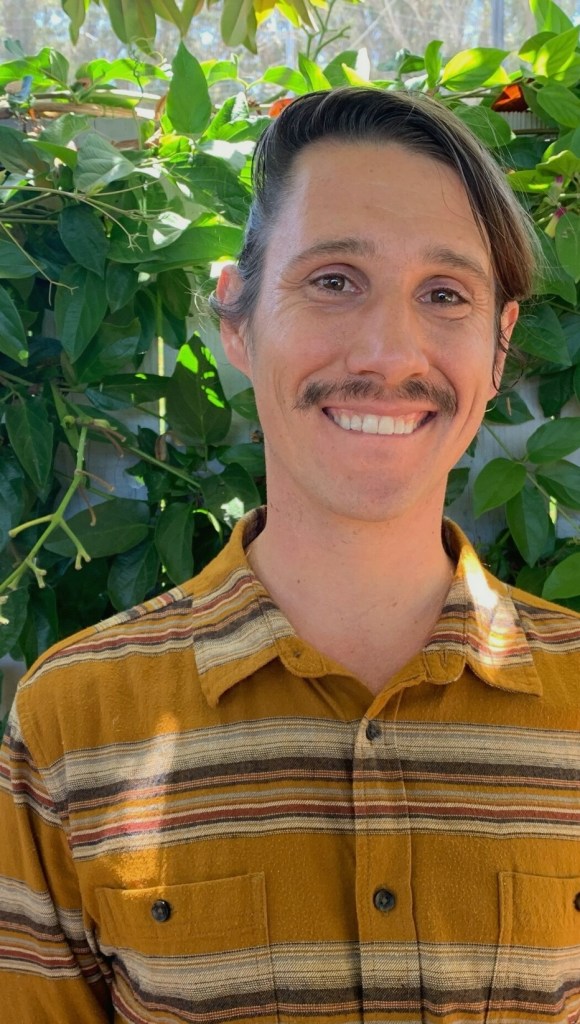
Jonathan Wilcox has just explained a math concept. Now, he tells his student, he’s forgotten how it works. Worse, he needs to teach it to the next kid. Could somebody please help save his job?
The amnesia, of course, is an act, but the invitation to take over the lesson is serious.
For Wilcox, founder of Open Horizons Tutoring, asking students to become the teacher reveals something a correct answer alone cannot: whether they comprehend what they’re doing. “Being able to reproduce a procedure isn’t necessarily the same as understanding it,” he explained.
His follow-up questions are simple. Why does that work? How did you reach your conclusion? As students talk through their reasoning, gaps become easier to spot, connections emerge, and the responsibility for learning begins shifting into their hands.
That shift is the point. Wilcox measures success partly by how much less his students need him. “I always joke that my job is to put myself out of the job and help students fly on their own, becoming independent learners,” he said.
Wilcox began tutoring while attending Westmont College, initially because the flexible hours accommodated his time playing trumpet in touring bands. His mother, local educator Sharon Wilcox, helped him get started, and his early students included kids who needed extra academic support as well as those pursuing professional sports careers while homeschooling.
His teaching philosophy also grew from his own uneven academic experience. High school wasn’t always easy, and his college years followed what he describes as an unconventional path.
Wilcox remembers teachers whose humor and enthusiasm made subjects like math entertaining. A tutor even allowed a lunchtime poker club as a vehicle for teaching probability. Those educators brought their personalities into the work and gave students room to bring theirs, too. “Learning is relational,” Wilcox said, “and having someone who believes in you, encourages your curiosity, and makes you feel comfortable being yourself can make an enormous difference.”
Open Horizons grew from his individual practice into a team of educators with specialties including mathematics, science, and writing. In 2027, Wilcox will mark 20 years since he began tutoring, a milestone made especially tangible by the former students who have returned as colleagues.
For him, that progression is a particularly satisfying expression of the work. Getting there, however, often involves some discomfort. Wilcox calls it “productive friction,” the necessary effort of wrestling with something that doesn’t immediately make sense. He generally starts with questions or small hints, adding support as needed. The difficulty is recognizing when a student is making progress through a challenge and when frustration has become discouraging. That requires knowing the individual.
Mistakes are part of the process, but Wilcox wants students to stop treating them as personal indictments. He draws inspiration from music producer Rick Rubin’s book The Creative Act: A Way of Being, particularly the idea of separating the work someone creates from their identity. Applied to a math assignment, that means a flawed calculation becomes not a failure but something to examine and revise.
Sometimes, the obstacle comes before a student ever reaches the problem on the page. Managing assignments, starting a project, and remembering what is due can require as much attention as the subject itself. Wilcox’s executive-function coaching covers planning, prioritization, time management, organization, and follow-through. One tool he uses is a Kanban board, a visual system that moves assignments through categories such as “To Do,” “In Progress,” and “Done.”
Amid grades, extracurricular commitments, and college admissions, he also tries to preserve room for curiosity. That doesn’t necessarily mean adding more work. Often, it means finding a different way into the assignment already at hand. For a student interested in surfing or the ocean, for instance, tide charts can open a conversation about sine and cosine, frequency, period, and amplitude.
Humor also helps, as does a relationship in which students feel comfortable asking a question or admitting they’re lost. Even online sessions can offer small opportunities for connection, including introductions to Wilcox’s cat, Diego.
Over time, Wilcox watches for changes that extend beyond a better grade: students recognizing their own mistakes, asking more thoughtful questions, and approaching unfamiliar problems with greater confidence. Those are signs that the habits practiced together are becoming skills they can use on their own.
“Success isn’t necessarily measured by how long a student continues tutoring,” he said. “It’s measured by how effectively they can navigate challenges without our support.”


You must be logged in to post a comment.