
‘Welcome to Isla Vista‘ is a six-part podcast series. Listen to new episodes here or anywhere you get your podcasts.
I’m Christina McDermott, and this is Welcome to Isla Vista.
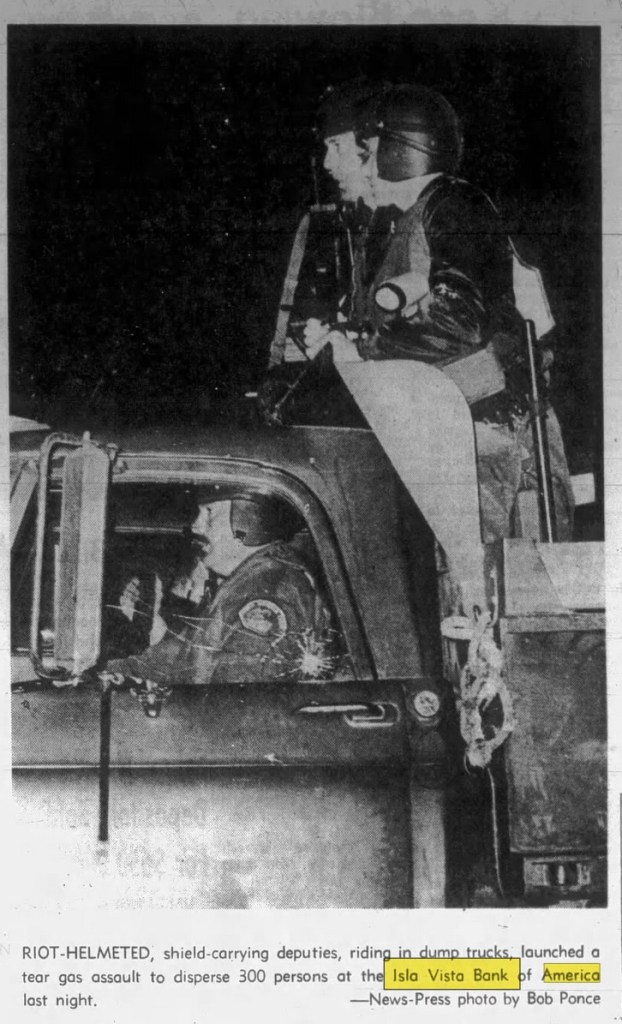
Late on February 25, 1970, the Bank of America in Isla Vista started to burn. Soon, flames engulfed much of the structure.
“In January and February of 1970, there was a big campus revolt that spilled over, you might say, into Isla Vista,” said Emeritus Professor of Sociology Dick Flacks.
Flacks arrived in Santa Barbara in the fall of 1969 for a tenured position. It was a controversial hire. Then-Governor Ronald Reagan publicly opposed his appointment. Professor Flacks had established himself as a left-wing scholar at the University of Chicago and was an anti-war activist.
In 1970, the Vietnam War was dividing families. At this time, the voting age was 21. Men as young as 18 were drafted, meaning they would have to fight in an unpopular war many did not believe in, for a country where they could not vote.
“For the rest of the winter and spring of 1970, there was a very fraught, tumultuous time in Isla Vista,” Flacks said.
What happened earlier that day in February? A man came to speak on campus. The man was William Kunstler, a civil rights attorney.
Kunstler made headlines as the defense lawyer of the Chicago Eight, a group of political activists that the government had charged with conspiracy and incite to riot after anti-war protests at the 1968 Democratic National Convention turned violent.
He traveled to I.V. with Nancy Kurshan, another anti-war activist. And that day in February, a crowd of anywhere from 2,000 to 5,000 people (depending on your source) gathered to hear Kunstler speak.
He wasn’t the beginning of discontent or questioning the status-quo in I.V.
“Up to that point, UCSB had been a very non-political campus,” said Professor Flacks. “Beginning around 1967, I think, before I got here, there was the beginning of a Radical Student Union, and there were a few activist Black students who were finally admitted to the campus.”
Black students’ work for civil rights represents early, organized, and peaceful political activity on campus.
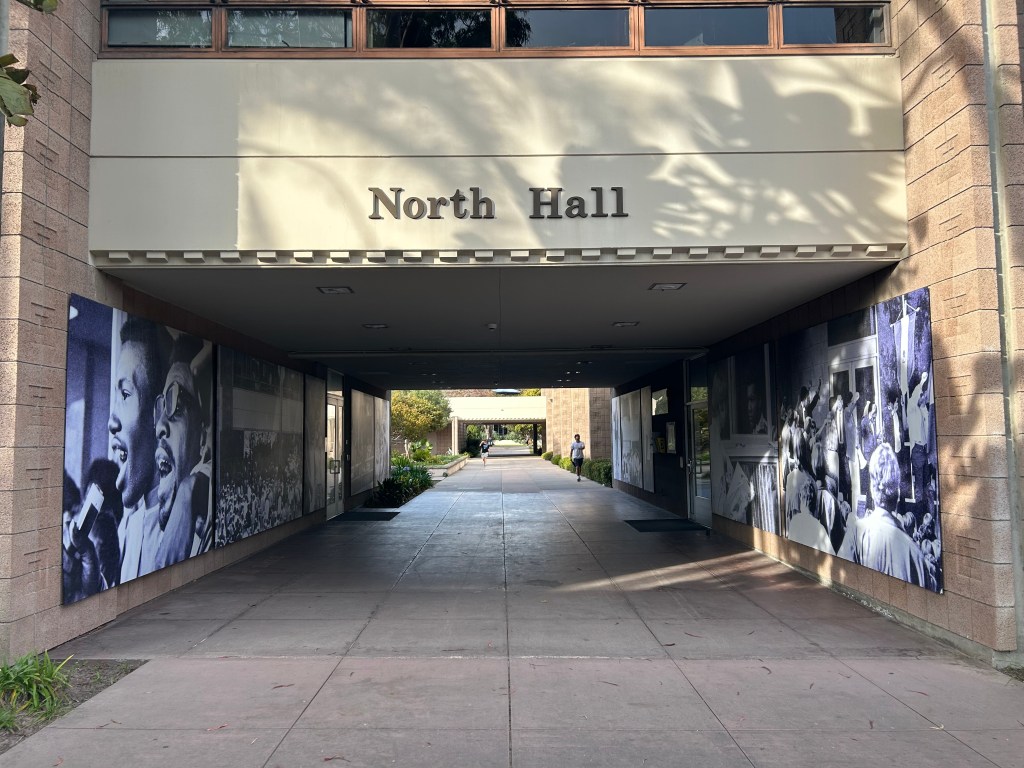
On October 14, 1968, members of UC Santa Barbara’s Black Student Union staged a takeover of North Hall’s computer lab. The goal? To get UCSB’s chancellor, Vernon Cheadle, to address the racism and inequities at UCSB.
If you walk to North Hall today, you’ll find a tunnel under the building full of photos and information on the event.
The Black Student Union’s actions at North Hall caused Cheadle to pay attention. It, along with the work for civil rights the union did over years, resulted in the creation of the Department of Black Studies and the Center for Black Studies, as well as the hiring of more minority faculty. It also helped pave the way for other departments like the Chicano/Chicana Studies Department, the Asian American Studies Department, and the Feminist Studies Department.
UCSB was still an overwhelmingly affluent white campus.
“I would say overwhelmingly, they came from Southern California, suburban, upper middle-class backgrounds. Their parents were typically going to be Republican,” Professor Flacks said.
Throughout 1969, discontent with the status-quo had grown. There was the threat of the draft; the impact of a giant oil spill off the coast of Santa Barbara, which helped motivate the creation of Earth Day; and the denial of tenure and eventual dismissal of a popular associate professor of anthropology, Jim Allen.
1969 was not without violence. One spring day, someone sent a bomb to the faculty club in a box.A custodian, Dover Sharp, opened the box. The bomb threw his body about fifteen feet. He died two days later from the wounds.
I.V. was a spot of counterculture, too, with students experimenting with drugs and casual sex. UCSB itself hosted some famous rock and roll artists and bands in the late ’60s: Janis Joplin, Jimi Hendrix, and the Grateful Dead. Urban legend says that Jim Morrison of the Doors wrote his song “The Crystal Ship” while on LSD, looking at Platform Holly.
“I think the typical police member of the police force of the sheriff’s department in those years thought Isla Vista was like Sin City,” Flacks said, “that these were spoiled brats who were doing all kinds of stuff they shouldn’t be doing.”
When folks left Kunstler’s talk on February 25, they entered an Isla Vista full of patrol cars. Police arrested a man for carrying what they thought was a Molotov cocktail but turned out to be an open bottle of wine. They beat him in front of hundreds of people.
Tensions exploded. Rioting began in I.V. Students threw rocks at cars, the realty office in town, and the Bank of America. They set dumpster fires. Police tried using tear gas on people, but people in I.V. actually pushed the officers out. And it was this night that a fire was lit inside the bank.
Here’s a memory from one student, documented by Dr. Jennifer Strand in her dissertation on I.V.:
“I can’t begin to tell you what it was like, that moment when we
realized our liberation. It was as if time had ceased. . . there was this
inexpressible animal feeling. Everybody began looking at the bank,” the student said.
I didn’t find a definitive reason why it was the bank that burned, but Strand’s dissertation includes an interview that suggests the bank was the biggest symbol of “the establishment” around. A New York Times article from a few weeks later said that people generally charged the bank with profiting from the Vietnam War.
The Bank of America burning marked a turning point in Isla Vista.
People would riot three more times through the winter and spring quarters. Police sprayed waves of tear gas and beat protesters. A temporary structure rebuilt at the Bank of America site burned again in April, and an officer shot a recent graduate, Kevin Moran, on the steps of that structure as he was attempting to put out the fire. There would be other attempts to burn the bank.
By June, the Los Angeles Sheriff’s Special Enforcement Bureau moved in to I.V. Police arrested and beat peaceful protesters at a sit-in. Heavy tear gas was used to break up the crowd. Students reported raids on their apartments by law enforcement and later, police brutality in jail.
Santa Barbara County Supervisors requested the National Guard replace the L.A. unit.
A former National Guardsman reached out to me ahead of this episode. Chris Coffman was a college student who had joined the National Guard to avoid being drafted to Vietnam. He was one of the guardsmen told to go to I.V. during the June unrest.
“That was in June of 1970,” he said. “However, the Kent State killings of four students in May of 1970 had a lot of influence on our actions,” Coffman said.
The Kent State massacre resulted in four dead, after national guardsmen opened fire on protesters on a college campus in Ohio.
Coffman said he and the other members of his unit had ammunition. They were meant to be perimeter guards, not in the heart of I.V.
“And on the way out … I was in the front seat of the truck, and we were watching the people in the back of the truck in front of us throwing out ammunition on the way out,” he said.
He said everyone started to discard their ammunition. And when the sergeant requested they return their ammunition at the end of the day, no one moved. Ultimately, the unit was allowed to leave.
“We were all in agreement once we found out everyone was throwing out their ammunition,” he said “The agreement was that we did not want to be put into a position being in Isla Vista, having to load and fire our weapons at fellow students, or not just fellow students, but American citizens.”
Why have I spent this time telling you all this? From the turbulence of 1970, change came out of Isla Vista. Community members organized, and larger powers — UCSB and the county — were forced to take a closer look at I.V. After all, I.V. was this unincorporated place; it had tons of private apartments and only one park.
Carmen Lodise arrived in Isla Vista in 1972 to do research at UCSB. [He said he had been hired by the cultural anthropologist Leslie White, who, in retirement, was finishing his last book]. Lodise went on to have a long career in I.V. as an activist, a journalist, and a local organizer.
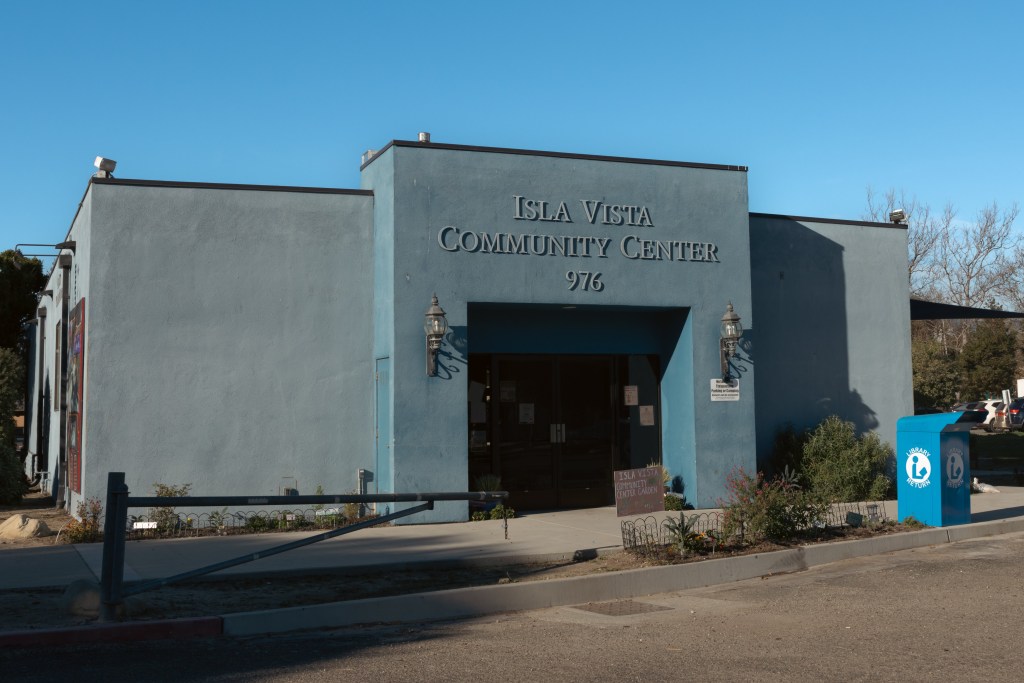
Residents had decided to form the Isla Vista Community Council, or IVCC for short, in May of 1970, amid the community’s turbulence. In his book, Isla Vista: A Citizen’s History, Lodise says that in 1970, 96 percent of Isla Vistans rented, more than a third of the community was paved over, and there were no social services.
“I was always amazed that all of the people around me were all really smart,” Lodise said.
Lodise said he had about 10 years of experience on the folks he worked with in I.V. in those days, as well as a background in economics, but that the student organizers he worked with were intelligent and open to talking. [He said people were in the top 10 percent of their graduating class].
The IVCC held their first election in 1970, and more than 4,000 people turned out to vote. Nationwide, the voting age was still 21, but the community council’s rules differed from the national voting age.
“Anybody who lived in town and was older than 15 would vote in the elections,” he said.
The IVCC’s goal was to gather community consensus on issues and then lobby for solutions that people wanted. It had no voting power within the county government.
But it did have some startup money from the UC Regents — $750,000 over three years to create community organizations.That’s more than $6 million in today’s money. It funded the startup of a health clinic, a credit union, and, yes, the IVCC.
The Regents also requested a study on I.V. and a commission formed of lawyers, professors, and administrators from elsewhere in California. They spent time conducting interviews and doing research. They created what’s called the Trow Report.
The Trow Report detailed I.V.’s problems and posed theories on why there was so much civil unrest and dissatisfaction. It said both the county and the university needed to be more involved with I.V.’s development. It said that UCSB’s development plans in the late ’50 and ’60s ignored I.V., all while the university grew its enrollment.
“It’s totally embedded in the university, UCSB, totally embedded,” Lodise said.
The Trow report also called out I.V.’s drug culture and its lack of urban planning, age diversity, and investment in its businesses.
Neither UCSB nor the county implemented the full extent of what the Trow Report recommended, things like UCSB working to create a more age-diverse community in I.V., or UCSB and the county partnering to establish recreation facilities.[44]
But the IVCC was at work. It implemented a vote to create a park district.
“The Isla Vista Community Council was the force that created the park district,” said Lodise.
The park district could implement taxes to fund itself and buy land — that gave it power.
In 1972, Goleta’s water district effectively pulled the plug on building in the area by establishing a water moratorium. That meant there were vacant lots around I.V.: privately owned and undeveloped spaces.
Not everyone supported the parks district. The district applied and won grant funding, but a tax levied to support the district came from property taxes.
Today Frank Thompson is a housing consultant, but in the mid-’70s, he was active in Isla Vista’s local political scene.
“The property owners paid the bill, actually, to acquire open space, and then that was a big fight again,” he said. “[It’s] bringing us back to the Isla Vista landlords, because they felt like, ‘Hey, this isn’t fair.’ We’re having to pay the bill, and everybody else gets to use the park, and the park doesn’t benefit us.”
But parks were also a way to create safe places to play games (versus the street) and hang out. They also reduced the potential density in I.V., should water become available for the vacant lots. In the end, Isla Vista’s voters passed the tax.
Today, Isla Vista’s Recreation and Park District maintains two dozen parks, open spaces, and beach access points.
While the parks district was working to buy empty lots, the Isla Vista Community Council wasn’t just involved in parks. It wanted to give Isla Vista more autonomy to make its own decisions as a community.
It wanted cityhood. That was not a plan many landlords supported, said former IV activist, journalist and organizer Lodise and housing consultant Thompson. Why? In part, rent control. Rent control is a law that limits how much rent can increase, and it’s controversial. Here’s Thompson.
“The threat of rent control in Isla Vista has always been there, like it’s kind of a motivating force for people to try to figure out, under whatever current scheme of government we’ve got, how to try to control the rapid increase in rents,” he said.
If Isla Vista was a city, it could have the power to run a referendum and pass a rent control measures.
Landlords could make their voices heard, but ultimately, they didn’t decide whether Isla Vista could incorporate (that means become a city). That was an organization called LAFCO (Local Agency Formation Commission). Don’t let the name fool you; they were no joke.
Sorry — no more puns.
The Isla Vista Community Council submitted paperwork for cityhood to LAFCO three times: in 1973, 1975, and 1983.
“Isla Vistans followed the rules [and] hired a few consultants,” Thompson said.
LAFCO rejected I.V.’s application for cityhood all three times.
Why? In 1973, a study from UCSB said that Isla Vista wasn’t financially feasible — that it couldn’t keep itself afloat. It didn’t have commuters or much sales tax.
Let’s talk about I.V. businesses. In 1970, there was a movie theater in I.V., bookstores, and music stores. There were a couple of grocery stores, and there were restaurants.
I met Bob McDonald outside of St. Michael’s Church on a sunny Friday morning. There’s a pride flag in the church window and some students on a nearby picnic bench. McDonald offered me chai tea.
McDonald was a co-owner of a former restaurant — Sun and Earth — from 1974 to 1979. The restaurant provided vegetarian and seafood meals and had a patio. Folk bands would sometimes come in and play.

“It was many things, you know, surfers would come in after a day of surfing and get a healthy meal of veggie tacos and this and that,” he said. “University staff [would come] or kids would bring their parents in on a weekend. Their parents would come up to visit them at UCSB. And ours was a safe place to take them.”
What about I.V. today? There are mighty small businesses, but when it comes to the diversity of shops you could see in a college town, I.V. is lacking. Social spots for students are somewhat limited. People don’t often come from outside I.V. to shop or eat during the year, meaning the area is dependent on the student flow and bust. And sales tax revenue, which might help the community be its own city, is lower than if there were a robust commercial core.
Where did UCSB fall in the incorporation debate? The university, Thompson said, did not support cityhood.
The university and the Chamber of Commerce, Thompson said, “got LAFCO to approve the exact opposite from Isla Vista incorporation, which was an annexation of virtually the entire South Coast, all the way to Gaviola, in the City of Santa Barbara.”
Annexation — that means making Isla Vista a part of Santa Barbara (along with Montecito, Hope Ranch and Goleta) . It was (obviously) not a successful plan.
And finally (yes, there’s a “finally” to this long thought), there was the politics of the members of LAFCO themselves. Isla Vista was considered a Democratic voting block, and, at least in the ’70s, LAFCO’s board consisted of Republicans.
George Thurlow served as the special assistant to Chancellor Yang for I.V., as well as on the Isla Vista Community Services District. He said that because I.V. was successful at registering voters, it, even unincorporated, could influence county politics.
“It’s purely politics,” Thurlow said. “It’s purely power. One of the things that scares everybody — not everybody — scares Republicans is Isla Vista votes as a Democratic block.’
So Isla Vista has never gained cityhood. But nearby Goleta did.
If you look at a map of Goleta, you’ll notice that it surrounds I.V. and UCSB. When the City of Goleta incorporated in 2002, it didn’t include I.V. Opposition came from people (including Isla Vista landlords) who raised concerns that a student population could influence votes on things with long-term implications. One News-Press article said that the opposition claimed that I.V.’s students didn’t have the same “behavioral standards” as people in Goleta.
But newspaper articles at the time report that actually, Goleta would have had more money (at least initially) if it had included I.V. Other articles from the time say I.V.’s landlords were organizing to oppose incorporation for their own gain.
In August 2013, a fellow student came to see Jonathan Abboud. Abboud, who had started at UCSB in 2010, was president of UCSB’s student government. Today, Abboud is the general manager of the Isla Vista Community Services District.
“There was a student who came to my office and who proposed the idea. He had done a lot of research,” Abboud said.
Abboud said the county’s Grand Jury had suggested a community services district in the early 2000s, and that earlier, in the ’70s, legislation was put forward for it. But nothing had panned out.
“We were working on that during that year, and we didn’t get a lot of traction. A lot of people told us, ‘That’s a nice idea, but it’s not possible for whatever reasons,’” he said.
Let’s fast-forward to April of 2014. It’s the first weekend of spring quarter, and for tens of thousands of people, that means Deltopia weekend.
“So the lead-up to the Deltopia riot was noteworthy,” Abboud said.
The party had grown since it started in 2010. The party the year prior saw a crowd of up to 18,000 people, as well as more medical emergencies and arrests.
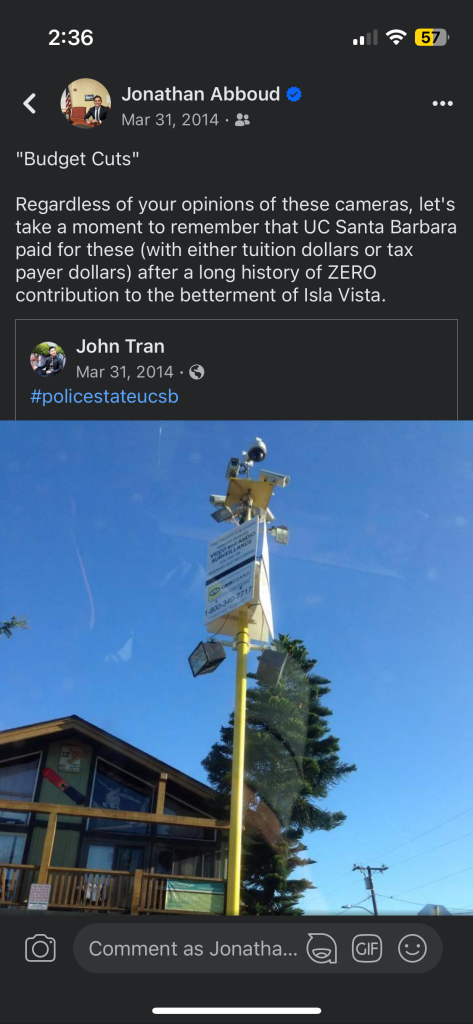
The week before Deltopia in 2014, Abboud said students discovered that someone had put surveillance cameras up on Del Playa Drive. He said it turned out UCSB worked with the county to do so, but residents didn’t know that at the time.
“That was one thing where, you know, people did not know, why is this being done to us, right?” he said. “Like, that’s just the basic question. If you live in any neighborhood, why is something being done in my neighborhood?”
Then, there was the 2 a.m. Facebook post from the Sheriff’s Office, saying the festival ordinance banning music would be enforced on Deltopia weekend.[70] Abboud said that student government had already worked to send information on Deltopia via postcards to houses, and now, with the sudden 2 a.m. post, that info was out of date.
“These things were just very indicative of the lack of local self-governance: that things can happen here, outside decisions can be made, local residents will have no say, even if those decisions might be needed,” Abboud said.
Deltopia still happened in 2014. Folks from out of town came flooding in for a party that spun out of control into a riot. People threw bottles and rocks at police cars, and police, in turn, shut down neighborhoods.
Abboud said how people behaved was not okay, but that the ingredients for the discontent were already sown.
“I don’t think a riot would have happened if we had pre-planned the event and worked to make it safe and had all worked together in an open and transparent way,” he said.
About a month later, tragedy struck.
On the evening of May 23, 2014, Santa Barbara City College student Elliot Rodger committed mass murder in Isla Vista. Rodger fatally stabbed his two roommates, Cheng Yuan “James” Hong and Weihan “David” Wang, and their friend, George Chen. Then, he drove to Alpha Phi, a sorority house, where he tried to get inside to kill the occupants with a gun. When he couldn’t get inside, he fatally shot two young women walking nearby, Katherine Cooper and Veronika Weiss. He drove to Isla Vista Deli Mart and killed Christopher Michaels-Martinez outside. Rodger then proceeded to drive around I.V., firing bullets and trying to hit pedestrians with his car. He injured 14 others.
After being shot at by police, Rodger hit a parked car. Police found his body; he had shot himself. Rodger left a manifesto where he blamed women, ultimately, for rejecting him.
Abboud said there wasn’t much connection between many of I.V.’s issues as an unincorporated community and Rodger’s crime. But there was a reason why Rodger wanted to be in I.V.
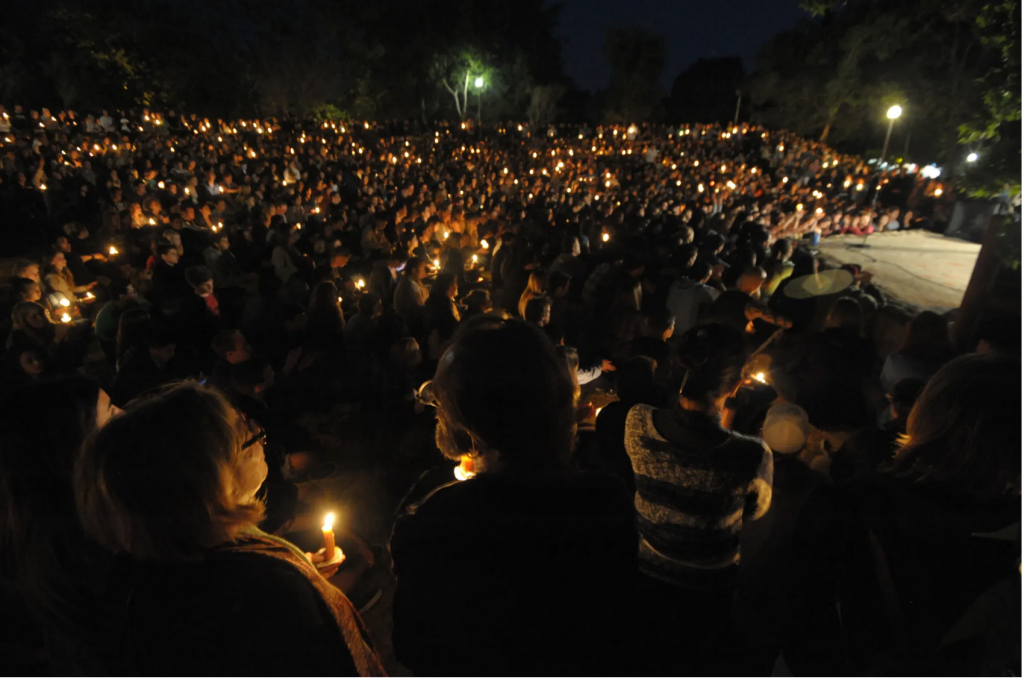
“But there was a nexus,” Abboud said. “Isla Vista had a reputation. And if you read the manifesto, there were reasons why this person was attracted to the unhealthy reputation of Isla Vista.”
I.V. has been famous for its parties for a long time. But without local government presence and without intense focus from the county, he said there wasn’t wider investment in alternatives.
“Without a local eye to promote a better neighborhood and a better sense of community, the misogyny, the rape culture at parties, all these things, they are things that, again, the government cannot stop or change, but by doing things like providing better night-life alternatives, we at least can create a competition,” he said.
Abboud said that both these events in the spring of 2014 helped highlight the community’s lack of agency.
“It was just the idea that decisions are made without us, and we don’t have a way to solve our own problems,” he said. “And that’s what put so much support behind the [community services district].”
Let’s hit pause for a second. What is a community services district? It’s a governing organization formed by the residents of a community that is unincorporated (that means it’s not a city), and it provides services to an area. Isla Vista’s Community Services District has a board with five elected representatives, one appointee from UCSB, and one appointee from Santa Barbara County.
I.V.’s community services district came about in an unconventional way.
Das Williams grew up in Isla Vista. He lived on the 6600 block of Del Playa Drive in 4th grade. He lived in I.V. again during college.
“I’m a former county supervisor and state legislator,” he said.
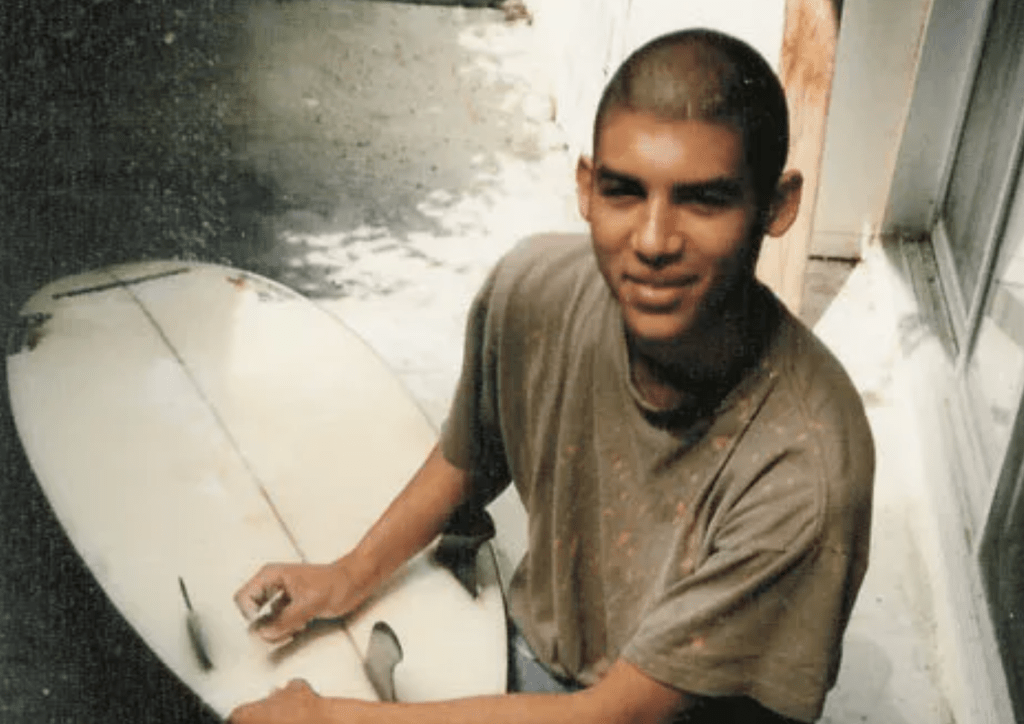
When Williams was serving in the state legislature in 2014, he put forward a bill to form the Isla Vista Community Services District.
Usually, Williams said, communities get formal governance powers, whether that’s incorporation or a district, through LAFCO. But LAFCO, UCSB, and many landowners did not support the creation of a community services district.
“The combination of that [LAFCO] process, the financial interest of people that live in the county but don’t live in Isla Vista, and the fact that Goleta incorporated with most of the sales tax areas, those three things looked like they combined to prevent Isla Vista from ever achieving local governance,” he said.
On the state level, Williams said there was support. He said the reaction to the 2014 massacre really illustrated to him the energy and push in I.V. for self-governance. So, he brought it before the legislature. At the time, the commission sent a formal letter to Sacramento about Williams’s bill bypassing the LAFCO process.
“Inevitably, the question comes up: Why wouldn’t the normal process work?” he said. “Why are you trying to sidestep the normal process? I would just say that laws are meant for people, not people meant for laws.”
Williams said that the normal process for providing some self-governance to I.V., which could make it safer, had failed for decades. That argument ultimately prevailed.
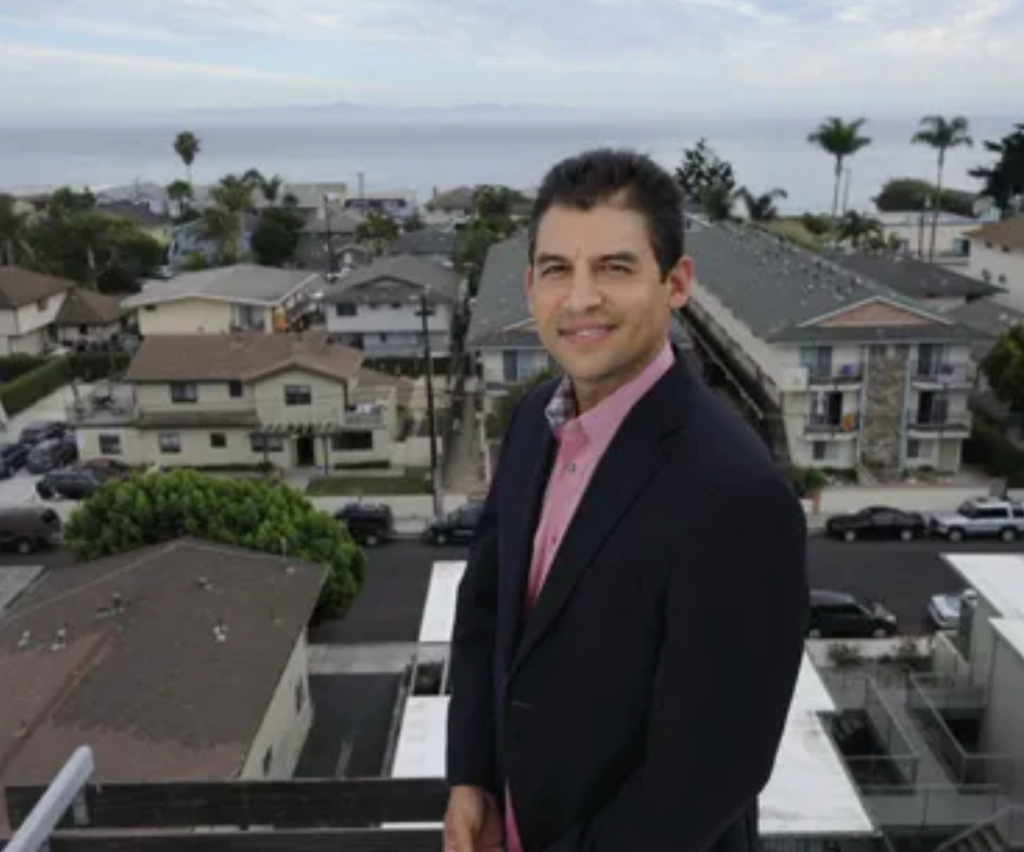
Where did UCSB fall? George Thurlow, who served on the community services district as UCSB’s appointee, said that as a general rule, the UC Regents don’t support governance that might contend with their local control.
“The UC system has always resisted anything that puts one of their campuses under somebody other than the regents,” Thurlow said.
When the referendum measure in I.V. passed and the community services district in 2016, UCSB put forward money to fund the district — $1.4 million for startup costs and $200,000 annually for the next seven years.
Part of UCSB’s financial investment in the services district, Thurlow said, was to keep UCSB’s land out of the district itself.
“UCSB agreed to pay what would have been their share of the utility users tax, and in return, it would not be included in the [community services district],” he said.
But other funding was another matter. An accompanying measure on the ballot to fund the district through a tax on utilities failed.
Abboud said there were a lot of reasons why the tax failed; for one, the measures weren’t next to each other on the ballot. For another, many landlords opposed it.
“The landlords did put forward a pretty big campaign against it,” Abbound said.
News articles at the time say that landlords argued the tax would burden landlords, tenants, and businesses alike and ultimately wasn’t necessary.
In 2018, the IVCSD put forward the measure on the tax again. The tax passed by 82 percent.

Today, Isla Vista’s community services district has a budget of about $2 million each year to implement changes. They are limited in their powers and don’t have any voting power at the county level, but like the Park District was and is, they are a semblance of local government.
Today, the community services district works with the one person who represents I.V. at the county level: 2nd District Supervisor Laura Capps. Capps’s district also includes much of Santa Barbara and Goleta.
Capps has focused on I.V., and we’ll talk more about Capps’s work in I.V. in Episode 6, when we talk about the rental inspection program and the cliffs. She said her office works with the district frequently and she tries to be a partner and advocate
I did ask Capps what she thought of cityhood, and she said she’s open minded.
“I’m open to it. I know that there’s been talk about it, and certainly if there’s a movement for it, I would definitely be open minded,” Capps said.
The cityhood question, though, has not quite been put to bed. In fall of 2025, Santa Barbara County’s Sheriff’s Office put forward a noise ban over Deltopia weekend. Previously, the ban was just for the evenings.
After the 2014 riots, Deltopia celebrations have cooled off, somewhat. But post-COVID, those celebrations grew again. Between 2023 and 2025, I.V. Foot Patrol Lieutenant Joe Schmidt said, the party generated hundreds of medical calls and cost County Fire and the Sheriff’s Office more than $465,000 in overtime costs.
Many students vocalized opposition to this ban at a Board of Supervisors meeting in January, saying it would not solve the problem and was being proposed without much student buy-in. One student brought up cityhood. Noah Luken is a student government senator representing off-campus students and a third-year economics and philosophy major. He said if I.V. was a city, it could make these decisions and create a sanctioned event for itself.
“When decisions are made about a people without their consent, history has shown that negative consequences frequently result for all parties involved,” Luken said. “Regardless of how you decide to vote today, the root issue of no direct representation for Isla Vista cannot be solved until an autonomous centralized government is established in Isla Vista.”
After public comment, the Board of Supervisors voted unanimously to pass the noise ordinance, effectively banning the party but leaving the door open for a sanctioned event.
This podcast has focused on students so far. It’s not unreasonable; the majority of Isla Vista is students. But students are not the whole story.
Next week, we’re heading to the northwest corner of I.V. to talk about longer-term residents.
This is Welcome to Isla Vista.
That was Episode 4 of Welcome to Isla Vista. Next week, tune in to Episode 5 – The quieter corner. How has Isla Vista changed from the eyes of people who see crops of students graduate each year? What mass eviction event forced families out of Isla Vista? And what’s with that dome house?
Episode 4 was written, fact-checked, recorded and produced by Christina McDermott. Episode 4’s script was edited by the Independent’s news editor, Jackson Friedman. The historic student quote was voiced by Dylan Charney. The Spring 1970 audio clip came from a KCSB news recording. The 2014 Isla Vista Massacre news clip was from KCBX Radio and specifically former News Director Randol White. And that song is Nothing is Nowhere by Orangepit!












You must be logged in to post a comment.