Question: ‘What was the hide and tallow trade?’
-Chris Toth

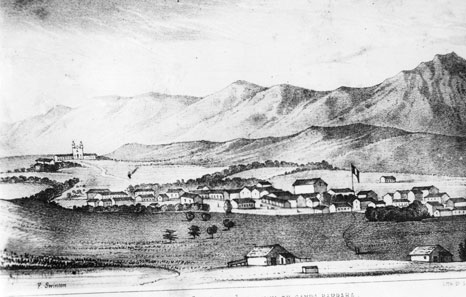
As food prices continue their upward creep, making some of us think twice before paying the price for a steak dinner, it may be hard to imagine a time in California when beef was so little valued that cattle carcasses were often left to rot in the sun. Yet the first half of the 19th century was just such a period. It was age of the great rancheros, the age of the hide and tallow trade.
Common to both the Spanish and Mexican periods in California was the chronic shortage of currency. This forced Californians to turn to various methods of barter to conduct business. The most ubiquitous item of barter was the cattle hide. Promissory notes were paid and contracts honored using this medium; judges rendered fines in number of hides. This form of exchange was so popular, cattle hides came to be known as California bank notes.
In the early 19th century, California population levels were low and there was little demand for beef. Native American populations were declining, due in large part to disease, while the non-native population was growing only slowly. At the same time there was a shortage of all sorts of goods: cloth, sugar, tools, furniture, books, and dining utensils, to name just a few. There were times when the presidio at Monterey was so short of gunpowder that when foreign naval ships pulled into port the garrison would have to borrow powder from the vessel to fire the requisite salute. The hide and tallow trade developed in part to ease the exchange of and better meet the demand for goods and services.
By the mid 1830s, the 21 missions in California were running some 400,000 head of cattle on their lands. Some cattle were slaughtered for fresh meat; some meat was dried for future use or for shipment. The hides were put to a wide variety of uses-bed mattresses, horse blankets, saddles, shoes, chair seats, knapsacks, window, and door coverings. Strips of hides were stretched between poles to create fences and were used to fashion ropes or reatas.
Hides to be shipped were soaked in saltwater for 24 to 48 hours to soften them. They were then scraped to remove anything that might decompose and then stretched out to dry. If dried on a beach, they were beaten with sticks to remove sand particles. Increasing industrialization in the eastern U.S. created a growing leather goods market; the shoe factories of New England were major cattle hide consumers.
Tallow, the fat of the steer, was also an important commodity. There were two kinds of tallow-the manteca, lying nearest the hide, was used for cooking; the sebo was used for candles and soap and was the type most often shipped abroad. Manteca sold for about $2 per arroba (25 pounds), and sebo for around $1.50 per arroba. Both kinds of tallow were boiled and the liquid poured into hide bags for shipment. Each bag held anywhere from 20 to 40 arrobas; the lighter-weight bags were most common.
Lack of fencing on the huge ranchos allowed the cattle to largely roam at will. There was a custom that hungry travelers were allowed to butcher an animal if they left the valuable hide behind; such was the lack of importance placed on “beef on the hoof.” In the early 1840s, cattle were worth around $4 a head.
The hide and tallow industry was in decline by the mid 1840s, a decline that was greatly accelerated by the discovery of gold in California in 1848. Thousands of fortune-seekers poured into northern California and the demand for beef skyrocketed. For seven years ranchers enjoyed unprecedented prosperity as prices soared to $75 a head in San Francisco.
As the gold fields played out, demand for beef contracted in the late 1850s. The catastrophic floods followed by withering drought in the mid 1860s virtually destroyed the Californio cattle industry, bringing to an end the era of the grand ranchero.